


We may not have the course you’re looking for. If you enquire or give us a call on 01344203999 and speak to our training experts, we may still be able to help with your training requirements.
The Major Advantages and Disadvantages of Communication Skills
ByThe Knowledge AcademyLast updated on: 19 November 2026
Explore the key advantages and disadvantages of communication skills, including stronger relationships, career growth, and improved understanding. Also, learn about common challenges such as misinterpretation, information overload, and unsuitable communication methods.
At a Glance
1. Effective communication builds trust, improves understanding and strengthens relationships.2. Clear communication supports career growth, teamwork and problem-solving.3. Misinterpretation, information overload and unsuitable communication methods can create challenges.4. Active listening, clear messaging and suitable communication channels help reduce misunderstandings.
Communication is the thread that connects ideas, people, and opportunities. A well-chosen word can inspire action, build strong relationships, and open doors to success, while poor communication can lead to misunderstandings and missed opportunities.
In a fast-paced personal and professional world, communication skills are more important than ever. While effective communication offers numerous benefits, unclear messages, excessive information and unsuitable communication methods can create challenges.
In this blog, we'll explore the key advantages and disadvantages of communication skills, along with their impact on everyday interactions, teamwork and career growth. Let's begin!
Advantages of Communication Skills
Effective communication skills help individuals express themselves clearly, understand different perspectives and maintain strong relationships. They also support professional development, collaboration and confidence in everyday interactions. Let's explore the major advantages of communication skills:
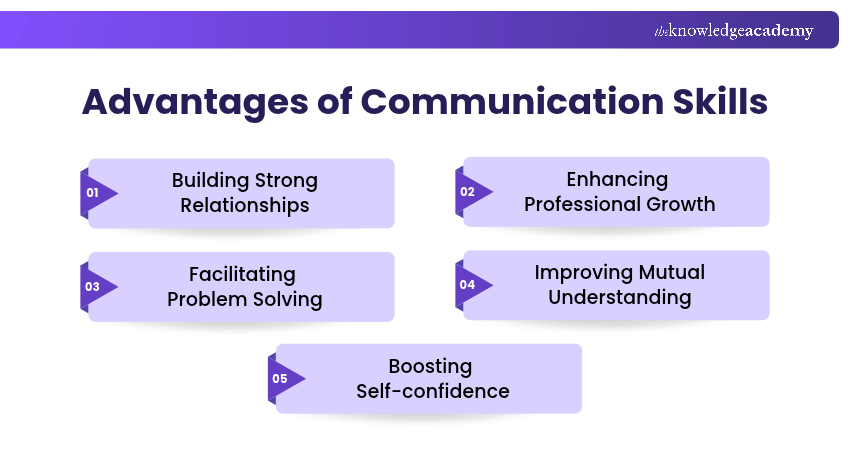
1) Building Strong Relationships
One of the key advantages of developing strong communication skills is the ability to build meaningful personal and professional relationships. Clear and open communication encourages trust, understanding and mutual respect.
Here are some ways communication skills help strengthen relationships:
a) Building Trust: Honest and transparent communication encourages openness and mutual respect.
b) Deepening Understanding: Meaningful conversations help individuals understand different perspectives, feelings and motivations.
c) Encouraging Empathy: Active listening and acknowledging others' feelings strengthen emotional connections and respect.
2) Enhancing Professional Growth
Having good communication skills can significantly contribute to professional growth. Employees who communicate clearly can build stronger workplace relationships, collaborate effectively and express their ideas with confidence.
Here's how communication skills support career development:
a) Career Advancement: Clear communication helps employees demonstrate their capabilities and leadership potential.
b) Networking Opportunities: Strong interpersonal skills help build professional connections and explore new opportunities.
c) Building Credibility: Sharing information accurately and confidently helps establish a reliable professional reputation.
Pro Tip
Adjust your tone, language and level of detail according to your audience. Communicating effectively with colleagues, managers and clients helps maintain professionalism and understanding.
3) Facilitating Problem Solving
Effective communication skills play an integral role in resolving problems in both personal and professional situations. Open discussions allow individuals to identify challenges, exchange ideas and develop practical solutions.
Here are some ways communication supports problem-solving:
a) Identifying Problems: Clear communication helps individuals explain challenges and understand their underlying causes.
b) Developing Collaborative Solutions: Open discussions encourage different perspectives and practical solutions.
c) Improving Decision-making: Sharing relevant information helps individuals evaluate options and make informed decisions.
For example, suppose a project team is struggling to meet a deadline because responsibilities are unclear. By organising a discussion, identifying the challenges and clarifying individual tasks, the team can improve coordination and develop a realistic plan to complete the project.
4) Improving Mutual Understanding
Communication skills help individuals convey information accurately and improve how their messages are understood. Clear communication reduces confusion and creates opportunities for questions, feedback and clarification.
Here are some ways effective communication improves understanding:
a) Reducing Assumptions: Explaining expectations and asking clarifying questions help prevent misunderstandings.
b) Encouraging Active Listening: Paying attention to the speaker helps individuals understand messages more accurately.
c) Simplifying Complex Information: Straightforward language, examples and visual aids make difficult concepts easier to understand.
Pro Tip
Maintain comfortable eye contact, appropriate gestures and a respectful tone to support your message. Consider individual and cultural communication preferences rather than relying on body language alone.
5) Boosting Self-confidence
Good communication skills help individuals express their ideas effectively and participate confidently in conversations. As people gain experience communicating with others, they may become more comfortable sharing opinions and handling challenging situations.
Here's how communication skills can improve self-confidence:
a) Encouraging Self-expression: Clearly communicating thoughts and opinions helps build confidence in discussions.
b) Building Confidence Through Practice: Regular conversations and presentations can reduce hesitation and strengthen communication abilities.
c) Handling Difficult Conversations: Effective communication helps individuals approach disagreements and sensitive discussions with greater confidence.
Learn to build stronger connections, one conversation at a time, by joining the Interpersonal Skills Training now!
Disadvantages of Communication Skills
Although effective communication skills offer numerous benefits, communication can also create challenges when messages are unclear, information is overwhelming or unsuitable methods are used. These challenges generally arise from ineffective communication practices rather than the skills themselves. Let's examine some common difficulties:
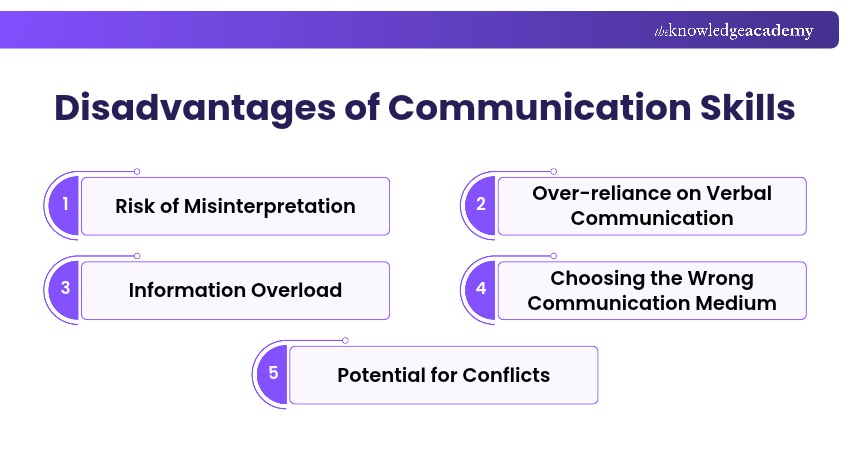
1) Risk of Misinterpretation
Misinterpretation occurs when a message is understood differently from what the sender intended. This can create confusion, unnecessary disagreements and difficulties in personal or professional relationships.
Some common causes of misinterpretation include:
a) Cultural Differences: People from different backgrounds may interpret words, expressions and gestures differently.
b) Ambiguous Language: Vague instructions or unclear explanations can create confusion and misunderstandings.
c) Technical Jargon: Using unfamiliar terminology can make messages difficult to understand.
For example, a manager's brief message asking an employee to complete a task "soon" may create confusion if no specific deadline is provided.
2) Over-reliance on Verbal Communication
Verbal communication is useful for immediate interaction and discussion. However, relying exclusively on spoken communication can create problems, especially when information needs to be recorded or shared with a larger audience.
Some limitations include:
a) Lack of Documentation: Verbal discussions may not provide a reliable written record of important decisions or instructions.
b) Dependence on Memory: Individuals may forget or misremember details communicated during conversations.
c) Accessibility Challenges: Spoken communication alone may not meet everyone's accessibility needs or communication preferences.
Combining verbal communication with written summaries, documents, or visual aids can help address these limitations.
3) Information Overload
Sharing too much information at once can make communication difficult to follow. When individuals receive excessive details, they may struggle to identify the most important points.
Here are some common consequences of information overload:
a) Reduced Understanding: Excessive information can make it difficult to identify the main message.
b) Delayed Decision-making: Too many details may make it harder to evaluate options and reach conclusions.
c) Poor Information Retention: People may struggle to remember essential details when too much information is presented at once.
Pro Tip
Present the most important information first and divide complex messages into smaller sections. Use clear headings or short summaries to help readers identify essential details.
4) Choosing the Wrong Communication Medium
Selecting an unsuitable communication channel can reduce the effectiveness of a message. Different situations require different approaches, depending on the audience, urgency and nature of the information.
Some potential disadvantages include:
a) Loss of Context: Text messages or emails may not fully convey tone or intentions.
b) Delayed Feedback: Asynchronous methods, such as email, may slow down urgent discussions.
c) Confidentiality Risks: Sharing sensitive information through inappropriate or insecure channels can expose confidential details.
For example, discussing a sensitive employee concern through a brief text message may lead to misunderstandings. A private conversation through an appropriate and secure channel would generally provide a better opportunity for explanation and clarification.
Learn to turn your words into influence and your ideas into action with the Communication and Influencing Skill Training – Join now!
5) Potential for Conflicts
Communication problems can sometimes create disagreements, particularly when messages are unclear, emotions influence responses, or individuals fail to consider different perspectives.
Some common consequences include:
a) Emotional Reactions: Inappropriate tone or poorly expressed criticism can create frustration or defensive responses.
b) Reduced Trust: Repeated communication failures may weaken confidence between colleagues or team members.
c) Lower Team Morale: Unresolved disagreements can affect relationships and reduce motivation.
Addressing misunderstandings early, encouraging respectful discussions and practising active listening can help prevent communication problems from escalating.
Checklist for Effective Communication
The following checklist can help you communicate clearly, reduce misunderstandings and choose suitable approaches for different situations.□ Define Your Purpose: Identify the main objective of your message before communicating.□ Understand Your Audience: Consider their knowledge, expectations and communication preferences.□ Keep Your Message Clear: Use simple language, avoid unnecessary jargon and focus on essential information.□ Practise Active Listening: Pay attention, avoid interruptions and acknowledge different perspectives.□ Maintain the Right Tone: Use respectful language and appropriate body language to avoid misunderstandings.□ Avoid Information Overload: Share relevant details in a logical order without overwhelming the audience.□ Encourage Feedback: Ask questions and confirm that your message has been understood correctly.

The Knowledge Academy develops accessible learning content across Project Management, IT, Cybersecurity, Data Science, Business Analysis, HR, Accounting and Finance, Leadership and Health and Safety. Its resources combine subject research with clear explanations to help professionals build practical knowledge across a wide range of disciplines.
View Detail

 If you wish to make any changes to your course, please


