Who Should Attend this Confidence Building Course?
This Confidence Building Course is suitable for individuals looking to strengthen their self-confidence, communication, and personal effectiveness in everyday and professional situations. It is also valuable for those looking to approach challenges, interactions, and responsibilities with greater confidence. The following individuals can benefit from this course:
- Sales Representatives
- Educators
- Managers
- Team Leaders
- Customer Service Representatives
- Public Speakers and Presenters
- Healthcare Professionals
- Entrepreneurs and Business Owners
Prerequisites for the Confidence Building Course
There are no formal prerequisites to attend this Confidence Building Training Course. However, an interest in strengthening self-awareness, motivation, and personal confidence will help delegates engage effectively with the course content.
Confidence Building Course Overview
The Confidence Building Course introduces practical approaches to developing self-confidence through goal-setting, positive thinking, self-awareness, motivation, values, and emotional understanding. It also explores how confidence supports personal growth, workplace effectiveness, and stronger relationships.
Delegates will develop knowledge of recognising strengths, motivation techniques, understanding emotions, and expanding their comfort zone. They will also explore performance profiling, authentic behaviour, passion, and practical approaches to personal improvement.
This 1-Day Confidence Building Course by The Knowledge Academy enables delegates to apply confidence-building techniques in personal and professional situations. They will be better equipped to set goals, strengthen self-belief, manage emotions, stay motivated, and approach challenges with greater confidence.
Confidence Building Course Objectives
- To understand goal-setting techniques and develop positive thinking habits
- To recognise personal strengths and assess current confidence levels
- To understand performance profiling and its benefits
- To develop motivation and align actions with personal values
- To understand and manage emotions more effectively
- To expand the comfort zone and approach relationships with greater confidence
Learning Outcomes of this Confidence Building Course
After completing this Confidence Building Course, delegates will understand how goal-setting, self-awareness, motivation, personal values, and emotional control contribute to confidence. They will be better equipped to strengthen self-belief, expand their comfort zone, and approach personal and professional situations with greater assurance.
Core Components of this Confidence Building Course
This Confidence Building Course focuses on key areas that support stronger self-awareness, motivation, emotional control, personal values, and sustained confidence. Its core components include:
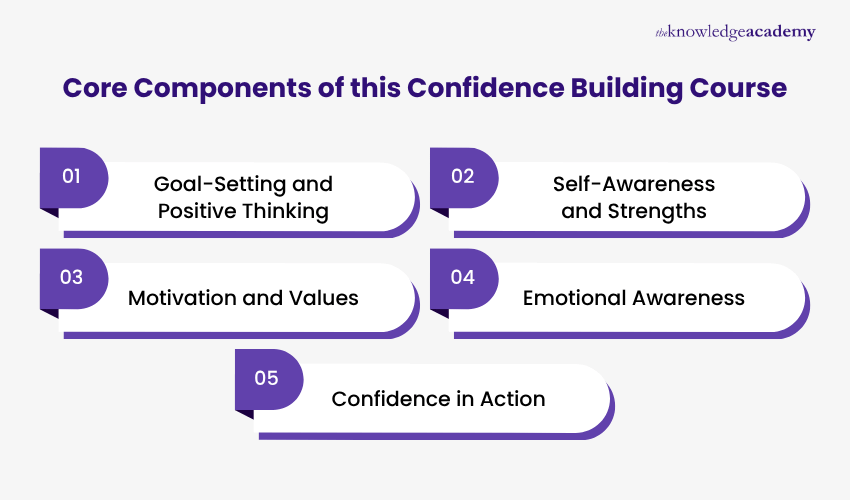
- Goal-Setting and Positive Thinking: Develop meaningful goals, constructive self-talk, and routines that support confidence.
- Self-Awareness and Strengths: Recognise personal strengths, assess current capabilities, and prepare for improvement.
- Motivation and Values: Understand what drives progress while aligning actions with personal values and principles.
- Emotional Awareness: Track moods, understand emotional responses, and develop greater emotional control.
- Confidence in Action: Expand the comfort zone, apply personal strengths, and approach relationships with greater confidence.
Key Application Areas of Confidence-Building Training
Confidence Building Training supports personal and professional effectiveness by helping delegates apply self-awareness, motivation, emotional control, and confidence across different situations. Key application areas include:
- Goal Achievement: Apply structured goal-setting and positive routines to support personal and professional progress.
- Workplace Confidence: Strengthen motivation and take greater ownership of actions and responsibilities at work.
- Personal Development: Recognise strengths, understand values, and develop greater confidence in personal decisions.
- Emotional Management: Build awareness of moods and emotions to respond to situations with greater control.
- Relationship Confidence: Apply stronger self-awareness and confidence when approaching personal and professional relationships.





 If you miss out, enquire to get yourself on the waiting list for the next day!













 If you wish to make any changes to your course, please


