Who Should Attend this Video Production Training Course?
This Video Production Course is suitable for professionals seeking to develop skills in video production, camera operation, scriptwriting, audio, lighting, and working with talent. It is particularly beneficial for:
- Videographers
- Camera Operators
- Content Creators
- Video Producers
- Production Assistants
- Photographers
- Multimedia Designers
Prerequisites for the Video Production Training Course
There are no formal prerequisites to attend this Video Production Course. However, a basic knowledge of video production concepts would be beneficial for delegates.
Video Production Training Course Overview
Video Production Course introduces delegates to the fundamentals of video production, including scriptwriting, camera use, working with talent, audio, lighting, and backgrounds. It also explores crew roles, technical considerations, and single- and multicamera production methods.
Delegates will develop skills in writing scripts, selecting and using cameras, working with talent, handling microphones, and applying suitable lighting techniques. They will also learn how backgrounds and locations influence a video's visual presentation.
This 1-Day course by The Knowledge Academy enables delegates to apply core video production techniques during planning and filming. They can use these skills to plan content, make informed production choices, and create more structured and effective videos.
Video Production Training Course Objectives
- To explain the technical aspects and key roles in video production
- To compare single- and multicamera production techniques
- To develop scripts using suitable formats and writing approaches
- To understand camera models, features, and operating controls
- To examine talent selection, interviewing, and presenting information on camera
- To explore microphone characteristics, lighting techniques, and background selection
Learning Outcomes of this Video Production Training Course
Upon completion of this Video Production Course, delegates will understand key production techniques, scriptwriting, camera use, working with talent, audio, lighting, and background selection. They will be able to apply suitable production methods, make informed technical choices, and organise video production elements more effectively.
Key Skills You'll Gain from this Video Production Training Course
This Video Production Training Course develops creative and technical knowledge relevant to planning, filming, and producing videos. Delegates explore essential production techniques and learn how different elements contribute to effective video content. Key skills include:

- Camera Operation and Shooting Techniques: Understand camera models, features, controls, and cameracraft. Explore different camera approaches used in video production.
- Video Planning and Scriptwriting: Learn to structure video content using suitable script formats, writing approaches, and production methods.
- Lighting Techniques: Explore light intensity, hard light, soft light, and bounce light to understand their applications in video production.
- Audio for Video: Understand sound, acoustics, microphone types, and directional features to make informed audio choices.
- Production Roles and Working with Talent: Understand crew responsibilities, talent selection, interviewing techniques, and effective information presentation.
- Background Selection: Evaluate real, unreal, and location-based backgrounds and understand their influence on video scenes.
Career Progression After Completing the Video Production Training Course
Completing this Video Production Course can help delegates build foundational knowledge relevant to entry-level and supporting roles in video production. With further practical experience, portfolio development, and continued learning, professionals may pursue roles at different career stages, including:
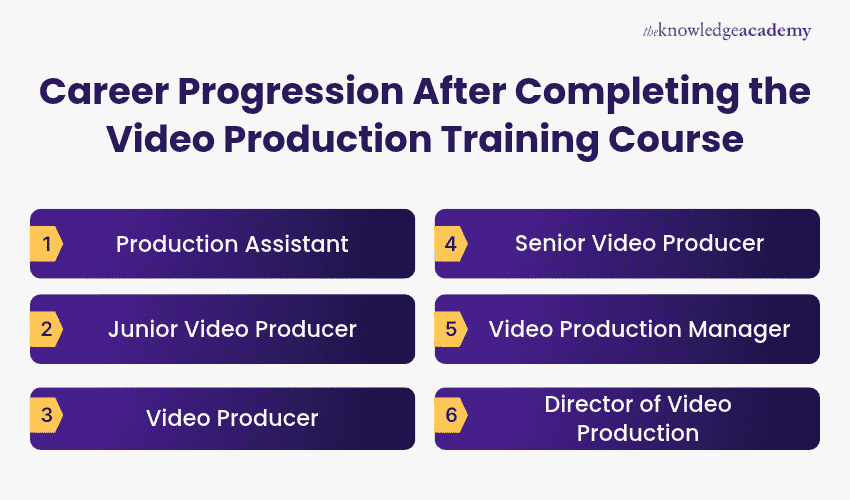
- Production Assistant: Support filming, equipment preparation, talent, and general production activities.
- Junior Video Producer: Assist with production planning and develop practical experience across video projects.
- Video Producer: Coordinate creative and practical elements of video production as experience develops.
- Senior Video Producer: Take greater responsibility for larger or more complex productions.
- Video Production Manager: Coordinate production activities, teams, schedules, and wider project requirements.
- Director of Video Production: Provide strategic and creative direction across video production activities.





 If you miss out, enquire to get yourself on the waiting list for the next day!


 If you wish to make any changes to your course, please


