


 Top Rated Course

We may not have the course you’re looking for. If you enquire or give us a call on 01344203999 and speak to our training experts, we may still be able to help with your training requirements.
Sales Manager Job Description: A Complete Guide
Charlotte Wilson 02 September 2026A Sales Manager Job Description includes leading sales teams, developing strategies, monitoring performance and supporting revenue goals.

Training Outcomes Within Your Budget!
We ensure quality, budget-alignment, and timely delivery by our expert instructors.
Table of Contents

Key Takeaways
1. Sales Managers lead sales teams, establish targets and develop strategies to achieve organisational sales goals.2. Their responsibilities include forecasting, performance monitoring, coaching, recruitment and customer relationship management.3. Leadership, communication, analytical thinking, negotiation and sales expertise are important skills for the role.4. Education and experience requirements vary depending on the organisation, industry and seniority of the position.5. A clear Sales Manager Job Description should define responsibilities, skills, experience and performance expectations.
What happens when a great salesperson becomes responsible for an entire team's results?
Imagine starting your Monday morning with a checklist like this:
Set monthly sales targets
Review team performance metrics
Coach underperforming sales representatives
Meet key clients and strengthen relationships
Plan strategies to exceed revenue goals
Recruit and train new talent
Suddenly, success is no longer measured by individual sales numbers alone. Instead, it's about enabling an entire team to perform at its best. That transition perfectly captures the essence of a Sales Manager Job Description. Sales Managers balance leadership, sales expertise and strategic thinking to drive team performance.
What is a Sales Manager?
A Sales Manager is a professional who is responsible for leading a company's sales team to achieve revenue goals. They create effective sales strategies, monitor performance, manage client relationships, and provide guidance to team members. By analysing market trends and sales data, they help optimise operations and ensure customer satisfaction while driving business growth through effective leadership.

Sales Manager Roles and Responsibilities
A Sales Manager's responsibilities extend beyond achieving sales targets. They plan how the team will reach its goals, develop team members and address problems affecting sales performance. The exact responsibilities can differ between organisations, but the following are commonly associated with the role:
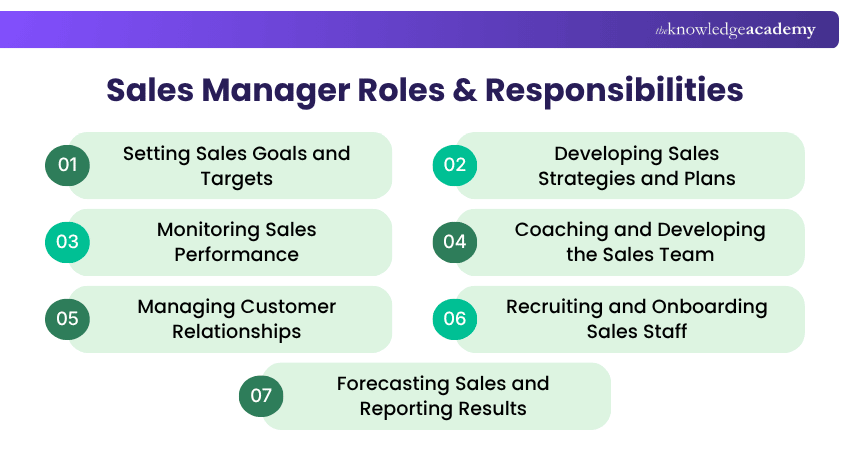
1) Setting Sales Goals and Targets
Sales Managers establish clear and achievable sales goals for their teams. They may consider previous performance, market conditions and organisational objectives when determining these targets. Clear goals provide salespeople with direction and give managers benchmarks for monitoring progress.
2) Developing Sales Strategies and Plans
Once goals have been established, Sales Managers develop plans for achieving them. These plans can involve identifying target markets, selecting sales approaches and allocating available resources. Managers should also review results and adjust their plans when performance or market conditions change.
3) Monitoring Sales Performance
Sales Managers track how individuals and teams are progressing towards their objectives. Monitoring performance helps them identify successful approaches, potential problems and areas where additional support may be required. They can also use sales information to review pipeline performance and improve future planning.
Pro Tip
Don't evaluate sales performance through final revenue alone. Look at the wider performance picture to understand where opportunities are progressing and where the team may need additional support.
4) Coaching and Developing the Sales Team
Continuous development helps sales teams strengthen their knowledge and capabilities. Sales Managers can detect skill gaps and provide training, workshops or one-to-one coaching. They also motivate employees, recognise achievements and create an environment that encourages stronger performance.
5) Managing Customer Relationships
Sales Managers may oversee important customer accounts or support sales representatives with client relationships. This can involve addressing customer concerns, maintaining relationships and identifying additional sales opportunities.
Build sales confidence and ensure sales success from anywhere with our Online Sales Training – Sign up now!
6) Recruiting and Onboarding Sales Staff
Building an effective sales team requires suitable people. Sales Managers may identify staffing needs, participate in interviews and help select candidates. They can also support onboarding to help new team members understand the organisation, sales processes and expectations.
7) Forecasting Sales and Reporting Results
Sales Managers review sales data and pipeline information to estimate future performance. Forecasts can help organisations make decisions about targets, resources and priorities. They may also report results to senior management and explain performance, challenges and expected outcomes.
Salesperson vs Sales Manager
Scenario: A major opportunity is at risk of being lost.Salesperson's focus: “How can I close this deal?”Sales Manager's focus: “Why is this deal struggling, what support does the salesperson need and is the same problem affecting other opportunities?”The difference lies in scope. Salespeople primarily manage their individual opportunities, while Sales Managers must consider individual deals alongside the performance of the wider team.
Key Skills Required for a Sales Manager
Successful Sales Managers need a combination of sales knowledge, leadership abilities and interpersonal and analytical skills. Here are the key skills required for a Sales Manager:
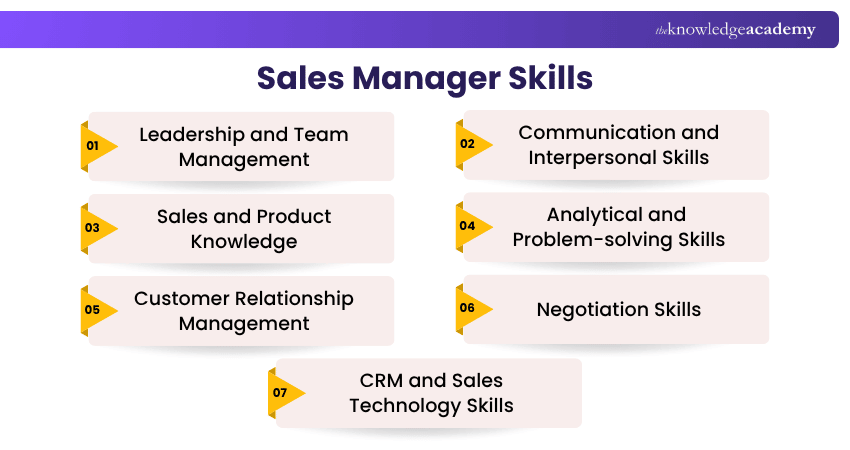
1) Leadership and Team Management
Sales Managers need leadership skills to guide, motivate and support their teams. They should establish expectations, provide direction and nurture an environment in which team members can perform effectively.
2) Communication and Interpersonal Skills
Clear communication helps Sales Managers explain targets, strategies and expectations. Active listening and constructive feedback are equally important when coaching employees. Interpersonal abilities also support customer relationships, negotiation and conflict resolution.
3) Sales and Product Knowledge
Sales Managers need a strong understanding of sales approaches and the products or services their organisation offers. This knowledge helps them guide salespeople, provide practical coaching and respond effectively to customer or team questions.
4) Analytical and Problem-solving Skills
Sales Managers regularly work with performance data. Analytical skills help them identify patterns, recognise areas for improvement and make informed decisions. Problem-solving abilities are equally useful when dealing with missed targets, customer issues or obstacles affecting team performance.
Pro Tip
When performance drops, investigate the cause before changing the target. The problem may lie in the sales process, team capabilities, available opportunities or another factor affecting results.
5) Customer Relationship Management
Understanding customer requirements helps Sales Managers guide their teams towards stronger customer relationships. A customer-focused approach can help the team address customer concerns and support longer-term business relationships.
6) Negotiation Skills
Sales Managers may negotiate with customers, support salespeople during important deals and work with stakeholders across the organisation. Strong negotiation involves understanding priorities, communicating value and working towards commercially appropriate outcomes.
7) CRM and Sales Technology Skills
Sales Managers may use Customer Relationship Management (CRM) systems and other sales tools to monitor pipelines, review customer activity and track team performance. Being comfortable with these technologies can support more organised and data-informed sales management.
Sales Manager Job Description Template
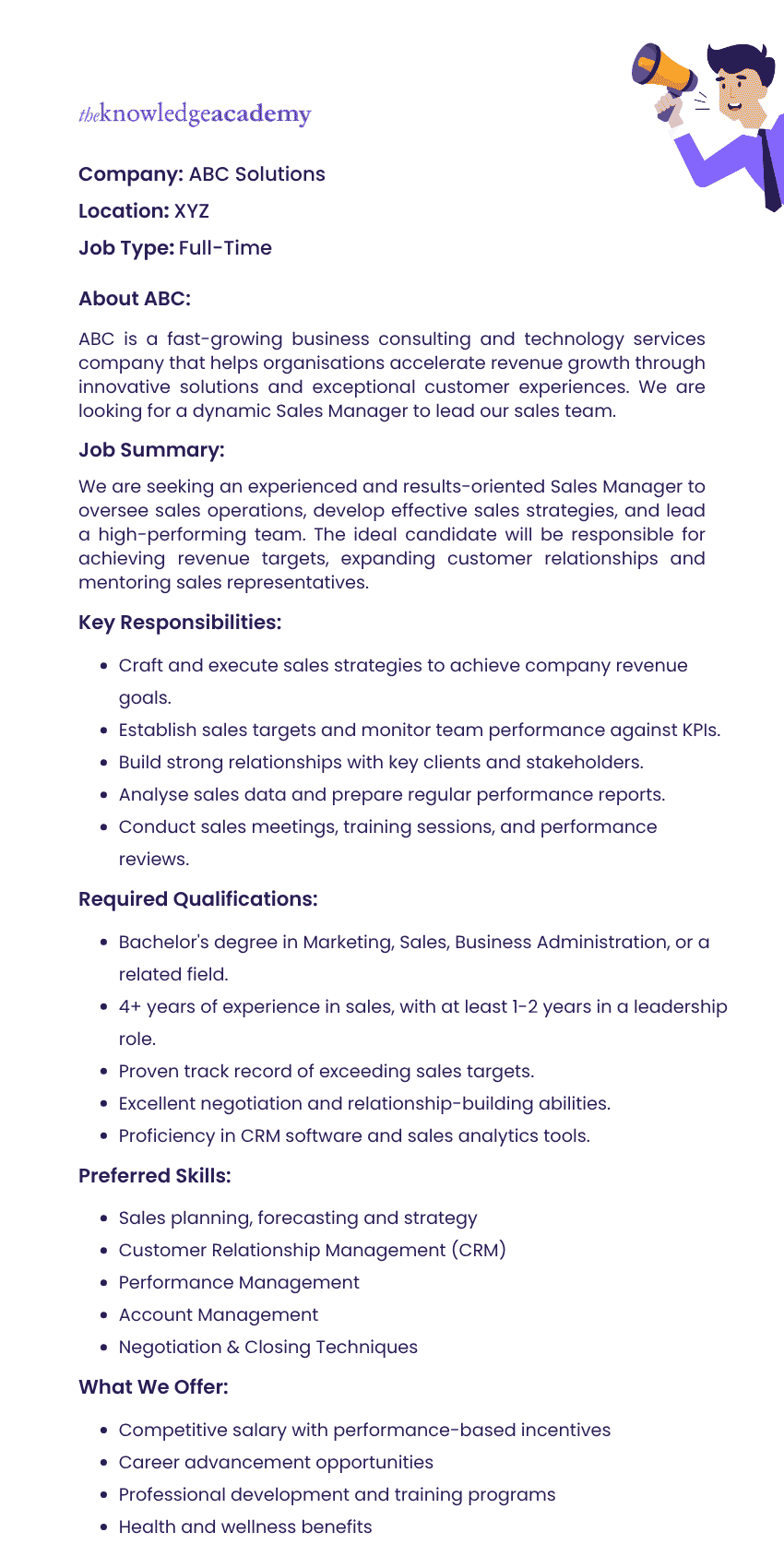
A well-written Sales Manager Job Description should clearly communicate what the employee will be responsible for, what skills are expected and what experience the organisation requires. Before writing one, employers can use this quick checklist:
Hiring Manager Checklist
Define the purpose of the role
Specify who the Sales Manager reports to
Identify the main sales responsibilities
Define team-management responsibilities
Establish expected skills
Determine necessary sales and leadership experience
Separate essential and desirable requirements
Explain how success in the position will be evaluated
Here’s a sample Sales Manager Job Description:
Conclusion
A Sales Manager combines sales expertise with leadership, planning and performance management. From setting targets and developing strategies to coaching employees and managing customer relationships, the role impacts both team performance and wider sales objectives. A clear Sales Manager Job Description should therefore explain responsibilities, skills and relevant experience while setting realistic expectations for candidates.
Close deals and seal lasting customer relationships the right way with our comprehensive Sales Training – Sign up now!
Frequently Asked Questions
Will Sales Jobs be Replaced by AI?

AI will not completely replace sales. Routine, transactional and entry-level tasks, such as basic cold-email prospecting, high-volume order processing and generic lead qualification, can increasingly be automated. However, complex relationship-driven sales remain heavily reliant on humans.
What Kind of Person Thrives in Sales?
People who succeed in sales are naturally curious, resilient, and emotionally intelligent. While extroverts often thrive, successful professionals come from diverse personality types. This includes introverts who excel at active listening and deep problem-solving.
How is a Sales Manager's Performance Usually Measured?
A Sales Manager's performance may be assessed through factors such as team sales results, target achievement, forecast accuracy, pipeline health and team development. The exact Key Performance Indicators (KPIs) depend on the sales model and responsibilities of the role.
What Questions Should You Ask Before Accepting a Sales Manager Role?
Useful questions include:
a) How will success be measured?
b) What challenges does the team currently face?
c) Who does the role report to?
d) What does the organisation expect during the first few months?
Sales professionals also recommend understanding team culture and career progression before accepting a sales position.

Charlotte Wilson


Soft Skills and Business Training Manager
Charlotte Wilson is an expert in soft skills development, with over 14 years of experience helping individuals and teams improve communication, productivity and emotional intelligence in the workplace. Her training content is focused on enhancing interpersonal effectiveness and fostering positive, collaborative environments across all levels of an organisation.
View Detail

 If you wish to make any changes to your course, please


