


We may not have the course you’re looking for. If you enquire or give us a call on 01344203999 and speak to our training experts, we may still be able to help with your training requirements.
Project Manager Roles and Responsibilities: A Complete Guide
ByDavid EvansLast updated on: 21 October 2026
Project Managers play an essential role in planning, coordinating and delivering projects successfully. Discover how their roles and responsibilities contribute to successful project execution, effective team coordination and the achievement of business goals.

The Role at a Glance
1. Project Managers coordinate project activities to achieve agreed objectives within defined constraints.2. Their responsibilities include managing scope, schedules, budgets, resources and stakeholder expectations.3. Identifying risks, resolving issues and monitoring progress help keep projects under control.4. Communication, leadership, adaptability and problem-solving are essential project management skills.
A project is a complex chaos of creative energies, strict deadlines, sky-high ambitions and ever-changing needs. So, how does one keep it all from spiralling out of control? This is where the Project Manager takes the spotlight as the master planner, communicator, and problem-solver.
This blog explores the essential Project Manager roles and responsibilities that keep projects moving and teams thriving. Read on to discover how Project Managers turn ideas into achievable outcomes while balancing deadlines, budgets, resources and stakeholder expectations.
Key Roles and Responsibilities of a Project Manager
A Project Manager's role is to lead and coordinate the work required to achieve project objectives. Their responsibilities are the specific activities they undertake, such as planning schedules, managing resources, engaging stakeholders and monitoring performance.
These activities may differ depending on the project's size, complexity, delivery approach and organisational requirements. Let's explore these responsibilities in detail:
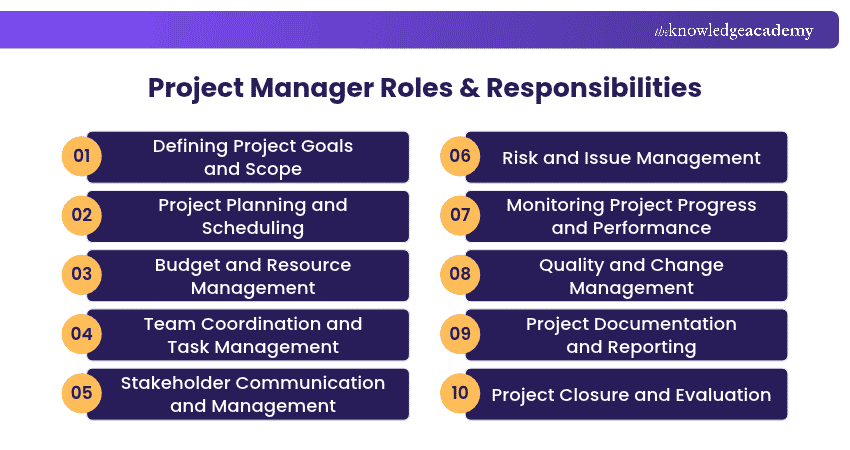
1) Defining Project Goals and Scope
At the beginning of a project, the Project Manager helps clarify why the project is being undertaken and what it is expected to achieve. They work with relevant stakeholders to understand business needs, define objectives and establish the project's boundaries.
Key activities may include:
a) Identifying project goals and expected outcomes
b) Understanding stakeholder requirements
c) Defining deliverables and scope boundaries
d) Identifying major assumptions and constraints
e) Clarifying success criteria
f) Supporting the preparation of project initiation documents
g) Obtaining approval from authorised stakeholders
For example, if an organisation plans to develop a new mobile application, the Project Manager helps establish its intended features, target users, delivery expectations and project constraints.

2) Project Planning and Scheduling
Project planning involves determining how work will be organised, coordinated and monitored to achieve the project's objectives. The Project Manager works with relevant team members and stakeholders to develop plans appropriate to the project's requirements and delivery approach.
Their planning responsibilities may include:
a) Identifying major activities and deliverables
b) Developing project schedules and milestones
c) Estimating activity durations and resource requirements
d) Identifying dependencies between tasks
e) Planning communication and reporting activities
f) Defining suitable approaches to managing risks and quality
Project Managers may use scheduling tools, task management systems and other planning methods to organise this information.
3) Budget and Resource Management
Managing project resources involves ensuring that suitable people, equipment, materials and funds are available when required. The Project Manager helps plan resource needs, monitor expenditure and address constraints that could affect delivery.
Their responsibilities may include:
a) Estimating project costs and resource requirements
b) Supporting budget development and approval
c) Allocating available resources to project activities
d) Monitoring actual expenditure against approved budgets
e) Identifying resource shortages or scheduling conflicts
f) Reporting significant cost or resource variances
For example, if a project requires additional specialist support, the Project Manager may assess the impact on the budget and schedule before seeking the necessary approval.
4) Team Coordination and Task Management
Project Managers coordinate the activities of individuals and teams responsible for delivering project work. They clarify responsibilities, support collaboration and address obstacles that could prevent team members from completing assigned activities.
Their responsibilities include:
a) Clarifying team roles and expectations
b) Coordinating task assignments and priorities
c) Supporting communication between team members
d) Resolving or escalating operational obstacles
e) Encouraging collaboration and accountability
f) Monitoring task progress and dependencies
For example, during a website development project, the Project Manager coordinates Designers, Developers, Testers and Content Specialists to ensure their activities remain aligned.
5) Stakeholder Communication and Management
Stakeholders may include customers, sponsors, employees, suppliers and other individuals or groups affected by a project. Project Managers help identify relevant stakeholders, understand their expectations and establish suitable communication arrangements.
Important activities include:
a) Identifying stakeholders and their information needs
b) Communicating project objectives and progress
c) Organising meetings and status reviews
d) Managing expectations regarding scope, cost and timelines
e) Escalating issues requiring stakeholder decisions
f) Recording and communicating relevant decisions
Trainer's Insight
Stakeholder communication depends on the audience. Senior stakeholders may need concise updates about progress, risks and decisions, while project teams often require detailed information about tasks and dependencies.
6) Risk and Issue Management
Projects involve uncertainties that may affect objectives, schedules, costs or deliverables. Project Managers help identify potential risks, assess their significance and coordinate appropriate responses. They also manage issues that have already occurred and require action.
Key responsibilities include:
a) Identifying and documenting project risks
b) Assessing potential impacts and likelihoods
c) Planning suitable risk responses
d) Maintaining risk registers and issue logs where appropriate
e) Assigning responsibility for response actions
f) Monitoring risks and escalating significant issues
It is important to distinguish between a risk and an issue:
a) Risk: An uncertain event or condition that could affect project objectives if it occurs.b) Issue: A current problem or situation requiring attention or resolution.
7) Monitoring Project Progress and Performance
Monitoring and controlling activities help Project Managers assess whether work is progressing towards agreed objectives. These activities occur throughout the project rather than only after execution begins.
Responsibilities may include:
a) Tracking completed activities and milestones
b) Comparing actual performance with approved plans
c) Monitoring project costs and resource utilisation
d) Reviewing deliverable quality
e) Identifying deviations and emerging problems
f) Recommending or implementing approved corrective actions
Project Managers use appropriate performance indicators and reporting methods to support these activities. For example, a project may appear busy because numerous tasks are being completed. However, if critical milestones are delayed, overall progress may still be below expectations.
Checklist: Key KPIs to Monitor in Project Management
□ Schedule Variance (SV): Measures whether a project is ahead of or behind its planned schedule in terms of earned value.□ Cost Variance (CV): Shows whether the value of completed work is above or below its actual cost.□ Schedule Performance Index (SPI): Measures schedule efficiency by comparing earned value with planned value.□ Cost Performance Index (CPI): Evaluates cost efficiency by comparing earned value with actual cost.□ Budget Utilisation: Tracks how much of the approved project budget has been spent.□ Resource Utilisation Rate: Measures how much of the available resource capacity is being used for assigned work.□ Project Quality Metrics: Tracks defects, rework, acceptance rates and compliance with quality requirements.□ Risk Exposure: Assesses potential threats and opportunities by considering their likelihood, impact and significance to project objectives.□ Stakeholder Satisfaction: Gauges how satisfied the stakeholders are with project communication, deliverables and outcomes.
The choice of project KPIs depends on the delivery approach, available data and reporting requirements.
8) Quality and Change Management
Project Managers help ensure that deliverables meet agreed requirements and that proposed changes are assessed appropriately. Quality management involves planning and coordinating activities needed to achieve the required level of quality. Change management, in the context of project delivery, involves evaluating proposed changes and managing their effects on project objectives.
Responsibilities may include:
a) Clarifying quality requirements and acceptance criteria
b) Coordinating reviews, inspections or testing activities
c) Monitoring quality-related issues and corrective actions
d) Documenting proposed project changes
e) Assessing the impact of changes on scope, schedule, cost and risk
f) Obtaining appropriate approvals before implementing controlled changes
For example, if a customer requests additional functionality during software development, the Project Manager should assess its potential impact before the team commits to the new work.
Turn the fundamentals of project management into your trusted formula for success. Register for the Introduction to Project Management Course now!
9) Project Documentation and Reporting
Project documentation supports communication, accountability and informed decision-making. Project Managers help ensure that relevant project information is recorded, maintained and accessible to authorised individuals.
Common documents may include:
a) Project charters or initiation documents
b) Project plans and schedules
c) Scope statements and requirements
d) Risk registers and issue logs
e) Budget and resource reports
f) Change records and decisions
g) Project status updates
h) Acceptance and handover records
Documentation requirements depend on the project's size, complexity and governance arrangements. For example, a large regulated project may require detailed records and formal approvals, while a smaller internal project may use simpler documentation.
10) Project Closure and Evaluation
Project closure involves formally completing the activities needed to bring the project to an appropriate conclusion. The Project Manager coordinates closure activities according to organisational procedures and project requirements.
Their responsibilities may include:
a) Confirming that agreed deliverables have been completed
b) Obtaining formal acceptance where required
c) Completing necessary operational handovers
d) Closing outstanding contracts and administrative activities
e) Releasing or reassigning project resources
f) Organising final documentation
g) Recording lessons learned and improvement opportunities
For example, after completing an IT implementation project, the Project Manager may coordinate the handover to the support team, confirm stakeholder acceptance and document lessons from delivery.
Formal closure helps organisations establish that the project has ended appropriately and provides useful information for future initiatives.
So, understanding the Project Manager roles and responsibilities helps professionals manage challenges, maintain team alignment and support effective project outcomes. By developing strong leadership, communication and organisational skills, Project Managers can contribute to successful delivery across different industries.
Enhance your leadership capabilities and manage complex projects with PMP® Training – Join now!

David Evans creates accessible resources that help professionals understand different approaches to planning and delivering projects. His content addresses changing requirements, collaborative working and the practical demands of contemporary project environments.
View Detail

 If you wish to make any changes to your course, please


