


 Top Rated Course

We may not have the course you’re looking for. If you enquire or give us a call on 01344203999 and speak to our training experts, we may still be able to help with your training requirements.
Importance of Setting Career Goals and How to Achieve Them
Scarlett Adams 04 September 2026Clear career goals can give your professional journey purpose and focus. Find out why they matter and how to turn them into achievable actions.

Training Outcomes Within Your Budget!
We ensure quality, budget-alignment, and timely delivery by our expert instructors.
Table of Contents

Key Takeaways
a) Career goals provide direction by defining what you want to achieve professionally.b) Setting realistic goals makes it easier to track progress and identify the actions needed to move forward.c) Career goals can include short-term objectives and long-term ambitions depending on your priorities.d) SMART goals turn broad career ambitions into specific, measurable and time-bound objectives.e) Regularly reviewing your career goals helps keep them relevant as your priorities and circumstances change.
In the next ___ years, I want to:
1) Move into __________________
2) Develop __________________
3) Achieve __________________
Were those blanks easy to fill? If not, you may have ambitions but not yet a clearly defined direction. Career goals help turn broad ideas about your future into specific objectives that you can plan, track, and work towards.
But a goal written down is not automatically a useful goal. Some can motivate you, while others may be too vague, unrealistic, or disconnected from what you actually want. So, what is the importance of setting career goals? Let’s find out.
What are Career Goals?
Career goals are professional objectives that define what you want to achieve in your career. They may involve developing new skills, earning qualifications, gaining experience, moving into a new role, or working towards a broader professional ambition.
These goals can be short-term or long-term, with shorter goals acting as steps towards larger ambitions. Setting clear career goals turns a general desire for progress into a defined direction, helping you understand what you want to achieve and what steps to take next.

Why is Setting Career Goals Important?
Goal setting can provide structure to professional development by turning general ambitions into objectives that can be pursued and reviewed. Let’s look at the importance of setting career goals below:
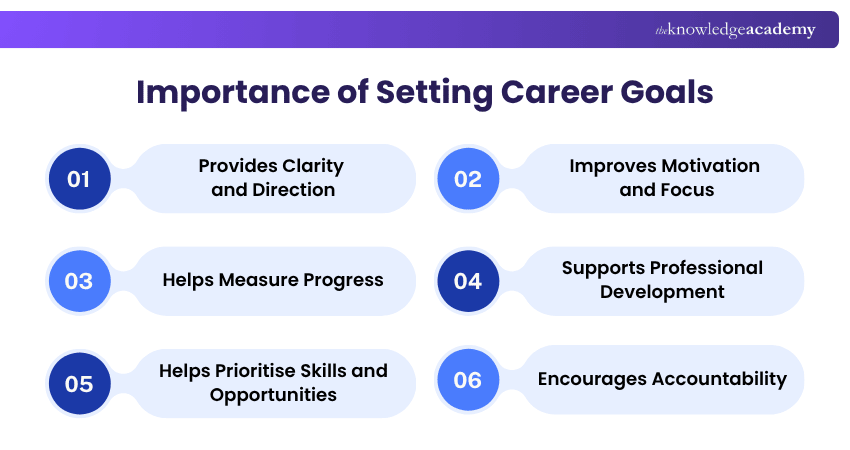
1) Provides Clarity and Direction
Setting career goals gives you a clear sense of where you want to go professionally. This direction can help you make more informed decisions about the skills, training and experiences needed to progress towards your ambitions.
2) Improves Motivation and Focus
Career goals provide a defined outcome to work towards, helping you focus your time and effort on relevant activities. Clear targets can also encourage persistence and help maintain motivation towards professional objectives.
3) Helps Measure Progress
Breaking career goals into manageable milestones makes progress easier to track. Also, regular reviews can show what you have achieved, what remains and whether you need to adjust your approach.
4) Supports Professional Development
Clear career goals help you identify the knowledge, skills and experience needed for your desired career direction. This allows you to choose training and development opportunities that directly support your professional growth.
Trainer's Insight
Don't begin by asking, “Which course should I take?” Begin with, “What do I want to be able to do next?” Once the destination is clear, it becomes easier to identify the skills, experience or training that can help you get there.
5) Helps Prioritise Skills and Opportunities
Career goals provide a useful reference point when evaluating projects, qualifications and development opportunities. They can help you prioritise options that build relevant skills or experience while remaining flexible as your career ambitions evolve.
6) Encourages Accountability
Turning an ambition into a defined goal with milestones and actions makes it easier to hold yourself accountable. Regular progress reviews, along with feedback from a manager or mentor where appropriate, can help you stay on track.
Small changes can shape stronger possibilities! Explore the Personal Development Courses and start investing in yourself now!
How to Set and Achieve Career Goals?
Learning to set career goals is not a one-and-done process. Effective goals need clarity, an action plan and regular review. Here are six practical steps for turning professional ambitions into goals you can work towards:
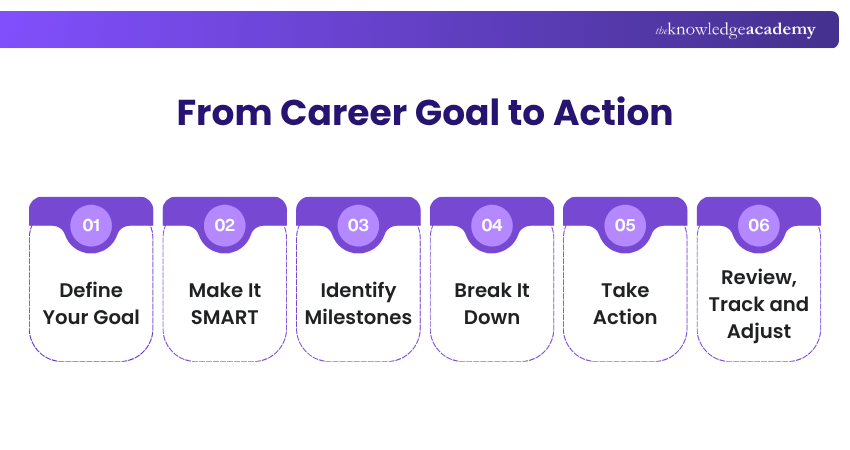
1) Define What You Want to Achieve
The process begins with self-reflection and introspection. You need to understand where you stand in your career and where you want to go. By defining your objectives, you gain a greater sense of purpose and direction. Ask yourself questions such as:
a) What do I want to achieve in my career?
b) Which aspects of my current work do I want to develop?
c) What skills or experiences would I like to gain?
d) What type of work or responsibility would I like to take on next?
e) What might I want my career to look like several years from now?
2) Turn Your Objectives into SMART Goals
Once you've identified your objectives, it's time to transform them into actionable goals. One widely used approach is the SMART framework. SMART stands for:
a) Specific: Clearly define what you want to accomplish.
b) Measurable: Decide how you will track progress or recognise completion.
c) Achievable: Make sure the goal is realistic given your circumstances and resources.
d) Relevant: Connect the goal to your wider career priorities.
e) Time-bound: Establish a timeframe or deadline.
SMART Career Goal: Before vs After
Before:“I want to improve my leadership skills.”After:“Within the next 12 months, I will complete one leadership training programme and lead at least one cross-functional project to develop practical team leadership experience.”
3) Break Larger Goals into Actionable Steps
Large, ambitious career goals can feel overwhelming. Break them down into smaller, actionable steps to make them more manageable and less intimidating. This approach allows you to create a structured plan that gradually moves you towards your larger objective. Your steps might include:
Step 1: Identify the skills expected for the target role
Step 2: Identify gaps in your current experience
Step 3: Complete relevant learning or training
Step 4: Seek opportunities to lead a task or project
Step 5: Request feedback on your leadership performance
Step 6: Review your readiness for suitable opportunities
Pro Tip
If a career goal feels too large to start, don't immediately change the goal. Change the size of the next step. Instead of focusing on “become a manager”, for example, your next step might be to identify the skills expected in the role or ask your manager for development feedback.
4) Identify the Skills and Resources You Need
Once your goal is clear, determine what you need to achieve it. A self-assessment can help you compare your current capabilities with those required for your intended career direction. Depending on the objective, this might include:
a) Technical or role-specific skills
b) Communication or leadership capabilities
c) Professional qualifications
d) Practical work experience
e) Networking opportunities
f) Learning resources
g) Time or financial resources
5) Set Milestones and Track Your Progress
Milestones tell you whether you are moving towards your goal. Suppose your goal is to earn a professional qualification within nine months. Instead of waiting until month nine to judge your progress, you could create milestones for completing learning modules, practising relevant skills and preparing for the assessment. Ask yourself questions such as:
a) Am I where I expected to be?
b) What have I completed?
c) What is delaying progress?
d) What should I do next?
6) Review and Adjust Your Goals Regularly
Career goals should evolve as your experience, interests and professional circumstances change. Regular reviews help you keep your goals relevant and realistic, while adjusting them may simply reflect new priorities in your career direction. During each review, consider:
a) Progress: What have you achieved so far?
b) Relevance: Does the goal still support your career direction?
c) Priorities: Have your interests or circumstances changed?
d) Challenges: Is anything preventing you from progressing?
e) Next Steps: Should you continue, modify or replace the goal?
Conclusion
Understanding the importance of setting career goals can help you bring greater direction, focus and structure to your professional development. By turning ambitions into clear actions, tracking progress and reviewing your goals regularly, you can adapt to changing priorities and make purposeful career decisions.
Give your ambition a destination! Learn to set meaningful goals with the Motivation and Goal Setting Training – Sign up now!
Frequently Asked Questions
What Makes a Good Career Goal?

A useful career goal should clearly describe what you want to achieve and be relevant to your wider professional ambitions. Using the SMART framework can help make a goal Specific, Measurable, Achievable, Relevant and Time-bound.
How Often Should You Review Your Career Goals?
There is no universal review schedule. Review them often enough to monitor meaningful progress and whenever circumstances change significantly, such as starting a new role, completing a qualification or changing career priorities.
What is the Difference Between Short-term and Long-term Career Goals?
Short-term career goals focus on objectives that can generally be achieved sooner, such as developing a skill or completing training. In contrast, long-term goals relate to broader career ambitions, such as moving into leadership or changing professional direction. Short-term goals can act as milestones towards longer-term objectives.

 If you wish to make any changes to your course, please


