


 Top Rated Course

We may not have the course you’re looking for. If you enquire or give us a call on 01344203999 and speak to our training experts, we may still be able to help with your training requirements.
Entry Level Project Management Jobs: A Complete Career Guide
John Davies 03 September 2026Learn about the top entry-level project management jobs and understand what each role involves, what skills you need, and how you can progress in the field.

Training Outcomes Within Your Budget!
We ensure quality, budget-alignment, and timely delivery by our expert instructors.
Table of Contents

Key Takeaways
Entry level project management roles provide practical experience in planning, coordination, reporting, and project support.Project Coordinator, Project Administrator, and Assistant Project Manager are common early-career roles.Communication, organisation, problem-solving, adaptability, and time management are valuable skills for beginners.Relevant qualifications and project management certifications can help candidates strengthen their knowledge and improve employability.Entry-level roles can provide a pathway to senior positions as professionals gain experience and develop their skills.
Imagine typing "Project Manager" into a job search and finding every vacancy asks for experience. Sound familiar?
The solution may be to widen your search. Entry level project management jobs appear under titles such as Project Coordinator, Project Administrator, Junior Project Manager, and PMO Administrator, offering several routes into the profession. So, let's take a closer look at the opportunities that can help you take your first step into project management.
What are Entry Level Project Management Jobs?
Entry level project management jobs are early-career positions that support the planning, coordination, monitoring, and delivery of projects. Professionals in these positions usually work alongside Project Managers, senior project professionals, or Project Management Office (PMO) teams.
These jobs allow professionals to learn how projects operate while developing practical experience in areas such as scheduling, documentation, communication, reporting, and task coordination. Responsibilities can vary depending on the employer, sector, and size of the project.

Common Entry Level Project Management Jobs
There are several roles that can provide a starting point for a project management career. The exact responsibilities and job titles differ between organisations, but the following positions are commonly associated with entry-level project work:
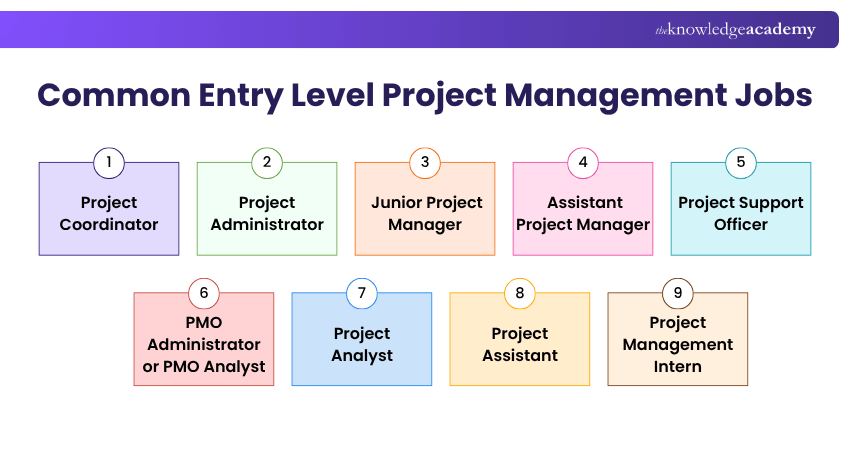
1) Project Coordinator
A Project Coordinator oversees the administrative and coordination activities that support successful project delivery. They may arrange meetings, update schedules, maintain project records, track actions, and communicate with members of the project team.
The position provides valuable exposure to how projects are planned, monitored, and delivered. By maintaining project workflows and keeping teams informed and aligned, Project Coordinators contribute to the successful completion of projects.
2) Project Administrator
Project Administrators provide administrative support throughout the project lifecycle. Their responsibilities can include maintaining documentation, organising meetings, updating project files, recording actions, and assisting with reports.
This role can be suitable for professionals with strong organisational and communication skills who want to develop practical project management experience.
3) Junior Project Manager
A Junior Project Manager typically works under the guidance of a more experienced Project Manager. Depending on the organisation, they may support project planning, track progress, communicate with stakeholders, maintain project documentation, or manage smaller workstreams.
The position can provide a direct route towards taking responsibility for larger and more complex projects.
4) Assistant Project Manager
Assistant Project Managers support Project Managers with planning and delivery activities. They may help coordinate tasks, update schedules, monitor progress, maintain documentation, and communicate with stakeholders.
As they gain experience, Assistant Project Managers may take responsibility for particular areas or smaller projects.
5) Project Support Officer
Project Support Officers provide operational and administrative assistance to project teams. Their work can include preparing reports, maintaining records, tracking risks and issues, arranging meetings, and monitoring project actions.
The role is particularly useful for developing an understanding of project governance and reporting processes.
Worth Remembering:
Project experience does not always come from a formal project management role. Helping organise an event, coordinate a team activity, introduce a new process, or deliver work to a deadline can involve elements of project management.
6) PMO Administrator or PMO Analyst
PMO professionals support a project management office, which helps organisations maintain consistent approaches to managing projects. Entry-level responsibilities can include reporting, maintaining project information, supporting governance processes, tracking performance, and managing documentation.
The position can be particularly useful for professionals who want to build experience in project controls, reporting, governance, and performance tracking.
Transform your career trajectory with our Project Management Office Fundamentals Certification Course - Join now!
7) Project Analyst
A Project Analyst supports project teams by collecting, organising, and analysing project information. Depending on the organisation, they may contribute to reporting, progress tracking, performance analysis, budgeting, or project controls.
The role can be particularly suitable for professionals who combine analytical ability with strong organisational skills.
8) Project Assistant
A Project Assistant provides general administrative support to Project Managers and project teams. Typical duties may include preparing documents, taking meeting notes, maintaining project files, handling correspondence, and assisting with reports and presentations.
The role can be a useful starting point for gaining first-hand experience of a project environment before progressing into positions with greater coordination or management responsibilities.
9) Project Management Intern
A Project Management Intern works alongside experienced project professionals to gain practical exposure to project management activities. Typical responsibilities may include assisting with documentation, scheduling meetings, updating project trackers, conducting basic research, and supporting progress reporting.
Internships are particularly suitable for students, recent graduates, or individuals looking to gain initial experience in project management.
Skills Required for Entry Level Project Management Jobs
Employers may look for a combination of technical, organisational, and interpersonal abilities when recruiting for entry-level positions. While requirements vary by job, the following skills are valuable:
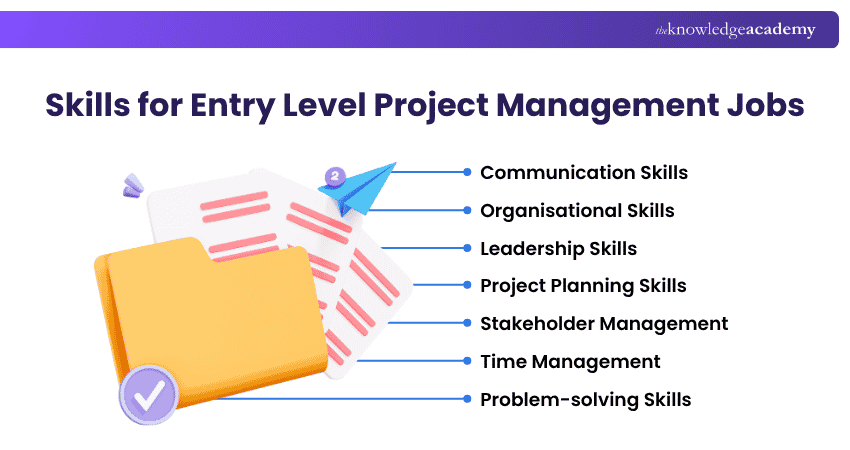
1) Communication Skills
Project teams depend on clear communication. Entry-level professionals may prepare meeting notes, provide updates, maintain documentation, communicate with team members, and support stakeholder correspondence.
2) Organisational Skills
Projects involve multiple tasks, deadlines, documents, and stakeholders. Strong organisational skills help professionals keep information structured and ensure that important actions are followed up.
3) Leadership Skills
Entry-level professionals may not have formal management responsibilities, but leadership skills are still valuable. Taking initiative, accepting responsibility, supporting team members, communicating confidently, and helping keep tasks on track can demonstrate leadership potential.
4) Project Planning Skills
Entry-level professionals may support project planning by organising tasks, updating schedules, tracking milestones, monitoring deadlines, and helping teams stay aligned with project timelines. Strong planning skills can help ensure work remains structured and progresses as expected.
5) Stakeholder Management
Entry-level professionals may support stakeholder management by sharing updates, gathering information, recording feedback, understanding stakeholder needs, and helping keep relevant people informed. These skills can help maintain positive working relationships and keep stakeholders aligned with project activities.
6) Time Management
Entry-level professionals may need to manage several activities simultaneously. Prioritising tasks, meeting deadlines, and identifying potential delays can help maintain project progress.
7) Problem-solving Skills
Unexpected challenges can arise during projects. Professionals should be able to understand problems, gather relevant information, consider possible solutions, and communicate issues to the appropriate team members.
Trainer's Insight:
Instead of simply writing "communication", "leadership", or "time management" on your CV, show where you used those skills. A university project, internship, volunteering activity, event, or workplace task can provide evidence of how you planned work, coordinated people, solved problems, or met a deadline.
8) Teamwork
Projects bring together people with different roles and areas of expertise. The ability to collaborate, share information, support colleagues, and contribute constructively to discussions is therefore valuable.
9) Attention to Detail
Project documentation, schedules, meeting records, reports, and action logs need to remain accurate. Attention to detail helps professionals identify inconsistencies and maintain reliable project information.
10) Adaptability
Project priorities, requirements, technologies, and timelines can change. Entry-level professionals should be willing to learn new processes, respond to changing requirements, and adapt to different ways of working.
Gain advanced skills, master complex projects, and propel your career to new heights only with our Project Management Certification Training - Register now!
Qualifications for Entry Level Project Management Jobs
Securing an Entry-level project management job requires a specific set of skills, qualifications, and personal attributes. Employers seek candidates who not only possess foundational knowledge but also demonstrate the potential to excel in a dynamic and challenging work environment. Here's an in-depth look at the job requirements:
1) Educational Background
Educational requirements vary by employer and industry. Some entry-level project management positions may require or prefer a degree, particularly graduate or specialist roles in in business administration, management, engineering, or a related field. However, some employers place greater emphasis on relevant skills, experience, training, or certifications.
2) Relevant Certifications
While not always mandatory, relevant certifications can strengthen your profile and demonstrate foundational project management knowledge. These certifications validate your understanding of essential project management concepts, making you a more attractive candidate to potential employers.
Learn industry-standard project management practices with CAPM® Certification Training – Join now!
3) Internship Experience
Internships or relevant work experience, even if unpaid, are invaluable. Practical exposure to project environments equips you with hands-on skills, enhances your understanding of real-world challenges, and demonstrates your efforts to potential employers. Internships also offer networking opportunities, allowing you to connect with professionals in the field.
4) Technical Proficiency
Entry level project management professionals should be familiar with project management software tools such as Microsoft Project, Asana, Jira, or Trello. Proficiency in these tools enables effective task management, resource allocation, and collaboration within project teams. Familiarity with office productivity software like Microsoft Office Suite (Word, Excel, PowerPoint) is often an essential requirement.
Industry Insight:
Project management is not limited to technology companies. PMI identifies construction, manufacturing, IT services, and healthcare among sectors facing growing demand for project professionals, with projected increases reaching as high as 66% in some areas.
How to Choose the Right Entry Level Project Management Role?
A suitable entry-level role can depend on your strengths, interests, and the type of project management experience you want to develop. Use this quick comparison as a starting point:
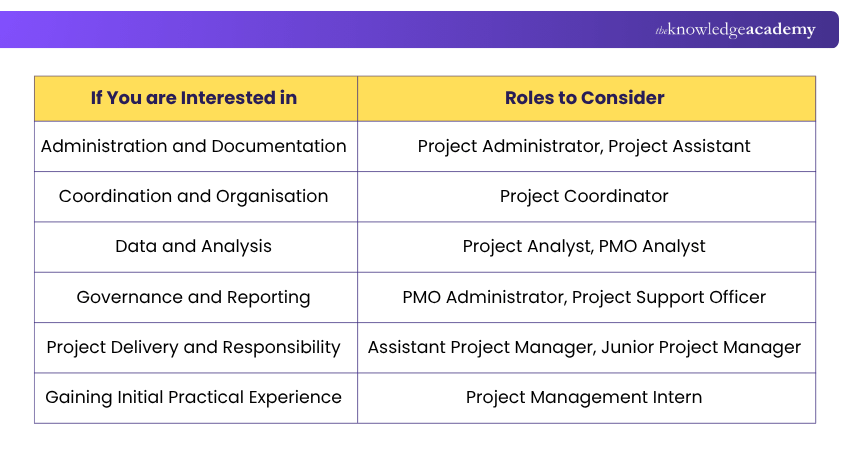
Tips for Landing an Entry Level Project Management Job
Here are some tips that can help you land your first job as an entry level project management professional:
a) Craft an Impressive Resume: Tailor your resume to highlight relevant skills, certifications, internships, and educational qualifications. Also, focus on your project management coursework, achievements, and any appropriate extracurricular activities.
b) Write a Compelling Cover Letter: Your cover letter should demonstrate your passion for project management. Discuss specific projects or coursework that showcase your skills and enthusiasm for the field. Moreover, address the employer's needs and explain how you can fulfil them.
c) Network Effectively: Attend industry events, job fairs, and networking sessions. Additionally, connect with professionals on LinkedIn and join project management groups. Personal connections often open doors to opportunities that might not be advertised publicly.
d) Internships and Volunteer Work: Gain practical experience through internships or volunteer opportunities. Even if unpaid, these experiences add value to your resume, providing real-world insights and enhancing your skill set.
e) Develop a Robust Online Presence: Create a professional LinkedIn profile that mirrors your resume. Moreover, share articles, projects, or insights related to project management to showcase your knowledge and enthusiasm. A robust online presence can catch the eye of potential employers.
f) Prepare for Interviews: Practice common project management interview questions. Be ready to discuss your problem-solving abilities, leadership experiences, and how you handle tight deadlines. Also, demonstrate your adaptability and willingness to learn new skills.
g) Be Proactive: Research organisations you are interested in and follow their careers pages, graduate programmes, networking opportunities, and recruitment channels for suitable openings. Also, express your interest in contributing to their projects and inquire about potential opportunities. Initiatives often impress employers.
h) Continued Education: Consider pursuing additional project management certifications or short courses related to project management. Continuous learning not only enhances your skills but also demonstrates your commitment to the field.
Conclusion
Entry level project management jobs offer a promising pathway to a fulfilling and rewarding career. By honing your skills, understanding the job market, and leveraging opportunities for growth, you can pave the way to becoming a successful Project Manager. With the right preparation and approach, you can position yourself strongly for entry-level project management opportunities.
Strengthen your ability to support project success with the Project Management for Non-project Managers Course - Join today!
Frequently Asked Questions
Which Industries Hire Entry-level Project Management Professionals?

Entry-level project management professionals can find opportunities across industries such as IT, construction, healthcare, finance, engineering, consulting, government, and marketing. Any organisation that regularly manages projects require professionals to support planning, coordination, reporting, and communication activities.
What Mistakes Should You Avoid When Applying for Your First Project Management Role?
Common mistakes include submitting a generic CV, overlooking transferable skills, ignoring job requirements, and applying only for Project Manager titles. Avoid exaggerating your experience, and instead highlight relevant projects, teamwork, organisation, communication, and examples that demonstrate your potential.
Is Project Management Difficult to Get into as a Beginner?
No, you can get into project management as a beginner by building relevant skills, gaining experience through internships, volunteering, or smaller projects, and exploring entry-level opportunities. Relevant training or certifications can also strengthen your knowledge and demonstrate your interest to potential employers.

John Davies


Cyber Security Governance & Assurance Specialist
John Davies is a cybersecurity expert specialising in governance, risk management, and compliance. With over 15 years in the field, he has led enterprise-wide security programmes across finance, healthcare and public sector organisations. His content provides practical guidance on building secure environments, managing risk and aligning with regulatory frameworks.


 If you wish to make any changes to your course, please


