




We may not have the course you’re looking for. If you enquire or give us a call on +44 1344 203 999 and speak to our training experts, we may still be able to help with your training requirements.
What is Social Networking and Why is it Important?
ByAishwarya UnniLast updated on: 03 October 2026
Social networking connects people, shares information, and builds communities online. This blog explores what is social networking, its importance, types, key advantages, and disadvantages such as privacy issues. It also highlights the need for responsible use to maximise benefits and minimise risks.
Quick Snapshot
1. Social networking allows users to create profiles and interact through posts, messages, groups, and other online features.2. Different networks can serve social, professional, educational, interest-based, and commercial purposes.3. Businesses can use social networks to communicate with audiences, share information, and promote products or services.4. Privacy concerns, misinformation, excessive use, and negative online behaviour are key challenges associated with social networking.
Imagine being able to connect with friends, share your ideas, and discover new opportunities, all from the comfort of your device. That’s the magic of social networking, where online platforms bring people closer than ever before. It’s about sharing updates, building communities, and unlocking endless possibilities.
In this blog, we will explore what is social networking, its importance, types, and the ups and downs. Join us as we uncover how social networking is transforming the way we interact, learn, and grow.
What is Social Networking?
Social networking involves using online platforms to connect with people and share information. These platforms, like Facebook, Instagram, and LinkedIn, allow users to create profiles, share updates, and interact with others. Social networking makes it easy to stay connected with friends no matter where they are in the world.
People commonly share photos, videos, and news or chat in real-time, while businesses use these networks to reach customers and promote services. Social networking offers opportunities to learn, find jobs, and discover events. However, it's important to use social networks safely and protect your personal information online.
Here are the key features:
1) Profile Creation: Create personal profiles to share details like your name, photo, and interests
2) Content Sharing: Share photos, videos, updates, and more with others
3) Connecting with People: Add friends, follow others, and join groups for shared interests
4) Real-time Communication: Chat, message, and interact instantly with people worldwide

How Does Social Networking Work?
Social networking works by connecting people through online platforms, allowing them to share, communicate, and interact in real-time. Here are the simple steps explaining how it works:
a) The platforms allow you to make a profile with details like your name, photo, and interests.
b) You can connect with friends, family, and people you know by adding them to your network.
c) Users can share updates, photos, videos, and messages to interact with others.
d) These platforms often have features like groups, events, and forums for discussions and shared interests.
e) Many social networking platforms use algorithms to recommend or prioritise content based on factors such as your activity, connections and interests.
f) You can follow pages, people, or organisations to keep updated on topics you care about.
g) Companies use these platforms to promote their products and services through ads and posts.
h) Privacy settings help you control who sees your information and what you share online.
Importance of Social Networking
Social networking is important because it enables people to maintain relationships, exchange information, build communities, and connect across geographical boundaries. It makes communication more accessible and helps people stay connected with friends, family, and wider communities.
It also supports professional networking, learning, collaboration, customer engagement, and the discovery of new opportunities. When used responsibly, social networking can help individuals and businesses build meaningful connections, exchange knowledge, and engage with wider audiences.
Types of Social Networking
Here are some of the major types of social networking:
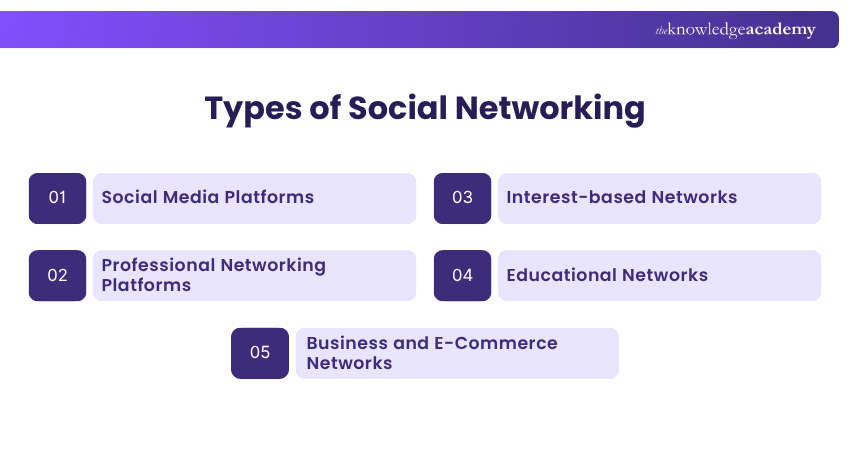
1) Social Media Platforms
Social media platforms are designed for sharing photos, videos, and updates while staying connected with others. They allow users to follow friends, celebrities, and brands, making it easy to discover and engage with new content. These platforms also offer features like stories, live streaming, and direct messaging to enhance interactions.
Pro Tip
Treat every public post as potentially permanent. Even deleted content can be copied, shared, or captured, so it is worth reviewing before publishing.
Examples:
a) Facebook, where users can share posts and join communities
b) Instagram is popular for sharing photos and reels
2) Professional Networking Platforms
These platforms help individuals build professional connections, search for jobs, and share career-related insights. They are ideal for showcasing skills, gaining industry knowledge, and connecting with colleagues or mentors.
Examples:
a) LinkedIn is widely used for job hunting and professional networking
b) Meetup, where professionals gather for events and discussions
3) Interest-based Networks
Interest-based networks bring together people with shared hobbies, passions, or topics of interest. These platforms focus on niche communities where users can exchange ideas, share resources, and collaborate.
Examples:
a) Pinterest, where users share and discover creative ideas
b) Reddit, known for its discussion forums on countless topics
4) Educational Networks
Educational networks are designed to support learning, teaching, and academic research. They connect students, educators, and researchers to share knowledge, collaborate on projects, and access study resources.
Examples:
a) Online learning communities where students and educators can share knowledge and learning resources.
b) Student and educator communities where members discuss subjects and exchange learning resources.
5) Business and E-Commerce Networks
These networks enable businesses to connect with customers and sell products or services online. They offer tools for creating storefronts, running ads, and managing transactions.
Examples:
a) Facebook Marketplace, where users can discover, buy, and sell products within their communities
b) Instagram Shopping, where businesses can showcase products and connect with customers through social content
Master the principles of Customer Experience (CX) with our Digital Marketing Course – Join today.
Advantages of Social Networks
Here are the benefits:
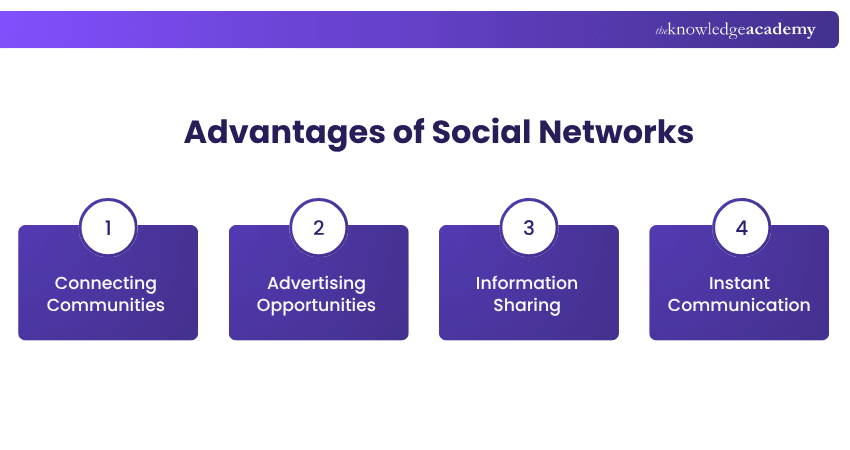
1) Connecting Communities
Social networking brings people together, no matter where they live. It allows individuals to join groups, support causes, and share their interests. This helps build strong communities and fosters connections between like-minded people.
Example:
a) Joining a Facebook group for gardening enthusiasts to exchange tips and ideas
b) Participating in a neighbourhood group to stay updated on local events
2) Advertising Opportunities
Social networking is a powerful tool for businesses to promote their products or services. Companies can reach a larger audience by running targeted ads and creating engaging posts. It can also provide a cost-effective way to connect directly with customers, depending on the platform, audience and marketing approach.
Example:
a) A small bakery using Instagram to showcase its latest cake designs
b) A tech company running ads on LinkedIn to attract professionals
3) Information Sharing
Social networks make it easy to share news, updates, and educational content with others. People can learn new skills, stay informed about global events, and discover useful resources. This quick sharing of information helps spread knowledge.
Example:
a) Sharing a YouTube video tutorial on how to bake bread
b) Posting an article on LinkedIn about trends in digital marketing
4) Instant Communication
Social networking allows people to send messages and connect instantly, even across long distances. It helps people stay in touch with family and colleagues quickly and easily. This real-time interaction can help support personal and professional relationships.
Example:
a) Using WhatsApp to chat with a friend living abroad
b) Using a professional networking platform to communicate with colleagues or industry contacts
Disadvantages of Social Networks
Here are some of the limitations of it:
1) Privacy Concerns
a) Personal information may be shared without consent
b) Risk of identity theft or data breaches
c) Difficulty in controlling what others post about you
2) Excessive Use and Time Wasting
a) Spending too much time online can reduce productivity
b) May cause distractions from important tasks
c) Excessive use may reduce time available for face-to-face interaction
3) Spread of Misinformation
a) False news and rumours can spread quickly
b) Hard to verify the accuracy of information shared online
c) It can lead to confusion or harm if not fact-checked
4) Cyberbullying and Negative Online Experiences
a) Some users face harassment or bullying online
b) Negative comments can harm mental health
c) Encourages unhealthy comparisons with others' lives
Smart Social Networking Checklist
Before posting or interacting online, check:1) Is the information from a reliable source?2) Am I sharing more personal information than necessary?3) Could this post affect my professional reputation later?4) Have I checked who can view or share the content?5) Am I engaging respectfully, even when I disagree?6) Is this platform helping me achieve something useful?
Learn data-driven marketing strategies for optimal campaign performance with our Performance Marketing Training – Join now!

Aishwarya Unni is a Copywriter with 2+ years of experience in reporting, web content, blogs, email marketing, and case studies. Her journalism background, combined with her research and writing experience across Business Skills and Human Resources, helps her create clear, engaging content for different audiences.
View Detail

 If you wish to make any changes to your course, please


