




We may not have the course you’re looking for. If you enquire or give us a call on 01344203999 and speak to our training experts, we may still be able to help with your training requirements.
What is Emotional Resilience and How to Build It
ByThe Knowledge AcademyLast updated on: 18 August 2026
Learn What is Emotional Resilience, why it matters, its key elements, benefits and practical steps to build resilience and handle life's challenges.
Key Takeaways:
a) Emotional Resilience helps you adapt to stress, setbacks and unexpected changes.b) Psychological, physical and social factors can support Emotional Resilience.c) Emotional awareness, optimism and perseverance can strengthen resilience.d) Healthy coping strategies help you respond constructively to challenging situations.e) Emotional Resilience can be developed over time through practice, reflection and experience.
A difficult day at work, an unexpected change or a plan that suddenly falls apart can test how we respond. Emotional Resilience helps us understand how people adapt to challenges, recover from setbacks and regain their balance.
But resilience is not about avoiding difficult emotions or pretending everything is fine. So, what does Emotional Resilience look like in practice? It involves recognising your emotions, responding constructively and moving forward after setbacks. This blog explores why it matters and practical ways to strengthen it in everyday life. Let’s begin!
What is Emotional Resilience?
Emotional Resilience is the ability to adapt to stressful situations, cope with challenges and recover from setbacks. It does not mean avoiding difficult emotions; rather, it involves recognising and managing them while adjusting to changing circumstances.
Individuals with high resilience recognise their emotions, cope with stress, and recover effectively from setbacks, whereas individuals with lower resilience can become overwhelmed and struggle to recover. Emotional Resilience helps you cope better with challenging experiences and can support mental wellbeing.

Importance of Emotional Resilience
Emotional Resilience matters because it helps you recognise and cope with your feelings upon encountering stress or other unexpected challenges. It also provides you with perspective so that you can respond effectively and calmly instead of responding impulsively.
By maintaining a high level of Emotional Resilience, you have a better chance of coping with adversity and supporting your mental wellbeing, and thus you can easily adapt and stay balanced despite challenging moments.
Trainer Insight:
Resilience isn't about never struggling. It is about how effectively you recover, adapt and decide what to do next.
Core Elements of Emotional Resilience
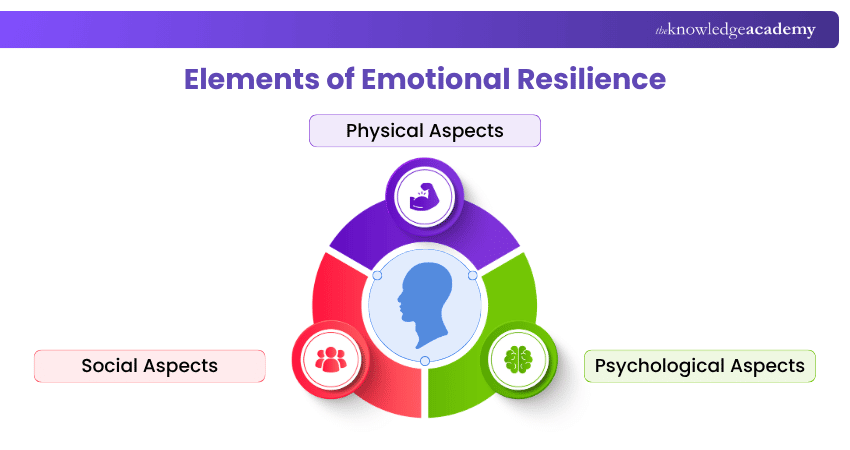
Emotional Resilience consists of three main elements: physical, psychological, and social. These elements are interrelated and influence each other. Let us look at each of them in more detail:
1) Physical Aspects
The physical components of Emotional Resilience include being in good health, energy, strong, and overall wellbeing, which can help you cope better. Mental and emotional functioning rely on a healthy body.
Physical activity, adequate sleep, and self-care can enhance energy and stress management, while physical health may make it more difficult to adapt to and recover from challenges.
2) Psychological Aspects
Psychological aspects of Emotional Resilience involve the way we think, feel and act towards stress and difficulty. This involves our beliefs, attitude, emotional awareness and coping mechanisms. The ability to think flexibly and positively helps us view setbacks more constructively and concentrate on what we can change.
Self-regulation and emotional awareness help us manage our reactions, whereas coping skills enable us to resolve issues, deal with stress, and cope with adversity. Developing such psychological strengths helps to make better choices, think realistically, and support mental wellbeing.
3) Social Aspects
Social elements of emotional strength consist of the nature of relations and support we have. Emotional support and a sense of belonging provided by strong and supportive relationships with family, friends and community members can help people cope with stress.
Good social relationships encourage trust, empathy and collaboration, and exposure to different opinions and experiences may enhance insight, problem-solving, and self-development. Establishing good relationships and getting help when required are also significant aspects of strengthening Emotional Resilience.
Elevate your Emotional Intelligence with the Emotional Intelligence Training – Sign up today!
Characteristics of Emotional Resilience
There are degrees to which stress can be managed; a person doesn’t simply have or lack resilience. It is for these reasons that the following are some of the main characteristics.
a) Emotional Awareness: Emotionally resilient people recognise their emotions and understand what may be triggering them. This awareness can help them manage their reactions and respond more constructively during stressful or challenging situations.
b) Optimism: Finally, flexible thinkers also approach most situations positively and possess personal strength. This can change the way they approach problems, from being helpless to being empowered, or as more options become available.
c) Support: More importantly, it is essential to know that social support helps enhance resilience, as well as mental health. Although resilient people are mostly strong individuals, they understand the importance of people's support and can always surround themselves with positive people, friends and relatives.
d) Perseverance: If they are striving toward observable objectives or toward learning new ways of dealing with stress, they are active, and they believe in it and persevere. The virtues of resilient people include that during the time of difficulty you don’t feel like you are helpless or hopeless.
e) Internal Locus of Control: They have a strong belief that their actions and decisions can influence outcomes in their lives. This trait can help people cope with stressors more effectively, remain focused on problem-solving and feel less helpless when facing challenges.
Quick Self-check: How Resilient is Your Response?
Think about the last time something did not go as planned. Ask yourself:a) Did I recognise what I was feeling before reacting?b) Could I stay focused on what was within my control?c) Did I look for possible solutions instead of focusing only on the problem?d) Was I willing to adapt my approach?e) Did I seek support when I needed it?f) Could I learn something useful from the experience?
Steps to Build Emotional Resilience
Emotional Resilience is not something that we have or do not have. We can develop and improve it over time through practice and experience. Here are some steps that can help us build our Emotional Resilience:
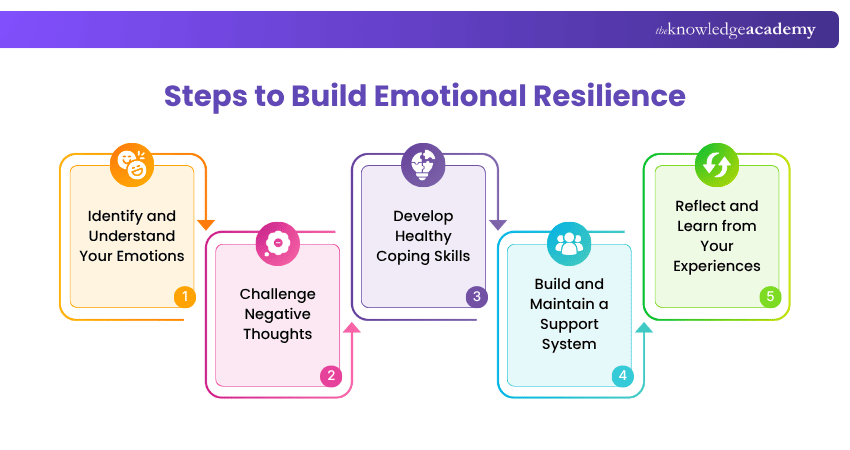
1) Identify and Understand Your Emotions
Building Emotional Resilience begins with recognising your emotions and understanding how they influence your thoughts and responses.
Acknowledge and Understand Emotions:
a) Become familiar with your emotions and emotions in general are an important aspect of resilience building. Knowing how you feel and why you feel that way will assist you in reacting better in stressful circumstances.
b) Determine the causes of your emotions in order to observe a pattern of your reactions and be able to control your reactions better.
Concentration and Meditations:
a) Reserve some time in a day to be mindful or meditate to be in the present and bring your thoughts to the present.
b) Learn to practice deep breathing, i.e. slow breathing or belly breathing, which calms down your body and mind when you are stressed.
Non-reactive Observation:
a) Learn to observe your emotions as they arise without immediately responding to them, as this allows you to pause, reflect and have a more considerate reaction
2) Challenge Negative Thoughts
Developing Emotional Resilience involves analysing and reconstructing thoughts and beliefs that cause or escalate stress and discomfort.
Methods to achieve this include:
a) Rational Emotive Behaviour Therapy (REBT)
b) Cognitive Behavioural Therapy (CBT)
c) Positive psychology theories and models
These methods help:
a) Identify negative or irrational thinking patterns
b) Replace these patterns with more constructive and assertive thoughts
3) Develop Healthy Coping Skills
This step helps in building Emotional Resilience which involves using and practicing developed coping skills as needed. There are various ways to enhance coping skills, including:
a) Problem-solving approaches
b) Decision-making and time management
c) Goal setting
d) Assertiveness
e) Humour and relaxation
These methods help handle stress and challenges constructively. If additional assistance is needed, professional support can be sought through:
a) Counselling
b) Coaching
c) Other forms of therapy
4) Build and Maintain a Support System
Positive social support is one of the aspects of strong Emotional Resilience.
Benefits of positive social support:
a) Becoming more informed, supported and reassured by others in the face of stress or problems.
b) Empathy, advice and positive support of others, which builds relationships.
Ways to build positive social support:
a) Talking openly with trusted family members or friends about your feelings and experiences.
b) Finding friends, support groups or peer fellowship circles to be encouraged.
c) Participating in community activities or group events to expand supportive social connections.
5) Reflect and Learn from Your Experiences
The fifth and final step in building resilience is valuing both successes and failures. These methods help identify and avoid repeating mistakes in the future.
Practical applications for this step include:
a) Keeping a gratitude journal
b) Maintaining a success log
c) Implementing a reward system to encourage and monitor positive behaviours
These tools help celebrate wins. Additional tools for learning from failures:
a) Keeping a failure log
b) Using a reflection journal
c) Establishing a feedback loop
Pro Tip:
Do not wait for a major setback to practise Emotional Resilience. Use everyday challenges, such as receiving feedback, dealing with delays or changing plans, to practise pausing, reframing your thoughts and choosing a constructive response.
Strengthen the art of Sentiment Analysis with the Sentiment Analysis Training – Sign up now!
Benefits of Emotional Resilience
Emotional Resilience plays an important role in how we handle stress, setbacks, and change in everyday life. The following are some key benefits of developing Emotional Resilience:
1) Improved Stress Management: Helps you to remain calm and composed in times of stress or when you are under stress.
2) Increased Mental Wellbeing: Decreases the effect of anxiety, negative thoughts and emotional overload.
3) Improved Adaptability: Enables you to adjust more easily to change and unexpected challenges.
4) Greater Confidence: It creates self-confidence because it helps you to get through the hurdles successfully.
5) Healthier Perspective on Setbacks: Encourages you to view challenges as learning opportunities rather than failures.
6) Improved Career Development: Helps in advancing professionalism through increasing attention, persistence, and making decisions.
7) Long-term Emotional Balance: Promotes stability, positivity, and overall personal growth.
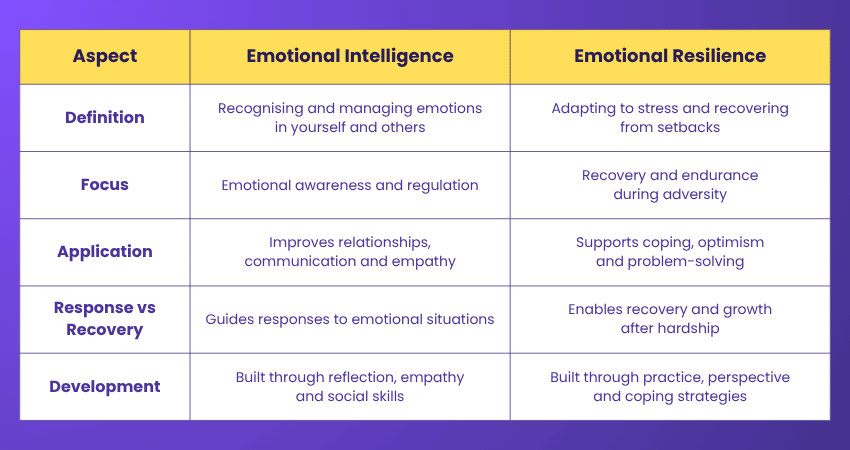
Emotional Resilience vs Emotional Intelligence
Emotional Resilience and emotional intelligence are related but distinct qualities that help us manage emotions and respond to life’s challenges. The following differences highlight how each works:
Conclusion
We hope you now understand What is Emotional Resilience, the ability to handle challenges and stress in a positive way. By developing this skill, you can improve your well-being, boost your performance, and increase your happiness. Following simple steps to build resilience will help you stay strong and adapt to life’s challenges.

The Knowledge Academy develops accessible learning content across Project Management, IT, Cybersecurity, Data Science, Business Analysis, HR, Accounting and Finance, Leadership and Health and Safety. Its resources combine subject research with clear explanations to help professionals build practical knowledge across a wide range of disciplines.
View Detail

 If you wish to make any changes to your course, please


