


 Top Rated Course

We may not have the course you’re looking for. If you enquire or give us a call on 01344203999 and speak to our training experts, we may still be able to help with your training requirements.
What is Cyber Resilience and Why It Matters
John Davies 14 July 2026Cyber Resilience is the ability to protect systems, respond to cyberattacks, and recover quickly, ensuring business continuity and reduced operational risk. It focuses on maintaining performance even when incidents occur, helping organisations adapt quickly, reduce impact, and sustain long-term digital stability.

Training Outcomes Within Your Budget!
We ensure quality, budget-alignment, and timely delivery by our expert instructors.
Table of Contents
Imagine starting your workday only to find systems down, data inaccessible, and operations paused due to a cyberattack. These situations are becoming common as organisations rely heavily on digital tools and connected systems. That is why understanding What is Cyber Resilience must be a business priority since it affects operations, reputation, and customer trust.
With the rising evolution of cyberattacks, organisations must look beyond preventing attacks. They need the ability to respond and recover to keep running even when disruptions happen. So, if you want to keep your business prepared, minimise disruption, and maintain stability, this blog is for you. It explains What is Cyber Resilience, along with its importance, goals, benefits, and more.
Table of Contents
1) Understanding Cyber Resilience
2) How Does Cyber Resilience Work?
3) Why is Cyber Resilience Important?
4) What are the Goals of Cyber Resilience?
5) How Do You Achieve Cyber Resilience?
6) The Benefits of Cyber Resilience
7) Components of Cyber Resilience
8) Difference Between Cyber Resilience and Cyber Security
9) Conclusion
Understanding Cyber Resilience
Cyber Resilience refers to the ability of an organisation to anticipate, withstand, recover from, and adapt to cyber threats and disruptions. Beyond simply protecting data and systems, it’s about business continuity and minimising the impact of cyberattacks. This includes measures such as threat intelligence, powerful security architecture, incident response planning, and business recovery strategies.

How Does Cyber Resilience Work?
Cyber Resilience is a multifaceted approach that extends beyond traditional Cyber Security measures, focusing on ensuring an organisation can maintain its operations despite facing cyber threats. Remember the following points as you take the first steps into understanding What is Cyber Resilience:
1) Start by identifying possible threats and weaknesses in the organisation's systems.
2) Assess how likely each threat is and how much damage it could cause to set priorities.
3) Use security measures like patch updates, firewalls, and intrusion detection to reduce risks.
4) Stay ahead of cyber threats by using intelligence to predict possible attacks.
5) Keep an eye on networks and systems to spot unusual activity early.
6) Train employees on Cyber Security basics, including phishing scams, to keep the organisation safe.
7) Prepare incident response plans to manage attacks effectively.
8) Ensure data recovery and business continuity to restore operations quickly.
Why is Cyber Resilience Important?
Cyber Resilience is important because planning for a wide range of cyber risks helps organisations stay prepared for disruptions. Its primary goal is to enable businesses to prepare for, respond to, and recover quickly from cyber incidents. This ensures business operations continue with minimal impact on workflow and daily processes.
A strong Cyber Resilience plan is based on identifying risks an organisation is likely to face. These risks can arise from internal sources, such as employee actions, or external threats, such as data breaches. Understanding these risks helps businesses respond effectively and maintain operational stability.
What are the Goals of Cyber Resilience?
Cyber Resilience focuses on ensuring organisations can operate securely and recover quickly when cyber incidents occur, going beyond preventing attacks. Let’s look at some of their core goals below:
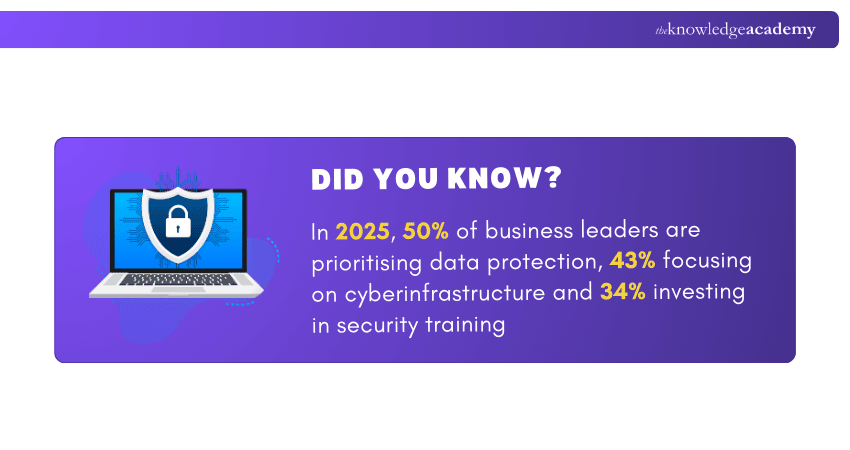
1) Maintaining Cyber Security Preparedness: Organisations must be ready for evolving threats through continuous monitoring. This helps to spot and address risks proactively.
2) Ensure Business Continuity: Cyber Resilience aims to keep operations running despite disruptions. This reduces downtime and maintains productivity, services, and customer trust.
3) Restore Critical Functions: Another key goal is to recover systems, data, and services after a cyberattack. Proactive restoration minimises operational impact and supports faster return to normal activities.
4) Learn and Adapt from Cyber Incidents: Organisations use insights from attacks to improve processes and strengthen defence. This continuous learning builds stronger protection from cyberattacks.
Identify risk early and strengthen smarter security decisions with the Cyber Security Risk Management Course now!
How Do You Achieve Cyber Resilience?
Organisations can enhance their Cyber Resilience by taking several key steps:
1) Strengthening Security: Implement robust security measures to prevent unauthorised access. This includes using strong passwords, enabling two-factor authentication (2FA), and regularly updating software.
2) Detecting Attacks: Establish systems to quickly identify potential attacks, allowing for a swift response to minimise damage. This involves continuous monitoring for suspicious activities and training staff to recognise signs of an attack.
3) Responding to Attacks: Develop a comprehensive response plan to effectively address detected attacks. This plan should outline whom to contact and the specific steps to mitigate damage.
4) Recovering from Attacks: Ensure systems and data can be restored following an attack. This requires maintaining regular backups and having a clear recovery plan in place.
The Benefits of Cyber Resilience
Implementing a strong Cyber Resilience provides several important benefits that go beyond traditional security measures. Let's look at their core benefits below:
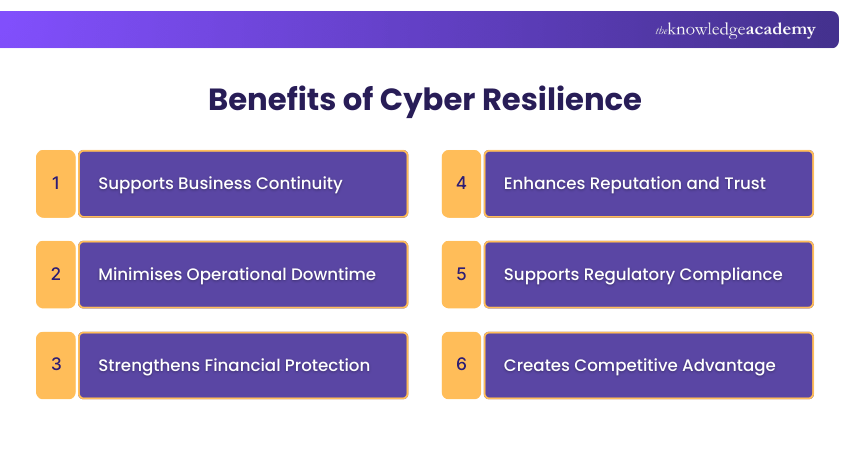
1) Supports Business Continuity
Cyber Resilience helps organisations keep essential operations running even during cyber incidents. This reduces disruption and ensures services, productivity, and workflow continue as smoothly as possible.
2) Minimises Operational Downtime
Cyber Resilience enables faster detection, responses, and recovery from cyberattacks. This reduces delays, prevents extended outages, and keeps business activities moving forward seamlessly.
3) Strengthens Financial Protection
Cyber Resilience reduces costs related to data breaches, recovery efforts, and legal penalties. Limiting the financial impact of incidents, organisations can effectively safeguard revenues and important resources.
4) Enhances Reputation and Trust
Cyber Resilience keeps organisations prepared to manage cyber incidents which builds reliability and demonstrates responsibility. This helps to build confidence among customers, partners, and stakeholders.
5) Supports Regulatory Compliance
Cyber Resilience helps organisations meet legal and industry security requirements. This is useful for reducing the risk of fines, penalties, and reputational damage that can arise due to non-compliance.
6) Creates Competitive Advantage
A strong Cyber Resilience demonstrates an organisation’s commitment to security and reliability. This attracts security-conscious customers and partners, helping organisations to stand out amongst their competitors.
Understand strong authentication methods and authenticating hosts in our Introduction to System and Network Security Course.
Components of Cyber Resilience
Cyber Resilience has four main components: Cyber Security, Risk Management, business continuity and disaster recovery. Let’s explore them in detail:
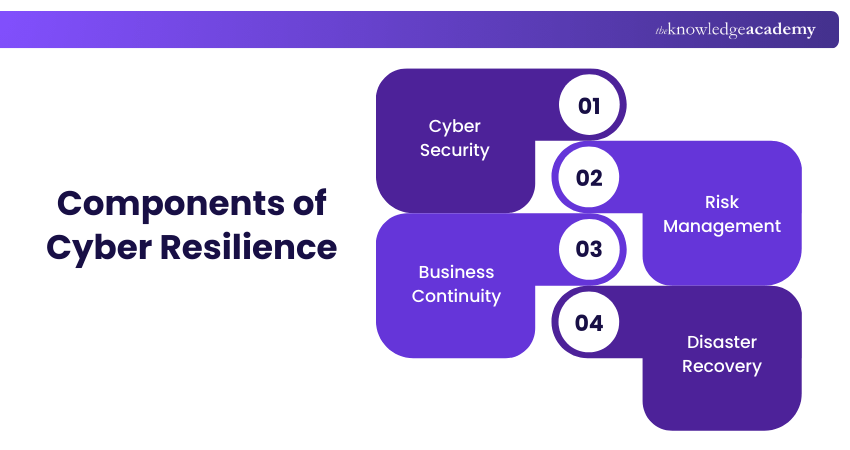
1) Cyber Security
Cyber Security is fundamental to a Cyber Resilience strategy. It involves teams and robust tools that protect an organisation's IT ecosystem; network, hardware, and data by monitoring, detecting, defending against, and responding to malicious attacks and intrusions. Cyber Security policies and solutions are also crucial for keeping workers secure, regardless of their location.
2) Risk Management
Risk Management identifies and detects potential risks that could impact an organisation's IT ecosystem, such as hacking, data breaches, and IT espionage. It also considers risks from human error, hardware failure, natural disasters, and power outages.
3) Business Continuity
Business continuity is the capability to maintain operational viability and continue delivering services after a short-term disruption. Cyber Resilience plays a critical role in supporting business continuity. Several businesses are re-evaluating their business continuity plan by identifying limitations and developing more detailed business resilience strategies.
4) Disaster Recovery
Disaster recovery encompasses procedures, tools, and policies that an organisation can deploy to restore mission-critical functions after a catastrophic event, such as a cyber-attack, prolonged power outage, or natural disaster.
Learn how to build strong digital defence skills with Cyber Security Courses today!
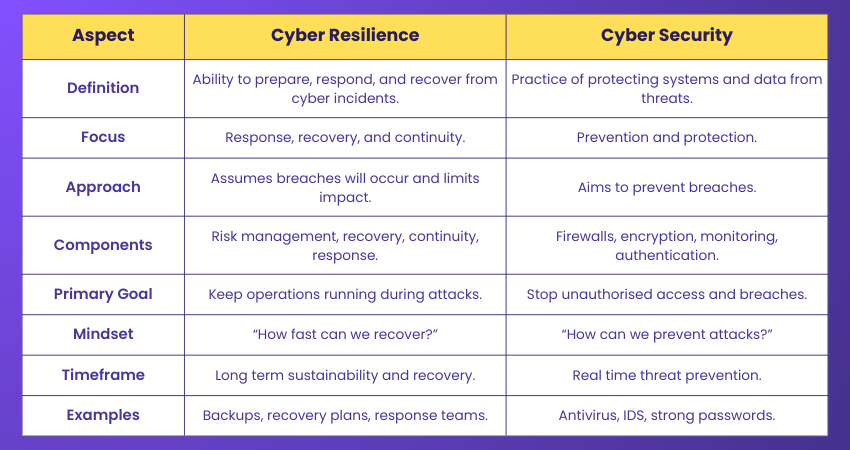
Difference Between Cyber Resilience and Cyber Security
Here are the key differences between Cyber Resilience and Cyber Security:
Conclusion
As the world of Cyber Threats keeps evolving, organisations need to go beyond preventing attacks alone. Understanding What is Cyber Resilience helps to prepare them thoroughly, respond effectively, and recover quickly while keeping operations running. This leads to long-term stability, protects trust, and enables organisations to thrive in an increasingly digital environment.
Strengthen your analytical capabilities against fraud with our Fraud Analytics Training- Sign up now!
Frequently Asked Questions
What are the Four Pillars of Cyber Resilience?

The four pillars of Cyber Resilience are:
1) Anticipate: Identify threats and vulnerabilities using risk analysis and intelligence
2) Withstand: Maintain operations through strong system protection
3) Recover: Restore systems quickly using backups and response plans
4) Adapt: Improve security by learning from every incident
What are the Seven Steps to Cyber Resilience?
The seven steps to Cyber Resilience are:
1) Assess Cyber Posture
2) Build Resilient Architecture
3) Monitor Threats Continuously
4) Plan Incident Response
5) Ensure Recovery and Continuity
6) Train Employees Regularly
7) Test and Improve Strategies

John Davies


Cyber Security Governance & Assurance Specialist
John Davies is a cybersecurity expert specialising in governance, risk management, and compliance. With over 15 years in the field, he has led enterprise-wide security programmes across finance, healthcare and public sector organisations. His content provides practical guidance on building secure environments, managing risk and aligning with regulatory frameworks.


 If you wish to make any changes to your course, please


