


 Top Rated Course

We may not have the course you’re looking for. If you enquire or give us a call on +44 1344 203 999 and speak to our training experts, we may still be able to help with your training requirements.
Cyber Resilience Framework: Strengthening Digital Defences
John Davies 25 August 2026This blog explores what a Cyber Resilience Framework is, its key components, and the steps organisations can take to implement, improve, and strengthen it against evolving cyber threats.
Home
 Resources
IT Security & Data Protection
Cyber Resilience Framework: Strengthening Digital Defences
Resources
IT Security & Data Protection
Cyber Resilience Framework: Strengthening Digital Defences
Resources
IT Security & Data Protection
Cyber Resilience Framework: Strengthening Digital Defences

Training Outcomes Within Your Budget!
We ensure quality, budget-alignment, and timely delivery by our expert instructors.
Table of Contents
Key Takeaways:
1. Cyber resilience goes beyond preventing attacks by preparing organisations to respond and recover.2. A Cyber Resilience Framework connects Risk Management, protection, detection, response and recovery.3. Proper cyber resilience requires a balance of people, processes and technology.4. Regular testing and improvement help organisations adapt to changing cyber threats.5. Cyber resilience can help with business continuity, Risk Management and regulatory compliance.
Imagine arriving at work on Monday morning to discover that your organisation has been hit by a ransomware attack.
a) Employees cannot access emails or essential applications!
b) Customer transactions have stopped!
c) Several shared files are unavailable!
Within minutes, support teams are receiving complaints while managers are trying to determine which systems were affected and whether sensitive data has been compromised.
Now the difficult questions begin:
a) Who leads the response?
b) Which systems should be restored first?
c) Are the backups usable?
d) Can critical services continue while the incident is contained?
e) How should customers and stakeholders be informed?
Without clear answers, a technical incident can quickly become a major business disruption. This is where a Cyber Resilience Framework becomes valuable. Rather than focusing only on stopping attacks, it builds the ability to maintain critical operations, recover effectively and learn from disruption.
What is a Cyber Resilience Framework?
A Cyber Resilience Framework provides a structured approach for managing cyber risks and strengthening an organisation's ability to prepare for, respond to and recover from disruption. Rather than relying on isolated security controls, it brings together areas such as Risk Management, threat detection, incident response, business continuity and recovery.
It shifts the focus from simply preventing every possible attack to accepting that some disruption is inevitable and preparing accordingly. This means organisations can continue operating, even in a limited capacity, while an incident is being contained and resolved.

Why is a Cyber Resilience Framework Important?
Cyberattacks cannot always be prevented. Organisations therefore need to consider not only how they will protect themselves but also how they will operate when disruption occurs. A Cyber Resilience Framework can help organisations understand critical risks, establish clear responsibilities and prepare response and recovery procedures before an incident happens. It also connects Cyber Security with wider operational requirements.
Here's a quick scenario to clarify its importance:
1) Organisation A experiences a cyber incident without clearly defined response responsibilities or tested recovery procedures. Teams spend valuable time deciding what to do, extending operational disruption.
2) Organisation B experiences a similar incident but has established responsibilities, backups, communication procedures and tested recovery plans. Teams can contain the incident and begin restoring critical services more systematically.
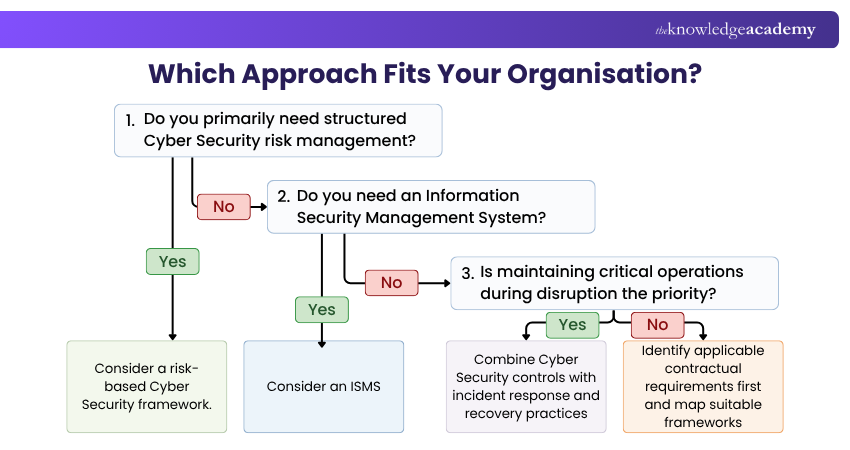
The difference is not simply whether an attack occurs. It is how prepared the organisation is to handle the disruption. It's important to remember that organisations may use complementary frameworks and practices rather than relying on one approach for every requirement. This flowchart will help you settle on the right approach for your organisation:
Key Components of a Cyber Resilience Framework
A Cyber Resilience Framework brings together several critical components that strengthen an organisation's ability to respond to and recover from cyberattacks. Here are those components in detail:
1) Threat Intelligence and Monitoring
Continuous monitoring helps organisations identify suspicious activity, vulnerabilities and potential indicators of compromise. Threat intelligence can provide additional context about emerging threats and support informed security decisions.
2) Risk Assessment and Management
Organisations need to understand which systems, data and services are most important and what threats could affect them. Risk assessments help identify vulnerabilities, evaluate potential impacts and prioritise resources.
3) Security Controls
Preventive controls help reduce exposure to cyber threats. These can include access controls, secure configurations, data protection measures, vulnerability management and other safeguards appropriate to the organisation's risks.
4) Incident Response
An incident response plan defines how an organisation will detect, contain and manage cyber incidents. It should establish responsibilities, communication procedures, escalation routes and appropriate response actions.
5) Business Continuity and Recovery
Cyber resilience also requires organisations to maintain or restore essential operations. Backups, recovery procedures and business continuity arrangements can reduce disruption and support the restoration of critical services.
6) Continuous Improvement
Threats, technologies and business operations change over time. Organisations should therefore review incidents, exercises and performance data to identify weaknesses and strengthen their resilience measures.
Examples of Cyber Resilience Frameworks and Standards
Organisations can use established frameworks, standards and assessment approaches to support different aspects of cyber resilience.
1) NIST Cyber Security Framework: The NIST Cyber Security Framework offers a risk-based approach to managing Cyber Security risk. Organisations can use it to understand, assess, prioritise and communicate Cyber Security activities.
2) ISO/IEC 27001: ISO/IEC 27001 provides requirements for setting up, implementing, maintaining and continually improving an Information Security Management System (ISMS). It helps organisations manage information security risks systematically.
3) Cyber Resilience Review: The Cyber Resilience Review is an assessment approach designed to help organisations evaluate operational resilience and identify areas where cyber resilience capabilities can be strengthened.
4) Cyber Security Maturity Model Certification: CMMC focuses on protecting sensitive information within the US defence industrial base. It establishes Cyber Security requirements and assessment levels for organisations handling specified information.
Steps to Implement a Cyber Resilience Framework
Here are five key steps to building a powerful Cyber Resilience Framework:
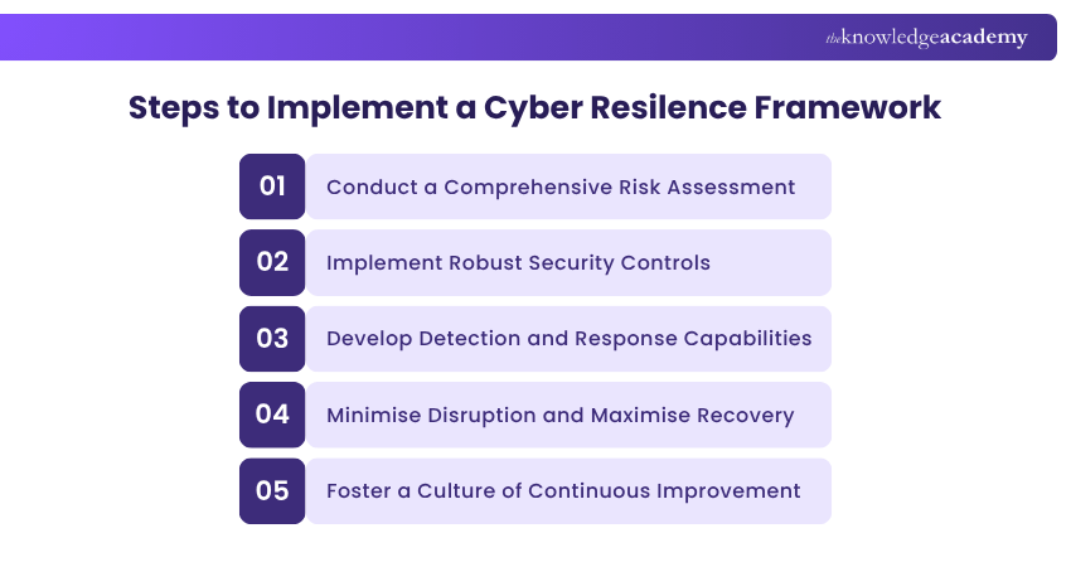
1) Go for a Detailed Risk Assessment: Start by looking at all your digital systems and finding where you might be vulnerable. Consider these points:
a) Make a list of your important systems, data, and third-party tools.
b) Check for weak spots like outdated software or exposed passwords.
c) Use trusted security standards like NIST or ISO 27001 to help guide you.
2) Implement Robust Security Controls: Once you know your risks, put protections in place. Consider these points:
a) Use tools to hide and manage sensitive data like passwords and API keys.
b) Monitor your network to catch threats quickly.
c) Make sure your software and hardware are set up securely.
d) Use data protection tools to keep important information safe.
e) Protect all your company's devices with real-time security tools.
3) Develop Detection and Response Capabilities: Have tools and plans in place so you can act fast during an attack. Consider these points:
a) Use automated tools that connect and manage your security systems.
b) Actively look for threats, not just wait for alerts.
c) Make clear plans for how to respond if something goes wrong.
d) Monitor your systems regularly to catch unusual behaviour early.
4) Minimise Disruption and Maximise Recovery: Prepare for what to do if an attack happens. Consider these points:
a) Create a business continuity plan, so essential work can continue.
b) Back up your data and set up systems to recover it quickly.
c) Practise recovery steps with drills to make sure your team is ready.
5) Foster a Culture of Continuous Improvement: Cyber threats change, so your plans should too. Consider these points:
a) After an attack, review what happened and how to do better next time.
b) Use feedback to improve your security.
c) Train your staff regularly on how to stay safe online.
Trainer's Pro Tip
Not every system needs the same level of protection. Identify critical services, data and dependencies first, then focus resilience efforts where disruption would have the greatest impact.
Build resilient digital defence strategies with our Certified Cyber Security Professional (CCS-PRO) Training - Sign up now!
How to Improve a Cyber Resilience Framework?
Cyber Resilience Frameworks provide managers with a reliable, standardised, and systematic approach to mitigating cyber risks, regardless of the complexity of the environment. These frameworks need continual improvement, and the following five activities are essential for enhancing a Cyber Resilience Framework.
1) Identification of a Top Management Coordinator
Assigning a senior manager responsible for Cyber Resilience ensures that there is a champion for Cyber Resilience at the C-suite level. This senior manager will educate board members and secure their support for investment in incident response automation tools and the development of a comprehensive Cyber Resilience Framework.
2) Nurturing a Culture of Cyber Resilience
Leaving Cyber Resilience solely to the security team is a common mistake. If only a few people have a grasp on the systems and how to protect them, the security posture weakens as the company grows. All employees should adopt a Cyber Resilience mindset, knowing how to identify and detect malware and phishing threats and understanding the consequences of data breaches.
KEY INSIGHT
The EU Cyber Resilience Act (CRA) sets mandatory Cyber Security requirements for products with digital elements, covering areas such as secure development and vulnerability handling. It entered into force in 2024.
3) Creating Formal Cyber Security Policies
A strong Risk Management policy is a vital component of a Cyber Resilience Framework. Documenting proven security processes as official guidelines provides employees with a reliable set of protocols to follow, strengthening the organisation's security posture.
4) Making Cyber Resilience a Priority at Board Meetings
Incident response strategies and Cyber Resilience Frameworks are dynamic, evolving assets. They require regular review and updates. Security issues should not be confined to a single department.
Enterprise leaders must regularly consult with key stakeholders on security policies, ensuring the organisation maintains a high level of Cyber Resilience and is prepared to respond to and manage threats.
Strengthen your defence-ready IT skillset with our Introduction to System and Network Security Training - Join now!
5) Offering Career Paths for Security Professionals
Top security professionals seek continuous learning and career growth opportunities. Without clear pathways for advancement, they may leave for other opportunities. By investing in ongoing training and career development, organisations can cultivate a loyal, highly skilled workforce of security professionals.
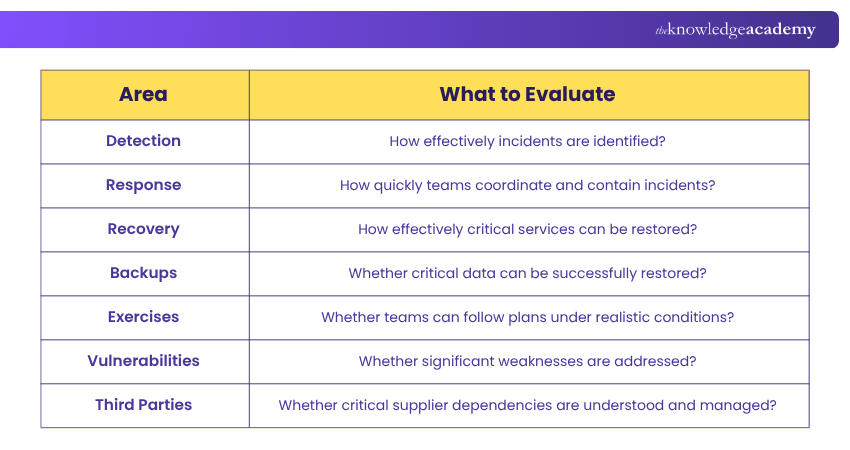
Some useful areas to evaluate include:
Cyber Resilience Best Practices
Achieving Cyber Resilience requires balancing people, processes, and technology. Organisations often mistakenly rely too heavily on technology, neglecting the importance of skilled people and well-designed processes. Ensuring Cyber Resilience involves integrating all three components effectively:
1) People: People are often the weakest link in Cyber Security, so every employee must understand their roles and responsibilities. Organisations must provide role-specific Cyber Security training, ensure top management supports and reviews Cyber Resilience initiatives, and educate board members on relevant Cyber Security terms.
2) Processes: Strong governance and processes are crucial. Best practices include maintaining regulatory compliance, validating data controls, agile policy adjustments, using scenario-based strategies for preparedness, and devising effective communication plans.
3) Technology: As a key enabler, organisations must invest in response and recovery capabilities, update technologies based on industry standards and adopt automation. They must create air-gapped copies of critical assets and leverage advanced technologies like deception to enhance Cyber Resilience.
Own the risk before it owns you! Sign up for our Cyber Security Risk Management Course now!
Challenges in Achieving Cyber Resilience
Achieving cyber resilience is vital for helping organisations recover from cyberattacks. However, some common challenges can make this difficult. Here are a few key obstacles and how they affect cyber resilience:
1) Lack of Awareness: Some organisations don't fully understand the importance of cyber resilience, so they don't prepare properly for possible threats.
2) Complex IT Systems: Today's IT setups can be very complicated, which makes it hard to spot weak areas and apply strong security.
3) Limited Resources: Not having enough money or staff can make building and maintaining a strong cyber resilience plan tough.
4) Changing Threats: Cyber threats keep evolving, so businesses must regularly update their defences to stay protected.
5) Risks from Third Parties: Working with outside vendors can bring new risks if those partners don't follow good security practices.
Consider this checklist to verify your cyber resilience readiness:
Cyber Resilience Readiness Checklist
□ Have critical systems, data and services been identified?□ Are major third-party dependencies understood?□ Are incident response roles clearly assigned?□ Are critical systems monitored for suspicious activity?□ Are important data and systems backed up appropriately?□ Have recovery procedures been tested?□ Are communication and escalation procedures documented?□ Are lessons from incidents and exercises used to improve resilience?
Conclusion
As the digital world becomes more complicated and risky, strengthening an organisation's cyber defences is more important than ever. A Cyber Resilience Framework takes a proactive approach, preventing attacks and helping respond quickly and recover effectively. Smarter threats need smarter defenders. It encourages a culture of readiness and flexibility so organisations can confidently handle cyber incidents.
Building cyber resilience starts with a strong foundation. Boost your security mindset with the DVMS NISTCSF – Foundation Course - Sign up now!
Frequently Asked Questions
Is COBIT a Cyber Security Framework?

COBIT isn’t a Cyber Security framework on its own. Instead, it’s a broad IT governance framework. Unlike NIST or ISO 27001, which focus mainly on Cyber Security, COBIT is designed to help ensure that IT efforts support a company’s overall business objectives.
What are the Three Rs of Cyber Resilience?
The three Rs of cyber resilience include Resist, Recover, and Rebuild. Resist means the prevention of attacks through strong defences. Recover means restoration of operations following an attack as soon as possible. Last but not least, rebuild involves improving defences and learning.
Is Cyber Security a Stressful Job?
Yes, Cyber Security can be a very stressful job. Professionals often face high stakes, round-the-clock on-call demands, and the constant pressure of knowing a single missed alert or mistake can lead to a costly data breach.
Will AI Replace Cyber Security?
AI will not replace Cyber Security professionals, but it's fundamentally changing the industry. Artificial Intelligence automates high-volume log analysis, reduces false-positive alerts, and accelerates threat detection. However, AI lacks contextual business judgment, meaning human oversight remains vital.

John Davies


Cyber Security Governance & Assurance Specialist
John Davies is a cybersecurity expert specialising in governance, risk management, and compliance. With over 15 years in the field, he has led enterprise-wide security programmes across finance, healthcare and public sector organisations. His content provides practical guidance on building secure environments, managing risk and aligning with regulatory frameworks.


 If you wish to make any changes to your course, please


