




We may not have the course you’re looking for. If you enquire or give us a call on 01344203999 and speak to our training experts, we may still be able to help with your training requirements.
What is Business Resilience and Why Does It Matter?
ByThe Knowledge AcademyLast updated on: 18 August 2026
This blog explores what Business Resilience is and why it matters, covering its key components, how to build it, relevant standards and frameworks, and how it differs from Business Continuity.
8:55 AM: Everything runs normally.
9:10 AM: A critical system fails.
9:30 AM: Customers start noticing.
10:00 AM: Someone asks, “What’s the backup plan?”
And suddenly, Business Resilience isn't something sitting in a strategy document. It's what determines whether a disruption becomes a manageable problem or a business-wide crisis.
Business Resilience is about preparing an organisation to respond, adapt, recover, and learn when normal operations don't go according to plan.
Key Takeaways
1. Business Resilience is an organisation's ability to adapt to disruption while continuing to operate and recover effectively.2. Resilience extends beyond Business Continuity by considering areas such as risk, people, technology, supply chains, leadership, and organisational adaptability.3. Business Resilience differs from Business Continuity in scope: Continuity focuses on maintaining critical functions, while Resilience covers broader adaptability and recovery.4. Resilience is not a one-time plan; organisations need to test, review, and improve their capabilities as risks and operating conditions change.
What is Business Resilience?
Business Resilience refers to an organisation’s ability to adapt to disruptions while continuing operations and protecting its people, assets, and brand value. It goes beyond simply reacting to incidents by ensuring businesses can maintain performance even during challenging situations.
It also involves anticipating potential risks and putting processes in place to handle unexpected events effectively. By combining proactive planning with response and recovery strategies, organisations can minimise impact and continue to grow despite disruptions.
Business Resilience in 10 Seconds
Anticipate → Prepare → Respond → Adapt → Recover → Improve

Why is Business Resilience Important?
From protecting core values to reducing risks, Business Resilience is crucial for many reasons. Let's explore some of them below:
1) Maintains Critical Business Operations: Business Resilience helps organisations continue delivering important products and services when disruptions occur, reducing operational downtime and maintaining essential activities.
2) Reduces the Impact of Disruptions: Prepared organisations can respond systematically and recover more effectively, helping limit operational, financial and reputational consequences. ISO specifically links business continuity capabilities with reducing disruption impacts on people, products and the bottom line.
3) Strengthens Adaptability to Change: Resilience enables organisations to absorb and adapt to changing circumstances while continuing to pursue their objectives. This becomes particularly valuable as markets, technologies, and customer expectations evolve.
4) Supports Faster Response and Recovery: Established resilience and continuity capabilities allow organisations to respond more effectively when incidents occur and restore affected operations more quickly.
5) Builds Stakeholder Confidence: A structured approach to business continuity can strengthen trust and credibility among customers, employees, partners and other stakeholders by demonstrating preparedness for disruption. ISO lists enhanced stakeholder confidence among the benefits associated with business continuity management.
6) Helps Identify Opportunities During Change: Resilience is not only defensive. ISO notes that organisations that improve resilience can be better positioned to anticipate and respond to risks while also harnessing opportunities created by changing circumstances.
Did You Know?
Cyber-attacks are estimated to cost UK businesses £14.7 billion annually, equivalent to around 0.5% of UK GDP. The average cost of a significant cyber-attack to an individual UK business is estimated at almost £195,000.
Key Components of Business Resilience
Business Resilience relies on key components that help organisations manage and recover from disruptions effectively. These elements support stability and adaptability. Together, they strengthen continuity, reduce risks, and improve overall performance.
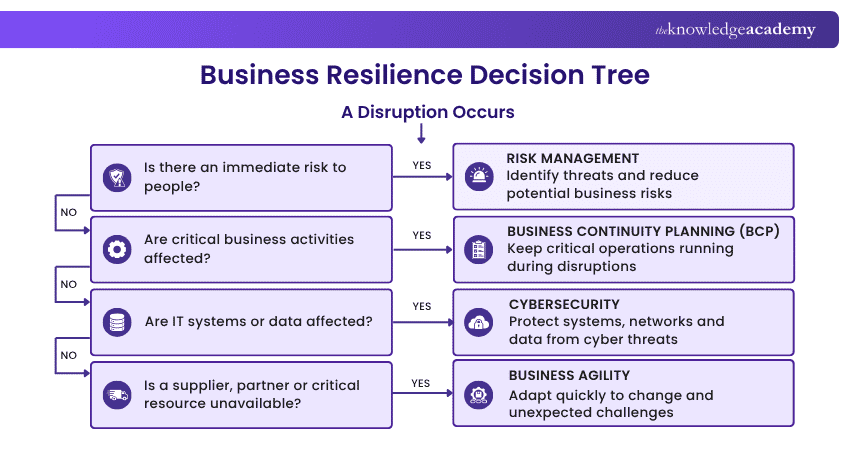
1) Risk Management
Risk Management involves identifying and evaluating internal and external threats that could disrupt business operations. It helps organisations understand vulnerabilities and develop strategies to minimise potential risks.
2) Business Continuity Planning (BCP)
Business Continuity Planning focuses on creating structured plans to ensure operations continue during disruptions. It includes maintaining critical systems, clear communication, and effective recovery processes.
Prepare for business disruptions with our ISO 22301 Training – Join now!
3) Cybersecurity
Cybersecurity ensures the protection of systems, networks, and data from cyber threats. It involves implementing security tools, access controls, and employee awareness to reduce digital risks.
4) Business Agility
Business agility enables organisations to quickly adapt to market changes and unexpected challenges. It allows businesses to adjust processes, products, and strategies to remain competitive.
Could Your Business Take the Hit: Mini Assessment
If one of these disappeared tomorrow, could you continue operating?
• Your primary IT system• Your largest supplier• Access to your workplace• A critical team member• Customer data• A major revenue stream
Mostly Yes → Strong foundationsMixed → Resilience gaps may exist
Mostly No → Prioritise resilience planning
How to Build Business Resilience?
Building Business Resilience requires organisations to understand what matters most, prepare for potential disruptions, and continuously strengthen their ability to adapt and recover. Here are seven practical steps:
1) Identify Critical Business Functions
Determine which operations, services, systems and resources are essential for the organisation to function. Understanding their importance helps prioritise what must be protected and restored during disruption.
2) Assess Risks and Dependencies
Identify potential threats and examine dependencies on employees, technology, suppliers, facilities and other resources. Assessing these areas helps reveal vulnerabilities that could interrupt critical operations.
3) Build Continuity and Response Plans
Develop clear plans outlining how critical activities will continue during disruption. Define responsibilities, communication procedures, recovery priorities and actions, so teams know how to respond when an incident occurs.
4) Strengthen Technology and Cyber Resilience
Protect critical systems, applications, and data against cyber-attacks and technology failures. Use appropriate security controls, backups, and recovery arrangements to support continued access to essential digital resources.
5) Reduce Supply Chain Dependencies
Identify critical suppliers and avoid unnecessary reliance on a single source where possible. Alternative suppliers, contingency arrangements, and regular supplier assessments can reduce the impact of supply disruptions.
6) Develop Resilient Leadership and Teams
Prepare leaders and employees to respond confidently to changing circumstances. Clear responsibilities, effective communication, and empowered decision-making can help organisations adapt more effectively during disruption.
7) Test, Learn and Continuously Improve
Regularly test resilience and continuity arrangements through exercises and reviews. Use lessons from tests and real incidents to identify gaps, update plans and strengthen future responses.
Trainer's Pro Tip
A plan that only exists on paper isn't resilience, it's paperwork. Test it under realistic pressure, with people who'd actually be involved during a real incident, and use what breaks in the test to fix what would break for real.
Business Resilience Standards and Frameworks
Several established standards give organisations structured approaches to strengthen resilience and manage risk consistently. Here are three of the most widely referenced:
1) ISO 22316:2017: Organisational Resilience
ISO 22316 provides guidance for enhancing organisational resilience. It outlines principles and attributes that help organisations strengthen their ability to adapt to changing conditions and respond effectively to disruption.
2) ISO 22301:2019: Business Continuity Management
ISO 22301 specifies requirements for establishing, implementing, maintaining and continually improving a Business Continuity Management System (BCMS). It helps organisations prepare for disruptive incidents, maintain critical activities and strengthen their ability to recover.
3) ISO/IEC 27001:2022: Information Security Management
ISO/IEC 27001 specifies requirements for establishing and continually improving an Information Security Management System (ISMS). It helps organisations manage information security risks, protect critical information, and strengthen resilience against cyber threats.
Difference Between Business Resilience and Business Continuity
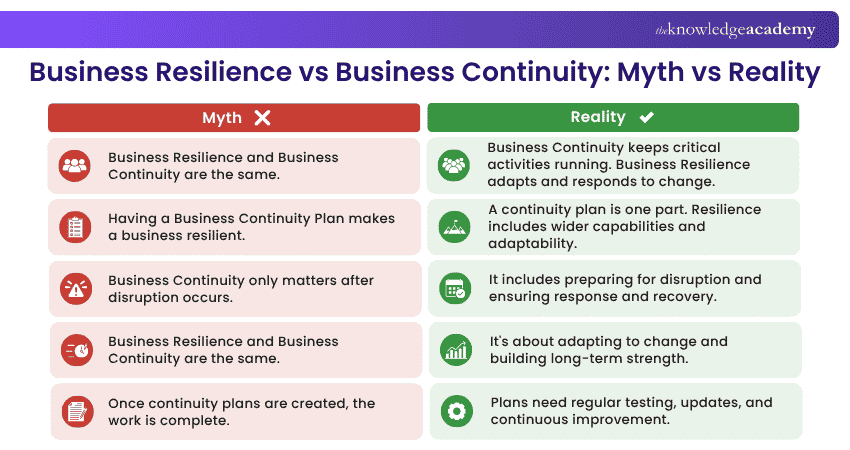
Business Resilience and Business Continuity are related but distinct concepts. Business Continuity is an important capability that contributes to broader organisational resilience. It focuses on ensuring the continuity of an organisation's critical functions and processes during a disruption.
Business Resilience, on the other hand, is a broader concept. It entails adapting to change, recovering from disruptions, and ensuring uninterrupted delivery of products and services to stakeholders.
Conclusion
By understanding What is Business Resilience, businesses can better prepare for disruptions, respond effectively, and recover with minimal impact. Focusing on the right strategies and a proactive mindset helps maintain stability and performance. In the long run, resilience strengthens continuity, growth, and confidence.
Develop practical continuity management skills with our ISO 22301 Certified Business Continuity Management Training – Join now!
Ask: If your biggest supplier, system or workplace became unavailable tomorrow, what would your organisation do first?

The Knowledge Academy develops accessible learning content across Project Management, IT, Cybersecurity, Data Science, Business Analysis, HR, Accounting and Finance, Leadership and Health and Safety. Its resources combine subject research with clear explanations to help professionals build practical knowledge across a wide range of disciplines.
View Detail

 If you wish to make any changes to your course, please


