




We may not have the course you’re looking for. If you enquire or give us a call on 01344203999 and speak to our training experts, we may still be able to help with your training requirements.
Types of Investment: A Complete Guide for Beginners
ByShristi RoyLast updated on: 18 September 2026
Explore the Types of Investment, including stocks, bonds, cash, property and funds, to grow wealth, diversify your portfolio, and achieve your financial goals. Each type gives a different balance of risk, return and liquidity to suit different investment needs. Also, understanding these types helps you make informed investment decisions.

Your bank account won’t make you rich, but the right investments just might. The question is: where should you start? With prices going up all the time, letting your money sit idle slowly loses value, and that can cost you in the long run. That is why more people than ever are turning to investment as a powerful way to build wealth and secure their future.
But with so many options, from stocks and bonds to property, crypto, and beyond, how do you know which path is right for you? Understanding the different Types of Investments, how they’ve evolved over time, and how to use them strategically is the first step. Want to know how to take that first step? Read on to jump into the world of investing!
What are Investments?
Investments are assets or items you purchase with the goal of generating income or increasing in value over time. Instead of letting money sit unused, investing helps it to potentially grow over time. Investing is the process of distributing resources, usually in the form of money, into different products or businesses to make profits later on.
The key is to choose options that suit your financial aims, risk tolerance, and time frame to build a stable financial future. The main goal of investing is long-term growth, although the level of risk and reward varies depending on the Type of Investment.

Types of Investments
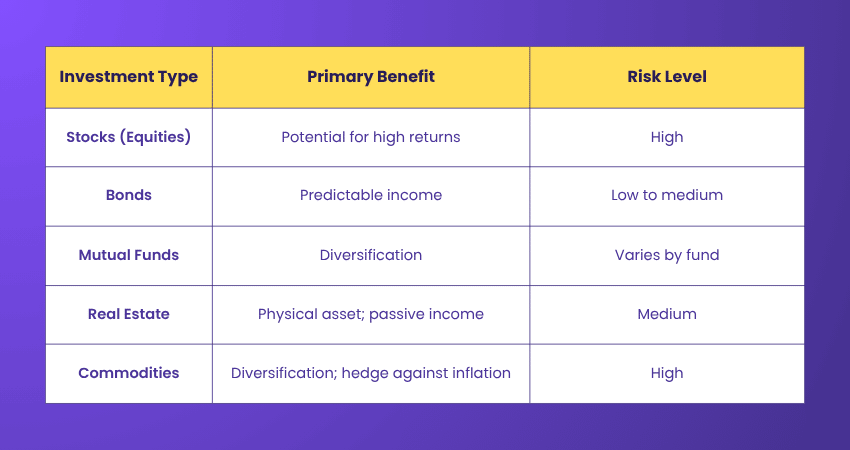
From physical assets like property to digital assets like cryptocurrency, investments come in many forms and offer different ways to grow your money. Understanding how each type works helps you make smarter, more informed financial decisions. Below are some of the most common Types of Investments:
1) Stocks (Equities)
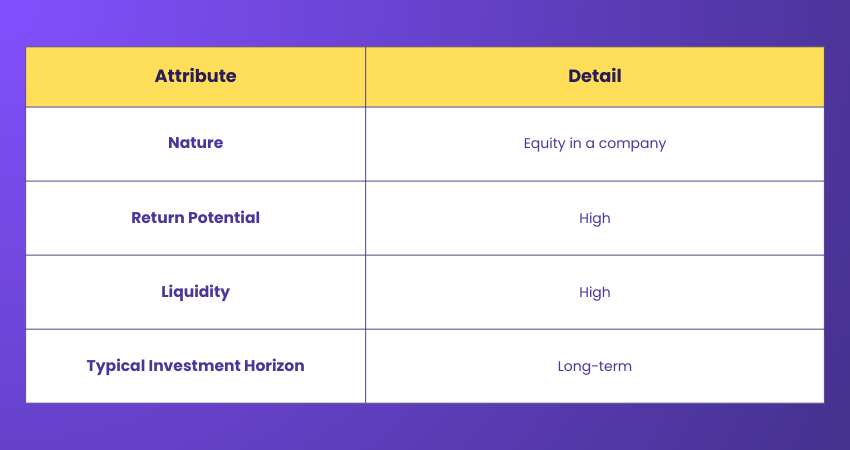
Stocks, also known as equities, represent ownership in a company. By purchasing stocks, investors essentially buy a share of that company's assets and earnings. These shares can be bought and sold on stock exchanges through brokers or online trading platforms.
Advantages of Stocks:
Investing in stocks offers high returns, especially over long durations. As companies grow and profit, stockholders benefit from price appreciation and, sometimes, dividends. Additionally, stocks are easily traded, providing liquidity to investors.
Disadvantages of Stocks:
Stock Investments can be volatile, with prices fluctuating based on market sentiment and company performance. There's also the risk of loss, especially if a company underperforms or faces bankruptcy. It demands an understanding of market dynamics.
Who Should Invest in Stocks?
Those with a higher risk tolerance, looking for growth over time, might find stocks appealing. It's suitable for individuals who can withstand market downturns and stay invested for the long-term. Individuals must consider the following before investing:
How to Invest in Stocks?
To invest in stocks, one needs a brokerage account. Many online platforms offer easy access. Once set up, investors can research, select, and buy shares of desired companies. Understanding the Characteristics of Investment is essential for making informed decisions. Regular monitoring and perhaps consultation with financial advisors can optimise the investment journey.
Discover expert insights and elevate your trading skills with our Stock Trading Course – Register now!
2) Bonds (Fixed-income Securities)
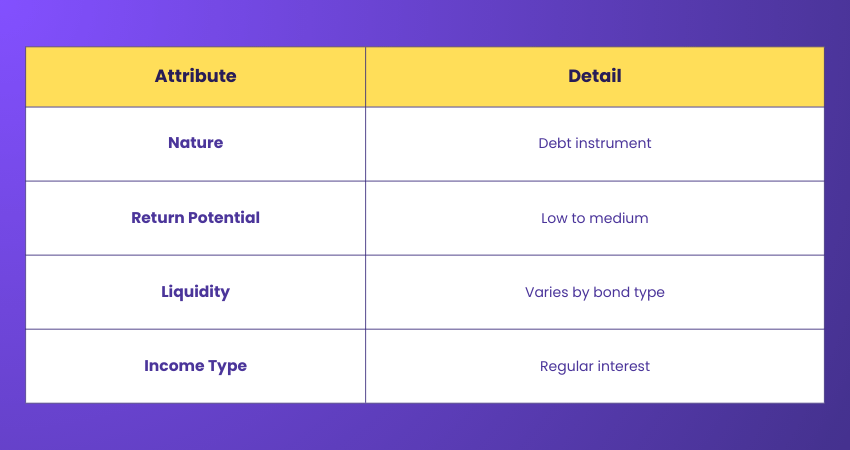
Bonds represent debt instruments where investors lend money to entities, be it corporations or governments. In return, these entities promise to pay a predetermined interest rate at specified intervals and return the principal amount at the bond's maturity.
Advantages of Bonds:
Bonds are generally less volatile than stocks, offering more predictable returns. They provide regular interest income and can be a reliable source of regular income for investors. They also help diversify an investment portfolio and reduce overall risk.
Disadvantages of Bonds:
Compared to stocks, bonds generally offer lower potential returns. They may also decline in value when interest rates rise, making existing bonds less appealing. Additionally, there's a risk of default where the issuer might fail to make timely payments.
Who Should Invest in Bonds?
Bonds are well-suited for conservative investors seeking steady income and capital preservation. They're also ideal for individuals nearing retirement or those who prefer to mitigate the volatility of a stock-heavy portfolio. Consider the following before investing in Bonds:
How to Invest in Bonds?
To invest in bonds, one can approach banks or brokerage firms or even purchase directly from the government (in the case of treasuries). Bond funds, available through mutual fund companies, provide another avenue, allowing diversification across multiple bonds with a single investment.
Start your journey to smarter investing with our Investment Management Course – Join now!
3) Mutual Funds
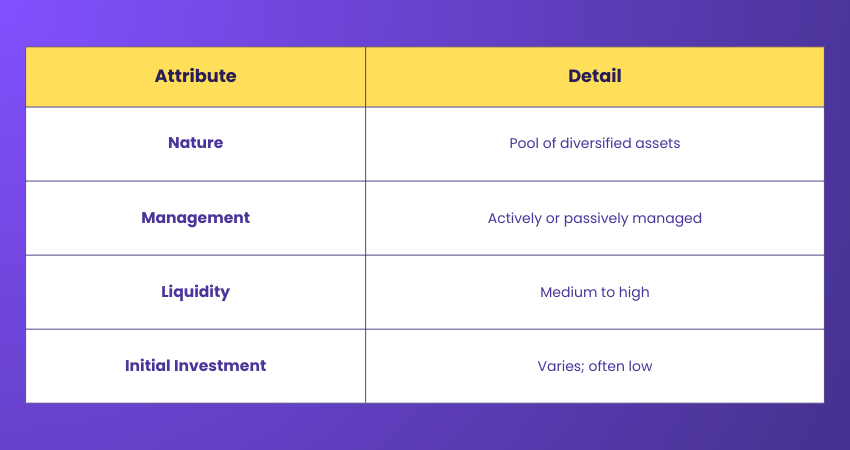
Mutual funds work by pooling capital from multiple investors to acquire a diversified mix of assets such as stocks, bonds, or other securities. Professional Portfolio Managers oversee these funds, making buying and selling decisions based on the fund's specific goals.
Advantages of Mutual Funds:
The primary allure of mutual funds is diversification, reducing the risk associated with individual securities. Investors also benefit from professional management, potentially improving returns. With mutual funds, one can access complex strategies and assets without a significant initial Investment.
Disadvantages of Mutual Funds:
Mutual funds have management fees, which can erode returns over time. Performance isn't guaranteed; some funds may underperform their benchmark. Also, depending on the fund type, there might be less control over specific investment choices and potential capital gain distributions that could have tax implications.
Who Should Invest in Mutual Funds?
Mutual funds are suitable for investors with different financial goals. Beginners find them appealing due to their inherent diversification and professional oversight. They're also beneficial for those seeking specific investment strategies or sectors without the need to analyse individual assets. Individuals must consider the following before investing:
How to invest in Mutual Funds?
Investing in mutual funds is easy and simple. Most brokerage accounts offer a range of mutual fund options. After researching and selecting a fund that aligns with one's goals, an investor can purchase shares. Many funds also allow automatic periodic investments, simplifying the process of consistent contributions.
Optimise profit potential and master pricing strategies with our Revenue Management Training – Begin your journey today!
4) Real Estate
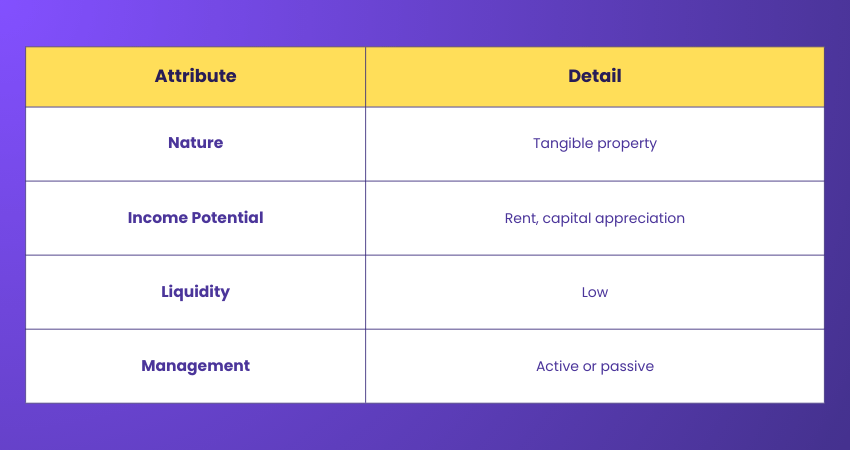
Real estate refers to tangible property, often encompassing land and the structures on it. Investments can range from residential properties, like houses and apartments, to commercial spaces, such as office buildings and shopping malls. Real estate can also extend to vacant land or by investing in Real Estate Investment Trusts (REITs).
Advantages of Real Estate:
Real estate investments offer potential capital appreciation over time. Properties can generate passive rental income, serving as a steady revenue stream. Real estate can help protect against inflation, as property values and rental income sometimes increase over time. Additionally, it offers tax advantages through deductions and credits.
Disadvantages of Real Estate:
Real estate requires substantial initial capital. It's not as liquid as stocks or bonds, meaning converting property to cash might take time. Managing real estate, especially rental properties, demands effort and can incur additional expenses. Market fluctuations and property location can also influence the Investment's profitability.
Who Should Invest in Real Estate?
Real estate suits those with significant capital and a willingness to commit long-term. Investors seeking Active Income and Passive Income, capital appreciation, and tax benefits might find it attractive. It's also for those comfortable with managing physical assets or hiring property management services. Individuals must take the following into consideration before investing in real estate:
How to Invest in Real Estate?
One can invest directly by purchasing property or indirectly through REITs, which are traded like stocks. For direct investments, scouting locations, securing financing, and understanding local property markets are crucial steps. For an indirect approach, brokerage accounts can be used to invest in REITs, offering a taste of real estate without hands-on management.
Transform your real estate career with our Real Estate Agent Course – Take the leap now!
5) Commodities
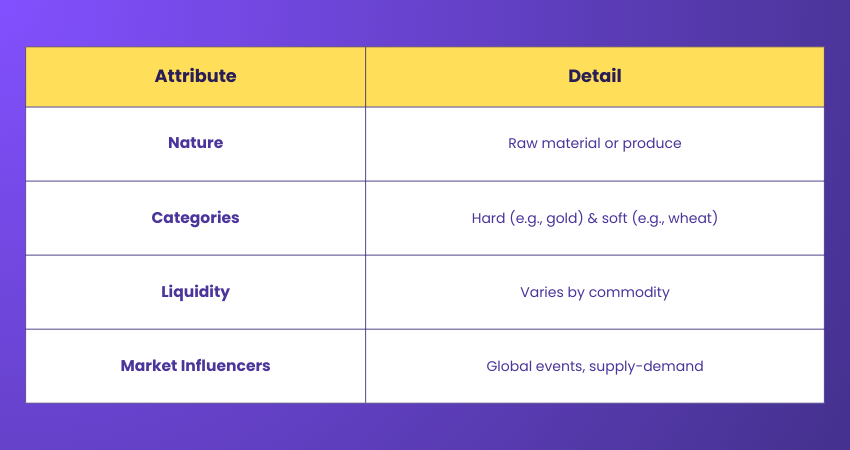
Commodities refer to the raw materials or primary agricultural products that can be bought or sold. They are typically standardised and interchangeable with other goods of the same type. Commodities are broadly categorised into two: hard (like gold and oil) and soft (such as wheat and coffee).
Advantages of Commodities:
Commodities offer a hedge against inflation and currency fluctuations. They provide diversification, as their performance can have a low correlation with traditional assets like stocks. In certain scenarios, commodities can offer significant returns, especially during supply shortages or increased demand.
Disadvantages of Commodities:
They can be highly volatile, influenced by global events, weather patterns, and geopolitical tensions. Investing in commodities requires specialised knowledge to predict market dynamics accurately. Physical storage for some commodities, like metals, can be challenging and expensive.
Who Should Invest in Commodities?
Investors looking to diversify beyond traditional assets might consider commodities. They're suitable for those who understand the unique factors influencing commodity prices and are comfortable with potential volatility. Commodities may also appeal to experienced investors seeking to benefit from price movements. However, it is better to consider the following factors before investing in any commodity:
How to Invest in Commodities?
There are various avenues: directly purchasing physical commodities, investing in futures contracts, or through commodity-focused Exchange-Traded Funds (ETFs) and mutual funds. Online brokerage platforms often provide access to these investment vehicles. For direct purchases, it's crucial to consider storage, insurance, and other logistical aspects.
What is the History of Investment?
While the concept of investing dates back thousands of years, modern investing began to take shape between the 17th and 18th centuries. The establishment of public markets, such as the Amsterdam Stock Exchange, allowed investors to trade shares and access broader investment opportunities.
Industrial Revolution Investing
The Industrial Revolution in the late 18th century and then again in the late 19th century marked a major turning point. Rapid industrial growth led to increased prosperity and the rise of formal banking systems. With more disposable income, individuals began saving and investing. The Industrial Revolution also encouraged the growth of investment banks and financial institutions, which helped finance railways, factories, and infrastructure projects.
20th Century Investing
In the 20th century, investment theory matured with concepts like Portfolio Management and asset pricing. New financial vehicles such as hedge funds, mutual funds, REITs, and ETFs became available. The internet revolution of the 1990s made investing more accessible through online trading platforms.
21st Century Investing
The 21st century has brought even more change. Online trading platforms, robo-advisors, and cryptocurrencies have opened new doors for investors worldwide. There’s also a stronger focus on ethical and sustainable investing, with people seeking returns that align with their values. Today, investment is more global, digital, and dynamic than ever before.
Choose the Right Type of Investment
Choosing the right Types of Investment depends on your financial goals, investment horizon, and risk tolerance. Understanding these factors helps you choose investments that align with your needs and support long-term financial growth. Consider the following key factors before making an investment decision:
1) Financial Goals:
Begin by defining your investment goals. Your goal may be to build wealth, save for retirement, buy a home, fund your child's education, or generate regular income. Having clear financial goals helps you choose investments that align with your priorities.
2) Investment Time Horizon:
Your investment horizon is the period for which you intend to keep your money invested. It plays a major role in determining the type of investments you should choose.
a) Long-term Investments: If you are investing for several years, you may consider assets such as stocks or equity mutual funds, which can offer higher growth despite short-term market fluctuations.
b) Short-term Investments: If you need access to your money within a few years, lower-risk options such as fixed deposits, bonds, or money market funds may be more suitable.
3) Risk Tolerance:
Risk tolerance is the level of risk you are comfortable taking when investing. Some investments offer higher returns with greater risk, while others provide lower but more stable returns. Choose investments that align with your risk tolerance and financial goals.
4) Diversification:
Diversification involves spreading your investments across different asset classes, industries, and regions instead of relying on a single investment. The strategy is built on the idea that different investments are unlikely to perform poorly simultaneously.
5) Costs and Fees:
Every investment comes with costs, such as management fees, brokerage charges, or taxes. Even small fees can reduce your overall returns over time. Comparing investment costs before investing can help you maximise your long-term gains.
Optimise profit potential and pricing strategies with our Revenue Management Training – Begin your journey today!
Tips for Building a Diversified Investment Portfolio
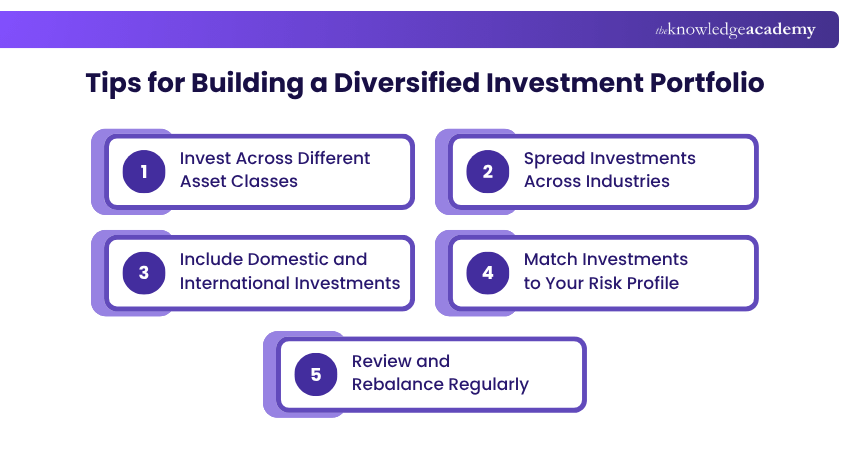
A diversified investment portfolio helps reduce risk by spreading your money across different investments. Rather than relying on a single asset, diversification helps balance risk and supports more stable long-term returns. Here are some practical tips for building a diversified portfolio:
1) Invest Across Different Asset Classes
Avoid investing all your money into one type of investment. Consider combining stocks, bonds, mutual funds, real estate, or cash-equivalent investments to balance risk and return while improving overall portfolio stability.
2) Spread Investments Across Industries
Investing in companies from different sectors, such as technology, healthcare, finance, and consumer goods, helps minimise the impact of poor performance in any single industry during changing market conditions.
3) Include Domestic and International Investments
Investing in both local and global markets provides broader growth opportunities and reduces dependence on the performance of a single country's economy while enhancing long-term investment resilience.
4) Match Investments to Your Risk Profile
Choose a mix of investments that reflects your financial goals, investment timeline, and risk tolerance. Your portfolio should support your objectives while remaining comfortable during market fluctuations.
5) Review and Rebalance Regularly
Over time, market movements can change the balance of your portfolio. Reviewing your investments periodically and rebalancing them helps maintain your preferred asset allocation and keeps your portfolio aligned with your goals.
Common Mistakes to Avoid When Investing
Investing can help you fulfil your financial goals, but common mistakes can reduce your returns and increase risk. Understanding these pitfalls can help you make informed decisions and build a stronger investment strategy. Here are some mistakes to avoid:
1) Holding too Much Cash:
Keeping all your savings in cash may feel safe, but inflation gradually reduces its purchasing power. Investing a portion of your money allows it to grow over time and increases the potential to achieve better long-term financial returns.
2) Trying to Predict the Market:
Trying to buy or sell investments at the perfect time is extremely difficult. A consistent, long-term investment strategy often delivers better results than making decisions based on short-term market movements or predictions.
3) Taking the Wrong Level of Risk:
Choosing investments that do not match your financial goals or risk tolerance can lead to unnecessary losses or lower returns. Select investments that suit your goals and comfort level with market fluctuations.
4) Failing to Diversify:
Investing all your money in one company, industry, or asset class increases risk. Spreading investments across various asset types and sectors helps reduce potential losses and creates a more balanced investment portfolio.
5) Making Emotional Investment Decisions:
Fear and excitement can lead to impulsive investment decisions during market highs and lows. Staying focused on your long-term investment plan helps you avoid costly mistakes caused by short-term market fluctuations.
6) Overlooking Investment Costs:
Management fees, brokerage charges, taxes, and other expenses can reduce your investment returns over time. Comparing costs before investing helps you choose cost-effective options and maximise your long-term financial growth.
Learn to craft and convey compelling equity stories in line with investor expectations with our Investor Relations Course – Join today!
Investment Strategies
Beyond choosing assets, how you approach investment matters. Strategies shape your investment journey, guiding decisions based on risk tolerance, goals, and market conditions. Here are some of them:
1) Buy-and-hold: Focuses on long-term gains. Investors believe in the growth of markets over extended periods and avoid reacting to short-term market fluctuations.
2) Active Trading: Involves frequently buying and selling assets, aiming to capitalise on short-term market movements. Requires a keen understanding of market dynamics.
3) Diversification: Spreading investments across different asset types to manage risks. This strategy is rooted in the idea that not all investments will perform poorly at the same time.
4) Dollar-cost Averaging: Investing a fixed amount on a regular basis, regardless of market conditions. This can minimise the impact of market volatility, ensuring investors don't always buy high.
Remember, combining these strategies with a deep understanding of the various Types of Investment can pave the way for informed decision-making and optimal financial growth.
How Can Investing Grow My Money?
Investing helps your money grow by putting it into assets that can increase in value or generate income over time. For example, stocks may rise in price or pay dividends, while bonds offer regular interest. With patience and smart choices, investments compound your returns, meaning your earnings start to earn more, helping you build wealth faster than saving alone.
Is Investing the Same as Gambling?
No, investing is not similar to gambling. While both involve risk, investing relies on research, strategy, and long-term planning to grow wealth. Gambling is based mostly on chance, with outcomes that are immediate and unpredictable. Investors assess risks, diversify assets, and make informed decisions, whereas gambling offers no control or expected return over time.

Shristi Roy is a Content Writer with experience in journalism, article writing and web content development. Her experience researching and writing about Business Skills and Accounting and Finance enables her to communicate specialised information through clear, engaging narratives.
View Detail

 If you wish to make any changes to your course, please


