


 Top Rated Course

We may not have the course you’re looking for. If you enquire or give us a call on 01344203999 and speak to our training experts, we may still be able to help with your training requirements.
13 Best Supervisory Skills to Improve Team Performance
The Knowledge Academy 15 July 2026Supervisory Skills include communication, leadership, and problem-solving to help supervisors manage teams effectively and improve workplace performance. From assigning tasks and decision-making to clear coaching and conflict resolution, the right skills help supervisors guide, support, and motivate teams to achieve shared goals.

Training Outcomes Within Your Budget!
We ensure quality, budget-alignment, and timely delivery by our expert instructors.
Table of Contents
Managing a team is not just about giving instructions and checking results; it requires a completely different set of strengths. From handling conflicts and motivating team members to giving feedback and keeping work on track, Supervisory Skills play a major role in turning daily challenges into team success. When these skills are missing in supervisors, teams can struggle with confusion, low morale, and missed goals.
These skills are essential to build clarity, develop trust, and improve team performance in scalable ways. They make it easier to communicate expectations, support employee growth, and keep everyone aligned with shared objectives. In this blog, you will explore the best Supervisory Skills, their importance, tips, and more.
Table of contents
1) What are Supervisory Skills?
2) Essential Supervisory Skills
3) Importance of Supervisory Skills?
4) How to Enhance Your Supervisory Skills?
5) Conclusion
What are Supervisory Skills?
Supervisory Skills refer to the abilities and competencies that individuals, typically in a managerial or leadership role, use to oversee, guide, and manage the work of others. These skills are essential for maintaining a productive and efficient work environment. Thus, a supervisor ensures that tasks are completed successfully and supports the development and well-being of employees.

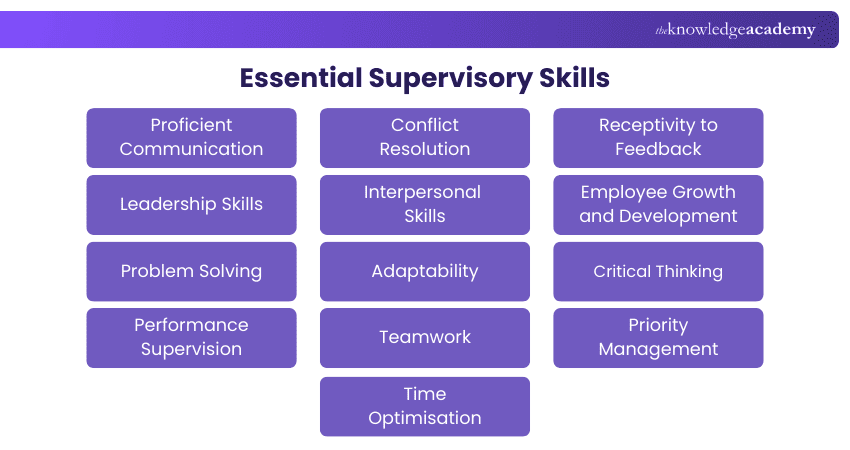
Essential Supervisory Skills
Essential Supervisory Skills are the core abilities that help a supervisor guide people, manage work, and achieve team goals effectively and consistently. Let’s look at them below to help you build the foundation of effective supervision:
1) Proficient Communication
Let's deep dive into the communication skills required by a supervisor:
1) Clear and Concise Communication: Effective Supervisors must communicate clearly and directly. They must ensure that their instructions and expectations are easily understood by team members. Moreover, they must avoid jargon or overly complex language.
2) Active Listening: Good communication involves not only speaking but also listening. Supervisors should actively listen to their team members, show empathy, and be open to their concerns and ideas.
3) Providing Constructive Feedback: Supervisors should be able to provide feedback in a constructive and supportive manner. This includes both positive reinforcement for good performance and guidance for improvement.
2) Leadership Skills
Let’s explore the core leadership skills below:
1) Inspiring and Motivating the Team: Effective supervisors energise their teams by recognising efforts, supporting initiative, and showing confidence in people’s abilities. They create a supportive environment where employees feel valued.
2) Creating and Communicating Vision: Good supervisors clearly explain where the team is heading and why the work matters. They connect daily tasks to bigger goals and highlight new opportunities that support growth and improvement.
3) Leading Through Change and Challenges: Strong supervisors stay calm and decisive in pressure situations. They guide their teams through challenges, make timely decisions, and maintain strong morale by providing direction and practical support.
3) Problem Solving
The following are the essential Problems Solving Skills:
1) Identifying Issues: Problem-solving starts with identifying and defining problems or challenges. Supervisors need to recognise when something is amiss or when a goal is not being met.
2) Analysing Root Causes: To find effective solutions, Supervisors must analyse the root causes of the problems. They must understand the root cause and factors contributing to these problems.
3) Developing Effective Solutions: Once the problems are understood, Supervisors should develop practical and effective solutions to address them. This may involve brainstorming, collaboration, and creativity.
4) Performance Supervision
The following are the essential performance supervision skills:
1) Setting Clear Expectations: Supervisors should define clear performance expectations for their team members. This includes outlining goals, key performance indicators, and job responsibilities.
2) Regular Feedback: Providing regular feedback is essential for performance improvement. Supervisors should offer constructive feedback on both strengths and areas for improvement.
3) Recognising Achievements and Areas for Improvement: Recognising and acknowledging team members for their achievements is equally important. This boosts morale and motivation while addressing areas for improvement and supports professional development.
5) Conflict Resolution
Let's explore conflict resolution skills in detail:
1) Identifying Conflicts: Supervisors must recognise when conflicts arise within their teams. This could be disagreements between team members, disputes over resources, or differences in work styles.
2) Mediation and Resolution: The ability to mediate disputes and facilitate conversations that lead to conflict resolution is crucial. This involves remaining impartial and helping the parties involved find common ground.
3) Creating a Harmonious Work Environment: Successful conflict resolution promotes a harmonious work environment where team members can collaborate effectively without lingering tensions.
Ready to master the art of dealing with difficult people? Join our Dealing With Difficult People Course today and unlock effective strategies for smooth interactions and conflict resolution!
6) Interpersonal Skills
The following are the essential interpersonal skills:
1) Building Relationships: Supervisors should be skilled at building positive relationships with their team members. This involves trust, respect, and open communication.
2) Motivating Team Members: Interpersonal skills are crucial for motivating team members, making them feel valued and engaged in their work.
3) Fostering a Collaborative Culture: Strong interpersonal skills support a culture of collaboration and teamwork, where team members willingly assist and support one another.
7) Adaptability
The following adaptability skills are essential to respond effectively to workplace change:
1) Responding Positively: Adaptable supervisors stay open-minded when policies, priorities, or structures change. They can change their management style to keep the work moving smoothly and keep work approach relevant.
2) Adjusting Methods and Processes: They modify plans, workflows, and communication methods when unexpected issues arise. One of their key reasons for stronger adaptability skills is to ensure productivity and efficiency do not drop.
3) Maintaining Team Stability: Effective supervisors guide their team members through periods of uncertainty with clarity and reassurance. They help employees stay focused and confident in their work despite change.
8) Teamwork
Teamwork is one of the integral supervisor Skills. Let's look at them below:
1) Building Cooperation and Trust: Strong supervisors encourage collaboration and mutual support to create a culture where people rely on each other and feel safe in contributing ideas.
2) Aligning Team Goals and Strengths: It is essential for a supervisor to clearly communicate shared objectives and help individuals understand their strengths. This helps team members identify how they are contributing to overall team success.
3) Involving Team in Problem-solving: Strong supervisors actively involve their team for input and ideas during challenges. This is important for increasing employee engagement and producing more diverse and practical solutions.
9) Receptivity to Feedback
The following skills help supervisors use feedback for continuous improvement in the workplace:
1) Openness to Feedback: Being open to feedback from team members, superiors, and other stakeholders is important for self-improvement. Supervisors should encourage feedback and be willing to accept criticism or suggestions.
2) Self-reflection: Receptivity to feedback also involves self-reflection. Supervisors should use feedback as an opportunity to evaluate their own performance and make necessary adjustments.
3) Continuous Improvement: Supervisors who are receptive to feedback are more likely to engage in ongoing self-improvement, ultimately becoming a supervisor who is more effective in their role.
Build trust that drives business results and strengthen your professional network with Building Business Relationships Course now!
10) Employee Growth and Development
The following are some Skills for Supervisors to enhance employee growth and development:
1) Identifying Training Needs: Effective supervisors recognise the training and development needs of their team members. They assess skills gaps and identify opportunities for growth.
2) Providing Development Opportunities: Supervisors should provide opportunities for skill enhancement, whether through training programs, mentorship, or on-the-job experiences.
3) Supporting Career Progression: Supporting the career progression of team members involves setting clear development paths, providing guidance, and ensuring that individuals have opportunities to advance within the organisation.
11) Critical Thinking
The following are the essential critical thinking skills:
1) Analysing Situations: Critical thinking involves the ability to objectively assess situations, problems, or challenges by breaking them down into their component parts and understanding the underlying issues.
2) Evaluating Information: Supervisors must evaluate the information available to them. They must consider the credibility, relevance, and significance of the data.
3) Making Well-informed Decisions: Critical thinking skills enable Supervisors to make well-informed decisions. By weighing the pros and cons of various options and considering potential consequences, they can make better decisions.
12) Priority Management
The following are the essential priority management skills required for a supervisor to possess:
1) Identifying Urgent Tasks: Supervisors should differentiate between urgent tasks and important but less time-sensitive tasks. Urgent tasks require immediate attention.
2) Resource Allocation: They must properly allocate resources to tasks based on their priority. They must ensure that important objectives are not neglected in favour of less critical ones.
3) Efficiency: Priority management helps Supervisors and their teams work efficiently, ensuring that they focus their efforts on what matters most.
13) Time Optimisation
The following are the essential time optimisation skills for enhanced productivity:
1) Prioritisation: Supervisors must prioritise tasks based on their importance and urgency. They need to identify what needs to be done first to ensure that critical goals are met.
2) Setting and Meeting Deadlines: Meeting deadlines is essential for maintaining productivity and keeping projects on track. Supervisors should set realistic timelines and ensure that their team adheres to them.
3) Resource Allocation: Supervisors should allocate resources, including time, money, and manpower, effectively to complete tasks and projects within the constraints of the available resources.
Maximise your productivity and reclaim your time – register for our Time Management Training now to boost your efficiency and achieve your goals!
Importance of Supervisory Skills
Supervisors play an important role in any organisation since they act as the link between senior management and employees. They convert organisational goals into clear action for their teams. Supervisory Skills are major for leading teams with clarity, communicating expectations, solving problems, and motivating employees.
The importance of Supervisory Skills is also reflected in team productivity and workplace culture. Skilled supervisors delegate tasks based on individual strengths, make informed decisions, and implement plans with structure and clarity. Building trust, supporting feedback, and recognising achievements lead supervisors to create high-performing and engaged teams.
How to Enhance Your Supervisory Skills?
Enhancing your Supervisory Skills is a continuous process that involves self-awareness, learning, practice, and adaptation. These skills are directly related to the effective execution of the Functions of a Supervisor. Whether you are a new supervisor or an experienced one looking to improve, here are several ways to enhance your Supervisory Skills:
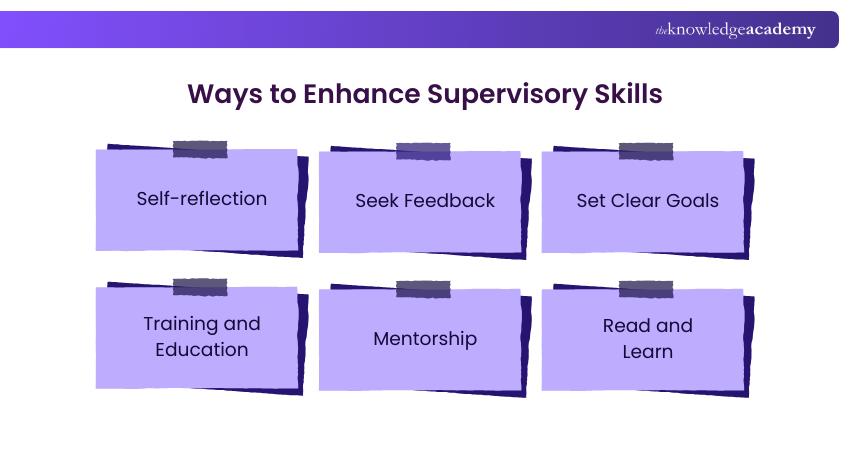
1) Self-reflection: Begin by reflecting on your current Supervisory Skills. Identify your strengths and areas where you need improvement. Self-awareness is the first step to growth.
2) Seek Feedback: Ask for feedback from your team members, peers, and superiors. Constructive feedback can help you identify blind spots and areas for improvement.
3) Set Clear Goals: Define specific goals for your supervisory development. Having clear objectives will guide your efforts and help you measure progress.
4) Training and Education: Consider training programs, workshops, or courses that focus on Supervisory Skills. Many organisations offer leadership development programs.
5) Mentorship: Seek out a mentor or coach, preferably someone experienced in supervision, who can provide guidance, share insights, and offer personalised advice.
6) Read and Learn: Invest time in reading books, articles, and research on effective Supervisory Skills, leadership, and management. Learning from others' experiences can be invaluable.
Conclusion
Strong teams are built through consistent, practical, and people-focused Supervisory Skills. When supervisors communicate clearly, adapt to change, lead with purpose, and support their teams, performance naturally improves. By continuously developing these skills, leaders can develop motivated teams, seamless workflows, and long-term success for both employees and the organisation.
Grow faster, think sharper, and lead better with Personal Development Courses – Join now!
Frequently Asked Questions
What are the Technical Supervisory skills?

Technical Supervisory Skills combine industry-based knowledge, such as software use or blueprint reading, with management abilities, such as delegation and safety compliance. It is useful for supervisors to guide technical tasks, maintain quality, and train teams.
Are Supervisory Skills Useful in Remote or Hybrid Teams?
Yes, Supervisory Skills are useful for remote or hybrid teams, but the focus shifts to outcome-based management, trust, and internal communication. Supervisors must drive clarity, engagement, and accountability while using digital tools to support collaboration and performance.

The Knowledge Academy


Global Training Provider
The Knowledge Academy is a world-leading provider of professional training courses, offering globally recognised qualifications across a wide range of subjects. With expert trainers, up-to-date course material, and flexible learning options, we aim to empower professionals and organisations to achieve their goals through continuous learning.


 If you wish to make any changes to your course, please


