


 Top Rated Course

We may not have the course you’re looking for. If you enquire or give us a call on 01344203999 and speak to our training experts, we may still be able to help with your training requirements.
Essential Reading Skills and How to Improve One
The Knowledge Academy 04 March 2026Reading Skills are the abilities to read, understand, interpret, and evaluate text using techniques like skimming and scanning to improve learning and communication. They support academic success, professional growth, and critical thinking in everyday life. Strong reading habits also enhance comprehension speed and overall confidence.

Training Outcomes Within Your Budget!
We ensure quality, budget-alignment, and timely delivery by our expert instructors.
Table of Contents
Reading is more than just a pastime; it’s a portal to knowledge, creativity, and a successful life. In this blog, we’ll explore essential Reading Skills that can transform your approach to reading. Whether you’re a beginner or seeking to refine your advanced techniques, you’ll discover strategies to read more efficiently and effectively.
Imagine absorbing information faster, retaining it longer, and enjoying every book you read. Ready to unlock your full reading potential? Dive in to discover how to read smarter, not harder, and revolutionise your reading journey!
Table of Contents
1) What Does Reading Mean?
2) Types of Reading Techniques
3) Core Components of Reading Skills
4) Importance of Reading Skills
5) How to Improve Your Reading Skills?
6) Common Reading Problems and Challenges
7) Conclusion
What Does Reading Mean?
Reading is not just about decoding words; it's a foundational step toward mastering Critical Reading where comprehension meets analysis. It involves deciphering written symbols and letters to grasp their meaning. Reading is among the four fundamental language skills:
a) Listening
b) Speaking
c) Writing
Reading is the third skill you develop, after listening and speaking. When we read, we decode written symbols (letters, punctuation, spaces) and transform them into meaningful words and sentences. Much like reading Different Types of Report Writing, each requires understanding its format and structure to fully comprehend the message being conveyed. This can be done silently in your minds or aloud, vocalising each word.
To read effectively, you need to:
a) Recognise the words you see (word recognition)
b) Understand their meaning (comprehension)
c) Connect words and their meanings to read smoothly and accurately (fluency)
By mastering these skills, reading becomes an automatic and enjoyable activity
Types of Reading Techniques
Depending on your goals, several reading techniques can help you read more effectively. Here are some of the most common ones:
1) Skim Reading
Technique: Rapidly reading to get an overall impression of the text without focusing on every detail.
Uses:
a) Previewing Material: Skim through a text before a detailed reading session to understand the main ideas and structure.
b) Determining Relevance: Identify which information is important and where to focus your attention.
c) Refreshing: Quickly review material before an exam to recall main points.
Note: Skimming helps grasp the gist of a text but may miss finer details, making it unsuitable for a comprehensive understanding of complex subjects.
2) Scan Reading
Technique: Quickly locating specific information within a text by looking for keywords, dates, names, or specific data.
Uses:
a) Finding Information: Locate particular pieces of information in indexes, tables of contents, or glossaries.
b) Specific Data: Quickly find specific data in long articles or reports.
c) Locating Answers: Efficiently find answers during exams or assignments.
Note: Scanning saves time and pinpoints relevant information but may not provide a deep understanding of the broader context.
3) Active and Intensive Reading
Technique: Engaging deeply with the text by asking questions, making connections, and taking notes.
Uses:
a) Studying Academic Material: Ideal for in-depth study of complex subjects.
b) Enhancing Comprehension: Improves understanding and retention of information.
c) Encouraging Critical Thinking: Promotes critical evaluation and analysis of content.
d) Strategies: Annotate the text, highlight key points, jot down questions, and summarise material in your own words.
Note: Active and intensive reading improves understanding, retention, and critical thinking, but it requires more time, focus, and effort than quicker reading techniques.
4) Analytical Reading
Technique: Analysing the text to evaluate and critique its content.
Uses:
a) Identification: Identify the author’s arguments, claims, and supporting evidence.
b) Assessment: Evaluate the credibility and reliability of the information.
c) Recognition: Recognise underlying assumptions and potential biases.
d) Comparison: Compare the text with other relevant sources to develop a comprehensive perspective.
Note: Analytical reading goes beyond comprehension to provide a thorough understanding of complex concepts.
Core Components of Reading Skills
Reading Skills are important for academic and personal success. Here are some key types of Reading Skills that can help you become a more effective reader:
1) Phonics
The process of relating letters to the sounds that they represent to read words correctly and fluently is called phonics.
Importance:
Phonics provides a good foundation for early readers in that they learn to identify the patterns in sounds, better pronunciation, and develop confidence in reading unfamiliar words.
Development Tips:
a) Practise identifying individual letter sounds and common blends
b) Use rhyming activities and sound-based word games regularly
c) Read simple phonetic books before progressing to advanced texts
2) Fluency
Fluency involves recognising words quickly and effortlessly, allowing for better comprehension and enjoyment of the text.
Importance:
Fluency allows readers to recognise words quickly and effortlessly, which enhances comprehension and enjoyment of the text.
Development Tips:
a) Regularly read passages aloud to improve accuracyand develop Speed Reading skill
b) Re-read familiar texts to build confidence and fluency
c) Read with a partner or teacher who can provide feedback and support
3) Vocabulary Development
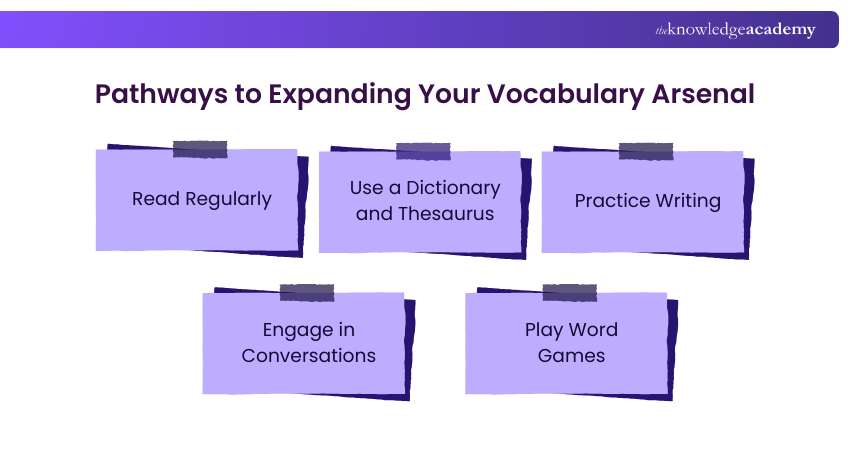
A robust vocabulary enhances comprehension and allows readers to understand and engage with more complex scripts or texts.
Importance:
A strong vocabulary allows readers to understand and use new words effectively.
Development Tips:
a) Expose yourself to a variety of genres and subjects
b) Keep a list of new words and their meanings
c) Play games like Scrabble or crossword puzzles to make learning new words fun
4) Reading Comprehension
Reading comprehension is understanding, interpreting, and analysing what you read.
Importance:
Involves making sense of the text, drawing inferences, and connecting it to existing knowledge.
Development Tips:
a) Pose questions about the text to deepen understanding
b) Write summaries of what you read to reinforce comprehension
c) Talk about the text with others to gain different perspectives
5) Memory and Focus
Good reading requires remembering what you’ve read and staying focused on the text.
Importance:
Crucial for retaining information and understanding the overall message.
Development Tips:
a) Use mindfulness techniques to improve concentration
b) Jot down key points while reading to aid memory
c) Go over what you’ve read to reinforce retention
6) Sentence Structure & Cohesion
Sentence Structure & Cohesion involves recognising how sentences are constructed and how they connect to form a coherent narrative or argument.
Importance:
Helps readers follow the flow of ideas in a text.
Development Tips:
a) Break down sentences to understand their components
b) Write your sentences to reinforce understanding
c) Look at well-written texts to see how sentences are effectively constructed
7) Attention to Detail
Attention to detail involves noticing and understanding the finer points of a text.
Importance:
Essential for tasks requiring precision, such as proofreading or analysing complex documents.
Development Tips:
a) Take your time to read carefully
b) Use a highlighter to mark important information
c) Focus on small text sections to understand them thoroughly
Master effective communication with our Active Listening Training – Join now!
Strengthen your skills for data synthesis and impactful storytelling in our Report Writing Course – Register now!
Importance of Reading Skills
Learning and communication skills are based on Reading Skills, which allow individuals to gain access to information in all areas of their studies and real-life scenarios. Good Reading Skills ensure academic achievement in subjects such as language arts, science and math, as learners are able to understand concepts better and retain information.
Outside the academic field, reading develops critical thinking, vocabulary, and problem-solving, preparing them to undertake more complex tasks and remain informed enough to make decisions. It also promotes empathy and cultural awareness as it introduces the reader to different views and experiences, and reading becomes a necessity in personal and intellectual development.
How to Improve Your Reading Skills?
Improving your Reading Skills involves practice and the use of effective strategies. For additional help, a Reading Strategies PDF can offer structured guidance to boost your progress. Here are some tips to help you enhance your reading abilities:
a) Set Reading Goals: Know what you want to accomplish by reading and have specific and measurable objectives. Clear goals assist you in keeping focused, monitoring your progress, and getting motivated to keep on improving.
b) Practise Regularly: Reading should become part of your routine so that you can gradually develop and sustain your skills. With regular practice, fluency, understanding, and confidence in reading are enhanced in the long term.
c) Expand Your Vocabulary: Study new vocabulary and the application of the vocabulary in different contexts. Good vocabulary allows you to understand and comprehend complex concepts better.
d) Use Reading Techniques: Use general understanding techniques, like skimming, and specific data techniques, like scanning. The correct strategy depends on what you are reading about, and this makes reading efficient and productive.
e) Take Notes: Make notes of important things, significant ideas, and brief summaries when reading. This enhances learning and makes you remember longer.
f) Discuss What You Read: Participate in reading discussions or group discussions. Discussion of opinions enhances understanding and offers new insights into the material.
g) Read Diverse Materials: Read across various formats, genres, and topics to expand your reading. The diversity of materials improves flexibility and quality of critical thinking.
Common Reading Problems and Challenges
The following are some of the common challenges that a reader can experience:
Vocabulary Deficits
Weaknesses in vocabulary arise where the reader has difficulty understanding and recognising the meaning of words, which may slow down the process of understanding and make reading frustrating. In the absence of a well-built vocabulary base, the learners will tend to make guesses or omit words they do not know, which does not support fluency and confidence.
Lack of Motivation
When the material is not interesting or applicable to the reader, many readers are unmotivated and do not practice enough to develop their skills faster. This may make the reading process an unwelcome task instead of a pleasing process, reducing overall gains.
Attention Difficulties
Attention problems make some people not to be able to concentrate on text over long periods of time and they lose their positions or are easily distracted. These challenges often result in fragmented reading and reduced comprehension of the material.
Phonemic Awareness
Phonemic awareness problems include the inability to recognise and manipulate the separate sounds of words that can complicate decoding and word recognition. Those who have weak phonemic awareness might not be able to sound out new words or connect letters to those sounds in an effective way.
Limited Exposure to Reading
Minimal exposure to books and reading experiences may expose the learners to lack the practice and familiarity required to develop a robust reading ability. Without the aspect of reading being a daily routine, learners tend to lag behind their peers in fluency, reading comprehension and even enjoyment of text.
Conclusion
Improving your Reading Skills requires dedication and practice. By understanding various reading techniques and applying practical strategies, you can enhance your efficiency and enjoyment. So, grab a book, set your goals, and start your journey to becoming a masterful reader today!
Facing challenges in creative writing? Overcome them with confidence through our Creative Writing Course— Sign up now!
Frequently Asked Questions
Are Reading Skills Important in the Digital Age?

Yes, Reading Skills remain essential in the digital age. They help individuals navigate online information critically, stay focused despite distractions, and interpret content accurately. Strong reading abilities also improve comprehension, vocabulary, and thoughtful engagement with digital media, supporting lifelong learning and informed decision-making.
What Is the Difference Between Reading Skills and Comprehension Skills?
Reading with comprehension is the ability to understand and interpret written text, not just recognise words. It enables readers to grasp meaning, connect ideas, and apply information effectively in academic, professional, and everyday situations.
What are the Other Resources and Offers Provided by The Knowledge Academy?
The Knowledge Academy takes global learning to new heights, offering over 3,000+ online courses across 490+ locations in 190+ countries. This expansive reach ensures accessibility and convenience for learners worldwide.
Alongside our diverse Online Course Catalogue, encompassing 17 major categories, we go the extra mile by providing a plethora of free educational Online Resources like Blogs, eBooks, Interview Questions and Videos. Tailoring learning experiences further, professionals can unlock greater value through a wide range of special discounts, seasonal deals, and Exclusive Offers.
What is The Knowledge Pass, and How Does it Work?
The Knowledge Academy’s Knowledge Pass, a prepaid voucher, adds another layer of flexibility, allowing course bookings over a 12-month period. Join us on a journey where education knows no bounds.
What are the Related Courses and Blogs Provided by The Knowledge Academy?
The Knowledge Academy offers various Personal Development Courses, including the Creative Writing Course and the Speed Writing Course. These courses cater to different skill levels, providing comprehensive insights into 8 Powerful Tips and Techniques for Persuasive Writing.
Our Business Skills Blogs cover a range of topics related to critical analysis, offering valuable resources, best practices, and industry insights. Whether you are a beginner or looking to advance your Critical Reading Skills, The Knowledge Academy's diverse courses and informative blogs have got you covered.

The Knowledge Academy


Global Training Provider
The Knowledge Academy is a world-leading provider of professional training courses, offering globally recognised qualifications across a wide range of subjects. With expert trainers, up-to-date course material, and flexible learning options, we aim to empower professionals and organisations to achieve their goals through continuous learning.

Upcoming Business Skills Resources Batches & Dates
Date
 Speed Writing Course
Speed Writing Course
Fri 20th Mar 2026
Speed Writing Course
Fri 22nd May 2026
Speed Writing Course
Fri 21st Aug 2026
Speed Writing Course
Fri 13th Nov 2026

 If you wish to make any changes to your course, please


