




We may not have the course you’re looking for. If you enquire or give us a call on 01344203999 and speak to our training experts, we may still be able to help with your training requirements.
Prosocial Behaviour: A Comprehensive Guide
ByThe Knowledge AcademyLast updated on: 19 September 2026
Prosocial behaviour involves helping, sharing, and cooperating activities that aid others and foster positive relationships and social harmony. It plays a crucial role in building trust and empathy within communities. Encouraging such actions can lead to stronger bonds, reduced conflict, and a more supportive social environment for everyone.
Key Takeaways
1. Prosocial behaviour includes actions intended to benefit other people.2. Prosocial actions can be reactive, altruistic or proactive.3. Empathy, personal values and social situations can affect whether people choose to help.4. Helping, sharing, volunteering, donating and cooperating are common forms of prosocial behaviour.5. Modelling empathy, providing opportunities to help and encouraging cooperation can support prosocial behaviour.
Prosocial behaviour is all about actions that benefit others - whether it’s helping, sharing, or simply offering support. From everyday kindness to structured teamwork, these behaviours shape how we connect and collaborate. But what exactly is this methodology, and why does it matter so much in both personal and professional settings? It goes beyond good manners; it's about empathy in action. Understanding its impact can improve team dynamics, well-being, and social cohesion. Let’s explore how it influences the way we live and work.
What is Prosocial Behaviour?
The definition of prosocial behaviour, as developed by psychology researchers, originated as the opposite of anti-social behaviour. While anti-social behaviour is often intended to harm others, this behaviour aims to benefit the greater good, regardless of the individual’s motives.
Prosocial behaviour is a positive form of conduct that benefits others. The study of this behaviour examines how and why people assist each other. It explores why some individuals feel a personal responsibility to engage in prosocial actions and how others might use such behaviours for self-serving purposes.
Trainer Insight
Prosocial behaviour describes an action that benefits others, but the motivation behind that action can differ. Therefore, not every prosocial action is necessarily motivated purely by altruism.
The Importance of Prosocial Behaviour
Prosocial behaviour includes actions intended to benefit others, plays a vital role in promoting positive social interactions and building strong communities. Engaging in prosocial actions, such as helping, sharing, comforting, and cooperating, contributes to a more compassionate and supportive society.
1) Enhancing Social Relationships
Prosocial behaviour cultivates trust and strengthens social bonds. When individuals engage in acts of kindness and cooperation, they build a sense of community and mutual respect. This trust is essential for creating harmonious relationships and fostering social cohesion.
2) Promoting Well-being
Engaging in prosocial behaviour has significant benefits for both the giver and the receiver. For the giver, it can lead to improved mood, lessened stress and a greater sense of purpose. Research has shown that people who help others tend to experience better mental health and lower levels of depression. For the receiver, prosocial actions provide support and relief, enhancing their overall well-being.
3) Building Resilient Communities
Communities thrive when individuals actively participate in prosocial behaviours. These actions create a supportive environment where people feel valued and connected. During challenging times, such as the COVID-19 pandemic, communities with higher levels of prosociality demonstrated greater resilience and cooperation, leading to better health outcomes.
4) Encouraging Altruism and Empathy
Prosocial behaviour encourages the development of empathy and altruism. By helping others without expecting anything in return, individuals learn to understand and share the feelings of others.
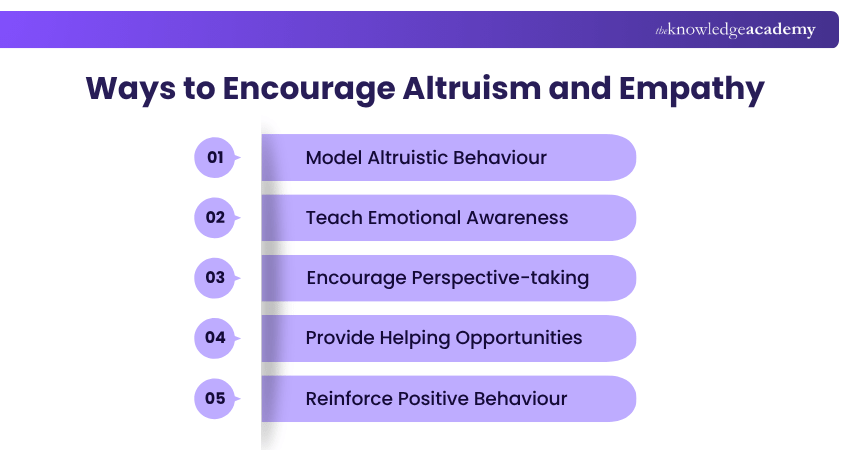
This empathy is vital for creating a more compassionate society where people are motivated to act for the greater good.
5) Positive Health Effects
Prosocial behaviour is linked to numerous health benefits. Studies have found that individuals who engage in volunteering and other forms of helping behaviour tend to live longer and healthier lives. Prosocial actions can reduce the negative emotional effects of stress and contribute to overall physical and mental health.
Different Types of Prosocial Behaviour
While prosocial behaviour is often viewed as a single, uniform dimension, some research indicates that there are distinct types. These types are differentiated based on their underlying motivations which include:
1) Reactive
Actions performed in response to the needs of others. These behaviours are typically spontaneous and driven by immediate circumstances.
Example: Comforting a colleague after noticing that they are upset.
2) Altruistic
Actions intended to help others without any expectation of personal gain. Such actions are motivated purely by the desire to benefit others.
Example: Volunteering time to support people in need without expecting a reward.
3) Proactive
Prosocial actions that serve self-benefitting purposes. These actions are often planned and executed to achieve personal goals.
Example: Helping with a workplace initiative partly because it supports the team while also strengthening professional relationships.
Pro Tip
Avoid treating “prosocial” and “altruistic” as exact synonyms. Altruistic Behaviour is one form of prosocial behaviour, while prosocial behaviour is the broader concept.
Success has a lot to do with how you connect with others. Build relationships and master meaningful communication with the Social Skills Course – Sign up now!
Benefits of Prosocial Behaviour
Prosocial behaviour, or deeds meant to benefit others, has significant advantages for both the individuals who engage in them and their communities. Numerous significant benefits are highlighted by research, particularly in relation to mood, social support, and stress reduction.
1) Mood-boosting Effects
a) Engaging in prosocial acts, such as helping a friend or comforting a colleague, has been shown to elevate one’s mood.
b) People who regularly perform acts of kindness tend to experience more positive emotions and encounter negative moods less frequently.
c) This “helper’s high” isn’t just a fleeting moment; consistent helping can contribute to lasting improvements in overall happiness and satisfaction.
d) The feeling of having made a positive impact, no matter how small, can foster a sense of purpose and increased self-worth.
2) Social Support Benefits
a) Prosocial behaviour strengthens social networks, creating webs of support that are crucial during challenging times.
b) When people extend help to others, they foster trust, mutual respect, and stronger interpersonal bonds.
c) This becomes a safety net, reducing the risk of loneliness, depression, and unhealthy coping strategies such as substance abuse.
d) Research shows that supportive relationships lead to greater emotional resilience, with people feeling less isolated and more motivated.
3) Stress-reducing Effects
a) Stress levels are directly impacted by helping others
b) By providing a sense of control and achievement, deeds of kindness can be a powerful tool for stress reduction and management.
c) People frequently find relief from their own burdens when they direct their attention outward, towards the needs of others rather than their own concerns.
d) Frequent engagement in prosocial activities is associated with reduced stress responses, which, over time, may result in improved mental health.
Ways to Encourage Prosocial Behaviour
Cultivating prosocial behaviour can benefit individuals and lead to broader societal advantages. If you aspire to live in a better world, you can start by taking action in your own life. Such behaviours not only benefit your community but also serve as a model for others to emulate. Some strategies to help foster this behaviour include:
1) Model Prosocial Actions
One of the best things you can do is to lead by example. Be empathetic, help out when you see a need, and don’t hesitate to volunteer for the causes you care about.
2) Show Compassion and Empathy
Take the time to put yourself in other people’s shoes. When you understand others and recognise their plight, you are more likely to be moved to help.
3) Be Ready to Assist
You are more likely to take action if you feel equipped with the knowledge and skills to be helpful. Learning how to manage conflict and acquiring basic first aid and CPR skills can put you in a better position to assist in emergency situations.
The Psychology Behind Prosocial Behaviour
Understanding the psychology behind prosocial behaviour helps you appreciate why people choose to help others and how various factors influence these actions. Let's look at them in detail:
1) Personal Influences
Personal characteristics significantly impact prosocial behaviour. Factors such as empathy, moral reasoning, and personality traits like agreeableness and conscientiousness influence one’s likelihood to help others. People with strong empathy are more inclined to engage in helping behaviours.
Additionally, those with internalised moral values and a sense of responsibility are more likely to act prosocially. Childhood experiences in nurturing environments also shape one’s tendency to help.
2) Does Being Watched Affect Behaviour?
The presence of an audience can enhance prosocial behaviour, known as the “audience effect.” Individuals are more likely to help when they believe they are being observed, as it heightens their concern for reputation and social image. Even subtle cues, like images of eyes, can increase prosocial actions by making people feel watched. This effect is linked to antisocial behaviour, as the desire for positive social perception drives altruistic behaviour.
Pro Tip: When assistance is required in a group situation, make requests clear and direct rather than simply assuming that someone else will respond.
3) The Bystander Effect
The bystander effect happens when individuals are less likely to tend to a victim in the presence of others. This phenomenon is due to diffusion of responsibility, where people feel less personal obligation to act, believing others will intervene. Social influence also plays a role; if no one else helps, individuals may perceive the situation as non-urgent. Fear of judgement or making mistakes can further inhibit action. Understanding this effect is crucial for encouraging prosocial behaviour in group settings.
Join our Team Development Training and equip your team with the skills to seamlessly work together!
Examples of Prosocial Behaviour
Prosocial behaviour encompasses actions intended to benefit others, promoting social acceptance and friendship. These behaviours can range from small acts of kindness to significant contributions to society. Here are some common examples:
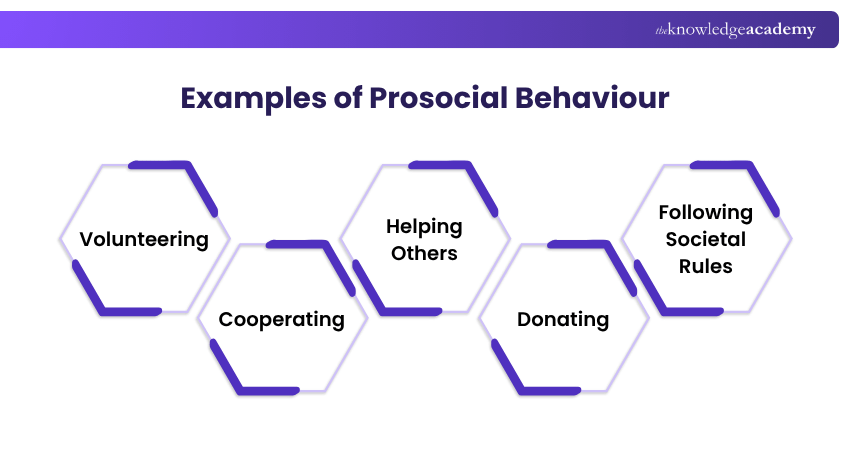
1) Volunteering
Volunteering at a local food bank, tutoring students in need, or participating in community clean-up events are all great examples of volunteering. These activities help improve the community and provide support to those who need it.
2) Cooperating
Working together on a group project, collaborating with colleagues to solve a problem, engaging in problem-solving, or participating in team sports are examples of cooperation. Cooperation involves working with others towards a common goal, often leading to better outcomes than working alone.
3) Helping Others
Assisting an elderly neighbour with their groceries, offering to help a friend move, or providing emotional support to someone going through a tough time are all ways of helping others. These actions can substantially impact the well-being of individuals and strengthen social bonds.
4) Donating
Donating money to a charity, giving clothes to a shelter, or contributing food to a food drive are examples of donating. Donations can provide crucial resources to those in need and support various causes and organisations.
5) Following Societal Rules
Adhering to traffic laws, respecting public property, and following community guidelines are examples of following societal rules. These behaviours help maintain order and safety within a community, ensuring that everyone can coexist peacefully.
How Does Prosocial Behaviour Impact Mental Health?
Prosocial behaviour involves voluntary actions that benefit others, such as helping, sharing, or volunteering. These behaviours can support psychological well-being by increasing positive emotions, life satisfaction, social connection, and a sense of meaning.
Prosocial actions may also help reduce anxiety, stress, and depressive feelings by strengthening empathy and support networks. Helping others can shift attention away from personal worries and foster a stronger sense of purpose, which may support resilience and emotional well-being.
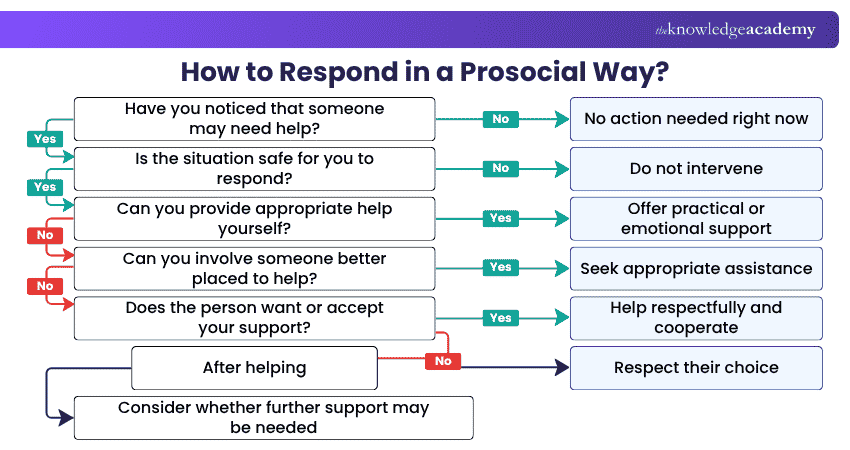
Prosocial behaviour is not only about recognising that someone needs support. It also involves considering the situation, the person's needs and whether you are able to provide appropriate help. Here's a quick look at how it can be done:
What are the Big 5 Prosocial Behaviours?
Here are the five key prosocial behaviours that describe how people can positively support and interact with others:
1) Altruism: Altruism involves selflessly helping others without expecting anything in return. It reflects genuine concern for others’ welfare and motivates acts like donating or volunteering purely to benefit someone else.
2) Helping: Helping behaviour refers to assisting others in need or solving a problem. It can be spontaneous or planned and often involves offering practical support or aid.
3) Sharing: Sharing includes willingly dividing resources or possessions with others. This prosocial act fosters cooperation and trust in social relationships.
4) Cooperation: Cooperation means working together with others towards common goals. It involves collaboration, mutual benefit, and collective problem-solving.
5) Empathy: Empathy refers to the capacity to understand and share the feelings of others. It motivates compassionate responses and underpins many prosocial behaviours by fostering emotional connection.
Each behaviour supports positive social interactions and contributes to stronger, more caring communities.
Checklist: Encouraging Prosocial Behaviour
Before you finish, check whether you can apply these principles in everyday situations:
□ Model helpful and cooperative behaviour□ Listen to other people's needs□ Show empathy and compassion□ Encourage sharing and teamwork□ Create opportunities to help others□ Recognise positive contributions□ Avoid assuming someone else will always step in□ Respect people's boundaries when offering support

The Knowledge Academy develops accessible learning content across Project Management, IT, Cybersecurity, Data Science, Business Analysis, HR, Accounting and Finance, Leadership and Health and Safety. Its resources combine subject research with clear explanations to help professionals build practical knowledge across a wide range of disciplines.
View Detail

 If you wish to make any changes to your course, please


