


 Top Rated Course

We may not have the course you’re looking for. If you enquire or give us a call on 01344203999 and speak to our training experts, we may still be able to help with your training requirements.
What is a PMO? Understanding Its Role & Importance
David Evans 14 July 2026A Project Management Office (PMO) ensures project success by providing centralised support, aligning projects with goals, and maintaining best practices. It helps ensure projects are completed on time, within budget, and aligned with business goals. It brings structure and control to how projects are run offering guidance, governance, and strategic alignment.

Training Outcomes Within Your Budget!
We ensure quality, budget-alignment, and timely delivery by our expert instructors.
Table of Contents
You’ve got projects. You’ve got deadlines. You’ve got chaos. But there’s one thing that can make it all work: Project Management Office. Learning What is PMO is your ultimate project ally, bringing structure, strategy, and support to every initiative. Think of it as the conductor in a symphony of tasks, timelines, and resources.
It's important to learn What is a PMO as it ensures that every project isn’t just done but done right. Whether you're building one or reporting to one, understanding the PMO is a game-changer. This blog explores everything from what a PMO is and why it matters to the types, tools, and people that make it tick. Ready to take your project game to the next level? Let’s begin.
Table of Contents
1) What is a PMO?
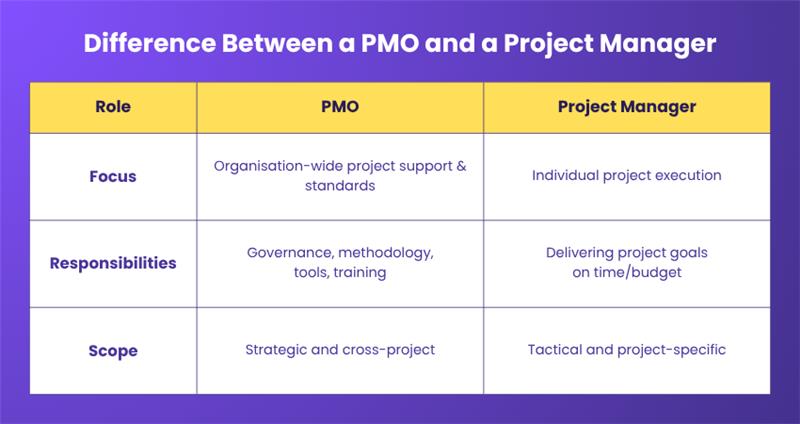
2) What is the Difference Between a PMO and a Project Manager?
3) Roles and Responsibilities of a PMO
4) Benefits and Challenges of PMO
5) Types of PMO
6) What are Typical PMO Job Titles?
7) PMO Tools and Software
8) Conclusion
What is a PMO?
A Project Management Office (PMO) is a centralised team or department within an organisation that defines and maintains best practices, standards, and tools for project management. Its main goal is to ensure projects are delivered consistently, efficiently, and in alignment with the company’s strategic objectives.

Key Takeaways:
1) It ensures projects align with business goals and are delivered efficiently
2) PMOs offer support, governance, and performance tracking for project success
3) They improve consistency, resource use, and risk management
4) Types include Supportive, Controlling, and Directive PMOs
5) Acts as the backbone of structured and successful project delivery
What is the Difference Between a PMO and a Project Manager?
Roles and Responsibilities of a PMO
To deliver successful outcomes across the board, a PMO takes on several critical roles. Here’s a deeper look at its core responsibilities:
a) Establishes a Project Governance Structure
The PMO lays the foundation for how projects are managed and controlled across the organisation.
1) Defines standard processes for initiating, planning, executing, and closing projects
2) Sets escalation procedures and decision-making protocols
3) Ensures alignment between project goals and organisational strategy
4) Promotes accountability through clear roles, responsibilities, and reporting lines
Level up your leadership - Explore Project Management Office Green Belt Course that delivers result!
b) Provides Management Reports
It acts as an information hub, delivering insights that drive smarter decision-making.
1) Collects project data including KPIs, budgets, timelines, and risks
2) Generates standardised, real-time reports for senior leadership
3) Offers visibility into project and portfolio performance
4) Supports data-driven decisions and early intervention in problem areas
c) Plan and Optimising Resources
This management process ensures the right resources are in the right place at the right time.
1) Manages allocation of people, tools, and budgets across multiple projects
2) Identifies resource conflicts or shortages and recommends solutions
3) Forecasts future resource needs based on project pipelines
4) Ensures efficient use of organisational capacity to avoid burnout or underuse
d) Creates Project Management Standards
It builds consistency by standardising how projects are planned and executed.
1) Develops standard templates, tools, and documentation guidelines
2) Implements consistent methodologies like Agile, PRINCE2, or Waterfall
3) Promotes best practices in scheduling, budgeting, and risk management
4) Enhances project quality and repeatability by reducing process variation
Benefits and Challenges of PMO
The PMO brings numerous benefits to organisations, including better alignment of projects with business goals, improved consistency through standardised processes, and more effective resource management. Here is a table that elaborates the pros and cons:

Benefits of PMO
1) Standardisation of Processes: A PMO introduces consistent methodologies, templates, and best practices across all projects. This ensures that teams follow a unified approach, reducing confusion and improving efficiency.
2) Enhanced Project Visibility: With centralised reporting and monitoring, a PMO provides real-time insights into project status, timelines, budgets, and risks. This allows leadership to make informed decisions quickly and proactively address issues.
3) Improved Resource Management: PMOs oversee resource allocation across multiple projects. It helps to avoid overloading individuals and ensures the right people are assigned the right tasks.
4) Strategic Alignment: A key role of a PMO is to ensure that projects align with the organisation’s broader goals. This means resources are invested in initiatives that deliver real value and support long-term strategies.
5) Better Decision-making: By collecting and analysing project data, a PMO empowers stakeholders. It provides accurate information and enables better risk assessment.
6) Increased Accountability and Governance: A PMO sets clear expectations, roles, and accountability frameworks. This reduces ambiguity, enhances compliance, and improves overall governance across the project lifecycle.
Challenges of PMO
1) Resistance to Change: Implementing a PMO often requires cultural and procedural shifts. Teams accustomed to autonomy may resist new frameworks, tools, or oversight.
2) High Initial Investment: Setting up a Project Management Office can be resource intensive. Costs include hiring skilled professionals, implementing new tools, and training staff.
3) Bureaucracy and Rigidity: An overly structured PMO can introduce unnecessary red tape, slowing down projects and stifling innovation. The challenge lies in finding the right balance between control and flexibility.
4) Limited Authority or Buy-in: Without strong executive backing, a PMO may lack the influence needed to enforce standards or drive change, limiting its effectiveness.
5) Not One-Size-Fits-All: PMO models must be tailored to the organisation’s size, culture, and maturity level. A rigid, standardised model may not suit every department or project, leading to misalignment.
6) Measuring ROI Can Be Difficult: While PMOs are meant to improve efficiency and outcomes, quantifying their direct Return On Investment (ROI) can be challenging, especially in the early stages.
Types of PMO
Depending on an organisation’s size, culture, and project complexity, a PMO can take different forms. It ranges from a supportive advisor to a hands-on manager. Here are the three main types of PMOs:
Directive PMO
A Directive PMO takes direct ownership of projects and assigns project managers from within the PMO itself. It has high authority and responsibility over project execution, making decisions, managing teams, and ensuring delivery aligns strictly with organisational goals.
This model is ideal for large enterprises or high-risk industries where strict governance, compliance, and control are critical such as defence, healthcare, or construction.
Key Traits:
1) High authority and accountability
2) Centralised project control
3) Standardised processes and tools enforced
4) Strong alignment with strategic goals
Controlling PMO
A Controlling PMO defines standards, templates, policies, and procedures and ensures that all projects comply with them. While it doesn’t directly manage projects, it plays a governance role by monitoring and auditing project adherence.
This model strikes a balance between control and autonomy and is suited for organisations that want consistency without micromanagement.
Key Traits:
1) Moderate control over projects
2) Ensures process compliance
3) Provides templates, tools, and training
4) Audits and monitors performance
Take charge of your career - Master Project Management Black Belt Course the smart way!
Supportive PMO
A Supportive PMO provides project managers with tools, templates, training, and best practices, but does not enforce their usage. It acts as a knowledge centre and advisory body, especially useful in organisations with decentralised or agile project environments.
This model is best for companies that value flexibility and already have experienced project managers.
Key Traits:
1) Low control, high flexibility
2) Offers guidance and resources
3) Encourages knowledge sharing
4) Suitable for agile or informal project environments
What are Typical PMO Job Titles?
A PMO includes various roles to manage strategy, execution, and support. These roles collectively ensure projects are delivered successfully on time and aligned with strategic goals. Here are some of them:
1) PMO Director / Head of PMO: Sets PMO vision, aligns projects with business goals.
2) PMO Manager: Oversees daily PMO operations and project governance.
3) Project Portfolio Manager: Manages and prioritises multiple projects for maximum value.
4) PMO Analyst / Project Support Officer: Tracks progress, supports reporting and coordination.
5) Project Controls Officer: Monitors budgets, timelines, and quality metrics.
6) Resource Manager: Plans and allocates project resources efficiently.
7) Governance Specialist: Ensures compliance with frameworks and regulations.
8) Project Management Trainer: Builds internal project management capabilities through training.
PMO Tools and Software
PMOs rely on tools to manage projects, track performance, and ensure alignment with business goals. Here are some commonly used tools:
1) Microsoft Project: Advanced scheduling, resource planning, and Gantt charts
2) Smartsheet: Spreadsheet-style interface with workflow automation
3) Jira & Confluence: Ideal for Agile project tracking and documentation
4) Asana: Visual task and project management for team collaboration
5) Trello: Simple, board-based tool for small teams and quick tasks
6) Wrike: All-in-one tool for planning, time tracking, and analytics
7) Clarity PPM: Enterprise-level portfolio and financial management
8) ServiceNow PPM: Integrates with IT services for large-scale project oversight
Conclusion
Understanding What is a PMO does can really help you work smarter. It plays a vital role in ensuring that projects are delivered efficiently, consistently, and in line with business goals. From setting standards to using the right tools, a good PMO makes projects run smoother and teams feel more supported. It’s all about making success easier, together. Behind every successful project is a PMO quietly turning chaos into clarity.
Equip yourself with the tools to identify and mitigate potential project risks with our Project Management Courses – join today!
Frequently Asked Questions
What Does a Good PMO Look Like?

A good PMO ensures project alignment with organisational goals, provides clear processes, and supports teams with tools and expertise. It promotes collaboration, tracks project performance, and mitigates risks. A well-structured PMO drives efficiency, transparency, and consistent delivery of successful projects.
What is an Example of a PMO Strategy?
An example of a PMO strategy is implementing a centralised project dashboard to monitor progress, allocate resources, and identify risks. This strategy focuses on standardising project workflows, ensuring alignment with business objectives, and enabling data-driven decision-making across all projects.

David Evans


Certified Project Trainer and Agile Delivery Expert
David Evans brings over a decade of hands-on experience in project delivery, Agile transformation, and team leadership. With a background in technology and business consulting, David has led cross-functional teams through Agile and Waterfall projects in both public and private sectors. He combines technical knowledge with practical insights to help readers navigate the challenges of modern project environments.


 If you wish to make any changes to your course, please


