






We may not have the course you’re looking for. If you enquire or give us a call on 01344203999 and speak to our training experts, we may still be able to help with your training requirements.
12 Personal Development Topics for Self-improvement
ByAkhil KLast updated on: 03 October 2026
Read this blog on personal development topics for self-improvement and learn how you can master the important areas in your life. Read more to learn.
Personal development topics encompass a broad spectrum of areas that can enhance an individual's life, skills and self-awareness. They can help you understand yourself better, strengthen how you interact with others and develop practical abilities for handling everyday challenges. Exploring the right areas can help you identify where you want to grow and take meaningful steps towards your personal goals.
According to Grand View Research, the personal development market size is projected to reach £59.04 billion by 2033. This shows its overall role and importance in a person's life. Read this blog to learn about top personal development topics that can help you improve the overall quality of your life. Let’s begin!
Personal Development Topics
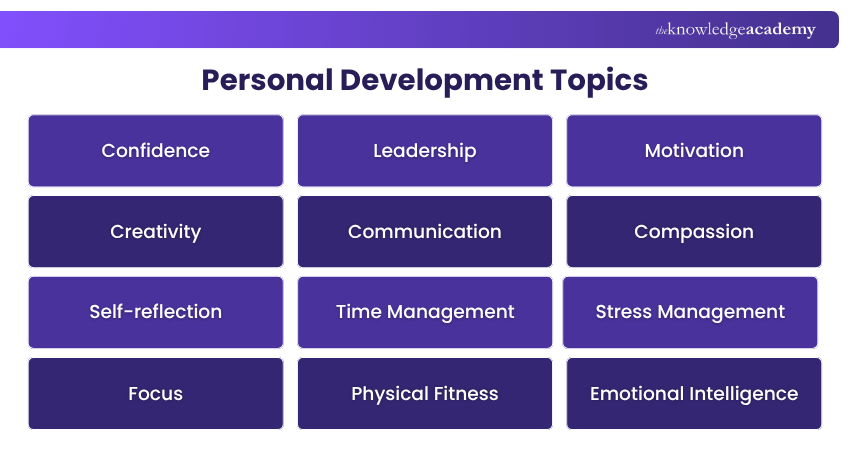
The following are 12 important areas you can focus on to support your personal development goals. Let’s look at them below:
1) Confidence
While success is what you want in life, confidence can play an important role in working towards it. Lacking confidence in yourself might pose challenges for achieving your goals. Even if you have a great talent or ability, lacking confidence can make it more difficult to demonstrate your skills and abilities.
Having confidence in yourself does not mean you can do anything at any moment. It means trusting your abilities while recognising that setbacks and uncertainty can occur. Having faith in yourself can help you continue working towards your personal development goals. Confidence fuels your passion and desire, serving as a driving force that can motivate you to accomplish your goals.
2) Leadership
Achieving personal and professional goals can also depend on developing leadership skills. A leader should be able to understand and guide others, respond to different situations, make decisions and take responsibility for outcomes. You don't need to be an expert or senior professional to develop leadership qualities.
Often, people associate leadership with designation or status. However, leadership is broader than a job title. At its core, it involves being able to guide and influence others towards shared objectives.
3) Motivation
Motivation is what helps you keep going. It is the driving force for whatever you want to do in life. It involves initiation, persistence and intensity. While initiation helps you take the first step towards your goal, persistence helps you continue working towards it. Intensity refers to the amount of effort and concentration you put into the activity.
Trainer's Insight
Don't rely on motivation alone to keep you moving. Motivation can change from day to day, so turn your goal into a small, repeatable action. A routine can help you continue making progress even on days when you feel less motivated.
4) Creativity
In this ever-changing world, you need solutions to complex problems occasionally. Meeting the need for new and innovative solutions is backed by creativity. The central aspect of creativity is one's ability to find new and original ideas. It's what makes your life more fun and interesting. Be it your hobby or your work, creativity makes it more enjoyable.
Creativity can be developed over time by trying unfamiliar activities, exploring different perspectives and practising ways of generating new ideas. Activities such as puzzles and creative games can also encourage you to approach problems from different angles. Regularly exploring and expressing your ideas can give you more opportunities to experiment with different ways of thinking.
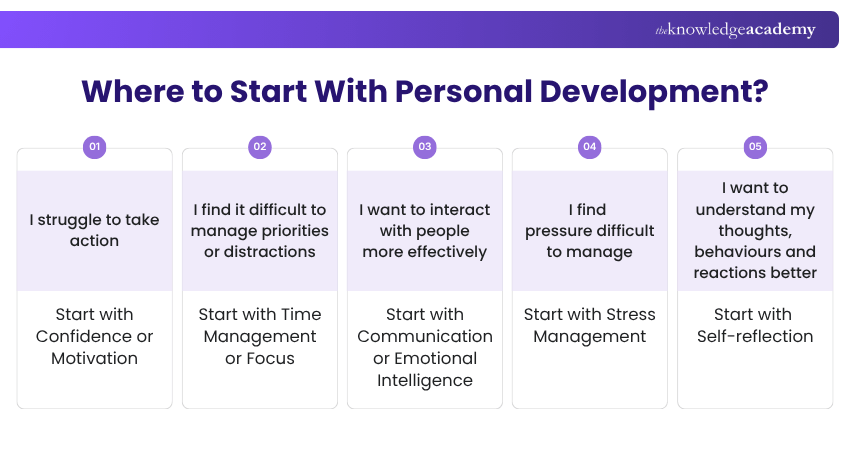
5) Communication
Communicating your thoughts and ideas in your workplace not only leaves a good impression but also makes you look genuine. Be it your personal or professional relationships, communication is an important component of building stronger connections in both areas. It makes life simpler and clearer instead of leaving people uncertain about what you mean.
Communication also involves listening and understanding others, not simply expressing your own thoughts. Developing both sides of communication can help reduce misunderstandings and support stronger personal and professional relationships.
Pro Tip
Before responding in an important conversation, briefly summarise what you think the other person means. A simple “If I understand correctly, you're saying…” can help clarify the message before you respond and reduce avoidable misunderstandings.
Communicate with purpose and influence with impact with the Communication and Influencing Skill Training – Sign up today!
6) Compassion
Compassion is derived from Latin, meaning “to suffer together”. Understanding others’ emotions and feelings is vital for maintaining healthy relationships. Although many use empathy and compassion interchangeably, there is a difference between the two. Empathy is when one can understand the emotions and feel the pain of others. Compassion does involve understanding others’ emotions; however, it is accompanied by a desire to help them and make them feel heard and understood.
Possessing strong emotional intelligence is a true asset if you aim to show compassion toward those around you. Compassion can encourage supportive behaviour and help you consider what another person may need rather than focusing only on your own perspective.
7) Self-reflection
Self-reflection refers to understanding your own self, thoughts, emotions, and ideas, why you think and feel the way you do, and why you do what you do. It helps you realise your strengths as well as weaknesses. By knowing yourself, you can respond to situations in a better way. You can understand if you are headed towards the right direction after evaluating the trajectory of your life.
Without regular self-reflection, it can be harder to recognise whether your actions are moving you towards the results you want. You may keep doing the same things in the same way even when they are not giving you the desired results.
Try ThisAt the end of the week, ask yourself three questions:1. What worked well?2. What didn't work as expected?3. What would I do differently next time?Keep the answers brief. The goal is not to overanalyse the week but to identify one useful lesson you can apply going forward.
8) Time Management
Time management helps you assign a specific amount of time to tasks and manage them to make them easier to complete. Organising, planning and chunking them helps you gain clarity and increases your motivation by facilitating your completion of tasks. The objective of time management is to use your available time effectively and give appropriate attention to your priorities.
It would not be wrong to say that time management is all about managing your life. Despite working hard, you might find yourself overwhelmed with responsibilities. As a result, your personal life deteriorates. Time management allows you to reallocate time to prioritise your tasks. This helps you achieve a good work-life balance.
Additionally, managing your time effectively may give you more mental space to focus on creative or demanding tasks.
Take control of your time and take charge of your day with the Time Management Training now!
9) Stress Management
Managing stress helps you deal with situations in life when you feel helpless and do away with the negative thoughts that cloud your thinking. Many people find unhealthy ways to cope with stress, such as smoking, drinking, or even drugs, worsening situations.
Stress management can include identifying sources of stress, planning demanding tasks, being physically active, taking appropriate breaks, maintaining supportive relationships and using relaxation techniques. Persistent stress that becomes difficult to manage or significantly affects everyday life may require additional professional support.
10) Focus
Focus is a cognitive skill that allows you to initiate a task and maintain attention until the task is complete. It helps you deal with distractions and stay determined to complete the task despite setbacks.
One of the most effective ways to increase your focus is to stop multitasking. You might think it may help you get more things done at once; however, frequently switching between tasks can reduce efficiency.
What feels like multitasking often involves repeatedly switching attention between activities. Research on task switching shows that these switches carry cognitive costs and can reduce efficiency.
11) Physical Fitness
Physical fitness refers to your ability to carry out daily activities and physical tasks with sufficient strength, endurance and energy. Maintaining physical fitness can support your overall health and well-being and make everyday activities easier to manage. A physically fit person may also have more energy for work, hobbies and other activities, which can support a healthier lifestyle.
You can increase your level of fitness through activities such as yoga, walking, sports or other forms of exercise. While you might have little to no interest in exercising, start by taking small steps and gradually increase the time and effort you put into those activities. Regular physical activity can improve physical and mental well-being and reduce the risk of several noncommunicable diseases.
12) Emotional Intelligence
Emotional intelligence involves recognising and understanding emotions and using emotional information appropriately in your thinking and behaviour. It can help you understand your own emotional responses and interact more effectively with other people.
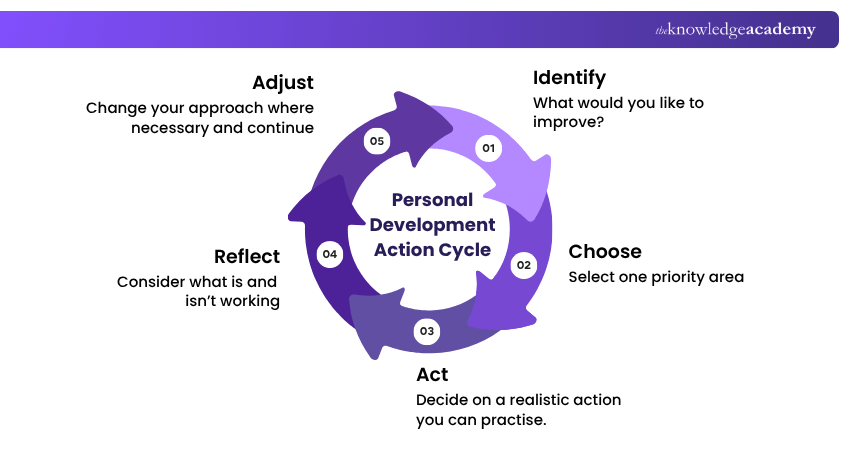
Developing emotional intelligence can involve paying attention to your emotions, considering what triggers them and learning how they affect your behaviour. Mindfulness and self-reflection can provide opportunities to notice your thoughts and emotions before reacting to them.
Make emotional intelligence your people advantage by joining the Emotional Intelligence Training now!

Akhil K is a Copywriter and Video Editor with experience in content creation, visual storytelling, advertising and brand communication. His background in journalism, research and audience-focused communication strengthens his ability to create clear and engaging Business Skills content.
View Detail

 If you wish to make any changes to your course, please


