




We may not have the course you’re looking for. If you enquire or give us a call on +30 2111995372 and speak to our training experts, we may still be able to help with your training requirements.
The Importance of Compliance
ByThe Knowledge AcademyLast updated on: 03 October 2026
Uncover the importance of compliance and find out how it helps organisations meet legal, regulatory and ethical responsibilities. Explore key areas of compliance and understand how effective compliance practices can reduce risk, protect reputation and strengthen stakeholder trust.
Quick Overview
1. Compliance helps organisations meet legal, regulatory, ethical, financial and data protection responsibilities.2. Key compliance areas include legal, regulatory, ethical, financial, data protection and third-party compliance.3. Internal controls, risk management and employee training help organisations manage compliance obligations more effectively.4. Strong compliance practices can reduce exposure to legal, financial, operational and reputational risks.5. Regular monitoring and review help organisations keep pace with changing requirements and emerging risks.
Compliance refers to the act of following the legal, regulatory, and ethical standards that apply to business operations. The importance of compliance for businesses cannot be overstated as it helps them avoid legal troubles, maintain a good reputation, and earn the trust of their stakeholders.
Compliance requirements continue to evolve as organisations respond to regulatory change, data protection obligations, technological developments and emerging business risks. This makes effective compliance increasingly important for protecting organisations from legal, financial, operational and reputational risks. Read along to learn more!
Key Areas of Compliance and Their Importance
Compliance involves following the legal, regulatory and ethical requirements that apply to an organisation's operations. The specific requirements can vary depending on factors such as the organisation's industry, activities and jurisdiction. Below are some key areas and practices that contribute to effective compliance:
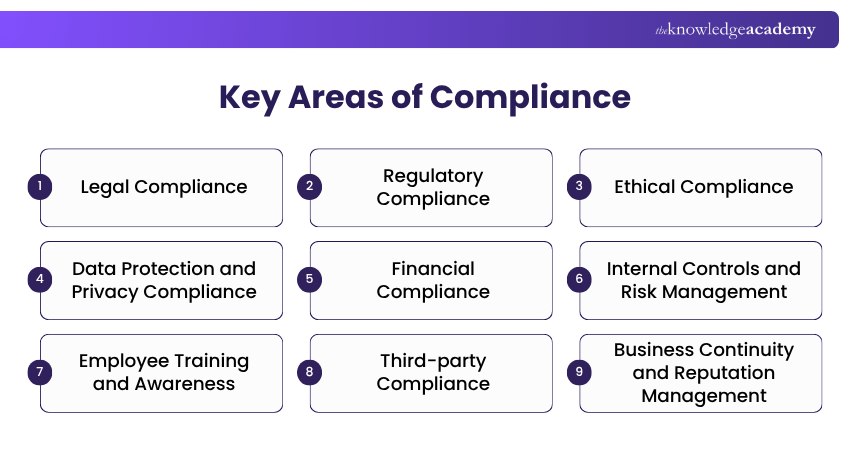
1) Legal Compliance
Legal compliance forms the foundation of any robust compliance programme. It involves adhering to applicable local, national and international laws governing an organisation's business operations.
Additionally, complying with legal requirements helps organisations reduce the risk of penalties, lawsuits and reputational damage. Depending on the applicable laws, compliance may also support consumer protection, fair competition and responsible business practices.

2) Regulatory Compliance
Organisations may also need to comply with industry-specific regulations, regulatory requirements and applicable standards in addition to broader legal obligations. Government regulators may impose mandatory requirements. Industry bodies and professional associations may also establish standards, codes or rules that organisations are expected or required to follow in particular contexts.
Additionally, regulatory compliance can help organisations meet requirements relating to areas such as operational integrity, data security, environmental protection and public safety, depending on the regulations that apply to them. Adhering to relevant regulatory requirements also helps organisations mitigate compliance risks.
3) Ethical Compliance
Ethical compliance focuses on conducting business with integrity, honesty, and fairness. It involves adhering to ethical standards, a code of ethics and a code of conduct that define acceptable behaviour within an organisation. These guidelines help ensure that all actions and decisions align with the core values and principles upheld by the organisation.
Additionally, demonstrating ethical compliance helps build trust with stakeholders, including employees, customers, and partners. It can also encourage organisations to consider social responsibility, sustainability and respect for human rights in their operations.
Common Misconception
Meeting minimum legal requirements does not automatically mean every business decision is ethical. Legal compliance focuses on applicable legal obligations, while ethical considerations can extend to organisational values, fairness and responsible conduct.
4) Data Protection and Privacy Compliance
Data protection and privacy compliance have gained significant importance in the era of increasing digitalisation. Organisations must comply with data protection and privacy laws that apply to their activities.
In the UK, this includes the UK GDPR and Data Protection Act 2018, as amended by the Data (Use and Access) Act 2025. Organisations operating in other jurisdictions may also be subject to requirements such as the EU GDPR.
More importantly, compliance in this area helps organisations handle personal data responsibly, protect individuals' rights and reduce the legal, financial and reputational risks associated with data misuse or breaches.
Enhance your understanding of data protection regulations with GDPR Training – Register now!
5) Financial Compliance
Financial compliance pertains to adhering to accounting standards, financial reporting requirements, and tax regulations. Compliance in this area supports accurate and transparent financial records, facilitates sound decision-making, and builds investor confidence.
Organisations must comply with applicable financial requirements, helping reduce the risk of legal consequences, reputational damage and financial losses associated with non-compliance.
6) Internal Controls and Risk Management
Internal controls and risk management are important components of an effective compliance framework. Effective internal controls help organisations conduct activities consistently and in accordance with established policies, procedures and requirements.
Additionally, risk management helps identify potential threats and implement measures to mitigate them. Effective controls and risk management can reduce the likelihood of fraud, corruption and operational disruptions while promoting efficiency and accountability.
7) Employee Training and Awareness
An organisation's compliance programme is more effective when employees understand their responsibilities and follow relevant policies and procedures. Comprehensive training and awareness programmes educate employees about compliance policies, procedures, and their role in upholding them.
Organisations benefit from training their employees, fostering a strong compliance culture, reducing the risk of inadvertent violations, and encouraging proactive identification and reporting of compliance concerns.
Trainer’s Insight
Tailor compliance training to employees' responsibilities and risk exposure. Role-specific scenarios can make requirements easier to understand and apply in day-to-day work.
8) Third-party Compliance
Organisations often work with third-party vendors, suppliers and partners that may be subject to relevant legal, regulatory, contractual or organisational compliance requirements. Managing third-party compliance is important for reducing risks arising from external relationships.
Furthermore, robust due diligence, ongoing monitoring and clear contractual agreements can help manage compliance risks across third-party relationships, reducing exposure to legal, reputational and operational issues.
9) Business Continuity and Reputation Management
Compliance contributes to business continuity and reputation management. Organisations can mitigate risks and ensure their adherence to legal and ethical standards, thereby safeguarding their reputation, which is vital for attracting and retaining customers, investors, and employees.
Moreover, strong compliance practices can support crisis management by establishing clear responsibilities, controls and reporting processes that help organisations respond effectively to disruptive events.
Compliance is not simply about having policies in place. Effective compliance requires organisations to understand their obligations, assess changing risks, apply appropriate controls and regularly check whether those controls work in practice.
Understand governance codes, mechanisms, and stakeholder responsibilities with the Corporate Governance Training – Join now!

The Knowledge Academy develops accessible learning content across Project Management, IT, Cybersecurity, Data Science, Business Analysis, HR, Accounting and Finance, Leadership and Health and Safety. Its resources combine subject research with clear explanations to help professionals build practical knowledge across a wide range of disciplines.
View Detail

 If you wish to make any changes to your course, please


