


 Top Rated Course

We may not have the course you’re looking for. If you enquire or give us a call on 01344203999 and speak to our training experts, we may still be able to help with your training requirements.
How to Become a Product Manager and Build Key Skills
The Knowledge Academy 15 July 2026Becoming a Product Manager means turning ideas into successful products and learning the skills, career paths, and steps to excel in this high-demand role. Product Managers manage the product lifecycle from conception through launch and iteration, making critical decisions to drive the product's success in the market.

Training Outcomes Within Your Budget!
We ensure quality, budget-alignment, and timely delivery by our expert instructors.
Table of Contents

Durning ideas into products that people can’t live without is a skill that ranks high in this digital age of ultrafast convenience. Becoming a Product Manager isn’t just about managing tasks; it’s about crafting visions, solving problems, and driving innovation. If you’re curious about How to Become a Product Manager, you’re in the right place.
In this blog, we’ll walk you through the skills, strategies, and secrets that outline How to Become a Product Manager. Whether you’re starting fresh or boosting your already thriving career, this is your roadmap to mastering the art of building products that truly make an impact. So read on!
Table of Contents
1) Who is a Product Manager?
2) What Does a Product Manager do?
3) Skills Required to Become a Product Manager
4) Step-by-step Process on How to Become a Product Manager?
5) What is the Difference Between a Product Manager and a Product Owner?
6) Conclusion
Who is a Product Manager?
A Product Manager is the strategic leader responsible for a product's overall vision, roadmap, and success. They bridge various elements such as business goals, customer needs, and technology to guide the product from idea to launch and beyond. They define what to build, why, and for whom, ensuring the product delivers value and meets market demands.
In addition, Product Managers work closely with cross-functional teams such as engineering, design, marketing, and sales to align efforts and drive execution. They continually assess market trends and customer feedback to refine strategies, making evidence-based decisions that keep the product competitive.

What Does a Product Manager do?
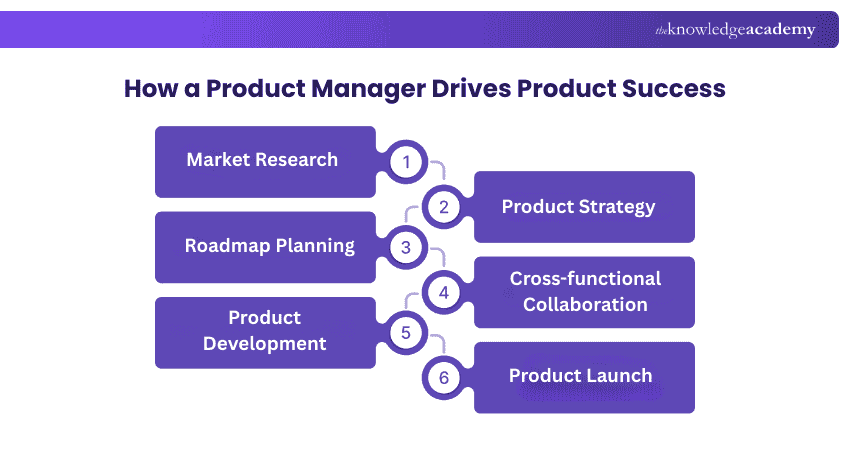
From Market Research to product launch, a Product Manager performs numerous tasks. Let’s explore these duties in detail:
1) Market Research
Market Research is a fundamental step in the Product Management Process. Product Managers conduct deep research to gain a deep understanding of the market landscape, customer needs, and emerging trends. They employ various methodologies including focus groups, surveys and Data Analysis, to gather valuable insights.By comprehending customer pain points and preferences, Product Managers can make informed decisions about product direction and features. This research-driven approach minimises the risk of building products that won’t resonate with the target audience.
2) Product Strategy
Armed with insights from Market Research, Product Managers formulate a well-defined product strategy. This strategy acts as a roadmap, guiding the entire product development journey. It outlines the product's vision, mission, and goals, aligning them with the company's overall objectives.
A robust product strategy considers market opportunities, competitive analysis, and the organisation's strengths and capabilities. With a clear direction in mind, Product Managers can make proper decisions about resource allocation and prioritise initiatives that best serve customer demands.
3) Roadmap Planning
The product roadmap is a crucial planning tool that lays out the timeline for product development, updates, and enhancements. It serves as a communication tool for the entire product team, stakeholders, and executives, ensuring everyone’s on the same page pertaining to the product's trajectory.
The roadmap enables Product Managers to translate the product strategy into actionable tasks while setting realistic deadlines. By strategically prioritising features and enhancements, Product Manager Job Description ensures the product's value is maximised and the development process is optimised.
4) Cross-functional Collaboration
Product Managers serve as glue that holds cross-functional teams together. They collaborate closely with teams such as marketing, design, Engineering and sales to ensure a seamless and efficient product development process.
Proper communication and collaboration are essential for bridging the gap between different departments and aligning everyone's efforts towards a common goal. By fostering a collaborative environment, Product Managers encourage creativity, innovation, and synergy among team members.
5) Product Development
Product Managers take a hands-on approach throughout the product development lifecycle. They oversee the development process, closely monitoring progress and quality to make sure the final product meets the defined requirements.
Product Managers function as advocates for the customer, ensuring that the product delivers value and addresses the identified pain points. They engage with designers and developers, providing clear direction and feedback to create a product that aligns with the established strategy.
6) Product Launch
A product launch's success relies heavily relies on the preparation and coordination led by Product Managers. They orchestrate the entire launch process, working closely with marketing, sales, and customer support teams.
Product Managers craft compelling marketing messages, positioning the product effectively in the market. They collaborate with sales teams to equip them with the necessary knowledge and resources for a successful product launch. Moreover, Product Managers engage with customers to collect feedback and accordingly refine the product based on their experiences.
Start your SCADA Training today and enhance your industrial control skills.
Skills Required to Become a Product Manager
Strong product strategies are built on a core set of essential skills. Here are some key skills critical to How to Become a Product Manager and succeed in this competitive role:
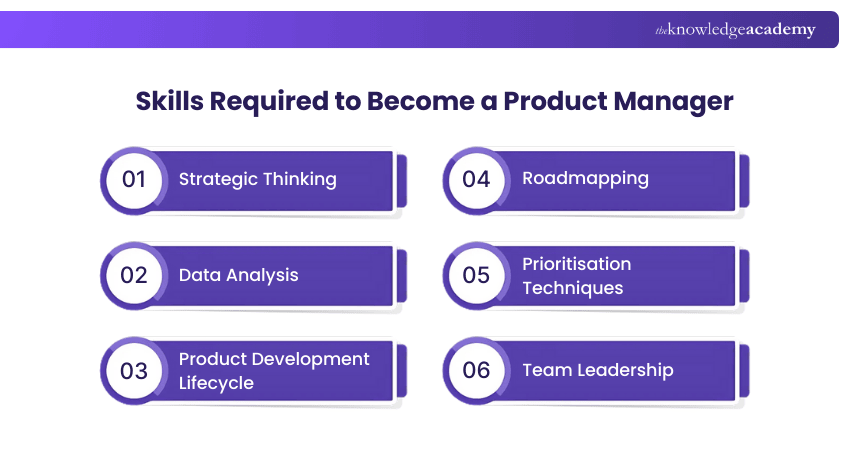
1) Strategic Thinking
Good Product Management relies heavily on strategic thinking. This skill goes beyond planning the next release and focuses on shaping a long-term vision for the product. A strong Product Manager sets meaningful goals aligned with wider business objectives. They ensure that each feature and update supports the product’s overall direction.
2) Data Analysis
In a data-fuelled world, the ability to interpret data is essential for Product Managers. This skill involves transforming user behaviour, performance metrics and market data into meaningful insights that guide future-ready decisions.
3) Product Development Lifecycle
A proper understanding of the full product development lifecycle is key to successful Product Management. This includes every stage, from idea creation and validation to development, testing and launch. Knowing how each phase works helps Product Managers anticipate challenges better.
4) Roadmapping
Product roadmapping defines how a product will evolve by combining strategic insight with forward planning. It requires anticipating market shifts, technology changes and user expectations while setting a clear direction for the product. An effective roadmap aligns teams and stakeholders around shared priorities.
5) Prioritisation Techniques
Product Managers face a constant flow of ideas and feedback, which makes prioritisation a critical skill. Proper prioritisation techniques help them gauge and rank initiatives based on strategic fit, customer value, business impact and available resources.
6) Team Leadership
Inspiring a product development team requires the ability to motivate a team toward common goals. Good Team leadership involves setting clear expectations, providing constructive feedback and recognising achievements. It also means being a role model in terms of work ethic and commitment to the product's success.
Want to master the art of keeping spaces safe and sustainable? Our Facilities Management Course will show you how - Sign up now!
Step-by-step Process on How to Become a Product Manager?
Starting a career in Product Management calls for a solid knowledge base, hands-on experience and a deep understanding of your industry. Here are the key steps to help you move confidently into the Product Management field:
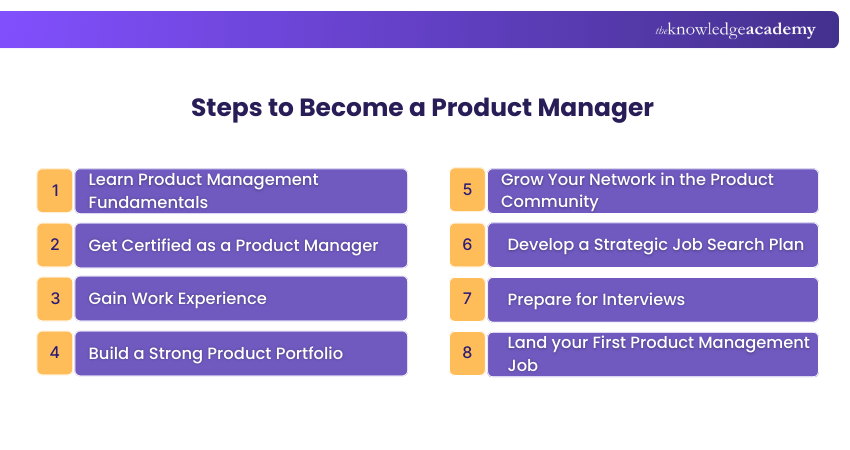
1) Learn Product Management Fundamentals
To lay down a strong foundation in Product Management, it's important to understand several core concepts, principles and approaches, including:
1) Product Lifecycle: It involves gaining insight into each stage, from initial concept through launch and ongoing improvement.
2) Agile Methodologies: It involves understanding frameworks such as Scrum and Kanban to support efficient product development.
3) User-centred Design: It involves focusing on user needs and empathy to design products that deliver real value.
4) Market Analysis: It involves developing the ability to research trends, competitors, and emerging opportunities.
5) Stakeholder Management: It involves learning how to collaborate effectively with cross-functional teams and key stakeholders.
6) Product Roadmapping: It involves building and managing roadmaps that align product direction with business objectives.
2) Get Certified as a Product Manager
A recognised Product Management certification can add credibility while teaching proven frameworks used by practising Product Managers. It also shows employers your commitment to entering the field. Here's what to consider:
1) Select a certification that offers live instruction, practical exercises and Instructor feedback.
2) Prioritise programmes that combine theory with real-world assignments.
3) Use course work and capstone projects to build portfolio-ready case studies that showcase your skills.
3) Gain Work Experience
Most employers consider relevant work experience. So, it's essential to start building it as soon as you can. Consider the following points:
1) Pursue Internships and Entry-level Roles: Gain practical business experience through internships, graduate roles, or summer jobs that support skill development and career growth.
2) Take on Leadership Opportunities: Build leadership skills by leading projects, joining business competitions, or taking part in challenges.
3) Lead During University or Placements: Chair a club or society, or volunteer to manage projects during internships or work placements.
4) Gain Product-relevant Experience: Seek roles aligned with the type of products you want to manage, such as entry-level positions in tech companies if you aim to work on app-based products.
4) Build a Strong Product Portfolio
Your Product Manager portfolio is the most convincing way to demonstrate how you think and solve problems as a Product Manager. Consider these points:
1) Rather than showcasing only outcomes, it should highlight your reasoning and approach, helping you stand out to employers
2) Include two or three clear case studies that outline the problem, research and solution
3) Emphasise your decision-making process and keep the design simple
4) Publish it online for easy sharing
5) Grow Your Network in the Product Community
Building relationships with Product Managers can lead to valuable guidance and career opportunities. Many product roles are secured through connections rather than traditional job listings. Consider these points:
1) Attend meetups and conferences where product professionals connect
2) Take advantage of events which include dedicated networking sessions
3) Engage in PM communities on LinkedIn, Reddit, Slack, or Discord
4) Reach out with thoughtful LinkedIn messages to professionals you admire
5) You can request brief, informal conversations about their experiences
From the factory to the front door, lead the way through the whole process with our Supply Chain Management Course - Sign up now!
6) Develop a Strategic Job Search Plan
A targeted job search improves your chances of securing interviews by clearly showcasing your transferable skills. Through a structured approach, you can focus on roles that fits your current experience and readiness. Consider these points:
1) Design your Product Management CV in a way that highlights strengths
2) Spotlight strengths like communication, analysis, leadership, and customer empathy
3) Refresh your LinkedIn headline and summary to reflect your Product Management goals
4) Apply for Associate or Junior Product Manager roles, as well as product-adjacent positions that can serve as effective entry points into the field
7) Prepare for Interviews
Product Manager interview questions gauge how you think through problems and handle uncertainty. Regular practice can strengthen both the structure and storytelling. Consider these points:
1) Rehearse product case questions using clear frameworks such as CIRCLES or STAR.
2) Record yourself answering behavioural questions to improve clarity and pacing.
3) Select a few well-known apps and prepare improvement ideas to demonstrate strong product sense.
8) Land your First Product Management Job
Your first Product Manager position marks the start of an ongoing learning process. Consider these points:
1) Instead of aiming for perfection, always focus on building confidence and steady progress, using each project as a chance to grow.
2) Set clear 30, 60, and 90-day goals to accelerate your onboarding and understanding of the role.
3) Seek a mentor within your organisation or the wider product community.
4) Regularly reflect on what you’ve learned, what worked well and where you can improve next.
What is the Difference Between a Product Manager and a Product Owner?
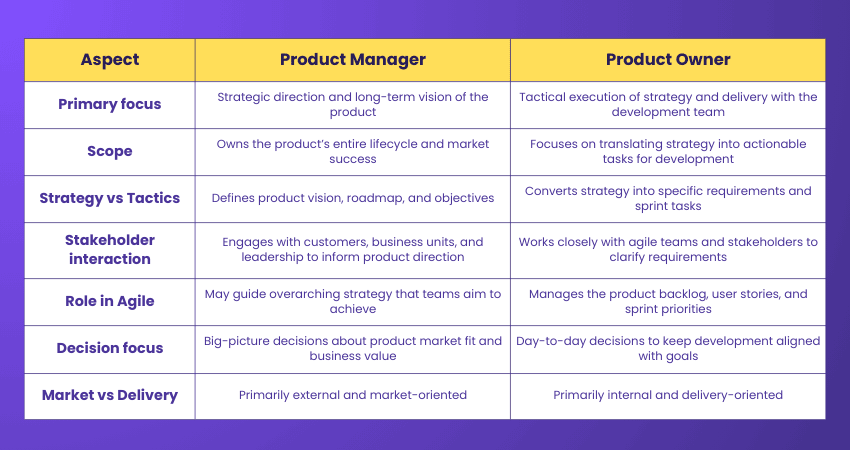
Product Managers take a strategic approach, concentrating on the product’s vision and market needs. Product Owners operate at a more tactical level. They turn the Product Manager’s strategy into clear requirements and work with cross-functional teams to deliver them effectively. Here are the key differences between a Product Manager and a Product Owner:
Conclusion
Learning How to Become a Product Manager is essential because this role empowers innovation, solves customer problems and makes a positive impact on the products they manage. A well-structured Product Breakdown Structure allows them to clearly define roles, responsibilities, and deliverables at each stage of the product development process. While challenges may arise, their ability to deal with complexities and learn from both successes and failures will make them excel in their roles.
Stay ahead of the curve. Upgrade your skills with our Industry Training - Register now!
Frequently Asked Questions
What Does a Product Manager's Career Path Look Like?

A Product Manager's career path typically goes through these Product Management roles:
1) Associate Product Manager
2) Product Manager
3) Senior Product Manager
4) Director of Product
5) VP of Product
6) Chief Product Officer and Beyond
How do Product Managers Prioritise Features?
Product Managers prioritise features by evaluating customer value and alignment with business goals. They use frameworks such as MoSCoW, RICE or Kano, alongside user feedback, data insights and resource constraints. This helps them decide which features deliver the highest value at the right time.

The Knowledge Academy


Global Training Provider
The Knowledge Academy is a world-leading provider of professional training courses, offering globally recognised qualifications across a wide range of subjects. With expert trainers, up-to-date course material, and flexible learning options, we aim to empower professionals and organisations to achieve their goals through continuous learning.


 If you wish to make any changes to your course, please


