


 Top Rated Course

We may not have the course you’re looking for. If you enquire or give us a call on 01344203999 and speak to our training experts, we may still be able to help with your training requirements.
English Language Day: A Brief Overview
Charlotte Wilson 16 July 2026English Language Day, celebrated annually on 23 April by the UN, honours Shakespeare and promotes the value of English, cultural diversity and multilingualism. It encourages global appreciation of the language’s history and modern influence. The day also highlights learning English as a bridge for international communication and unity.

Training Outcomes Within Your Budget!
We ensure quality, budget-alignment, and timely delivery by our expert instructors.
Table of Contents

Think about your day. You scroll on Social Media, watch shows, study, work, and chat with friends. What language supports you through it all? English. It is more than grammar. It helps us learn, connect, and grow. Every year on 23rd April, we celebrate English Language Day to honour the language that brings people across the world closer.
In this blog, we explore what English Language Day means, how English began, fun ways to celebrate it, key facts, and a beautiful quote about the language. Ready to discover the story behind the words you use every day? Let's begin.
Table of Contents
1) What is English Language Day?
2) The Origins of the English Language
3) Ways to Celebrate English Language Day
4) Key Facts About English Language Day
5) What is a Famous Quote About the English Language?
6) Conclusion
What is English Language Day?
English Language Day, celebrated annually on April 23rd, is a global event committed to recognising the importance, history and cultural impact of the English Language. Established by the United Nations. This day is part of a larger initiative to promote multilingualism. It also promotes cultural diversity worldwide. English Language Day coincides with the birth and death anniversaries of William Shakespeare. Shakespeare is one of the most influential writers in the English Language. This makes it a fitting date to honour the language's rich literary heritage. Similarly, Board Diversity plays a vital role in promoting a diverse cultural understanding within organisations.
The day serves multiple purposes. It celebrates the role of English as a global lingua franca. A link connecting people from diverse linguistic backgrounds. English is the primary or secondary language for over a billion people. It is used extensively in international business, diplomacy, science, technology and entertainment. By highlighting the importance of English, the day aims to encourage language learning and Improve Communication Skills. It also encourages cultural exchange, which fosters a deeper understanding among nations.
Why is English Language Day Celebrated on 23 April?
English Language Day celebration is on 23rd April. Because it marks both the birth and death anniversaries of William Shakespeare, one of the most influential figures in English literature. The United Nations chose this date to honour his contribution to the language and to highlight the importance of English in global communication, cultural exchange, and multilingual understanding.

The Origins of the English Language
Before celebrating English Language Day, it is helpful to know how English began and changed over time. The English Language has grown for more than 1,400 years, influenced by many countries, people, and cultures.
Old English (c. 450–1150 AD)
English started when Germanic tribes, called the Angles, Saxons, and Jutes came to Britain. The word “English” comes from “Angle ish,” meaning the language of the Angles. This early English sounded very different from the English we speak today.
Middle English (c. 1150–1500)
In 1066, the Normans from France took control of England. French became the language used in courts and schools, so many French words entered English. This is why many English words have French roots.
Early Modern English (c. 1500–1700)
This period includes the time of William Shakespeare. The printing press was invented, which helped make spelling and grammar more standard. English writing and books became more popular.
Modern English (1700–Present)
English spread around the world because of trade, travel, and the British Empire. Later, movies, science, and technology from the United States also helped English grow. Today, English is a global language used for business, study, travel, and communication across many countries.
Learn the primary grammar rules with specialist classes. Join our English Grammar Course today!
Ways to Celebrate English Language Day
There are numerous engaging and creative ways to celebrate English Language Day. Here are a few ideas to inspire you. Embrace and enjoy the richness of the English Language.
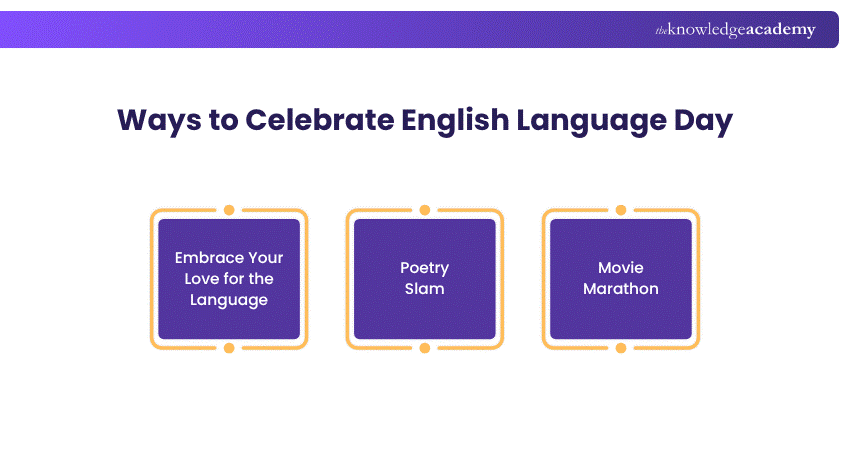
1) Embrace Your Love for the Language
One of the most fitting ways to celebrate English Language Day is to dive into the works of William Shakespeare, the Bard himself. Here are some ideas to help you unleash your inner Bard
a) Read Aloud: Gather friends, family, or colleagues for a reading session of Shakespeare's plays or sonnets. Take turns reading different parts. Bring the text to life with dramatic expressions and gestures.
b) Write Your Own: Experiment with writing a short play or sonnet in the style of Shakespeare. Use his distinct iambic pentameter and explore themes of love, betrayal, or ambition.
c) Attend Performance: Check out local theatres or online platforms for live or recorded performances of Shakespeare's works. Experiencing his plays performed by skilled actors can provide a deeper appreciation of his genius.
2) Poetry Slam
A poetry slam can be a vibrant and interactive way to celebrate English Language Day. It provides a platform for poets. Writers and enthusiasts can share their work. They can appreciate the art of the spoken word.
a) Open Mic Night: Organise an open mic event where participants can perform their original poems or recite works from their favourite English poets. Encourage support. Inclusive atmosphere.
b) Themed Poetry: Set a theme for the poetry slam, such as "Language and Identity" or "Celebrating Diversity." This can inspire participants. Try to create thought-provoking pieces.
c) Workshops: Include poetry writing workshops. Make them part of the event. These sessions can help budding poets. They will hone their Communication Skills and gain confidence in their craft.
3) Movie Marathon
A movie marathon featuring adaptations of English literary works or films that celebrate the English Language can be a fun way to enjoy English Language Day. It helps you appreciate classic stories, learn new expressions, and enjoy the beauty of English through cinema.
a) Classic Adaptations: Watch film adaptations of classic English literature. Examples include "Pride and Prejudice", "Jane Eyre," and "Great Expectations." Compare the films to the original texts. Discuss the interpretations.
b) Shakespeare on Screen: Dedicate part of the marathon to Shakespearean adaptations. Movies like "Romeo + Juliet", "Hamlet", and "Much Ado About Nothing" offer diverse takes on his timeless plays.
c) Language-themed Films: Include movies that celebrate the power of language and communication. For example, "The King's Speech" or "Dead Poets Society."
Understand audience engagement techniques for impactful presentations with our Public Speaking Course – Join today!
Key Facts About English Language Day
Here are some interesting facts that you need to know on English Language Day:
1) Significance of April 23rd:
William Shakespeare, one of the great playwrights and poets in the English Language, made a lasting impact on literature and the way we speak. His works introduced many new words and phrases still used today, which is why he is often celebrated on English Language Day.
2) Cultural Celebrations:
a) Literature and Arts: Events celebrating English Language Day often include readings of Shakespeare's works, performances, and discussions about his influence on literature and the arts.
b) Educational Activities: Schools, universities, and cultural centres may organise workshops, poetry readings, and debates to promote English learning and appreciation, making English Language Day a meaningful celebration for learners and communities.
3) Language Evolution:
a) Historical Development: English has grown over the centuries by adopting words from Latin, French, Norse, and many other languages through history, trade, and global influence. This rich mix is why English Language Day celebrates its diversity and evolution.
b) Modern Usage: Today, English continues to expand with the influence of technology, Social Media, and globalisation, leading to new words, phrases, and Ways of Communication.
4) Promotion of Multilingualism:
a) UN Goals: By celebrating English Language Day, the UN aims to promote the learning of multiple languages, encourage cultural exchange, and foster international cooperation.
What is a Famous Quote About the English Language?
A well-known quote about the English Language comes from Derek Walcott: “The English Language is nobody’s special property. It is the property of the imagination; it is the property of the language itself.”
This quote means that English does not belong to one group or country. Anyone can learn it, use it, and make it creative. Language grows through the ideas and imagination of people from all around the world.
Conclusion
Celebrating English Language Day reminds us how powerful language is in bringing people together. English has travelled across history, cultures, and continents, growing richer with every voice that speaks it. From Shakespeare’s writings to modern global Communication, English connects ideas and communities worldwide. As we continue to learn and share this language, we honour its history and help shape its exciting future.
Learn powerful communication techniques to influence, inspire, and lead effectively. Join our Communication Skills Courses now!
Frequently Asked Questions
How can I Evaluate my Communication Skills and Identify Areas for Improvement?

You can evaluate your Communication Skills by:
a) Seeking feedback from peers, mentors, and supervisors
b) Using self-assessment tools
c) Reflecting on past interactions
d) Identify areas for improvement by observing communication gaps
e) Practice active listening
How Important is Non- verbal Communication, and how can I Enhance my Non-verbal Communication Skills?
Non-verbal Communication is crucial as it conveys emotions and intentions beyond words. It encompasses body language, facial expressions, gestures, posture, eye contact, and even the tone of our voice.

Charlotte Wilson


Soft Skills and Business Training Manager
Charlotte Wilson is an expert in soft skills development, with over 14 years of experience helping individuals and teams improve communication, productivity and emotional intelligence in the workplace. Her training content is focused on enhancing interpersonal effectiveness and fostering positive, collaborative environments across all levels of an organisation.
View Detail

 If you wish to make any changes to your course, please


