




We may not have the course you’re looking for. If you enquire or give us a call on 01344203999 and speak to our training experts, we may still be able to help with your training requirements.
How to Build Confidence in Public Speaking?
ByAishwarya UnniLast updated on: 18 September 2026
Learn How to Build Confidence in Public Speaking with preparation, practice, and audience focus, using breathing, eye contact, and visualisation techniques. It involves creating a clear message, practising delivery, and managing nerves. With consistent effort, speakers can communicate clearly, stay composed, and make a stronger impact.

Speaking in front of others can feel intimidating. Many people worry about forgetting their words, being judged, or making mistakes. The good news is that confidence is not something you are born with; it is a skill you can build over time. Learning How to Build Confidence in Public Speaking takes practice, but with the right approach, anyone can improve.
Building confidence in Public Speaking starts with simple habits, such as preparation, practice, and understanding your audience. In this blog, you will learn How to Build Confidence in Public Speaking, why Public Speaking is important, and practical tips to help you speak with clarity, confidence, and impact. Let’s begin!
How to Develop Confidence in Public Speaking?
Developing Public Speaking confidence takes time, practice, and the right approach. By focusing on key techniques and building small habits, you can gradually reduce fear and improve your Public Speaking skills. Let’s look at some practical ways to help you speak with more confidence below:

1) Prepare Thoroughly
Preparation is one of the most effective ways to build Public Speaking confidence. Start by outlining your speech, organising key points, and practising multiple times to become familiar with your content. Also, recording yourself can help to identify areas for improvement, such as tone and pace, making your delivery more polished and confident.

2) Ensure Positive Mental Affirmations
Confidence begins with your mindset. Visualising yourself speaking successfully and using positive affirmations like “I am prepared” can reduce self-doubt and anxiety. This helps to build a strong sense of self-belief and allows you to approach Public Speaking with a calm and confident attitude.
3) Manage Your Nerves
Feeling nervous is natural but managing it is key to building confidence. Techniques like deep breathing, mindfulness, and light exercise can help calm your body. Also, starting with small audiences, such as friends or colleagues, helps you build comfort and reduce fear over time.
4) Seek Feedback
Feedback is essential for improvement. After each speaking experience, ask for constructive feedback from others to understand your strengths and areas for growth. Reflecting on your performance helps you make continuous improvements and gain confidence.
5) Master Non-verbal Communication
Non-verbal communication plays a big role in how confident you appear. Maintaining eye contact, using natural gestures, and keeping a strong posture can make your delivery more engaging. Practising these skills helps to reinforce your message and makes you look more confident.
6) Connect With Your Audience
Connecting with your audience makes Public Speaking feel more natural and less stressful. Focus on engaging your listeners through clear communication, relatable examples, and interaction. Shifting your focus from yourself to your audience reduces pressure and helps you speak confidently and impactfully.
7) Using Humour
Using humour can make your Public Speaking more engaging and help create a relaxed atmosphere for both you and your audience. Light, appropriate humour, especially self-deprecating jokes, can make you more relatable and build trust, but it is important to ensure your jokes are suitable.
Develop the right communication skills to build unbreakable relationships with our Interpersonal Skills Training – Join today!
8) Have a Trial Run With Family and Friends
Practising your speech in front of family and friends provides a safe and supportive environment to test your content. Their honest feedback helps you identify strengths and areas for improvement, allowing you to refine your delivery and gradually build confidence.
9) Develop a Confident Body Language
Confident body language plays a key role in how your message is received. Stand upright, maintain eye contact, and use natural gestures to emphasise points. Also, avoid closed postures like crossed arms, as these can appear defensive and reduce audience connection.
10) Be Prepared for Mistakes
Mistakes are a normal part of Public Speaking and handling them calmly shows confidence. Instead of reacting with embarrassment, acknowledge the slip lightly and continue, as most audiences are understanding and appreciate a speaker who remains composed and authentic.
11) Manage Your Voice
Your voice is a powerful tool in Public Speaking, so focus on clarity, tone, and pace. Varying your pitch, using pauses effectively, and speaking clearly can keep your audience engaged, while practising aloud helps to improve vocal control and overall confidence.
12) Live in the Moment
Staying present during your speech helps reduce anxiety and improve focus. Techniques like deep breathing and paying attention to your audience’s reactions can keep your mind from drifting, allowing you to deliver your message more naturally and confidently.
13) Celebrate Your Progress
Recognising your progress is essential for building long-term Public Speaking confidence. Whether it is a small improvement or a successful presentation, celebrating these moments boosts motivation and encourages you to continue improving your Public Speaking skills.
Learn to build clear, confident communication that drives real impact with the Communication Skills Course – Sign up now!
Importance of Confidence in Public Speaking
Public Speaking confidence is essential for delivering your message clearly and making a strong impression. It helps you engage your audience, communicate ideas effectively, and build trust, making your speech more impactful and memorable. Let’s look at its importance below:
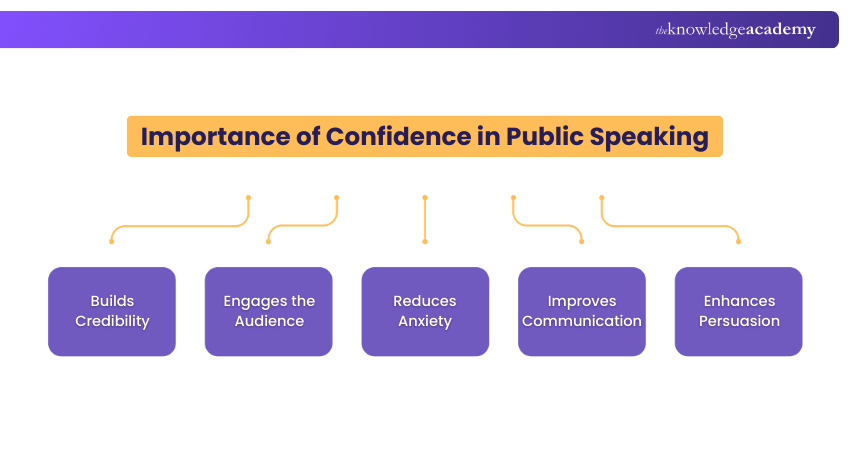
a) Builds Credibility: Confidence makes you appear knowledgeable and trustworthy, which helps establish your credibility with the audience.
b) Engages the Audience: A confident speaker can capture and maintain the audience's attention, making the presentation more engaging and impactful.
c) Reduces Anxiety: Confidence helps reduce nervousness and anxiety, allowing you to focus on your message rather than your fears.
d) Improves Communication: When you are confident, you communicate more clearly and effectively, making it easier for the audience to understand your message.
e) Enhances Persuasion: A confident delivery makes your arguments more convincing, helping you to persuade your audience and achieve your goals
What Causes a Lack of Confidence in Public Speaking?
Now that you are aware of How to Gain Confidence in Public Speaking, let’s explore the numerous causes of a lack of Confidence in Public Speaking:
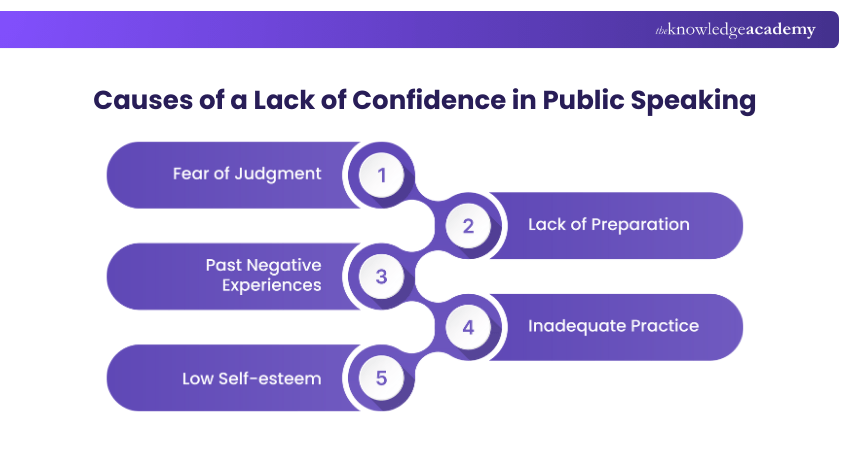
a) Fear of Judgment: Thinking about what others will think of you can make you feel insecure and anxious. This fear often leads to hesitation and self-doubt while speaking.
b) Lack of Preparation: Feeling unprepared can make you unsure about your content and delivery. This lack of readiness increases anxiety and reduces your confidence.
c) Past Negative Experiences: A previously failed presentation can create lasting self-doubt and anxiety. These memories can resurface, making you fear repeating the same mistakes.
d) Inadequate Practice: Not practising enough can leave you feeling nervous and unprepared. Practice builds familiarity and confidence, so without it, you may struggle to speak clearly.
e) Low Self-esteem: Doubting your abilities can result in a lack of confidence when speaking in front of others. This low self-worth can make it hard to believe in yourself and your message.
Develop strong body language to strengthen every message you deliver with the Nonverbal Communication Training – Sign up today!
What are the Seven Powerful Speaking Tips?
Strong Public Speaking depends on both your message and delivery. Using the right techniques can help you engage your audience and communicate more effectively. Here are seven powerful Public Speaking tips:
a) Start Strong: Begin with a compelling quote, story, or fact to capture attention. A strong opening sets the tone and encourages your audience to stay engaged.
b) Use Visuals: Use clear and simple visuals to support your points. They should enhance understanding, not distract from your message.
c) Tell Stories: Share relatable stories or examples to make your message more engaging and memorable. Storytelling helps create a stronger connection with your audience.
d) Engage Your Audience: Involve your audience through questions or interaction. This keeps them attentive and makes your Public Speaking more dynamic.
e) Keep it Concise: Focus on key points and avoid unnecessary details. A clear and structured message is easier for your audience to follow and remember.
f) Use Humour: Add light and appropriate humour to make your presentation enjoyable. It helps build rapport but should always suit the context.
g) Practice, Practice, Practice: Practice regularly to improve your delivery and confidence. Rehearsing helps refine your message and ensures a smooth presentation.
What are the Three Golden Rules of Public Speaking?
Public Speaking is about connecting with your audience, delivering your message clearly, and creating impact. These three golden rules help you speak with confidence and make your message more memorable. Let’s look at them below:
a) Know Your Audience: Understand who you are speaking to and tailor your message to their needs, interests, and expectations. When your content feels relevant and valuable, your audience is more likely to stay engaged and respond positively.
b) Know Your Material: Have a strong understanding of your topic rather than memorising every word. This allows you to speak naturally, stay confident, and adapt easily if you forget something or face unexpected situations.
c) Know Your Passion: Bring genuine passion and enthusiasm to your speech. When you believe in what you are saying, your energy connects with the audience, making your message more impactful and memorable.

Aishwarya Unni is a Copywriter with 2+ years of experience in reporting, web content, blogs, email marketing, and case studies. Her journalism background, combined with her research and writing experience across Business Skills and Human Resources, helps her create clear, engaging content for different audiences.
View Detail

 If you wish to make any changes to your course, please


