


 Top Rated Course

We may not have the course you’re looking for. If you enquire or give us a call on 01344203999 and speak to our training experts, we may still be able to help with your training requirements.
Careers in Fashion Industry: Top Roles to Build Your Future
The Knowledge Academy 02 March 2026Careers in fashion span creative, business, and technical roles, including designers, buyers, merchandisers, stylists, PR specialists, and textile experts. These roles shape trends, manage brands, and support production. Together, they combine creativity, strategy, and technical skills to drive the global fashion industry forward.

Training Outcomes Within Your Budget!
We ensure quality, budget-alignment, and timely delivery by our expert instructors.
Table of Contents

The fashion industry is a vast source of different things besides trends and catwalks. Discovering Careers in Fashion is the invitation to pursue creative, commercial, and technical career pursuits, which are the foundation blocks of the business. Let's now examine the roles and skills, as well as opportunities, found in this exciting field.
Table of Contents
1) A Brief Introduction to Fashion Design
2) Exploring the Various Careers in Fashion Design
3) Prospective Employers in the Fashion Industry
4) Which Career is Best in the Fashion Industry?
5) What are Creative Jobs in Fashion?
6) Conclusion
A Brief Introduction to Fashion Design
Fashion Design is the art and science of creating clothing, accessories, and footwear that blend style, functionality, and cultural influence. It involves transforming creative ideas into wearable pieces through sketching, fabric selection, pattern-making, and production.
The Fashion Industry not only sets trends but also reflects societal changes, technological innovations, and sustainability demands. It continues to evolve with digital tools, 3D modelling, and eco-friendly practices reshaping the industry.

Exploring the Various Careers in Fashion Design
The Fashion Industry has lots of different roles, giving people plenty of ways to be creative and bring new ideas to life. Let’s take a quick look at those careers:

1) Fashion Designer
Fashion Designers are the creative minds behind our favourite clothing and accessory collections. They sketch the concepts, choose the right fabrics, and oversee the production process to bring their vision to life. These Designers can work in haute couture, ready-to-wear, or mass-market fashion.
Becoming a Fashion Designer blends artistry with practicality, balancing creativity, consumer demand, and trends to deliver innovative yet wearable designs.
2) Fashion Illustrator
Fashion Illustrators turn creative ideas into visual representations through sketches, digital art, or drawings. They capture the look, style, and details of clothing designs before they are produced. Often working with Designers, brands, or magazines, Illustrators help bring fashion concepts to life in a visually appealing way.
Using traditional mediums like pencil, ink, watercolour or digital tools like Graphic Design software, they produce detailed sketches and renderings that showcase garment details, textures, and drapes.
3) Textile Designer
Textile Designers create fabrics that form the foundation of fashion. A Textile Designer specialises in creating designs for woven, knitted, or printed fabrics. Their expertise lies in crafting patterns, motifs, and colour palettes that align with current trends and market demands.
They mix creativity with technical knowledge to create fabrics that are functional and visually appealing. They work together with Fashion Designers to ensure materials complement garment designs. Using traditional techniques and modern digital tools, their work appears in clothing, interiors, and beyond.
4) Stylist
Fashion Stylists create cohesive and striking looks by putting together visually appealing outfits using clothes, accessories, and props to match a set artistic vision. They work on catwalk shows, photo shoots, advertisements, films, concerts, and more, collaborating with Designers, Photographers, and production teams.
The Stylist’s role requires a keen eye for trends, strong visual storytelling skills, and the ability to adapt styles for different occasions or audiences. They collaborate with Designers, Photographers, and Makeup Artists to bring creative concepts to life.
5) Fashion Buyer
A Fashion Buyer is responsible for choosing and buying fashion items that will be stocked in retail stores. They predict consumer trends, assess demand, and ensure that products align with the store or brand's image. By attending fashion shows, trade fairs, and liaising with Designers or Manufacturers, they curate collections that appeal to their target market.
They analyse sales data, manage budgets, and negotiate with suppliers to ensure profitability. Their choices directly influence retail inventories, defining the fashion narrative for a season and shaping consumers' shopping experiences.
Elevate your creative projects with our Mixing and Mastering Course – Register soon!
6) Visual Merchandiser
A Visual Merchandiser crafts in-store displays to optimise product visibility and enhance customer experience. Their role is a blend of artistry and strategy, using design principles to showcase products in a way that attracts and engages customers. They create eye-catching store displays and layouts to attract customers and drive sales.
They keep an amicable relationship with the designers, the buyers, and the manufacturing people to achieve the cost, quality, and performance standards. The role of garment technologists is crucial in the production of safe, long-lasting, and uniform garments.
7) E-commerce Manager
An e-commerce Manager oversees the online sales operations of a fashion business, ensuring the digital storefront's functionality, appearance, and user experience align with brand standards and sales goals. They manage websites, product listings, Digital Marketing, and Customer Experience.
Their role involves tracking sales performance, optimising online platforms, and ensuring smooth order fulfilment. As online shopping continues to grow, this career is crucial in helping fashion brands expand their reach, attract global audiences, and boost online revenue.
8) Retail Buyer
Retail Buyers specialise in selecting and purchasing merchandise for specific retail outlets. They analyse buying patterns, forecast trends, and consider factors like style, quality, price, and shopper behaviour when choosing stock. Unlike Fashion Buyers, who focus on trend-driven collections, retail buyers often balance fashion items suited to their store’s audience.
They negotiate prices, track customer preferences, and ensure shelves remain stocked with appealing choices. It is a commercial role that blends Market Analysis, negotiation, and style awareness.
9) Fashion Public Relations (PR) Specialist
Fashion Public Relations (PR) Specialists manage shaping and maintaining a brand’s public image. They organise events, secure media coverage, and build relationships with Influencers, Editors, and Journalists.
Their job is to create buzz around collections, have a positive brand image, and handle crisis communication if needed. Strong communication and networking skills are essential in this fast-paced role.
10) Fashion Journalist
Fashion Journalists write about trends, Designers, events, and cultural influences shaping the industry. They may work for magazines, newspapers, blogs, or digital platforms, providing readers with insights and analysis. Journalists attend fashion shows, conduct interviews, and report on industry news.
Their role requires strong writing, research, and networking skills, as they play a key part in shaping fashion media.
11) Fashion Blogger/Vlogger
A Fashion Blogger/Vlogger is a digital content creator focusing on fashion trends, style ideas, and personal views. They interact with the audience via blogs, videos, and social media.
They develop an individual name by being knowledgeable about fashion and partnering with fashion brands. Often, they are associated with designers and retailers to increase their audience and impact.
Their role requires strong writing, research, and networking skills, as they play a key part in shaping fashion media.
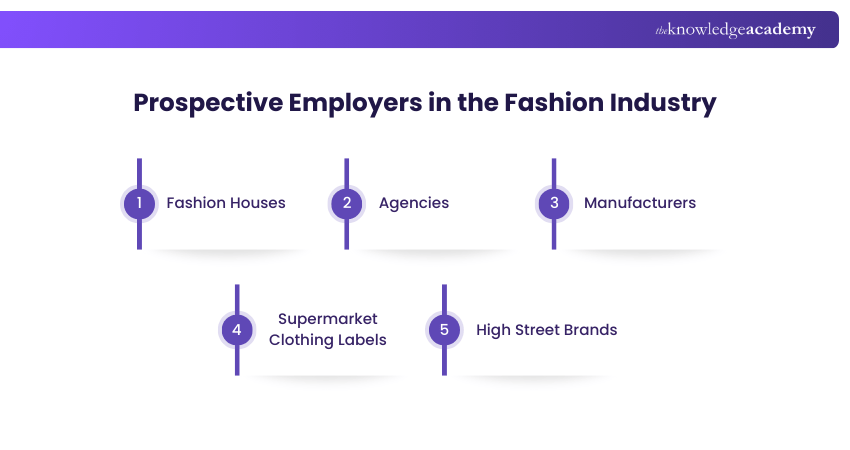
Prospective Employers in the Fashion Industry
Here is a descriptive list of your main employers in the fashion industry:
1) Fashion Houses
1) Fashion houses are respected institutions in the fashion industry.
2) They are recognised for distinctive designs and heritage.
3) Many are founded by notable Designers who are experts at setting global fashion trends.
4) They define standards across haute couture and ready-to-wear collections.
5) Fashion houses are synonymous with luxury, craftsmanship and innovation in design.
6) Some of the most iconic names to dominate fashion history are Chanel, Dior and Gucci.
7) When showcased in global capitals, their creations can reshape consumer desires.
2) Agencies
1) Agencies refer to organisations that represent or provide services to clients.
2) They act as intermediaries who connect talent or resources with those in need.
3) In the fashion industry, modelling agencies support models starting their careers.
4) They secure suitable jobs while negotiating contracts and fees.
5) In the field of Advertising, agencies design and execute marketing campaigns for brands.
6) Across industries, agencies utilise their expertise and networks to effectively meet client needs.
7) They optimise opportunities and help navigate industry-specific challenges.
3) Manufacturers
1) Manufacturers are entities that specialise in large-scale production and assembly of products.
2) Through machinery, technology and skilled labour, Manufacturers turn raw materials into finished goods.
3) In Fashion, Manufacturers produce clothing items based on brand designs.
4) They play a big role in product quality, cost efficiency and production scalability.
5) Manufacturers also oversee ethical labour practices and industry compliance along with sustainability.
4) Supermarket Clothing Labels
1) Supermarket clothing labels refer to apparel brands owned by or linked to supermarket chains.
2) They focus on affordability and convenience and cater to a mass market.
3) These collections include basics and trend-driven fashion pieces.
4) They are positioned alongside groceries and they benefit from daily shopper foot traffic.
5) Quality and design may vary, but accessibility is their main appeal.
6) Consumers can easily add fashion items while doing routine grocery shopping.
5) High Street Brands
1) High street brands are the mainstream retail labels that offer trendy and ready-to-wear collections.
2) They focus on affordability while keeping fashion accessible to a broad demographic.
3) Their stores are usually located in prime urban shopping areas.
4) Their collections strike the balance between wardrobe basics and seasonally inspired fashion pieces.
5) These brands thrive by quickly adapting to current fashion trends.
6) Their main appeal is that they give consumers access to stylish pieces without the luxury price tags.
7) Examples of high street brands include Zara, H&M, and Topshop, blending style with accessibility.
Capture the world through your lens – Sign up for our Photography Course for stunning images!
Which Career is Best in the Fashion Industry?
Narrowing down the best career in Fashion Industry comes down to your skills, interests and goals. If youare very creative, being a Fashion Designer or Stylist can be great because you get to shape styles and looks.
On the other hand, careers such as fashion buying, merchandising, or E-commerce Management are ideal for people with strong analytical and business skills, offering stability and growth opportunities. In the end, the best job is one that matches your talents, lets you be creative, and helps you grow in your career.
Key career options include the following:
1) Fashion Designer or Stylist for creative influence
2) Fashion buying, merchandising, or e-commerce for business-minded roles
3) Fashion Journalism, PR, or Photography for communication-focused careers
4) The best career depends on aligning passion with personal strengths
What are Creative Jobs in Fashion?
Creative jobs in fashion are all about using art and coming up with new ideas to shape the industry. This includes Designers who make clothing lines, Illustrators who draw fashion ideas and Textile Designers who create special fabrics.
Stylists, Photographers, and Visual Merchandisers help show fashion in the best way, while Journalists and PR experts share brand stories with the world. These jobs mix creativity with real skills to shape fashion trends and how people see and enjoy them.
Conclusion
Careers in Fashion have different paths where creativity, strategy, and technical skills coalesce. The industry is still counting on the opportunities coming from design studios and global brands to keep growing. If you have the right attitude and knowledge, you can create a career that will be changing along with the trends and innovations.
Turn your passions into skills and start learning what you love! Join our Hobbies & Interests Training today!
Frequently Asked Questions
Is Fashion a Hard Career?

Fashion can be a challenging career due to its fast-paced, highly competitive nature. There’s constant pressure to have new ideas. It often involves long hours and the ability to adapt. But for people who love it, the creativity and exciting opportunities make it a worthwhile career.
What is the Highest Paying Job in Fashion?
The Buying Director is among the highest paying roles in fashion, overseeing product strategy and buying decisions at senior level. Creative Directors also earn high salaries by leading brand vision and design direction.
What are the Other Resources and Offers Provided by The Knowledge Academy?
The Knowledge Academy takes global learning to new heights, offering over 3,000+ online courses across 490+ locations in 190+ countries. This expansive reach ensures accessibility and convenience for learners worldwide.
Alongside our diverse Online Course Catalogue, encompassing 17 major categories, we go the extra mile by providing a plethora of free educational Online Resources like Blogs, eBooks, Interview Questions and Videos. Tailoring learning experiences further, professionals can unlock greater value through a wide range of special discounts, seasonal deals, and Exclusive Offers.
What is The Knowledge Pass, and How Does it Work?
The Knowledge Academy’s Knowledge Pass, a prepaid voucher, adds another layer of flexibility, allowing course bookings over a 12-month period. Join us on a journey where education knows no bounds.
What are the Related Courses and Blogs Provided by The Knowledge Academy?
The Knowledge Academy offers various Hobbies & Interests Courses, including the Photography Course, Piano Course, and Bag Making Course. These courses cater to different skill levels, providing comprehensive insights into Photography.
Our Business Skills Blogs cover a range of topics related to the Fashion Industry, offering valuable resources, best practices, and industry insights. Whether you are a beginner or looking to advance your Business skills, The Knowledge Academy's diverse courses and informative blogs have got you covered.

The Knowledge Academy


Global Training Provider
The Knowledge Academy is a world-leading provider of professional training courses, offering globally recognised qualifications across a wide range of subjects. With expert trainers, up-to-date course material, and flexible learning options, we aim to empower professionals and organisations to achieve their goals through continuous learning.

Upcoming Business Skills Resources Batches & Dates
Date
 Fashion Designing Course
Fashion Designing Course
Fri 22nd May 2026
Fashion Designing Course
Fri 21st Aug 2026
Fashion Designing Course
Fri 13th Nov 2026

 If you wish to make any changes to your course, please


