


 Top Rated Course

We may not have the course you’re looking for. If you enquire or give us a call on 01344203999 and speak to our training experts, we may still be able to help with your training requirements.
What is a Bull Market: Meaning, Features, Causes and Strategies
The Knowledge Academy 22 December 2025A Bull Market is a sustained period of rising prices, optimism and strong Investor confidence often defined as a 20%+ rise in a market index from a recent low. It often signals strong economic growth, increased corporate earnings, and high demand for securities. Bull Markets can apply to stocks, real estate, or other assets.

Training Outcomes Within Your Budget!
We ensure quality, budget-alignment, and timely delivery by our expert instructors.
Table of Contents
Back in 2020, while much of the world was in chaos and trying to make sense of lockdowns, something surprising was happening on Wall Street; stocks were soaring. Tech companies were breaking records, portfolios were growing overnight, and first-time Investors were suddenly glued to trading apps. That wasn’t luck. It was the power of a Bull Market in action.
A Bull Market is one of the most exciting phases in investing. It’s a time when prices rise steadily, confidence grows, and opportunities open for those ready to take them. But there’s more to it than just good vibes and green charts. In this blog, we’ll unpack What is a Bull Market, what sparks it, and how you can make the most of the momentum. So read on!
Table of Contents
1) What is a Bull Market?
2) Importance of a Bull Market
3) Bull Markets Features
4) Causes of Bull Markets
5) How to Identify Bull Markets?
6) How to Benefit from a Bull Market?
7) Examples of Historic Bull Markets
8) What Ends a Bull Market?
9) Bull Market Strategies
10) Is it Better to Buy in a Bull or Bear Market?
11) What Is the Difference Between a Bull Market and a Bear Market?
8) Conclusion
What is a Bull Market?
In financial markets like stocks, a Bull Market occurs when prices are rising or expected to rise. While most often linked to equities, the term also applies to bonds, real estate, currencies and commodities. Bull Markets typically align with economic expansion, marked by increasing GDP and declining unemployment.
Bull Market can span months or even years of sustained price growth. Investor optimism, strong corporate earnings, and higher consumer spending further fuel the upward momentum. It creates a cycle of confidence and continued investment.

Importance of a Bull Market
Bull Markets are more than just good news for investors. These points illustrate the importance of Bull Market:
1) A Bull Market reflects a strong and healthy economy where businesses are expanding and performing well. This indicates rising employment rates and increased consumer confidence.
2) It encourages higher levels of spending and investment, driving further economic growth.
3) It creates a positive feedback loop that supports long-term economic development.
4) It offers investors the potential for substantial returns on their investments.
5) It contributes to the growth of pension funds and retirement accounts.
6) It helps individual and institutional portfolios achieve significant gains.
Bull Markets Features
Bull Markets usually emerge when the economy is performing well. They go with strong GDP, declining unemployment and rising corporate profits. Demand for stocks tends to outpace supply, keeping momentum high. Predicting the shifts in market trends remains a challenge because no single metric defines a Bull Market.
However, a common indicator is a stock price increase of 20% or more from recent lows.
During such periods, analysts and investors often note the following:
1) Higher trading volumes, as more investors buy and hold in pursuit of capital gains.
2) Elevated valuations, driven by expectations of future price growth.
3) Increased liquidity, with strong demand and limited selling activity.
4) Shareholder rewards through dividend hikes from successful companies.
5) A rise in initial public offerings (IPOs), reflecting favourable market conditions.
Ready to trade like a pro? Discover the skills to invest smarter and trade confidently. Join our Investment and Trading Training today!
Causes of Bull Markets
Bull Markets don't appear out of thin air. They are driven by a combination of factors that collectively push the market upwards. Some of the common causes include:
1) Low Interest Rates: These make borrowing cheaper, encouraging businesses to expand and consumers to spend.
2) Government Stimulus: Fiscal policies such as tax cuts or increased government spending can spark economic activity.
3) Strong Corporate Earnings: If companies report higher profits, investors feel more confident in buying shares.
4) Global Stability: A peaceful political climate and positive international trade relations also play a part.
How to Identify Bull Markets?
While it’s easy to identify a Bull Market in hindsight, recognising one as it begins can be tricky. However, a few key indicators can help you spot the signs early.
1) Market Rally
A prolonged increase in stock prices, often over several weeks or months, is a strong sign. Look for consistent upward trends in market indices, along with rising prices across various sectors.
2) Volatility Index
The Volatility Index (often referred to as the VIX) tends to decrease in a Bull Market. A low VIX indicates reduced fear among investors and a belief that prices will continue to rise.
3) Low Bond Returns
When equities are performing well, bonds usually take a backseat. Falling bond yields are often an indication that investors are shifting their money into riskier but potentially more rewarding stocks.
Master the skills to profit in the Cryptocurrency market with our Cryptocurrency Trading Training - Join now!
How to Benefit from a Bull Market?
Cashing in on a Bull Market requires a mix of strategy and timing. Here are a few popular ways investors ride the wave.
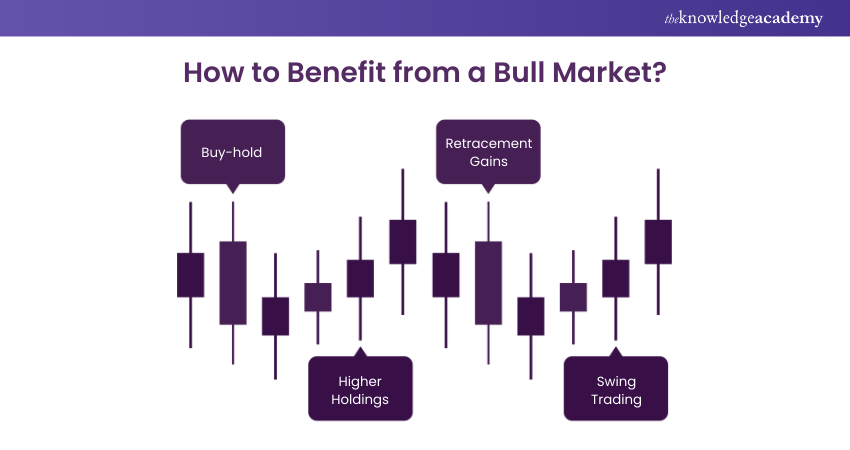
1) Buy-hold
This is a long-term approach where investors buy stocks and hold onto them throughout the Bull Market. The idea is to benefit from the overall upward trajectory, without trying to time every small movement.
2) Higher Holdings
When the market is expected to grow, increasing your equity exposure can result in greater gains. Many investors reallocate their portfolios during Bull Markets to hold a larger percentage of stocks.
3) Retracement Gains
Even in Bull Markets, prices don’t go straight up. There are often short-term pullbacks or retracements. Savvy investors use these moments to buy at slightly lower prices, anticipating a return to the upward trend.
4) Swing Trading
This strategy involves capitalising on short-term price movements within the broader Bull Market. It requires more active involvement and analysis but can offer quicker profits if done correctly.
Examples of Historic Bull Markets
Looking at history helps us understand the scale and impact of Bull Markets. Here are a few notable examples:
1) Post-World War II Boom (1949–1968): Following the end of the war, the US saw a sustained economic boom driven by industrial growth and technological innovation.
2) 1990s Tech Boom: Fuelled by advances in the internet and technology, this period saw massive gains in tech stocks, with the Nasdaq reaching record highs.
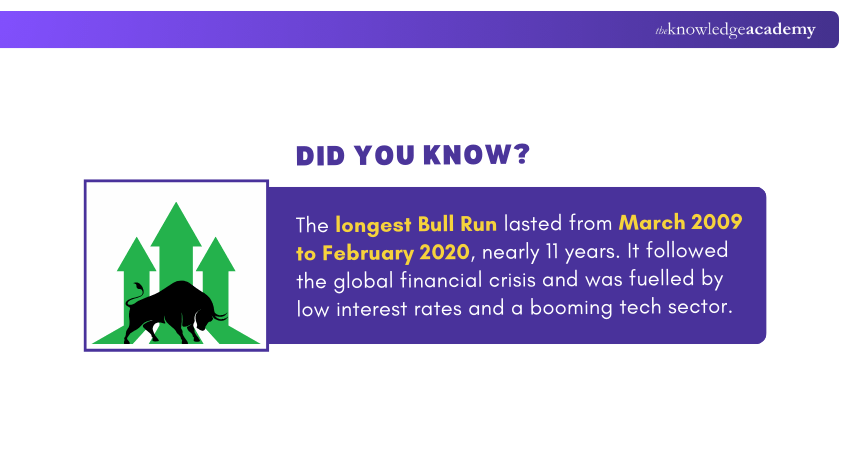
3) 2009–2020 Bull Market: After the global financial crisis, markets entered one of the longest Bull Runs in history, driven by low interest rates, strong corporate earnings, and technological growth. It ended in early 2020 due to the COVID-19 pandemic.
These periods transformed the financial landscape, offering valuable lessons for future investors.
Sign up for our Day Trading Course and learn how to profit from the pulse of the market - Join now!
What Ends a Bull Market?
The following situations can end a Bull Market:
1) Rising Inflation and Interest Rate Hikes: When inflation starts creeping up, central banks often respond by increasing interest rates. This can erode the momentum of a bull run.
2) Economic Slowdown or Recession Signals: A falling GDP, weakening consumer demand or rising unemployment can signal trouble ahead.
3) Overvaluation and Stretch in Asset Prices: When stock prices become detached from fundamentals (e.g. earnings, cash flows), the market is more vulnerable to a correction.
4) External Shocks and Geopolitical Instability: Crises such as wars, trade conflicts, supply chain disruptions, or pandemics can lead to sudden shifts in risk perception.
5) Tightening of Credit and Liquidity Constraints: If credit becomes harder to get or monetary policy becomes restrictive, companies and consumers both suffer. This can weigh on Bull Markets.
6) Change in Investor Sentiment: Bull Markets often end when optimism becomes complacency. As investors begin worrying about valuation or signs of slowing growth, they may reduce exposure. This leads to broader market declines.
7) Trigger Events Leading to Corrections: Sometimes Bull Markets end because there’s a trigger such as a policy surprise, regulatory change, unexpected earnings miss, or financial scandal.
Bull Market Strategies
Common Bull Market strategies include:
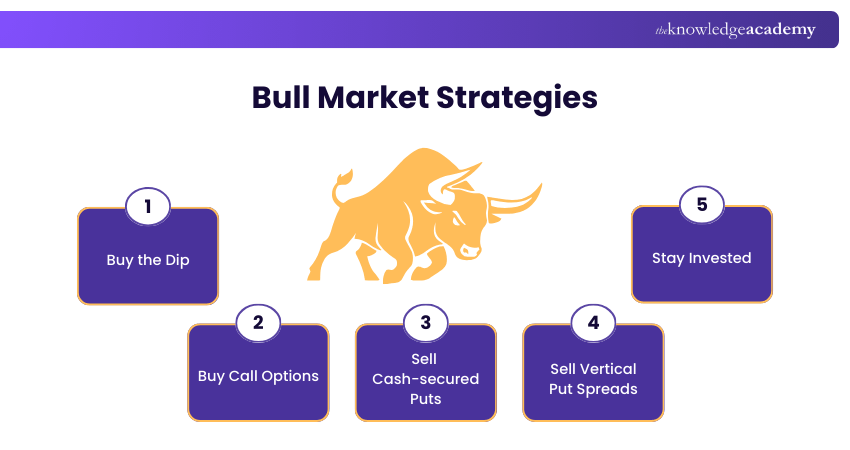
1) Buy the Dip: Short-term declines are treated as buying opportunities, with confidence that prices will rebound as the overall trend remains positive.
2) Buy Call Options: Call options let investors benefit from rising prices with limited downside risk if the market shifts.
3) Sell Cash-secured Puts: Traders sell puts at a price they’re willing to buy. If shares drop, they acquire them at a discount; if not, they keep the premium.
4) Sell Vertical Put Spreads: A moderately bullish strategy that combines buying and selling puts at different strike prices to cap both risk and profit.
5) Stay Invested: Remaining active in the market during bull runs ensures that investors don’t miss out on potential gains, especially with a diversified portfolio.
Is it Better to Buy in a Bull or Bear Market?
Bull markets generally last longer and deliver stronger returns, making them attractive to investors seeking growth with relatively lower short-term risk. Bear markets can create chances to purchase high-quality assets at reduced prices. This positions investors for potential gains when recovery begins. However, timing the market is highly unpredictable. Consistency, patience and a long-term approach are the keys to stronger results.
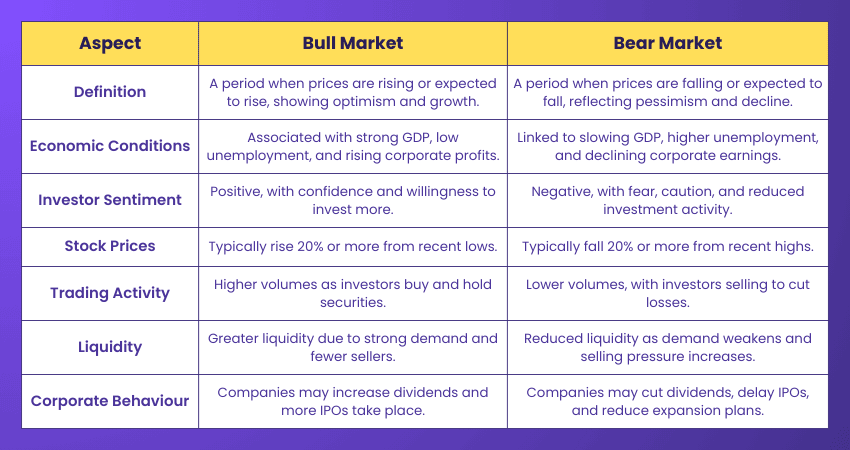
What is the Difference Between a Bull Market and a Bear Market?
Here are the key differences between a Bull Market and a bear market:
Conclusion
Bull Markets mark some of the most rewarding times in the world of investing. They reflect a healthy economy, growing confidence, and rising opportunities. While they can bring strong financial gains, the real value lies in knowing how to approach them with a clear plan. Understanding What is a Bull Market along with its features, causes, and benefits puts you in a stronger position to make informed choices.
Sharpen your portfolio skills and become the strategist every Investor wants to be. Register for our Investment Management Course now!
Frequently Asked Questions
How Long Can a Bull Market Remain?

A Bull Market can last anywhere from several months to over a decade. Its duration depends on economic conditions, investor confidence, and market trends. Historically, Bull Markets have averaged around four to 10 years, though no fixed time frame guarantees how long one will continue.
How to Identify a Bull Run?
You can spot a Bull Run by observing a steady rise in stock prices, increased trading volumes, and growing investor confidence. Economic indicators like low unemployment, strong GDP growth, and rising company earnings often support a Bull Run. A gain of 20% or more from recent lows is a key sign.
What are the Other Resources and Offers Provided by The Knowledge Academy?
The Knowledge Academy takes global learning to new heights, offering over 3,000 online courses across 490+ locations in 190+ countries. This expansive reach ensures accessibility and convenience for learners worldwide.
Alongside our diverse Online Course Catalogue, encompassing 19 major categories, we go the extra mile by providing a plethora of free educational Online Resources like Blogs, eBooks, Interview Questions and Videos. Tailoring learning experiences further, professionals can unlock greater value through a wide range of special discounts, seasonal deals, and Exclusive Offers.
What is The Knowledge Pass, and How Does it Work?
The Knowledge Academy’s Knowledge Pass, a prepaid voucher, adds another layer of flexibility, allowing course bookings over a 12-month period. Join us on a journey where education knows no bounds.
What are the Related Courses and Blogs Provided by The Knowledge Academy?
The Knowledge Academy offers various Investment and Trading Courses, including the Cryptocurrency Trading Training, Day Trading Course, and Stock Trading Course. These courses cater to different skill levels, providing comprehensive insights into the Types of Investments.
Our Business Skills Blogs cover a range of topics related to Investment and Trading, offering valuable resources, best practices, and industry insights. Whether you are a beginner or looking to advance your Trading Skills, The Knowledge Academy's diverse courses and informative blogs have got you covered.

The Knowledge Academy


Global Training Provider
The Knowledge Academy is a world-leading provider of professional training courses, offering globally recognised qualifications across a wide range of subjects. With expert trainers, up-to-date course material, and flexible learning options, we aim to empower professionals and organisations to achieve their goals through continuous learning.

Upcoming Business Skills Resources Batches & Dates
Date
 Stock Trading Course
Stock Trading Course
Thu 28th May 2026
Stock Trading Course
Thu 3rd Sep 2026
Stock Trading Course
Thu 22nd Oct 2026

 If you wish to make any changes to your course, please


