




We may not have the course you’re looking for. If you enquire or give us a call on 01344203999 and speak to our training experts, we may still be able to help with your training requirements.
Assertive vs Turbulent Communication: Key Differences
ByThe Knowledge AcademyLast updated on: 22 September 2026
Amidst the myriads of multiple personalities, Asset and Turbulent communications are the two popular modes of interacting in business meetings and with your peers. Continue reading this fascinating blog to discover the differences between Assertive vs Turbulent Communication approaches. Let’s propel on this insightful journey!
Assertive vs Turbulent communications are the two trending ways to interact with your colleagues and stakeholders. These styles greatly impact interpersonal relationship dynamics and reshape the ways of conveying their thoughts, emotions, and ideas. They serve as the foundation for building relationships, resolving conflicts, and fostering understanding.
To this end, understanding their key differences can significantly impact how humans navigate conversations and handle disagreements. But how do Assertive vs Turbulent Communication styles differ from one another?
Read this blog and dive into comprehending the difference between Assertive vs. Turbulent approaches. Moreover, you will also learn about their modern applications and how they impact your communication style.
What is an Assertive Personality?
An assertive personality is characterised by confidence in expressing thoughts, feelings, and needs clearly and respectfully. These individuals advocate for themselves without being aggressive or passive, maintain healthy boundaries, make decisions, and engage constructively with others.
Assertive communication is a powerful method of expressing oneself while respecting others' rights and boundaries. It fosters understanding, encourages open dialogue, and promotes healthy relationships. Assertive communicators are clear, concise, and actively listen, ensuring their message is conveyed respectfully and purposefully.
What is a Turbulent Personality?
Turbulent individuals are passionate, perfectionistic, and driven by a desire to improve. They are highly self-aware and sensitive to stress, using it as a motivator to overcome challenges. However, their perfectionism may lead to self-doubt and comparisons with others, sometimes resulting in frustration or self-criticism. In communication, they may express concern or overanalyse situations but are not inherently hostile or aggressive.
Turbulent communication, in contrast, is aggressive and antagonistic, using hostile language and tactics like intimidation. This communication style creates tension, damages relationships, and negatively impacts emotional well-being. It involves verbal aggression, dismissing others' perspectives, and relying on blame and criticism, leading to escalated conflicts and strained interactions.
Master business communication attitudes and emotional skills by signing up for our Nonverbal Communication Trainingnow!
Assertive versus Turbulent Communication: Key Differences
The assertive and turbulent communication may seem similar, they carry significant distinctions. Here are the key differences between Assertive vs Turbulent Communication:
|
Key Aspects |
Assertive Communication |
Turbulent Communication |
|
Style |
Clear, direct, and respectful expression of thoughts and feelings. |
Aggressive and confrontational communication style. |
|
Emotional expression |
An open and honest expression of emotions while considering others' feelings. |
Emotional outbursts, anger, and blame without regard for others' emotions. |
|
Conflict resolution |
Emphasises Active Listening, empathy, and finding mutually beneficial solutions |
Escalates conflicts, hinders resolution, and damages relationships. |
|
Relationship building |
Fosters trust, respect, and understanding contribute to positive relationships. |
Strains relationships and hampers effective communication due to its aggressive nature. |
|
Tone |
Respectful and considerate. |
Demeaning, insulting, and aggressive. |
|
Non-verbal cues |
Maintains appropriate body language and tone of voice. |
May exhibit aggressive body language and intimidating gestures. |
|
Focus |
Problem-solving and collaboration. |
Blaming and criticism. |
|
Boundaries |
Respects personal boundaries and set your own boundaries clearly. |
Disregards others' boundaries and personal space. |
|
Listening |
Communicators actively listen, engage, and validate others' perspectives. |
Communicators dismiss or invalidate others' perspectives and lack empathy. |
|
Outcome |
Positive and constructive interactions enhance relationships. |
Negative and destructive interactions, damages relationships. |
|
Emotional impact |
Enhances self-esteem and reduces stress and anxiety. |
Creates stress, anxiety, and hostility. |
|
Goal |
Effective communication, mutual understanding, and cooperation. |
Control, dominance, and self-assertion. |
|
Long-term effect |
Improves communication dynamics and fosters healthier relationships. |
Erodes trust, strains relationships, and impedes personal growth. |
|
Conflict handling |
Seeks resolutions through open dialogue and compromise. |
Escalates conflicts, avoids resolutions, and perpetuates negativity. |
Seamlessly handle disputes and resolve conflict in an organisation by signing up for our Conflict Resolution and Negotiation for Change Trainingnow!
The Modern applications of Assertive and Turbulent Communication styles
There are numerous modern applications of assertive and turbulent communications. Below, we have described those in detail:
Assertive Communication
Here is a list of the applications of Assertive Communication:
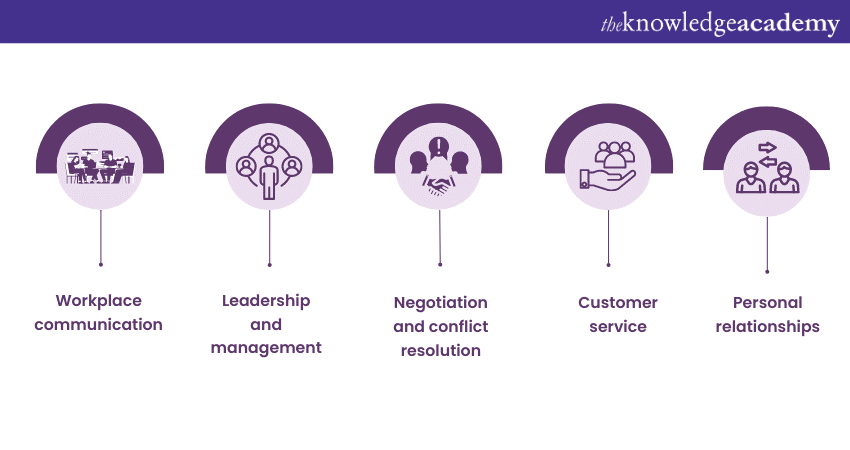
a) Workplace Communication: Assertive Communication is vital in the workplace for individuals to express their ideas, concerns, and boundaries effectively. Additionally, it promotes teamwork, collaboration, and a positive work environment.
b) Leadership and Management: Leaders and managers must be able to provide clear directions, delegate tasks, and address performance issues. Assertive communication fosters mutual respect, encourages open dialogue, and empowers team productivity.
c) Negotiation and Conflict Resolution: Assertive Communication is instrumental in negotiating to arrive at mutually beneficial outcomes and resolving conflicts constructively. It allows individuals to express their needs while considering the interests of others, leading to solutions that benefit everyone.
d) Customer Service: This communication style helps customer service representatives effectively address customer queries, concerns, and complaints. Additionally, it enables them to remain empathetic, listen actively, and provide satisfactory solutions for customer satisfaction and loyalty.
e) Personal Relationships: Assertive Communication is valuable in personal relationships, enabling individuals to express their feelings, set boundaries, and respectfully resolve conflicts. In addition, it promotes healthy communication, strengthened emotional connections, and long-lasting relationships.
Strengthen your communication with the Assertive Communication Skills PDF.
Turbulent Communication
There are multiple applications for turbulent communication. Here is the comprehensive list of this critical communicational mode.

a) Crisis Management: Turbulent Communication may find application in crisis management situations where quick decision-making and improved assertiveness skills are required. However, it must be applied with caution to avoid further escalation or harm.
b) Advocacy and Activism: This communication style may be utilised by activists or advocates to draw focus on pressing social or political issues. It can be a forceful way to galvanise attention to injustices and demand change.
c) Emergency Situations: This communication style may be utilised by activists or advocates to draw focus on pressing social or political issues. It can be a forceful way to galvanise attention to injustices and demand change.
d) Competitive Environments: Highly competitive environments like sports or business negotiations may adopt Turbulent Communication to assert dominance. This can be particularly implemented to intimidate opponents or attain a competitive advantage. However, it should be used sparingly and with caution due to its impact on relationships.
e) Conflict-Driven Discussions: Turbulent Communication may be used as a last resort to disrupt conventional power structures and compel necessary discussions. It should be used when conflicts are severely ingrained, and the resolution seems problematical. However, it should be approached with caution and a focus on finding constructive solutions.
Learn to express yourself confidently and enhance your career prospects by signing up for our Assertive Skills Training now!

The Knowledge Academy develops accessible learning content across Project Management, IT, Cybersecurity, Data Science, Business Analysis, HR, Accounting and Finance, Leadership and Health and Safety. Its resources combine subject research with clear explanations to help professionals build practical knowledge across a wide range of disciplines.
View Detail

 If you wish to make any changes to your course, please


