




We may not have the course you’re looking for. If you enquire or give us a call on 01344203999 and speak to our training experts, we may still be able to help with your training requirements.
The Future of Artificial Intelligence in Everyday Life
ByVishnu SankarLast updated on: 23 September 2026
Artificial Intelligence is transforming everyday life through smarter automation, personalisation, and decision-making across industries and daily activities. Understanding the future of Artificial Intelligence helps individuals and businesses explore emerging technologies, intelligent systems, and the growing impact of AI on modern living.
Artificial Intelligence (AI) is not just a catchword or sci-fi fantasy. It is well known that AI is shaping the world on a gigantic scale. In simpler terms, AI is the simulation of machines to mimic human intelligence, such as seeing, hearing, speaking, understanding, learning, and reasoning. It has been advancing rapidly in the past decades, thanks to the availability of data, computing power, and new algorithms.
However, Artificial Intelligence’s future is also uncertain and challenging. There are many ethical, social, legal and security issues that need to be addressed. Explore this blog to learn more about the Future of Artificial Intelligence and the impact of AI on society. Keep reading to learn more.
Introduction to AI
Water Jug Problem in AI is an example of how Artificial Intelligence (AI) involves the discipline and application of crafting machines capable of accomplishing activities typically demanding human intelligence, including abilities like perception, logical thinking, acquiring knowledge, making choices, and processing Natural Language Processing (NLP). AI has been advancing rapidly in recent years, thanks to the availability of large amounts of data, powerful computing resources, and breakthroughs in algorithms and techniques. Artificial Intelligence Interview Questions often focus on these advancements, as well as how AI has already transformed many domains and industries, such as Healthcare, Education, Entertainment, Transportation, Finance, and Manufacturing.
Get ready to dive into the world of AI with our Artificial Intelligence Courses. Unearth the mysteries of technology as we unravel the hidden secrets of AI!
Brief history of AI
AI is a field of computer science that creates machines and systems that can perform tasks that require human intelligence. The modern basis of AI was established by philosophers who attempted to explain human thinking as system manipulation. The creation of programmable digital computers in the 1950s facilitated the development of the first AI programs, such as Logic Theorist.
The term AI was introduced by MC Carthy in 1956 at the Dartmouth Conference. Since then, AI has undergone periods of optimism and pessimism, known as AI summers and winters, depending on the availability of funding and the progress of research. In the 21st century, AI has experienced a resurgence due to advances in Machine Learning (ML), data, availability, and computing power.

Importance of AI
Artificial Intelligence has many applications and benefits across various domains and sectors, including healthcare, education, business, entertainment, and more, as highlighted in the Artificial Intelligence in Healthcare Guide. Here are some of the reasons why AI future is significant:
1) AI can enable us to tackle complex problems and acquire new knowledge by processing large volumes of data and finding patterns and insights that humans might overlook.
2) AI can increase our productivity and efficiency by automating routine and tedious tasks, reducing errors and costs, and improving quality and speed.
3) It can boost our creativity and innovation by producing original and diverse content, such as art, music, poetry, code and more.
4) AI can enhance our well-being and happiness by offering personalised and customised services such as recommendations, assistance, education, and entertainment.
5) AI can help us overcome the constraints of human biology, such as diseases, aging and death, by augmenting our abilities and extending our lifespan.
Future of Artificial Intelligence
The future of intelligence is a fascinating and important topic that explores how Artificial Intelligence is changing and shaping our world and lives.
Advancements in AI Technology
AI technology has been making rapid progress in recent years, thanks to the availability of large-scale data, powerful computing resources, and innovative algorithms. Some of the remarkable achievements in AI achievement include:
1) Natural Language Processing (NLP): NLP constitutes a division of AI focused on comprehending and producing human language. Noteworthy advancements within NLP encompass tasks like machine translation, text summarisation, sentiment analysis, question answering, and conversational agents. For example, GPT and DeepSeek are two of the most advanced and largest language models that can produce diverse and coherent texts on various topics and domains.
2) Computer vision: Computer vision is an AI domain focused on processing and interpreting visual data, playing a crucial role in various Artificial Intelligence Apps. This area has demonstrated impressive achievements in activities like identifying faces, detecting objects, comprehending scenes, generating images, and analyzing videos. For instance, StyleGAN stands as an advanced generative model capable of crafting lifelike and top-notch pictures encompassing faces, animals, landscapes, and various other items.
3) Reinforcement learning: Reinforcement Learning (RL) is a domain of Artificial Intelligence that focuses on learning through trial and error by interacting with an environment. RL has demonstrated remarkable performance across various domains of Artificial Intelligence, including games, robotics, self-driving cars, and healthcare. For instance, AlphaGo gained global recognition for defeating the reigning world champion in Go, a highly complex board game that requires both strategic intelligence and intuitive decision-making.
Build foundational AI knowledge to understand intelligent technologies and their real-world applications with our Introduction to AI Course- Register now!
Potential Applications of AI in Future
AI is a powerful technology that have a significant impact on various sectors and fields in the future by offering new possibilities and solutions for different challenges and opportunities. Some of the potential applications of AI are mentioned below:
1) Education: AI can improve the quality and availability of education by offering customised learning, adaptive testing, smart coaching, and feedback systems. AI can also assist teachers and educators by automating tasks such as scoring, curriculum development, and student support.
2) Healthcare: AI can enhance the efficiency and quality of healthcare by offering diagnosis, treatment, prevention, and the management of diseases and conditions. AI can also support doctors and medical professionals by augmenting their abilities and knowledge, reducing mistakes, and saving time.
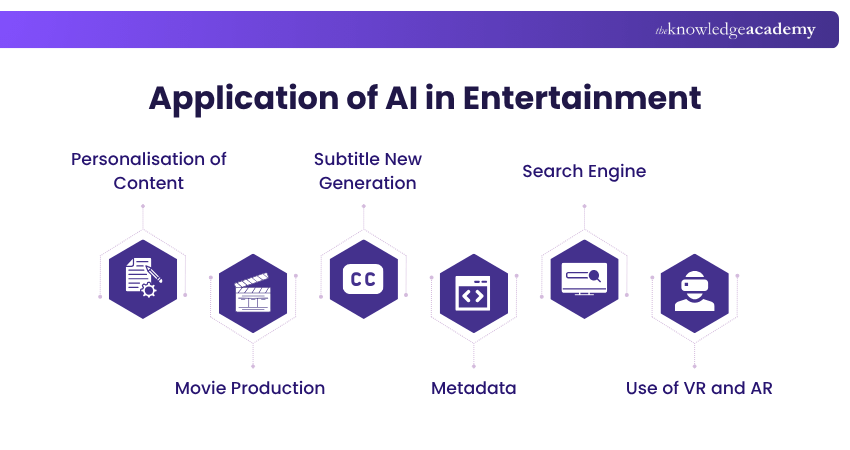
3) Entertainment: AI can increase the variety and creativity of entertainment by offering content creation, recommendation, personalisation, and interactive systems. AI can also help artists and creators by improving their tools and platforms, enabling collaboration, and reaching a larger audience.
Impact of AI on job Market
Today’s job market is highly influenced by AI in various ways, such as creating new jobs, transforming existing jobs, and eliminating some jobs. The influence of AI on the job market depends on different factors such as the kind, level, and sector of work; the abilities, education, and experience of workers; and the policies, rules, and ethics of society. Some of the potential influences of AI on the job market are:
1) New jobs: AI can generate new jobs that need human-Ai cooperation or oversight; that involve building, improving and maintaining AI systems; or that use AI to offer new products or services. Examples of new jobs include data analysts, AI programmers, chatbot creators, digital artists, etc.
2) Transformed jobs: AI can transform existing jobs that need human-AI integration or adjustment that involve working with or using an AI system or that gain from AI to enhance efficiency or quality. Examples of transformed jobs include educators, doctors, lawyers, reporters, etc.
3) Eliminated jobs: AI can eliminate some jobs that are mundane, repetitive, or low-skill, that can be fully automated or replaced by AI systems; or that face high competition or low demand due to AI. Examples of eliminated jobs include clerks, drivers, call centre operators, factory workers, etc.
Say goodbye to stale routines and hello to a world optimised with AI-driven project management with ourArtificial intelligence (AI) for Project Manager Course. Join now.
Impact of Artificial Intelligence on Society
Here are some of the key impacts such as both negative and positive impacts of AI on society:
Positive Effects
AI has made great progress in the last decade, thanks to the availability of large amounts of data, powerful computing resources, and breakthroughs in algorithms and techniques. Artificial Intelligence Facts show that AI is already transforming society in many ways. We will focus on three key areas:
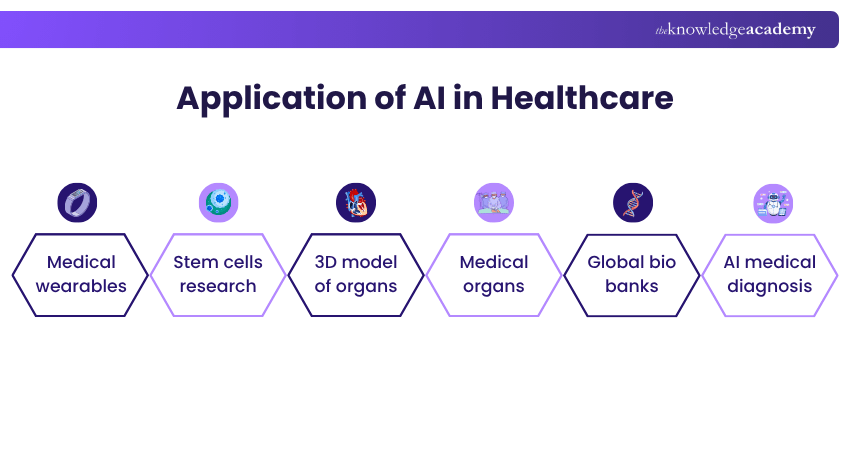
a) Healthcare
AI helps improve healthcare services by supporting disease diagnosis, treatment planning, and patient monitoring. It can analyse medical images, wearable device data, and health records to identify risks and improve early detection. AI also supports medical research by accelerating the discovery of drugs, vaccines, and advanced therapies.
b) Business: AI helps businesses improve productivity, automate processes, and optimise operations across different industries. It supports personalised marketing, customer service, and data-driven decision-making through technologies such as chatbots, analytics, and recommendation systems. AI also enables organisations to create innovative products, services, and business opportunities.
c) Safety and Security: AI improves safety and security by helping organisations predict risks, detect threats, and respond to emergencies more effectively. It supports applications such as fraud detection, autonomous vehicles, cybersecurity, and disaster prediction using advanced data analysis and intelligent systems. AI also helps protect digital infrastructure and public safety.
Uncover the secrets of Artificial Intelligence with our thrilling OpenAI Training Course. Dive headfirst into the world of machine learning and AI algorithms.
Negative Effects
Artificial Intelligence is revolutionising the world in unprecedented ways, presenting numerous prospects for enhancing human well-being, promoting creativity, and addressing challenges like climate change and health emergencies that were previously unparalleled. However, AI also raises significant risks and challenges for society, especially for workers, consumers, and citizens whose rights and interests may be affected by an AI system.
a) Job Displacement and Unemployment: AI can automate tasks traditionally performed by humans, which may lead to job displacement in certain industries. It also changes the nature of work by creating demand for new technical skills, training, and career adaptation. As AI adoption grows, organisations must focus on workforce reskilling and professional development.
b) Privacy Concerns: AI systems often rely on large amounts of personal data to deliver accurate results and personalised experiences. However, excessive data collection and monitoring can raise concerns about privacy, surveillance, and data security. Strong privacy regulations are important to protect individuals while supporting responsible AI innovation.
c) Bias and Discrimination: AI systems can sometimes produce biased or unfair outcomes due to biased data, algorithms, or decision-making processes. This may negatively affect individuals or groups based on factors such as gender, race, or age. Ensuring fairness, transparency, and ethical AI practices is essential to reduce discrimination and improve trust in AI systems.

Vishnu Sankar is a Senior Content Writer with 5+ years of experience across content development, software development, web development and system administration. His technical background and professional training support his expertise in IT and Tech, while his extensive research and writing experience covers Project Management and Health and Safety.
View Detail

 If you wish to make any changes to your course, please


