




We may not have the course you’re looking for. If you enquire or give us a call on 01344203999 and speak to our training experts, we may still be able to help with your training requirements.
Home
 Resources
IT Service Management
The 7 C’s of Customer Service: A Guide to Improve Customer Support
Resources
IT Service Management
The 7 C’s of Customer Service: A Guide to Improve Customer Support
Resources
IT Service Management
The 7 C’s of Customer Service: A Guide to Improve Customer Support
The 7 C’s of Customer Service: A Guide to Improve Customer Support
ByThe Knowledge AcademyLast updated on: 02 October 2026
The 7 C’s of customer service in this guide represent key principles: culture, courtesy, clarity, convenience, consistency, conciseness, and customer focus. Together, they can help teams deliver excellent service by supporting clear communication, reliable support, respectful interaction, and a smooth customer experience across different touchpoints.

Quick Preview
1. Customer service standards help set clear expectations for service quality and responsiveness.2. In this guide, the 7 C’s are culture, courtesy, clarity, convenience, consistency, conciseness and customer focus.3. These principles support better communication, reliable service, and positive customer experiences.4. Convenience and consistency help make support easier to access and more dependable.5. Keeping customers at the centre of service can help build trust, satisfaction, and loyalty.
Ever had a customer experience so smooth, it made your day? That’s no accident; clear service principles and consistent practices often contribute to experiences like these. These seven simple yet powerful principles can help teams improve support, strengthen customer interactions and deliver a more consistent service experience.
In this blog, we’ll explore each of the 7 C’s and how they can be applied to everyday customer interactions. Whether you're leading a support team or just want to sharpen your customer-facing skills, these principles can help strengthen service delivery and customer relationships.
What are Customer Service Standards?
Customer service standards are essential for setting clear expectations between a service provider and their customers. They define what customers anticipate in terms of service quality, speed, and overall experience. These standards are typically centred around key factors like responsiveness, which refers to how quickly and effectively a provider addresses customer needs, and accountability.
By establishing these standards, businesses create clearer expectations for employees and customers and provide a basis for monitoring service quality. These standards help foster Brand Trust, build customer loyalty, and create a positive experience that encourages repeat business.
While service standards define expected levels of performance, the 7 C’s in this guide focus on the behaviours and practices that can help teams deliver those standards effectively.

Service Reminder
Courtesy + Clarity + Consistency + Convenience = Better Customer Experience
The 7 C's of Customer Service
The 7 C’s in this guide provide a practical set of principles for strengthening everyday customer service interactions:
Service in Action
Customer asks → Team listens → Clear response → Helpful solution → Consistent follow-up
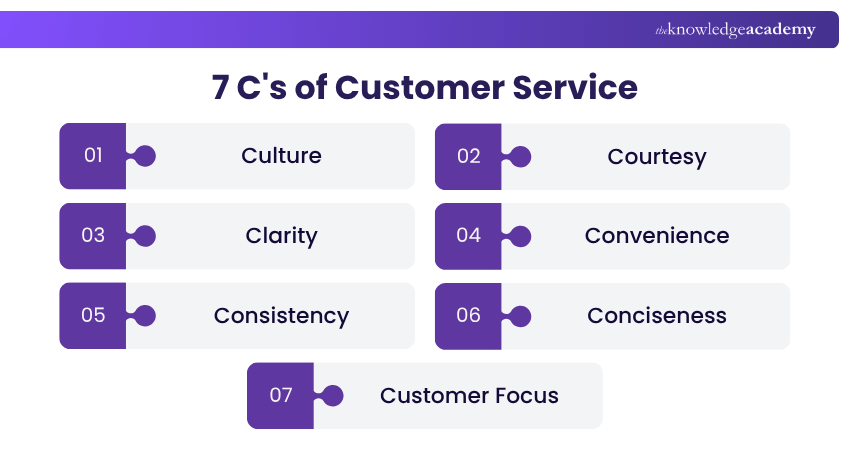
1) Culture
Customer service culture reflects the values, behaviours and expectations that shape how a team treats customers. Building the right culture involves setting clear service expectations, supporting employees and encouraging customer-focused behaviour across the organisation.
2) Courtesy
Being polite, friendly, professional, open and honest is the key to being courteous. Being empathetic towards their needs will help deliver a message in a way that’s easy to understand. Although it's not easy in a stressful situation, it's important to view the bigger picture.
Frontline Reminder
Customers often judge the whole organisation by a single interaction. Clear communication and reliable support can shape that impression.
3) Clarity
Clarity means using simple, direct language so customers can easily understand the information, actions or solutions being provided. Clear communication reduces confusion and helps customers know what to expect next.
4) Convenience
Convenience means making it easy for customers to access support, information, and services through suitable channels. This can include clear self-service options, accessible contact methods, simple processes, and timely assistance.
5) Consistency
Consistency means delivering a reliable level of service across different interactions, channels, and team members. Customers should receive accurate information, dependable support, and a similar standard of service each time they contact the organisation.
6) Conciseness
Keeping things to the point and short helps things go more smoothly in the long run. This will also make any communication more engaging. Repeating the same point again and again might not help make the point, as anyone would get frustrated with the same.
7) Customer Focus
Customer focus means understanding customer needs and considering them when providing support or solutions. Listening carefully, addressing the immediate issue and providing clear next steps can help create a more useful and responsive service experience.
Customer-first Check
Before responding, ask:1. Is the message clear?2. Is the tone courteous?3. Is the solution convenient?4. Is the service consistent?
Learn to identify and resolve customer concerns with confidence. Join our Exceptional Customer Service Training now!

The Knowledge Academy develops accessible learning content across Project Management, IT, Cybersecurity, Data Science, Business Analysis, HR, Accounting and Finance, Leadership and Health and Safety. Its resources combine subject research with clear explanations to help professionals build practical knowledge across a wide range of disciplines.
View Detail

 If you wish to make any changes to your course, please


