


 Top Rated Course

We may not have the course you’re looking for. If you enquire or give us a call on 01344203999 and speak to our training experts, we may still be able to help with your training requirements.
Benefits of Online Project Management Training
David Evans 31 August 2026Online Project Management Training offers flexible access to Project Management education, helping professionals balance training with work and other commitments.

Training Outcomes Within Your Budget!
We ensure quality, budget-alignment, and timely delivery by our expert instructors.
Table of Contents
Key Takeaways
1) Online Project Management training can provide greater flexibility around work and personal commitments.2) Digital formats can remove geographical barriers and provide access to a wider range of training options.3) Interactive online courses can combine live instruction, digital resources, and practical activities.4) Course quality, trainer experience, delivery format, and practical content should be considered before choosing training.
Your project deadline is approaching, your calendar is packed, and you still want to attend a Project Management course. Do you have to choose between professional development and your existing commitments?
Online Project Management training offers a flexible alternative, allowing you to access structured training without travelling to a classroom. But is flexibility the only advantage?
In this blog, we explore the benefits of online Project Management training, compare online and classroom learning, and discuss what to consider when choosing the right training format.
What is Project Management Training?
Project Management training provides structured education in the knowledge, methods, tools and approaches used to plan, execute, monitor and close projects. It can cover areas such as project scope, schedules, resources, risk, stakeholders, communication and delivery.
Training is available in several formats, including:
a) Online Training: Delivered through digital platforms, either live or self-paced.
b) Classroom Training: Delivered face-to-face at a physical location.
c) Blended Training: Combines online learning with classroom or practical sessions.
The best format depends on factors such as availability, preferred learning environment, location, and professional commitments.
For professionals balancing work with development, online training can provide an alternative to attending scheduled classroom sessions. Research from the OECD also highlights the growing importance of flexible learning pathways for adults managing professional and personal responsibilities.

What are the Benefits of Online Project Management Training?
Online Project Management training offers several practical advantages, particularly for professionals who need greater control over when and where they study.
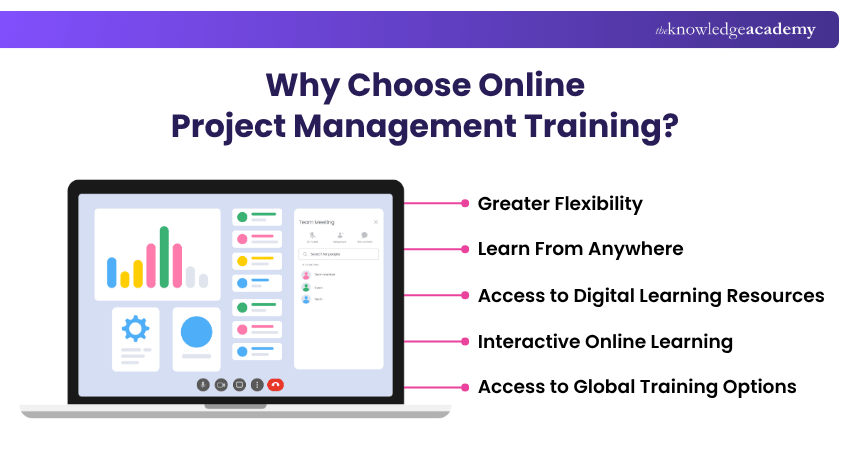
1) Greater Flexibility
One of the main benefits is the ability to fit training around existing commitments. Depending on the course format, professionals may be able to attend live sessions at scheduled times or access self-paced materials when convenient.
This can make it easier to combine professional development with work, family and other responsibilities.
2) Learn From Anywhere
Online training removes the need to travel to a physical training centre. With a suitable internet connection and the required device, professionals can access their training from home, the workplace or another suitable location.
This can be particularly useful for those who do not have a relevant training provider nearby.
3) Access to Digital Learning Resources
Online courses can bring different resources together within a digital environment, such as presentations, recordings, reading materials, practice activities and assessments.
This can make it easier to revisit specific topics when preparing for an assessment or reinforcing an area that needs further attention.
4) Interactive Online Learning
Online training does not necessarily mean studying alone. Live virtual sessions can include discussions, questions, collaborative activities and interaction with the trainer and other attendees.
The quality of this experience depends on how the course is designed. Effective digital learning requires more than simply transferring classroom material onto a screen.
5) Access to Global Training Options
Online delivery can widen the range of courses available to professionals beyond their immediate geographical area. This can make it easier to compare different course formats, subject coverage, schedules and training approaches before making a decision.
Did You Know?
In 2023, 28% of internet users aged 16 and over in the European Union reported taking online programmes or using online learning materials during the previous three months. This was nearly double the 16% reported in 2017.
Online vs Classroom Project Management Training
Both formats can provide structured Project Management education, but they suit different circumstances.
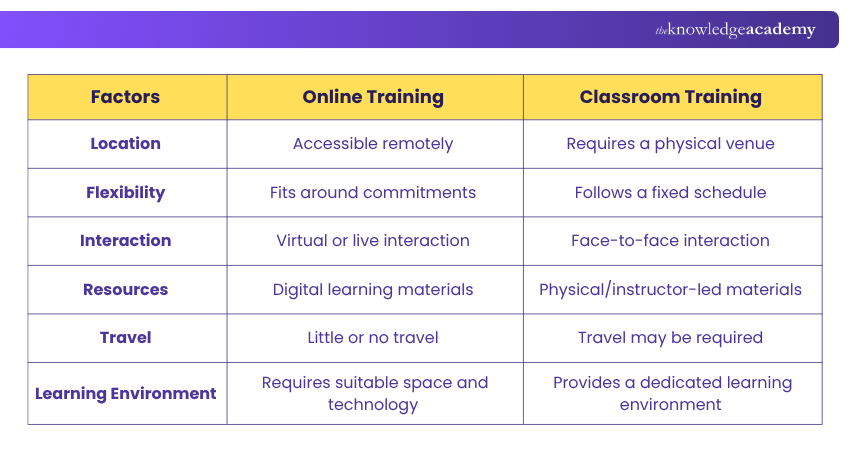
Neither format is universally better. The right choice depends on your schedule, location, preferred learning environment, course design and ability to participate effectively.
Is Online Project Management Training Right for You?
Situation 1:You work full-time and cannot attend weekday classroom sessions.Situation 2:You live far from a training centre offering the course you want.Situation 3:You prefer face-to-face discussion and find it difficult to stay focused when studying remotely.Which format could suit each situation?A. OnlineB. ClassroomC. BlendedAnswer Key: Situation 1 → A. Online, Situation 2 → A. Online, Situation 3 → B. Classroom
How to Choose the Right Online Project Management Training?
Not every online course offers the same learning experience. Consider the following before making a decision.
1) Check the Course Content
Review the syllabus to ensure it covers the Project Management topics relevant to your objectives. If you are preparing for a certification exam, check that the course aligns with the relevant examination requirements.
2) Consider the Delivery Format
Find out whether the course is:
a) Live instructor-led
b) Self-paced
c) Blended
d) Available through recorded sessions
e) Delivered at fixed or flexible times
Understanding the format beforehand can help you choose something compatible with your schedule.
3) Review Trainer Experience
Consider the trainer's professional background and experience delivering Project Management training. A trainer who can connect concepts with realistic project situations can make technical topics easier to understand.
4) Check Practical Activities and Resources
Look for opportunities to apply concepts rather than relying entirely on passive content. Case studies, exercises, discussions, simulations and practice questions can make training more engaging and relevant.
5) Consider Certification and Assessment
If certification is your objective, check whether the training prepares you for the relevant examination and whether assessment or examination support is included.
Do not assume that every online Project Management course leads to a certification. Check the course and certification requirements before booking.
Start your Project Management journey with our Introduction to Project Management Course- Register now!
Challenges of Online Project Management Training
Online training offers flexibility, but it also requires the right conditions and approach.
1) Maintaining Focus and Motivation
Without a physical classroom, distractions can make it harder to remain engaged.
How to Overcome it: Create a dedicated study space, set specific study times, and minimise unnecessary notifications during sessions.
2) Limited Face-to-Face Interaction
Some professionals may prefer direct interaction with a trainer and other attendees.
How to Overcome it: Choose courses that include live sessions, discussions, questions, and collaborative activities if interaction is important to you.
3) Technical Issues
Unstable internet connections, unsuitable devices or audio and video problems can interrupt online sessions.
How to Overcome it: Check your equipment and internet connection before training begins and familiarise yourself with the required platform.
4) Managing Your Time
Flexible learning can become difficult if there is no clear routine, particularly with self-paced courses.
How to Overcome it: Set realistic study targets and divide the course into manageable sections rather than leaving everything until the final stages.
Trainer Insight:
Online flexibility works best when it is supported by a structure. Choose a format that gives you freedom without removing accountability.
Conclusion
The benefits of online Project Management training include flexibility, reduced travel and convenient access to learning resources, making professional development easier to fit around work and personal commitments. Choose a format that aligns with your goals, schedule, and preferred learning style.
Build confidence in managing projects with our Project Management for Non-Project Managers Course- join now!
Frequently Asked Questions
What Equipment is Usually Needed for Online Project Management Training?

Requirements vary by provider, but you will generally need a suitable computer or device, a reliable internet connection, and access to the platform used for training. A headset, webcam, and quiet study space may also be useful for live sessions.
Is Online Project Management Training Suitable for Beginners?
Yes, provided the course is designed for the appropriate level. Beginners should check the stated entry requirements, course content and expected prior knowledge before selecting a course.
How Can I Tell Whether an Online Project Management Course is Credible?
Check out the course provider, trainer credentials, syllabus, delivery format, assessment arrangements and any certification associated with the course. If the course prepares you for an external certification, verify the relevant certification body's current requirements rather than relying solely on course descriptions.
Can Online Project Management Training Include Practical Project Activities?
Yes. Depending on the course, practical learning may include case studies, project scenarios, exercises, simulations, group discussions, or practice assessments. When comparing courses, check exactly what practical activities are included rather than assuming every online course offers the same experience.
Is a Self-paced Course or Live Online Training Better for Project Management?
Neither is automatically better. Self-paced training can suit professionals who need maximum control over their schedule, while live online training can provide greater interaction and immediate opportunities to ask questions. Your preferred learning style, availability, and course objectives should guide the decision.

David Evans


Certified Project Trainer and Agile Delivery Expert
David Evans brings over a decade of hands-on experience in project delivery, Agile transformation, and team leadership. With a background in technology and business consulting, David has led cross-functional teams through Agile and Waterfall projects in both public and private sectors. He combines technical knowledge with practical insights to help readers navigate the challenges of modern project environments.


 If you wish to make any changes to your course, please


