


We may not have the course you’re looking for. If you enquire or give us a call on 01344203999 and speak to our training experts, we may still be able to help with your training requirements.
12 Benefits of Self-confidence
ByThe Knowledge AcademyLast updated on: 06 November 2026
Explore the key benefits of self-confidence, from improving decision-making and communication to building stronger relationships, overcoming challenges and achieving personal and professional growth.

At a Glance
1. Self-confidence helps individuals communicate their ideas and opinions more openly and clearly.2. It encourages a constructive response to challenges and setbacks.3. It supports the willingness to pursue new professional opportunities.4. It encourages learning, experimentation and unfamiliar experiences.5. Self-confidence strengthens the motivation to work towards meaningful objectives.
Have you ever had a valuable idea during a meeting but hesitated to share it? Or avoided an opportunity because you doubted your abilities? Such experiences highlight how self-belief can influence everyday decisions. Understanding the benefits of self-confidence can help you recognise the value of trusting your abilities while remaining open to learning.
Self-confidence is not about knowing everything or never feeling nervous. It involves recognising your capabilities and taking thoughtful action even when situations feel uncertain. In this blog, we will explore the key benefits of self-confidence and practical ways to strengthen it. Let's get started!
Benefits of Self-confidence
Self-confidence can influence how individuals think, respond to challenges, communicate with others and pursue meaningful goals. Although its effects vary depending on personal circumstances, abilities and experiences, healthy confidence can support several aspects of both professional and personal life. Let's explore these benefits in detail:
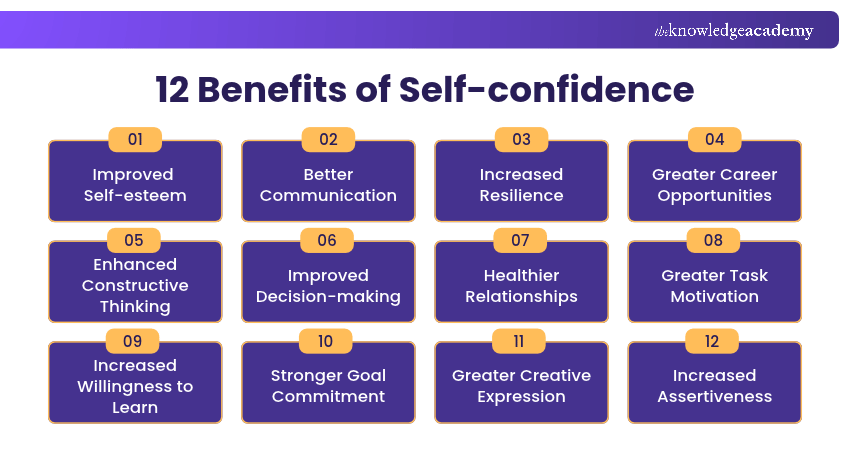
1) Improved Self-esteem
Self-confidence can contribute to healthier self-esteem by helping individuals recognise their capabilities and appreciate their achievements. As people become more aware of their progress and strengths, they may develop a more positive view of themselves and their abilities.
For example, someone who initially struggles with public speaking may gain confidence after preparing and delivering several presentations. Recognising this progress can also contribute to a more positive view of themselves.

2) Better Communication
Self-confidence can help individuals express their thoughts and opinions more openly. People who trust their abilities may feel more comfortable participating in discussions, asking questions and sharing ideas with others. Confident communication does not involve dominating conversations or speaking continuously.
It includes listening carefully, considering different perspectives and responding respectfully. For example, someone contributing to a team discussion may feel more comfortable presenting an idea, explaining their reasoning and responding to questions.
Real-life Scenario: Speaking Up in a Meeting
Imagine that a team is discussing ways to reduce project delays. You notice a recurring problem but feel unsure about raising it. Instead of remaining silent, you prepare a brief explanation supported by an example and say:"I have noticed that delayed approvals affect our delivery schedule. Could we introduce an earlier review stage?"This shows how confidence can support constructive communication without requiring complete certainty or eliminating nervousness.
3) Increased Resilience
Resilience involves adapting to difficulties and recovering from setbacks. Self-confidence can support resilience by helping individuals believe they have the ability to respond constructively to challenging circumstances. People who trust their capacity to learn may be more willing to review mistakes, seek support and try alternative approaches rather than abandoning their efforts.
For example, a professional who receives critical feedback on a presentation may use the comments to improve their preparation and delivery for the next opportunity. This does not mean confident individuals are unaffected by failure. They can experience disappointment and frustration while still recognising that setbacks provide opportunities for learning.
4) Greater Career Opportunities
Self-confidence can encourage professionals to pursue opportunities that match their interests and abilities. This may include applying for promotions, accepting new responsibilities, participating in professional discussions or developing leadership capabilities. Confident employees may also find it easier to communicate their achievements and contribute ideas during important workplace conversations.
For example, a skilled employee may hesitate to apply for a managerial position because they have never supervised a team. Developing confidence alongside relevant leadership skills may encourage them to explore the opportunity.
5) Enhanced Constructive Thinking
Self-confidence can contribute to a more constructive outlook by encouraging individuals to recognise their capabilities when facing uncertainty. Rather than automatically assuming that a difficult situation will end unsuccessfully, confident individuals may be more willing to consider possible solutions and identify actions within their control.
For example, someone starting a new job may initially feel overwhelmed by unfamiliar responsibilities. Confidence in their ability to learn can help them approach the experience with curiosity instead of focusing only on potential mistakes.
Trainer's Insight
Confidence can vary across situations. For example, a Software Developer may be comfortable solving technical problems but uncertain when presenting ideas to senior management. Confidence often develops through experience in specific activities, so identify the situations where you need more practice rather than judging your overall abilities.
6) Improved Decision-making
Self-confidence can support decision-making by helping individuals evaluate options and act without becoming excessively dependent on reassurance from others. People who trust their judgement may feel more comfortable making decisions when complete certainty is unavailable.
For example, an employee may hesitate to suggest a solution when faced with an unexpected workplace challenge. With greater self-confidence, they may feel more comfortable assessing the situation, considering possible approaches and choosing an appropriate course of action rather than allowing self-doubt to delay their decision.
7) Healthier Relationships
Self-confidence can help individuals build healthier relationships with others by supporting honest communication, mutual respect and a greater willingness to participate in relationships. People who feel secure in their abilities may be more comfortable sharing opinions, accepting feedback and addressing misunderstandings constructively.
For example, someone who feels that a friend regularly makes plans without considering their availability might confidently explain how this affects them and suggest making decisions together. Such conversations can encourage mutual understanding and help both people feel respected.
8) Greater Task Motivation
Self-confidence can encourage individuals to begin tasks, engage actively with responsibilities and approach activities with a stronger sense of capability. When people believe they can complete an activity or develop the skills required, they may be less likely to avoid it solely because it appears difficult.
For example, an employee who feels confident using spreadsheet software may be more willing to prepare a complex report or explore an unfamiliar feature. Taking on these activities can provide practical experience and reinforce their willingness to approach similar tasks in the future.
9) Increased Willingness to Learn
Self-confidence can encourage people to explore unfamiliar experiences and develop new abilities. Believing that improvement is possible may make challenging learning experiences feel more approachable.
For example, a professional interested in Data Analytics may initially feel uncertain about learning programming. Rather than avoiding the subject, they may begin with basic exercises and gradually develop their knowledge. This willingness to experiment can create opportunities for personal and professional development.
10) Stronger Goal Commitment
Self-confidence can help individuals pursue meaningful goals and remain committed to working towards them. People who believe they can make progress may be more willing to create plans, monitor their development and maintain effort towards long-term objectives despite temporary setbacks.
For example, someone preparing for a professional certification may feel more motivated to follow a study schedule when they believe their preparation can improve their performance. As they complete practice assessments and recognise improvements, their growing confidence may reinforce their commitment.
Remember
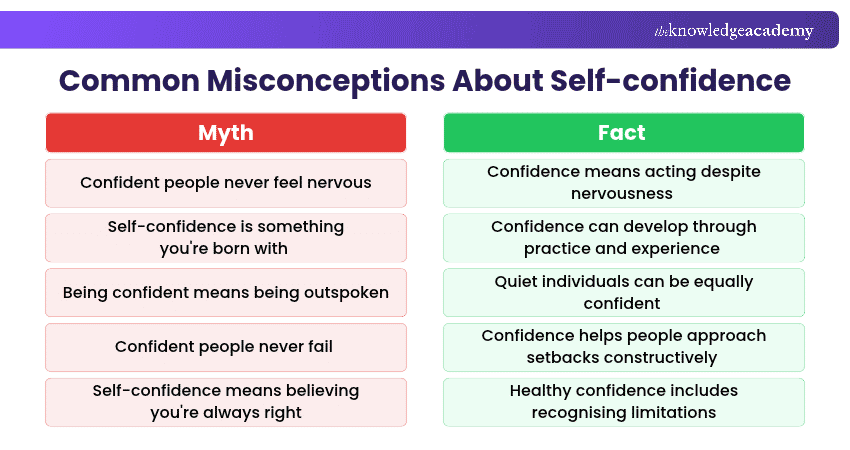
Self-confidence should not be confused with being highly outspoken or socially dominant. An introverted professional may demonstrate confidence by listening carefully, contributing thoughtful ideas and communicating boundaries calmly. Confidence is reflected in how individuals approach situations, not simply how frequently or loudly they speak.
11) Greater Creative Expression
Self-confidence can encourage individuals to explore original ideas, experiment with different approaches and participate in creative activities. People who feel comfortable expressing their perspectives may be more willing to contribute suggestions even when those ideas are unfamiliar or require further development.
For example, a marketing professional might propose a different campaign format based on audience feedback. Confidence may encourage them to explain the concept and invite constructive discussion. This willingness to contribute can support creative collaboration and experimentation.
12) Increased Assertiveness
Assertiveness involves expressing thoughts, feelings and needs clearly while respecting others' perspectives. Self-confidence can support this ability by helping individuals communicate without excessive hesitation. Being assertive is different from being aggressive. Assertive communication focuses on clarity and mutual respect rather than confrontation or control.
For example, an employee who receives an unrealistic deadline might say: “I can complete this task by Thursday, but I would need to adjust the deadline for another assignment.” This response communicates a limitation while remaining professional and solution-focused.
Become more effective in both personal and professional interactions with Assertiveness Skills Training – Sign up soon!
How to Build Self-confidence?
Self-confidence can develop gradually through consistent practice, meaningful experiences and realistic expectations. Here are some steps you can try:
1) Recognise Your Strengths
Begin by identifying abilities, experiences and achievements that demonstrate your capabilities. Consider situations where you have solved problems, learnt new skills or completed challenging responsibilities.
Reflecting on these examples can help you develop confidence grounded in actual experience. For example, if you successfully coordinated a team activity, recognise the communication, planning and organisational skills involved.
2) Set Small, Achievable Goals
Large objectives can sometimes feel overwhelming, particularly when confidence is limited. Breaking them into smaller activities makes progress easier to recognise. For example, an employee aspiring to a leadership role could begin by coordinating a small team activity before taking responsibility for more complex assignments.
7-day Confidence Practice
Try one manageable activity each day to practise confident behaviour:
□ Day 1: Identify three personal strengths□ Day 2: Complete one small task you have been postponing□ Day 3: Share one idea or question in a conversation□ Day 4: Try a manageable task outside your usual routine□ Day 5: Ask someone you trust for constructive feedback□ Day 6: Reflect on one lesson from a previous setback□ Day 7: Review your progress and identify your next step
Remember that confidence develops at different rates. This activity provides opportunities for practice rather than guaranteeing results within seven days.
3) Practise Confident Communication
Communication confidence develops through preparation and repeated experience. Begin with manageable situations, such as asking questions, expressing an opinion or offering constructive feedback during a discussion. Be attentive to speaking, listen actively and maintain respectful communication.
You do not need to eliminate nervousness to communicate effectively. As you gain experience, gradually explore more challenging situations, such as presenting information to a group or participating in unfamiliar professional discussions.
4) Learn From Feedback and Experience
Constructive feedback can help you recognise strengths and identify opportunities for improvement. Instead of interpreting every mistake as evidence of inability, consider what happened, which factors influenced the outcome and how you might approach the situation differently.
For example, if a presentation does not go as expected, you could review its structure, seek feedback and practise the sections that were difficult to communicate. Developing confidence involves recognising both your progress and the areas where further learning is required.
Invest in your growth and bring out your true potential with the Personal Development Training – Sign up now!

The Knowledge Academy develops accessible learning content across Project Management, IT, Cybersecurity, Data Science, Business Analysis, HR, Accounting and Finance, Leadership and Health and Safety. Its resources combine subject research with clear explanations to help professionals build practical knowledge across a wide range of disciplines.
View Detail

 If you wish to make any changes to your course, please


