


We may not have the course you’re looking for. If you enquire or give us a call on 01344203999 and speak to our training experts, we may still be able to help with your training requirements.
Benefits of CRM for Building Stronger Customer Relationships
ByRichard HarrisLast updated on: 22 October 2026
Customer Relationship Management (CRM) systems help businesses organise customer information, improve communication, manage sales activities and streamline day-to-day operations. Discover the important benefits of CRM and how different businesses can utilise them to strengthen customer relationships.
Picture this scenario: A small business owner overwhelmed by the chaos of managing customer interactions, missing crucial follow-ups, and losing out on potential sales.
One customer is waiting for a quotation, another needs an update on their complaint, and a potential buyer has not received a promised follow-up. With customer information scattered across emails, spreadsheets and individual employees, keeping track of every interaction becomes difficult.
This is where the benefits of CRM systems become essential. From improving communication to boosting customer satisfaction, Customer Relationship Management (CRM) systems can help businesses organise customer interactions and manage relationships more effectively.
But how does CRM provide these benefits, and which businesses can benefit most from using it? Let’s find out!
Benefits of CRM
A Customer Relationship Management (CRM) system helps businesses organise customer information, manage interactions with customers and prospects, and coordinate sales, marketing and service activities. The following benefits explain how CRM can support marketing, sales, customer service and internal business operations. Let’s look at them below:
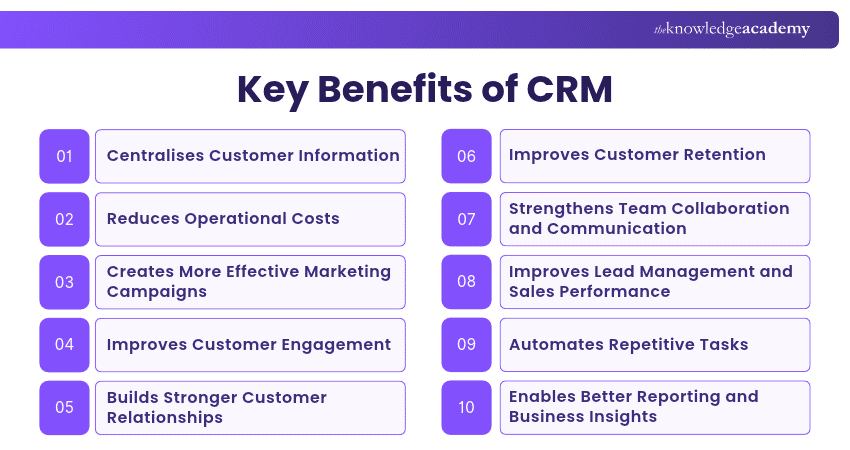
1) Centralises Customer Information
One of the most important benefits of CRM is the ability to bring customer information into a centralised system. A CRM system helps businesses organise this information into accessible customer records, making it easier for authorised employees to understand previous interactions and manage ongoing activities.
Key advantages include:
a) Maintaining customer contact details and relevant interaction histories in one place
b) Reducing unnecessary duplication of information across teams
c) Helping employees access relevant customer context before responding
d) Supporting more consistent customer service and follow-up activities
e) Improving coordination when several departments interact with the same customer
2) Reduces Operational Costs
CRM systems can help businesses reduce operational costs by automating repetitive tasks, centralising customer information and streamlining daily workflows. By minimising manual data entry, administrative work and unnecessary duplication, CRM software helps teams use their time and resources more efficiently. This can lower administrative expenses and allow employees to focus on higher-value activities.
Businesses may achieve operational savings through:
a) Less time spent searching for customer information
b) Reduced duplication of routine administrative tasks
c) Automated customer follow-ups and reminders
d) Better coordination between sales, marketing and service teams
e) Fewer manual errors and less time spent correcting them
3) Creates More Effective Marketing Campaigns
CRM systems help businesses create more targeted marketing campaigns by organising customer information, tracking interactions and identifying relevant audience segments. Marketers can use these insights to understand customer interests, purchasing patterns and previous engagement with the business.
Depending on the platform and its integrations, CRM data can support personalised emails, targeted promotions and follow-up campaigns. This helps businesses deliver more relevant messages to different customer groups and evaluate how their marketing activities contribute to customer engagement and lead generation.
4) Improves Customer Engagement
CRM systems can improve customer engagement by helping businesses manage interactions and communicate with customers based on their needs and preferences. By providing access to previous conversations, enquiries and relevant customer information, CRM software allows teams to deliver more timely and personalised responses.
Customer engagement includes activities such as responding to messages, participating in campaigns, making enquiries and sharing feedback. Depending on the platform and its integrations, CRM systems can help businesses record these interactions and identify opportunities to maintain meaningful communication.
CRM systems can support these interactions by helping teams:
a) Record customer preferences and previous communication
b) Respond to enquiries with relevant information
c) Follow up after customer interactions
d) Collect and organise customer feedback
e) Identify opportunities for timely and useful communication
5) Builds Stronger Customer Relationships
CRM systems help businesses build stronger customer relationships by maintaining a consistent record of customer preferences, communication history and previous interactions. This information allows employees to understand individual needs and provide more relevant assistance, even when different team members manage the same customer account.
For example, an account manager can review a customer's previous purchases, enquiries and service concerns before a follow-up conversation. This helps the business provide more consistent and personalised communication, address customer needs effectively and build trust through positive interactions.
6) Improves Customer Retention
Businesses often need to maintain relationships with existing customers while continuing to attract new ones. While customer growth is often prioritised, managing churn rates is essential to maintaining profitability.
CRM benefits businesses by focusing on both sales and service. It can support customer retention by helping teams recognise customer needs, maintain communication and respond to service concerns. Depending on the CRM's capabilities, businesses may also monitor customer activity, organise renewal reminders, review service histories and identify customers who have become less engaged.
Trainer's Insight
A CRM system can show when a customer last interacted with your business, but it cannot create loyalty on its own. Strong retention depends on using customer insights to provide timely support, resolve concerns and maintain relevant communication. The value comes from how your team acts on the information.
7) Strengthens Team Collaboration and Communication
Besides enhancing customer relationships, CRM software also boosts team collaboration. Depending on the CRM platform and its integrations, service agents can use features such as shared documents and file management tools to access, comment on and share essential reports or videos. Available sharing and export options vary between platforms.
Different CRM products offer different collaboration capabilities, including shared customer records, notes, assigned tasks, notifications and integrations with communication platforms. These capabilities can help departments coordinate activities without relying entirely on separate emails or informal conversations.
If your business operates both in the field and from a home base, CRM integrations can help service agents stay updated on workload changes through internal company messaging. Effective collaboration also helps businesses maintain consistent customer communication, especially when several employees are involved in handling one account.
Connect the data, simplify the process, and strengthen the relationship with Salesforce CRM Training now!
8) Improves Lead Management and Sales Performance
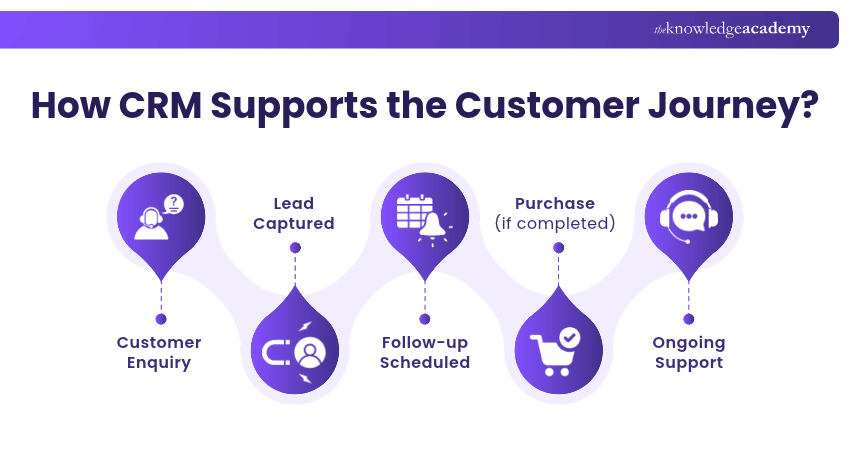
Another important benefit of CRM is the ability to organise sales leads and monitor their progress through the sales pipeline. Leads may arrive through websites, advertisements, referrals, events or direct enquiries. Without a structured process, businesses risk overlooking enquiries or failing to follow up at the right time.
CRM software can help sales teams:
a) Capture and organise leads from supported sources
b) Record contact details and relevant customer interests
c) Track the stage of each sales opportunity
d) Schedule follow-ups and reminders
e) Monitor sales activities and potential deals
f) Identify opportunities for relevant additional products or services
9) Automates Repetitive Tasks
CRM systems can automate routine activities that would otherwise require manual effort. This allows employees to spend more time on tasks that need judgement, personal communication or complex problem-solving.
Depending on the CRM platform, businesses can automate activities such as:
a) Follow-up Reminders: Creating reminders when a customer needs to be contacted.
b) Lead Assignment: Routing new enquiries to suitable sales representatives according to predefined rules.
c) Data Updates: Updating relevant records when connected systems provide new information.
d) Customer Notifications: Sending appropriate acknowledgements or updates following certain actions.
e) Task Creation: Generating tasks when an opportunity moves to another sales stage.
f) Reporting Workflows: Scheduling regular reports and distributing them to relevant employees.
10) Enables Better Reporting and Business Insights
CRM systems provide robust reporting capabilities, allowing businesses to generate detailed reports on several aspects of their operations. These reports can include sales performance, customer interactions, and marketing campaign effectiveness. By having access to accurate and comprehensive data, businesses can make informed decisions, identify trends, and optimise their strategies.
CRM reports can help organisations understand:
a) How many leads enter the sales pipeline and progress through different stages
b) How sales performance changes over time
c) Which marketing activities generate relevant enquiries
d) How efficiently customer service issues are resolved
e) Where follow-ups, conversions or customer interactions may require attention
Never let a valuable lead slip through the cracks by joining the HubSpot CRM Training today!
Which Businesses Can Benefit From CRM Systems?
CRM systems provide a multitude of benefits across various industries. Here are some types of businesses that can particularly gain advantages from implementing CRM systems:
a) Retail and E-commerce: CRM systems help manage customer data, track purchase history, and personalise marketing efforts. This can support better customer experiences, relevant communications and sales opportunities.
b) Financial Services: Investment firms, banks, and insurance companies use CRM systems to manage client relationships, track interactions, and coordinate relevant services while complying with applicable confidentiality and regulatory requirements.
c) Healthcare: Hospitals, clinics, and private practices may use suitable CRM to manage enquiries, appointment communications and patient relationships. Sensitive health information requires appropriate privacy, security and regulatory safeguards.
d) Real Estate: Real estate agencies use CRM systems to manage property listings, track client preferences, and streamline communication, which helps in organising enquiries, coordinating viewings and managing ongoing client relationships.
e) Travel and Hospitality: Hotels, travel agencies, and tour operators use CRM systems to manage bookings, personalise guest experiences, and handle customer feedback, enhancing overall guest satisfaction and loyalty.
f) Manufacturing: Manufacturers use CRM systems to manage relationships with suppliers and customers, track sales processes, and improve customer service, particularly where account management and after-sales support are important.
g) Education: Educational institutions use CRM systems to manage prospective student enquiries, admissions communications, enrolment-related activities and stakeholder relationships, improving overall administrative efficiency.
h) Non-profit Organisations: Non-profits use CRM systems to manage donor information, track fundraising efforts, and improve volunteer coordination, which helps in achieving their mission more effectively.
Keep This in Mind
A CRM system is only as effective as the way your business uses it. Centralising customer data is just the beginning; maintaining accurate records, ensuring team adoption and following up consistently are equally important. Focus on building meaningful customer relationships rather than simply managing information, and use CRM insights to make every interaction count.
Turn complex CRM workflows into seamless experiences with the Microsoft Dynamics CRM Training now!

Richard Harris creates technically detailed yet accessible content on full-stack development, software architecture and modern development frameworks. His knowledge of frontend and backend technologies helps developers understand how scalable, efficient and high-performing applications are designed and built.
View Detail

 If you wish to make any changes to your course, please


