


We may not have the course you’re looking for. If you enquire or give us a call on 01344203999 and speak to our training experts, we may still be able to help with your training requirements.
Benefits of Content Marketing
ByJames SmithLast updated on: 22 October 2026
Content marketing helps businesses build brand awareness, engage their target audience and establish trust through valuable content. Explore its key benefits and how it helps attract potential customers, generate leads and support long-term business growth.

Before We Dive In
1. Content marketing helps businesses improve online visibility and attract relevant audiences through valuable content.2. Consistently sharing accurate and useful information helps establish brand credibility and build customer trust.3. Relevant content supports lead generation and conversions by helping potential customers make informed decisions.4. Educational resources, tutorials and ongoing communication can improve customer experience and strengthen long-term relationships.5. Evergreen content can continue attracting audiences and delivering value over time when regularly reviewed and updated.
Imagine discovering a brand through a helpful article that answers exactly what you were searching for. You explore more of its resources, begin recognising its expertise and eventually consider its products or services. The brand has earned your attention by providing useful information rather than immediately asking for a sale.
That is the value of content marketing. It creates opportunities to attract, educate and engage audiences. But its impact extends well beyond website visits. In this blog, we will explore the top benefits of content marketing and how they can contribute to meaningful business growth. Let's dive in!
15 Key Benefits of Content Marketing
Content marketing offers several benefits, from improving brand visibility and building customer relationships to generating leads and supporting long-term growth. Understanding these benefits can help businesses develop effective marketing strategies and achieve their goals. Here are the 15 key benefits of content marketing:
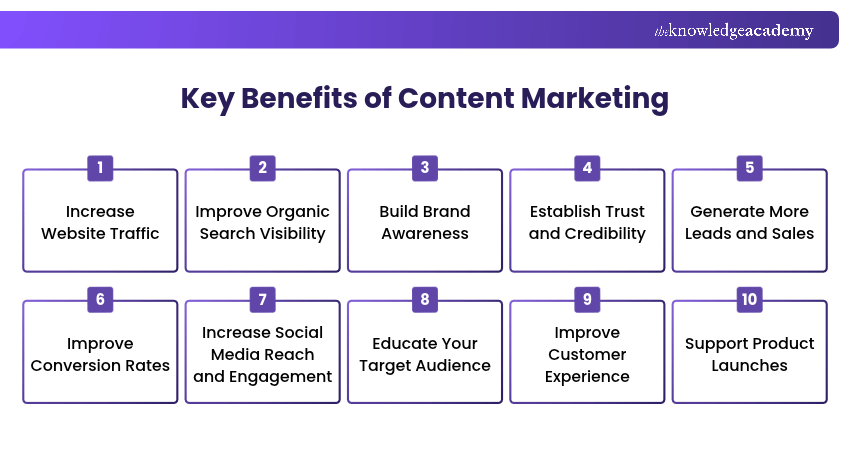
1) Increase Website Traffic
Content marketing helps businesses increase website traffic by creating valuable, relevant content that attracts potential customers by addressing common questions, interests and challenges. Blogs, practical guides and educational resources can provide opportunities for people to discover a website through search engines, referrals and other channels.
For example, a company offering accounting software might publish articles explaining invoicing, bookkeeping and financial reporting. These resources can attract readers interested in topics connected to their services. When visitors find the information useful, they may explore other website pages or return for additional resources.
Pro Tip
High website traffic does not always indicate successful content marketing. Businesses must connect their measurements with specific objectives, such as generating qualified enquiries, increasing relevant engagement or supporting customer retention.

2) Improve Organic Search Visibility
Search Engine Optimisation (SEO) helps search engines understand website content and its relevance to particular searches. Publishing useful, well-organised content can support visibility in organic search results and help businesses reach audiences looking for information.
Content that addresses search intent, uses descriptive headings and provides accurate explanations is more useful to readers. However, rankings also depend on factors such as competition, website quality and search engine systems.
3) Build Brand Awareness
Brand awareness refers to how familiar people are with a business and what it offers. Content marketing helps increase this familiarity by presenting a brand's knowledge, values and expertise to relevant audiences. Consistent content across websites, newsletters, social media platforms and other channels can help people recognise a brand over time.
4) Establish Trust and Credibility
Trust plays an important role in building lasting customer relationships. Content marketing can help businesses demonstrate their knowledge by providing accurate explanations, practical advice and reliable information. For example, a technology company that publishes detailed tutorials, troubleshooting guides and well-supported comparisons can help readers evaluate its expertise.
Trainer's Insight
Publishing frequently does not automatically establish authority. Accurate information, relevant examples and evidence of subject knowledge can help readers evaluate whether a brand's content is trustworthy.
5) Generate More Leads and Sales
Content marketing can support lead generation by attracting people interested in a business's products, services or expertise. It helps businesses identify potential customers and encourage them to express interest through enquiries, registrations or requests for further information. Businesses can provide downloadable guides, webinars or product demonstrations to nurture this interest and encourage further engagement.
For example, a software provider may publish a guide about common inventory challenges and provide a relevant product demonstration for readers seeking a solution. These interactions can help businesses identify interested prospects and create opportunities to nurture them towards a purchase.
6) Improve Conversion Rates
A conversion occurs when a visitor completes a desired action, such as submitting an enquiry, registering for a webinar or making a purchase. Conversion rate refers to the percentage of visitors who complete a particular action. Content marketing can help improve this rate by addressing potential customers' doubts, providing relevant information and guiding them towards the next step
For example, a product comparison guide can help visitors evaluate available options, while customer testimonials and detailed product information can provide reassurance before they make a decision. Clear Calls to Action (CTAs) can further encourage visitors to complete the intended action.
7) Increase Social Media Reach and Engagement
Content marketing gives businesses opportunities to connect with audiences through social platforms. Sharing useful posts, videos, infographics and educational resources can encourage likes, comments, shares and discussions, helping brands improve their visibility and encourage participation.
For example, a fitness business might share short exercise demonstrations, practical training tips and answers to Frequently Asked Questions (FAQs). Content that matches audience interests can encourage engagement and broaden reach, although results depend on factors such as relevance, distribution and platform behaviour.
Increase digital brand visibility and achieve marketing goals with Social Media Marketing Course – Register today!
8) Educate Your Target Audience
Educational content helps people understand challenges, compare possible solutions and develop confidence in their decisions. It is especially valuable when products or services require detailed explanations.
Businesses can publish beginner guides, tutorials, demonstrations and comparison resources that address different information needs. For example, a cybersecurity company might explain common security threats, preventive measures and available protection options.
9) Improve Customer Experience
Content marketing can improve customer experience by making important information easier to understand and access. Product tutorials, onboarding materials and instructional resources help customers use products or services more effectively.
For example, an online learning platform might provide course preparation guides, video tutorials and learning resources to help participants navigate their training. When customers can understand processes and access helpful information, their overall experience may become smoother and more satisfying.
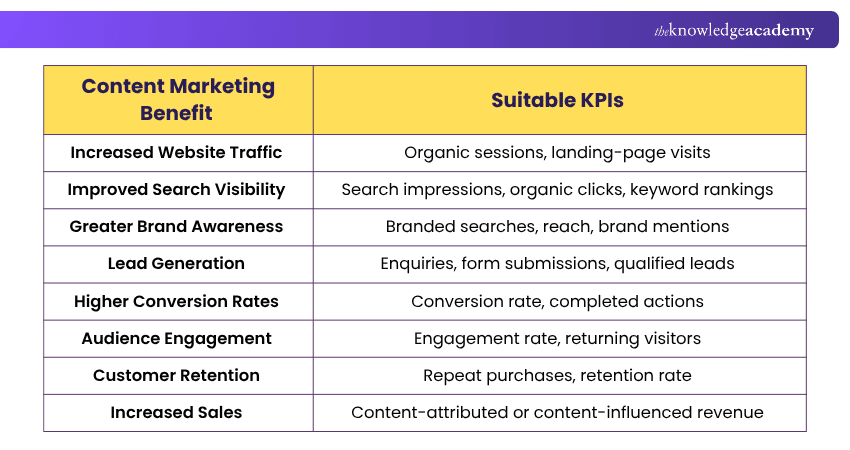
Here are the Key Performance Indicators (KPIs) that will help you measure the benefits of content marketing:
10) Support Product Launches
Content marketing helps businesses introduce new products or services by creating awareness and communicating their value to potential customers. Blogs, product previews, demonstration videos and educational resources can explain key features, address common questions and generate interest before and after a launch.
For example, a technology company launching a new project management tool might publish feature demonstrations, introductory guides and practical use cases. These resources can help potential users understand how the product works, assess its suitability and make informed decisions about trying or purchasing it.
11) Build Audience Engagement and Loyalty
Content marketing can help maintain audience interest beyond an initial visit or purchase. Regularly sharing useful information gives people reasons to return and continue interacting with a brand. Newsletters, educational resources, community discussions and product updates can support ongoing communication.
For instance, a gardening business might publish seasonal planting guides and maintenance tips throughout the year. These resources can provide continued value to customers. Although content alone cannot guarantee loyalty, it can strengthen relationships when supported by positive customer experiences.
12) Provide Long-term Value Through Evergreen Content
Evergreen content focuses on subjects that remain useful over an extended period. Examples include introductory guides, practical tutorials, explanations and answers to frequently asked questions.
Unlike time-sensitive announcements, evergreen resources may continue attracting and helping readers after publication. For example, a guide explaining how to prepare a business budget may remain relevant for years, provided its information stays accurate.
Trainer's Insight
Evergreen does not mean maintenance-free. Reviewing older content, replacing outdated examples and checking factual accuracy help preserve its usefulness and long-term value.
13) Support Faster Purchase Decisions
Buying decisions often involve researching products, comparing alternatives and addressing concerns. Content marketing can make this process easier by providing relevant information at the right time. Product comparisons, buying guides, demonstrations and customer success stories can help prospects understand available options.
For example, a business evaluating Customer Relationship Management (CRM) software may find a comparison guide useful for assessing features and suitability. Well-structured content can reduce uncertainty and support more efficient evaluations, although the time required to purchase still depends on the buyer's circumstances.
14) Reach Audiences Across Multiple Channels
Content marketing allows businesses to communicate through different platforms and formats. Some audiences prefer detailed articles, while others respond better to videos, podcasts or visual explanations. Adapting content for different channels can help organisations reach people with varied information needs and consumption preferences.
Here are the popular content formats and their uses:
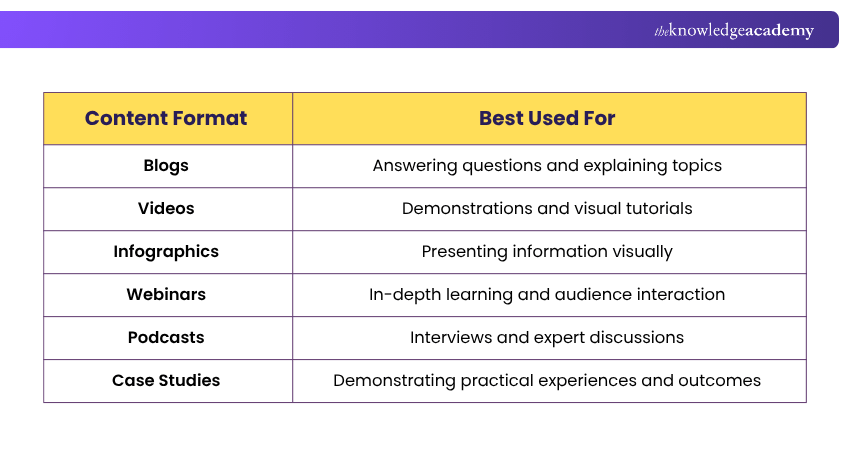
Businesses can also repurpose useful content. For example, a detailed article could become a short video series, an infographic or a collection of social media posts.
15) Differentiate Your Brand from Competitors
Businesses often compete for the attention of similar audiences. Content marketing can help a brand stay unique by presenting distinctive perspectives, practical expertise and useful insights. Rather than repeating commonly available information, organisations can publish original research, expert explanations, practical examples or specialised guidance.
For example, a consulting company might share detailed insights into industry challenges and explain how different approaches work in practice. Distinctive content can help audiences recognise what makes a business valuable and why its expertise may be relevant to their needs.
Extra Insight
A successful content marketing strategy should balance educational, engaging and promotional content based on audience needs and business objectives. Rather than following a fixed publishing ratio, businesses should regularly review content performance and adjust their approach to deliver meaningful results.
So, from improving search performance to generating leads, the benefits of content marketing extend across different stages of the customer journey. Understanding these benefits of content marketing helps organisations set meaningful priorities and create content that delivers genuine value. By combining audience-focused information with regular evaluation, businesses can build stronger connections and support sustainable growth.
Master the art of social media storytelling and content design to make every post count. Sign up for the Design and Create Engaging Content for Social Media Training now!

James Smith produces results-focused content that helps marketers plan, evaluate and improve their online activities. His writing connects channel selection, audience behaviour and performance data with measurable marketing objectives.
View Detail

 If you wish to make any changes to your course, please


