


 Top Rated Course

We may not have the course you’re looking for. If you enquire or give us a call on 01344203999 and speak to our training experts, we may still be able to help with your training requirements.
Effective Time Management Techniques
The Knowledge Academy 26 August 2026Time Management Techniques help individuals prioritise tasks, minimise distractions and use time effectively. Choosing the right method can improve productivity, reduce stress and support personal goals.

Training Outcomes Within Your Budget!
We ensure quality, budget-alignment, and timely delivery by our expert instructors.
Table of Contents
Key Takeaways
1. Time Management Techniques support prioritisation, planning and focused work.2. Different methods address challenges like procrastination, distractions and poor scheduling.3. Prioritisation techniques help distinguish high-value work from less important activities.4. Planning methods provide structure while allowing room for unexpected demands.5. The most suitable technique depends on your goals, responsibilities and working style.
Imagine you are talking to a colleague over coffee.
They tell you their day is packed with meetings, messages and unfinished tasks, then ask:
“How can I manage my time without feeling overwhelmed?”
It sounds like a simple question, but the answer depends on your priorities, working style and daily responsibilities. With so many Time Management Techniques available, choosing the right one can be difficult.
So, which approach would work best for you?
This blog will help you decide. You will explore the effective Time Management Techniques that can help you organise tasks, maintain focus and work efficiently in your personal and professional life. Let’s get started!
What is Time Management?
Time Management is the practice of planning and organising how you use your time across different tasks and responsibilities. When applied effectively, it can help you work more efficiently, complete important tasks within the available time and remain productive under pressure.
It can also support better focus, decision-making and stress management by helping you prioritise tasks based on their importance and urgency. This allows you to allocate your attention and effort to activities that contribute most to your goals.

What are Time Management Techniques?
Time Management Techniques are structured methods used to put Time Management into practice. They help you prioritise tasks, plan activities, manage distractions and allocate your available time more effectively.
Different techniques solve different problems. Some focus on prioritisation, while others support concentration, scheduling, task organisation or deadline management.
14 Time Management Techniques
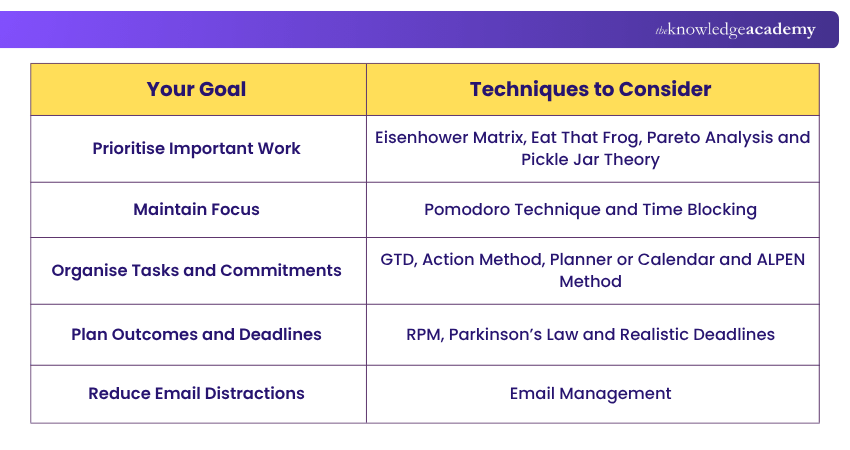
Effective Time Management can help you prioritise responsibilities, stay focused and make steady progress towards your goals. Different techniques address different challenges, from managing distractions to organising tasks and setting realistic deadlines. Here are 14 practical Time Management Techniques you can consider:
Choose a Technique Based on Your Goal
1) Pomodoro Technique
Entrepreneur and author Francesco Cirillo developed the Pomodoro Technique. It is a Time Management approach that uses a timer to divide work into focused intervals, called Pomodoros, followed by short breaks. The name was inspired by the tomato-shaped kitchen timer Cirillo originally used. Here's how it works:
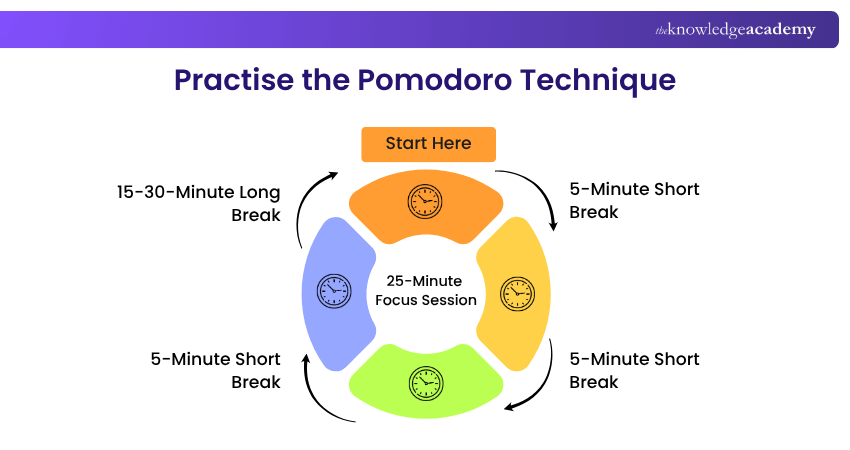
a) Select a task you want to complete.
b) Set a timer, usually for 25 minutes.
c) Work on the task with full focus until the timer ends.
d) When the timer rings, mark the completed Pomodoro and review your progress.
e) Take a short break of around five minutes.
f) Repeat the cycle. After completing four Pomodoros, take a longer break before starting another cycle.
The Pomodoro Technique may suit people who prefer short periods of focused work followed by regular breaks.
2) Time Blocking Technique
Time Blocking involves dividing your day into defined periods and assigning specific tasks or activities to each block. It can help you create structure, protect focused work time and manage competing responsibilities. Here's how you can apply it:
a) Divide your day into suitable time blocks, such as 30 or 60 minutes.
b) Estimate how long each task will take and allocate it to a time block.
c) Include buffer periods between blocks to handle delays or unexpected changes.
Time Blocking may suit people managing multiple responsibilities or those who prefer a structured daily schedule.
3) Eisenhower Matrix
The Eisenhower Matrix is named after Dwight D. Eisenhower and is based on the distinction between urgent and important matters associated with him. The four-quadrant approach was later popularised as a Time Management framework for prioritising tasks.
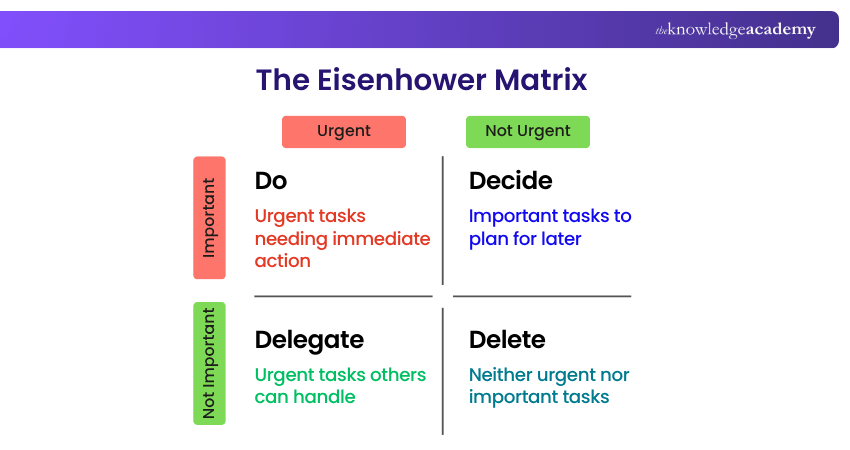
Complete urgent and important tasks first. Schedule important but non-urgent work, delegate urgent but less important tasks where appropriate and eliminate or limit activities that are neither urgent nor important. Protecting time for planning, learning and prevention can also help prevent important tasks from becoming urgent later.
4) Eat That Frog Technique
The Eat That Frog technique, popularised by Brian Tracy, encourages you to identify and tackle an important task that you are most likely to postpone. Completing it early can help reduce procrastination and build momentum for the rest of the day. Here's how it works:
a) Identify an important task or goal you have been delaying.
b) Define what needs to be achieved.
c) Set a realistic deadline.
d) Break the goal into clear, manageable tasks.
e) Prioritise the tasks based on their importance and impact.
f) Start with the most important or challenging task – your “frog.”
g) Repeat the process regularly to maintain progress towards your goals.
This technique may suit people who frequently postpone difficult or high-priority tasks.
5) Getting Things Done (GTD) Method
The Getting Things Done (GTD) method, developed by David Allen, is a structured approach to organising tasks and commitments by capturing what requires your attention and deciding what action to take. Here's how it works:
a) Capture: Record everything requiring attention.
b) Clarify: Decide what each item means and whether action is required.
c) Organise: Place tasks, calendar items and reference material in the appropriate place.
d) Reflect: Review the system regularly to keep it current.
e) Engage: Choose and complete the appropriate next action.
GTD also includes the Two-Minute Rule. If an action takes less than about two minutes, complete it immediately rather than spending more time organising or tracking it. Other actions can be delegated, scheduled or added to an appropriate action list.
Learn to think ahead, plan smarter, and lead strategically with the Strategic Planning and Thinking Course – Sign up now!
6) Rapid Planning Method (RPM)
The Rapid Planning Method (RPM), developed by Tony Robbins, is a results-focused planning and life management approach. Rather than concentrating only on tasks or schedules, it encourages you to define the result you want, understand why it matters and identify the actions needed to achieve it. Here's how it works:
a) Define the specific result you want to achieve.
b) Identify the purpose behind the result and why it matters to you.
c) List the actions that could help you achieve the desired result.
d) Organise and prioritise these actions into a Massive Action Plan (MAP).
RPM can help you connect everyday activities with broader goals by focusing on the result, purpose and actions required to move forward.
7) Pareto Analysis
Pareto Analysis is a prioritisation and problem-solving method based on the Pareto Principle, also known as the 80/20 Rule. It helps you identify the problems or causes that have the greatest impact so you can focus your time and effort where they are most valuable. Here's how it works:
a) List the problems or issues you want to address.
b) Identify the possible cause of each problem.
c) Assess or score each problem based on its impact or frequency.
d) Group problems that share the same or similar causes.
e) Compare the groups to identify those contributing most significantly to the overall problem.
f) Prioritise the highest-impact causes and address them first.
The 80/20 ratio is a general principle rather than a fixed rule. In Time Management, Pareto Analysis can help you identify which problems or activities deserve the most attention, allowing you to focus your effort where it can have the greatest impact.
8) Pickle Jar Theory
The Pickle Jar Theory uses a jar to represent the time available in a day. Rocks represent your most important priorities, pebbles represent less critical commitments and sand represents minor activities or distractions. The order matters:
a) Rocks represent your most important tasks and priorities.
b) Pebbles represent smaller or less important responsibilities.
c) Sand represents minor activities and distractions, such as unnecessary messages, social media or interruptions.
Plan your rocks first, followed by the pebbles and allow the sand to fill the remaining time. This approach helps protect time for important priorities while leaving room for smaller tasks and unexpected demands.
9) Parkinson's Law
British historian Cyril Northcote Parkinson introduced the idea that work expands to fill the time available for its completion. Simply put, a task may take up the time allocated to it, even when it could potentially be completed sooner. Parkinson’s Law is not a traditional Time Management method but a principle that can be used to encourage more focused working.
Setting clear and realistic time limits can encourage focused and efficient work. To apply this principle:
a) Set a clear but realistic time limit.
b) Break larger tasks into smaller deadlines.
c) Set target completion times before the final deadline.
d) Reserve defined periods for routine tasks such as email.
Time limits should remain realistic so that working faster does not compromise accuracy or quality.
Plan better today and achieve more tomorrow with the Effective Planning and Scheduling Course – Join today!
10) Use a Planner or Calendar
A planner or calendar is a simple yet useful Time Management Tool. It can help you organise your schedule, track deadlines and keep important tasks and commitments visible. Use it effectively by following these steps:
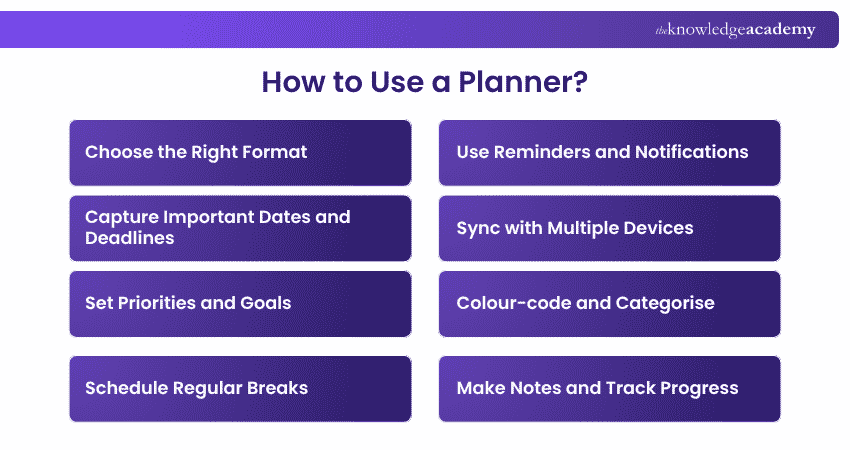
a) Use a paper planner, digital calendar or both based on what suits you best.
b) Add deadlines, meetings, events and personal commitments in one place.
c) Highlight critical tasks to focus on what matters most.
d) Plan regular breaks to support sustained focus and productivity.
e) If you use a digital calendar, enable alerts for important tasks and appointments.
f) Keep your digital calendar synced across devices for easy access and updates.
g) Use categories or labels to make different activities easier to identify.
This technique may suit people managing multiple responsibilities, tracking several deadlines or preferring a clear overview of their schedule.
11) Set Realistic Deadlines
Realistic deadlines can make your time and workload easier to manage. They allow you to plan tasks, manage pressure and maintain the quality of your work. Use these steps to set achievable timelines:
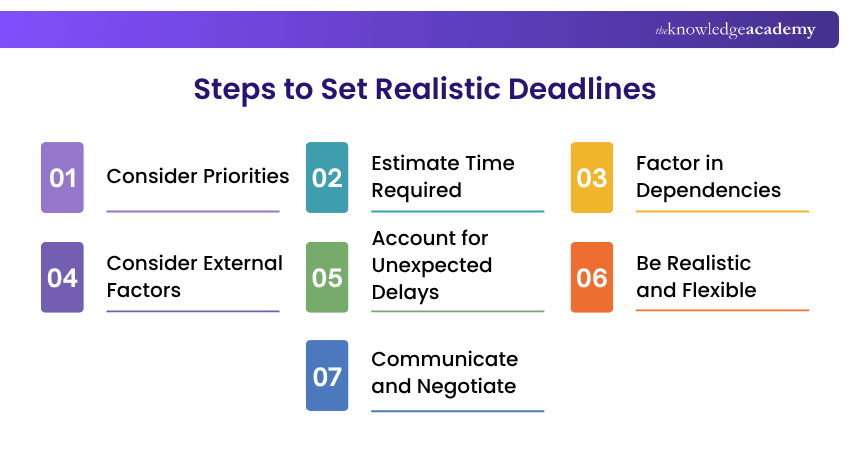
a) Consider the importance, urgency and complexity of each task.
b) Break tasks into smaller steps and estimate time for each.
c) Identify tasks that depend on other people or activities and plan timelines accordingly.
d) Consider available resources, workload and stakeholder involvement.
e) Allow buffer time for unexpected delays or changes.
f) Set achievable deadlines that reflect your available capacity and resources.
g) Discuss and agree on deadlines with teams or stakeholders where appropriate.
Realistic deadlines can be particularly useful when managing multiple responsibilities, coordinating work with others or avoiding overcommitment.
12) Manage Email Effectively
Managing email effectively can support better Time Management, particularly in roles where email is a major part of daily work. Frequent checking and unnecessary notifications can interrupt focused work, so setting clear email habits can help reduce distractions. Try these strategies:
a) Check and respond to emails during dedicated time slots where practical.
b) Prioritise messages based on their urgency and importance.
c) Make the purpose of your email clear from the beginning.
d) Use short sentences or bullet points to communicate information clearly.
e) Use templates for recurring messages where appropriate to save time.
These strategies may be particularly useful for people who manage a high volume of work-related emails.
13) Action Method
The Action Method is a structured Task Management approach developed by Scott Belsky to help turn ideas into concrete actions and move projects forward. It organises project information according to what requires action now, what should be kept for reference and what can be considered later. Here's how it works:
a) Capture ideas, notes and tasks related to a project.
b) Turn tasks that require action into clear Action Steps.
c) Keep supporting information as References so it is available when needed.
d) Place ideas that do not require immediate action into Backburner Items for future consideration.
e) Review your Action Steps regularly and focus on completing the most relevant priorities.
The Action Method may suit people who generate many ideas or manage project-based work and need a clear way to turn ideas into actions.
14) ALPEN Method
The ALPEN Method is a daily planning technique associated with German Time Management expert Lothar Seiwert. Its name comes from five German terms representing the key steps for planning and reviewing a working day:
a) List Tasks: Record the tasks, appointments and activities planned for the day.
b) Estimate Duration: Estimate how long each activity is likely to take.
c) Plan Buffer Time: Leave time for interruptions, delays and unexpected tasks.
d) Set Priorities: Decide which tasks should be completed, delegated or postponed.
e) Review Progress: Review what was completed and use what you learn to improve future planning.
The method combines task planning, time estimation, prioritisation and review. It may suit people whose schedules often include changing priorities, interruptions or unexpected requests.
How to Choose the Right Time Management Technique?
The right Time Management Technique depends on your goals, workload, working environment and personal preferences. You do not need to rely on one method permanently. Consider these factors when choosing a suitable approach:
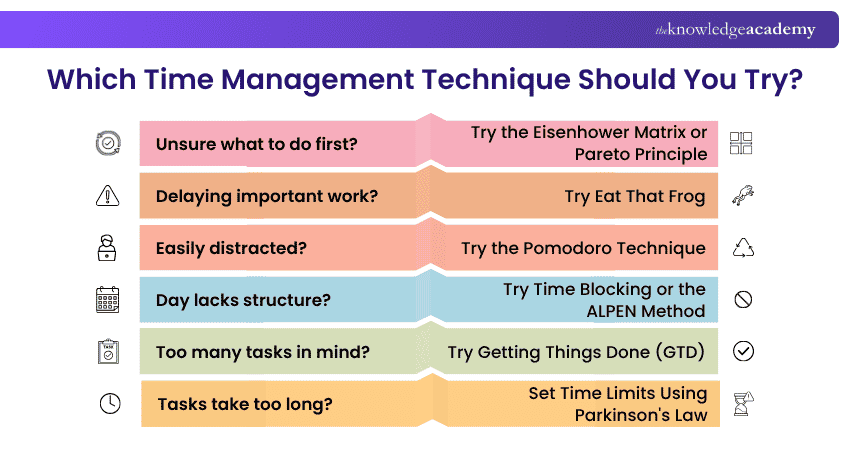
a) Review Your Work Structure: If your day includes frequent meetings and commitments, Time Blocking can help you organise dedicated periods for focused work. If you have more flexibility, the Pomodoro Technique may provide useful structure.
b) Evaluate Your Environment: If you experience frequent interruptions, shorter focus periods may be easier to manage. If you can work without interruption, longer focused sessions may be more suitable.
c) Clarify Your Goals: Use prioritisation techniques when you need to identify important tasks, focus techniques when distractions are a challenge or planning methods when you need greater structure.
d) Match Your Energy Levels: Schedule demanding tasks during periods when you typically feel most focused and alert, where possible.
Pro Tip:
Test one technique consistently before introducing another. Assess whether it improves your focus, task completion and control over your schedule. If it does not address your main challenge, adjust the approach or try another technique.
Conclusion
The right Time Management Techniques can help you prioritise tasks, maintain focus and use your available time more effectively. Since no single method suits everyone, experiment with different approaches and adapt them to your goals, responsibilities and working style to build productive habits that last.
Build better habits and create stronger possibilities by joining the Personal Development Courses today!
Frequently Asked Questions
How Can Effective Time Management Positively Impact My Career Prospects?

Effective Time Management can help you prioritise responsibilities, meet commitments and maintain consistent performance. These habits can demonstrate reliability, organisation and the ability to manage workloads effectively, which may support your professional development.
Can You Combine Different Time Management Techniques?
Yes. Different techniques can be combined to address different needs. For example, you could use the Eisenhower Matrix to prioritise tasks, Time Blocking to schedule them and the Pomodoro Technique to maintain focus while working.
Is Multitasking an Effective Time Management Technique?
Multitasking is generally unsuitable for tasks requiring concentration because frequently switching between tasks can reduce efficiency and increase the likelihood of errors. Grouping similar routine tasks may be useful, but complex or important work usually benefits from focused attention.
How Often Should You Review Your Time Management Approach?
Review your approach whenever your workload, priorities or responsibilities change. Regular reviews can help you identify what is working, remove unnecessary steps and adjust your techniques to suit your current needs.

The Knowledge Academy


Global Training Provider
The Knowledge Academy is a world-leading provider of professional training courses, offering globally recognised qualifications across a wide range of subjects. With expert trainers, up-to-date course material, and flexible learning options, we aim to empower professionals and organisations to achieve their goals through continuous learning.


 If you wish to make any changes to your course, please


