


We may not have the course you’re looking for. If you enquire or give us a call on 01344203999 and speak to our training experts, we may still be able to help with your training requirements.
Home
 Resources
Digital Marketing
Skyscraper Technique for SEO: What It Is, How It Works and Benefits
Resources
Digital Marketing
Skyscraper Technique for SEO: What It Is, How It Works and Benefits
Skyscraper Technique for SEO: What It Is, How It Works and Benefits
ByScarlett AdamsLast updated on: 26 October 2026
The skyscraper technique is an SEO strategy that involves finding popular content, creating a more valuable version and promoting it to relevant websites. This blog explores how the technique works, its key benefits and its role in strengthening content quality and improving search engine visibility.
What You'll Learn
1. The skyscraper technique is a link-building strategy developed by Brian Dean.2. It involves finding link-worthy content, creating something better and promoting it to relevant websites.3. SEO tools can help identify content with valuable backlinks.4. Original insights, accurate information and useful visuals can make your content more appealing.5. This technique can help attract backlinks, referral traffic and improve search visibility.
Longer content = Better rankings?
Not necessarily.
More keywords = More traffic?
Not always.
Better content = More backlinks?
Only if the right people discover and value it.
So, what actually makes content worth linking to? The answer isn't always about creating more content. Sometimes, it's about making something that already exists significantly better.
That's where the skyscraper technique comes in. But what makes this approach different, and how can it strengthen your SEO efforts? Let's find out.
What is the Skyscraper Technique?
The skyscraper technique is an SEO link-building strategy introduced by Brian Dean. It involves identifying content that has already earned backlinks and ranks well, creating a more useful version of it and reaching out to websites that link to the original content and may be interested in referencing the improved version.
Its primary aim is to attract high-quality backlinks and strengthen a website's visibility in search engine results. However, earning backlinks is not guaranteed, as results depend on content quality, relevance and effective outreach.

How to Use the Skyscraper Technique for SEO?
The skyscraper technique is a structured approach to link building, although its success depends on content quality, relevance and outreach. The following steps explain how to apply this technique:
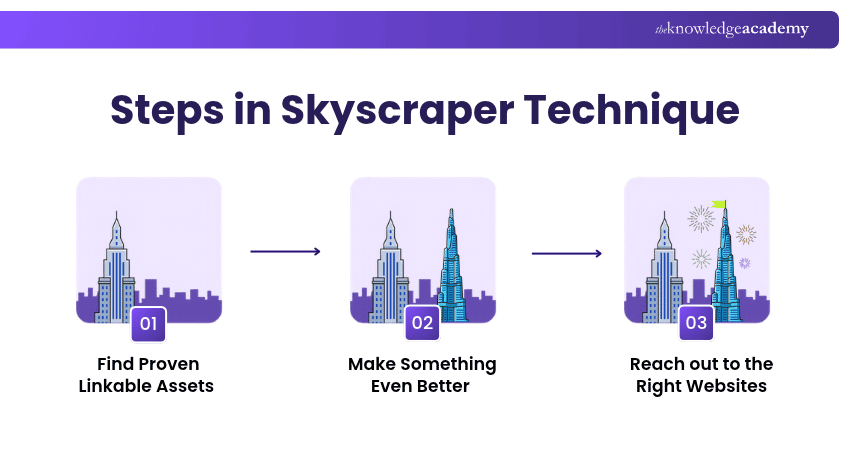
1) Find Proven Linkable Assets
The first step is to identify content that has already attracted relevant backlinks. These pages can reveal what audiences find useful and which resources other websites are willing to reference. Here are four ways to find proven linkable content:
a) Use SEO Tools: SEO tools can help identify pages with backlinks. Analyse referring domains, link relevance and the types of content attracting attention.
b) Search Google: Search for keywords related to your topic to identify visible content and potential competitors. Use a backlink analysis tool to check which pages have earned links.
c) Explore Competitor Websites: Review competing websites to identify content formats, recurring topics and resources that attract backlinks. Examine the unique insights, original research or practical information that may have encouraged other websites to reference them.
d) Check Content Roundups and Resource Pages: Explore industry resource pages, curated guides and relevant content collections. These can reveal potentially link-worthy resources and websites that reference external content. Use backlink analysis tools to verify whether the identified resources have attracted relevant links.
Pro Tip
Before selecting an article, examine the relevance and credibility of its referring websites. A resource with fewer relevant backlinks may offer a more suitable opportunity than one attracting numerous unrelated links.
2) Make Something Even Better
Once you have identified a suitable resource, the next step is to create something that provides greater value. This does not necessarily mean producing the longest article. Instead, focus on improving usefulness, accuracy and overall reader experience. Here are five ways to improve existing content:
a) Update the Content: Review facts, statistics and recommendations to identify outdated information. Replace it with accurate, relevant information from reliable sources.
b) Make it More Informative: Address important gaps in the original resource. Include additional explanations, practical examples or case studies where they genuinely help readers understand the topic.
c) Improve Readability: Organise information with clear headings, shorter paragraphs and logical sections. Use straightforward language so readers can find and understand information easily.
d) Add Useful Visuals: Include relevant infographics, charts, diagrams or videos to explain complex information. Ensure every visual serves a clear purpose rather than simply making the page longer.
e) Offer Unique Insights: Add original observations, practical experiences or research where possible. A fresh perspective can make your content more valuable than resources that only repeat existing information.
Content Improvement Checklist
Before publishing your improved resource, review the following:□ Have you checked the accuracy of existing information?□ Have you added original insights or useful examples?□ Have you addressed gaps in competing content?□ Is your content easy to read and navigate?□ Do your visuals improve understanding?□ Does your content satisfy the reader's search intent?
3) Reach out to the Right Websites
After publishing your improved content, the next step is to introduce it to relevant websites. The purpose of outreach is to show website owners why your resource may be useful to their audience. Rather than requesting links from unrelated websites, focus on publications and resource pages where your content offers genuine value.
Here are four ways to approach link-building outreach:
a) Find Websites Linking to Similar Content: Use backlink analysis tools to identify websites referencing the original resource. Review whether your improved content would be relevant to their audience.
b) Personalise Your Outreach: Write a message that refers to the recipient's existing content. Explain what your resource offers and why it may be worth considering.
c) Be Polite and Respectful: Keep your communication professional and avoid demanding backlinks. Website owners decide independently whether a resource is suitable for their readers.
d) Make It Easy for Them: Provide a direct link to your resource and briefly highlight its most useful features. Avoid unnecessary explanations or repeated requests.
Here's an example of a personalised link-building outreach email:
Subject: A Useful Resource for Your SEO Guide
Hi [Name],I came across your article on SEO strategies and found your section on link-building techniques particularly useful. I've recently published a resource covering updated information, practical examples and visual explanations of the same topic. It may offer additional value to your readers.Here's the resource: [Link]I thought you might find it useful when reviewing or updating your recommended resources and if you're considering any additional references.Best regards,[Your Name]
Promote impactful blog content and drive traffic with our Blogging Course – Sign up soon!
Skyscraper Technique Benefits
The skyscraper technique offers several benefits that can improve your website’s SEO performance. Here are some of its benefits:
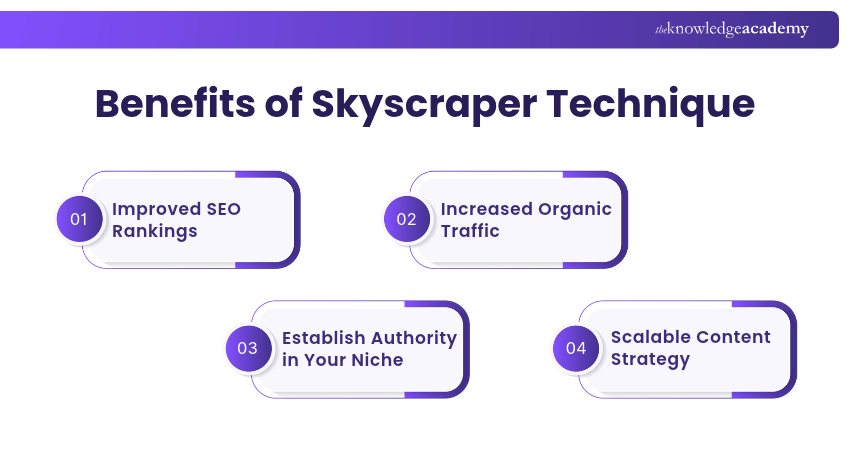
1) Improved SEO Rankings
Earning relevant, high-quality backlinks can contribute to improved search engine rankings by helping search engines understand the value and relevance of your content. However, rankings also depend on factors such as content quality, search intent and overall website performance. The skyscraper technique can support SEO efforts, but higher rankings are not guaranteed.
2) Increased Organic Traffic
When relevant websites link to your content, readers may discover and visit your website through those links, increasing referral traffic. High-quality backlinks may also support search visibility, potentially helping your pages attract more organic traffic over time.
3) Establish Authority in Your Niche
Creating valuable, well-researched content can help establish your website as a useful resource within its niche. When credible publications reference your content, it can increase brand exposure and strengthen your reputation among relevant audiences. Over time, consistently providing trustworthy information may encourage other websites to reference your resources.
4) Scalable Content Strategy
The skyscraper technique provides a repeatable framework for identifying content opportunities, improving existing resources and conducting targeted outreach. Teams can apply this approach across different topics while adapting their research and promotion strategies to each audience. This supports a more systematic content development process.
Common Mistakes to Avoid When Using the Skyscraper Technique
Although the skyscraper technique provides a structured approach to link building, its effectiveness depends on how carefully each step is implemented. Avoiding common mistakes can help you focus on valuable content opportunities and more relevant outreach. Here are five mistakes to watch out for:
1) Choosing Content Based Only on Rankings: A page that ranks highly does not necessarily have many relevant backlinks. Examine its backlink profile before selecting it as a content opportunity.
2) Making Content Longer Without Adding Value: Adding unnecessary information can make an article harder to read. Focus on useful improvements rather than increasing the word count.
3) Ignoring Search Intent: Even detailed content may fail to satisfy readers if it does not answer their questions. Understand what your target audience needs before developing your resources.
4) Contacting Irrelevant Websites: Sending backlink requests to unrelated websites is unlikely to provide meaningful results. Prioritise publishers whose audiences may benefit from your content.
5) Expecting Immediate Results: Creating improved content does not guarantee backlinks or higher rankings. Link acquisition and search performance can take time, and some campaigns may generate limited results.
Learn how to craft high-performing campaigns that drive leads and conversions in the Search Engine Marketing (SEM) Training – Sign up now!

 If you wish to make any changes to your course, please


