


We may not have the course you’re looking for. If you enquire or give us a call on 01344203999 and speak to our training experts, we may still be able to help with your training requirements.
Top 14 Time Management Skills and How to Improve Them
ByShristi RoyLast updated on: 17 September 2026
Time Management Skills help you organise tasks, meet deadlines and stay focused. They can improve productivity, reduce stress and create greater balance across work and daily life.

Some days can feel like a race against the clock. Deadlines pile up, messages keep arriving, and personal responsibilities get pushed aside.
Without a clear way to manage these competing demands, even a busy day may end with important work unfinished.
So, how can you use your available time more purposefully? Let’s explore the essential time management skills that can help, and learn how to strengthen them.
What are Time Management Skills?
Time management skills help you control how you use your available time to achieve specific goals. They include prioritising important work, staying organised, maintaining focus and making thoughtful decisions about your schedule.
They also involve knowing when to delegate, protect your time or adjust priorities. These abilities can be strengthened through practice and applied across professional and personal situations.

Myth vs Fact
Myth: Good time management means filling every hour with tasks.Fact: Effective Time Management means allocating time according to priorities while leaving room for unexpected changes.
Top 14 Time Management Skills
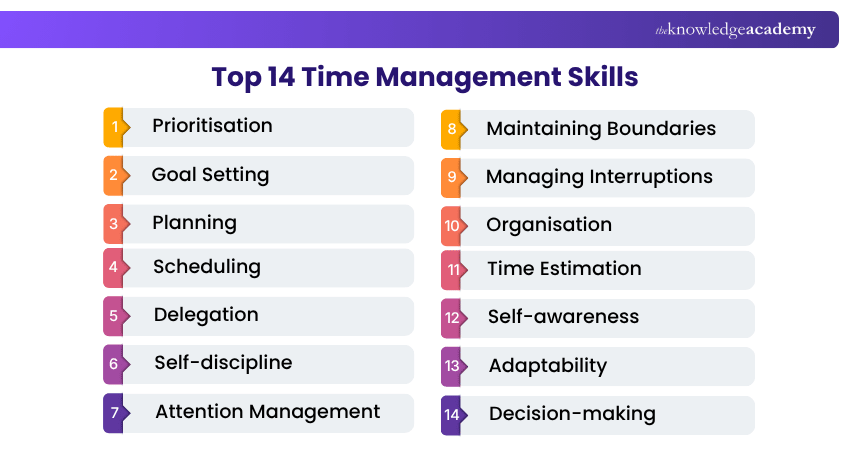
Cultivating strong time management skills can help you accomplish both personal and professional goals more efficiently. Let's look at the top skills to help you manage your time and work more effectively below:
1) Prioritisation
Prioritisation involves deciding which tasks deserve attention first based on importance and urgency. Clear priorities help you determine where to direct your time, whether you are managing a work deadline, household task, appointment or personal commitment.
2) Goal Setting
Goal setting provides direction by defining what you want to achieve. Breaking larger objectives into manageable steps also makes priorities and progress easier to understand.
3) Planning
Planning involves identifying what needs to be completed and breaking larger responsibilities into specific actions. A clear plan creates a practical route from intention to completion.
4) Scheduling
Scheduling can help organise meetings, exercise, appointments, family commitments, and other responsibilities. It helps you understand how responsibilities fit across the day or week and reduces unnecessary clashes.
Trainer's Tip: Avoid scheduling every minute of your day. Leave some capacity for unexpected tasks, delays and changing priorities.
5) Delegation
Delegation helps prevent overload by assigning suitable responsibilities to people who can complete them effectively. It also creates more time for work requiring your direct attention or expertise.
6) Self-discipline
Self-discipline helps you follow priorities even when motivation is low or distractions appear. Consistent follow-through can also reduce procrastination and prevent unnecessary delays.
7) Attention Management
Attention management involves protecting your concentration from avoidable distractions and unnecessary task switching. Creating suitable conditions for focused work can help you remain engaged with important responsibilities.
8) Maintaining Boundaries
Setting boundaries helps protect your time from unnecessary requests and overcommitment. Knowing when to say no can keep your workload aligned with genuine priorities.
Find Your Time Management Weak Spot
Not sure which skill deserves your attention first? Match your most common challenge with the skill that can help:
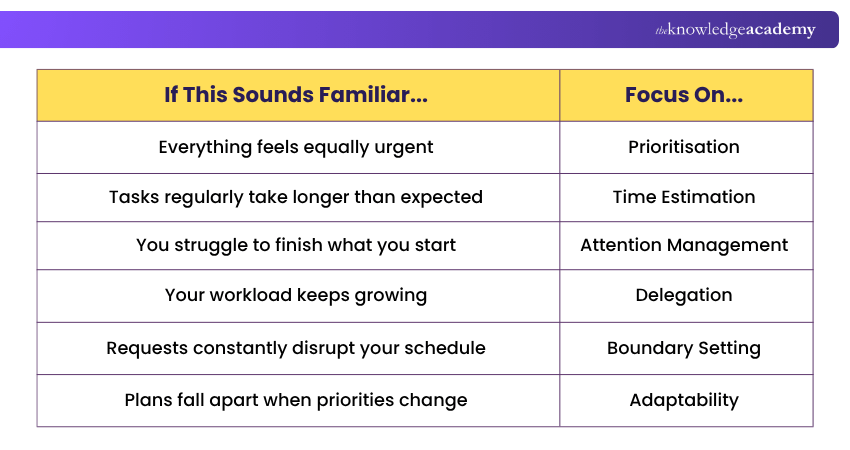
Start with the challenge you experience most often and strengthen the skill connected to it.
9) Managing Interruptions
Interruptions can break concentration and force you to repeatedly refocus on unfinished work. Communicating your availability and protecting periods of focused work can reduce unnecessary disruption.
10) Organisation
Organisation helps you keep tasks, information and resources easy to locate and manage. Clear systems can reduce time spent searching for files, documents or other essential materials.
11) Time Estimation
Time estimation involves judging how long a task is realistically likely to require. Accurate estimates help you set achievable deadlines and leave suitable time for unexpected delays.
Estimate Before You Start
Before beginning your next task, make a quick prediction:
Task: ____________________Estimated Time: __________Actual Time: _____________Then ask:Was your estimate accurate?What caused any difference?Should you allow more buffer time next time?
Repeat this with several tasks to identify whether you regularly overestimate or underestimate your workload.
12) Self-awareness
Self-awareness helps you understand your work habits, concentration patterns and common distractions. Recognising when your focus is strongest can help you schedule demanding work more effectively.
13) Adaptability
When work, family or personal priorities change unexpectedly, adaptability helps you reorganise your time without losing sight of what matters most.
14) Decision-making
Every schedule involves decisions about what to start, postpone, delegate or remove. Strong decision-making helps you allocate limited time to activities that contribute most to your priorities.
Build resilience with advanced stress management strategies. Sign up for our Stress Management Course today!
Why are Time Management Skills Important?
Time Management Skills can support both personal and professional effectiveness by improving productivity, reducing stress and making responsibilities easier to manage. Their importance can be seen in several areas:
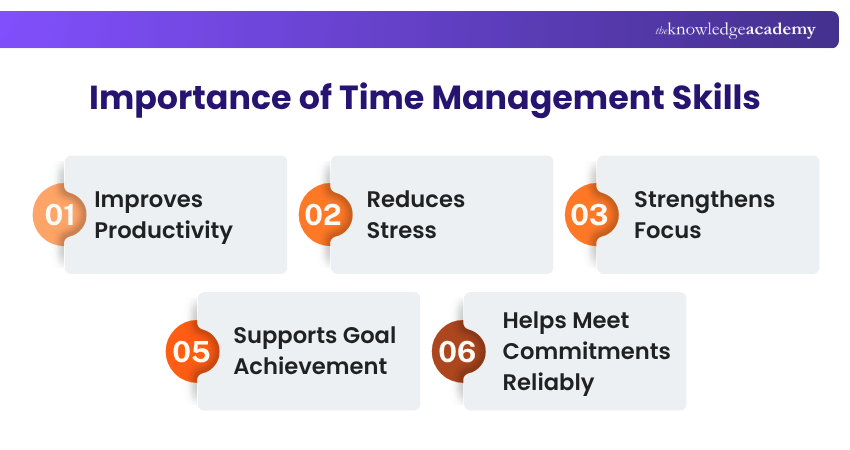
1) Improves Productivity: Effective Time Management helps you concentrate on meaningful tasks instead of reacting to everything at once. Better organisation can reduce wasted effort and support more consistent progress.
2) Reduces Stress: Planning tasks and deadlines can reduce the pressure caused by last-minute work and competing commitments. A clearer schedule also makes workloads easier to understand and manage.
3) Strengthens Focus: Managing time well encourages dedicated periods for important activities and reduces unnecessary interruptions. This can make it easier to maintain concentration and complete work carefully.
4) Supports Goal Achievement: Breaking larger goals into manageable tasks makes progress easier to plan and monitor. Allocating time to those actions also keeps long-term objectives connected to everyday work.
5) Helps Meet Commitments Reliably: Realistic planning helps you understand what can be completed within the available time. Meeting agreed deadlines consistently can also strengthen trust with colleagues, managers and clients.
How to Improve Your Time Management Skills?
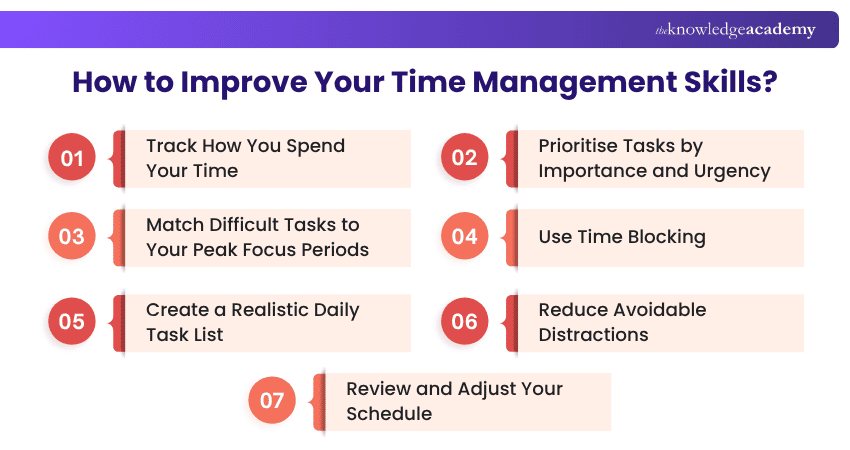
Time management skills can be strengthened through consistent practice, reflection and small changes to everyday habits. Here are seven practical ways to develop them:
1) Track How You Spend Your Time
Keep a simple time log for several days to understand where your working hours actually go. Look for repeated activities, interruptions or low-value tasks that consume more time than expected.
2) Prioritise Tasks by Importance and Urgency
Use a framework such as the Eisenhower Matrix to separate urgent work from genuinely important work. This can help prevent immediate requests from automatically replacing long-term priorities.
3) Match Difficult Tasks to Your Peak Focus Periods
Identify when your concentration tends to be strongest during the day. Where possible, schedule demanding or high-priority work during those periods.
4) Use Time Blocking
Time blocking assigns specific periods to tasks, projects or types of work. Time batching can also group similar activities together to reduce unnecessary switching between tasks.
5) Create a Realistic Daily Task List
A daily task list can help you keep important responsibilities visible and monitor progress. Keep the list achievable rather than filling it with more tasks than your available time allows.
6) Reduce Avoidable Distractions
Identify the interruptions that regularly disrupt your concentration and decide how they can be reduced. This may involve changing notification settings, adjusting your workspace or protecting periods of focused work.
7) Review and Adjust Your Schedule
Review whether your planned time matched the actual effort required at the end of the day or week. Use what you learn to improve future estimates, priorities and schedules.
Take control of your day and achieve more with less stress with Attention Management Training – Join now!
Common Time Management Problems and Solutions
It is important to consider that time management brings its own set of challenges. These issues must be identified to solve them and build better work habits. Let's look at them below:
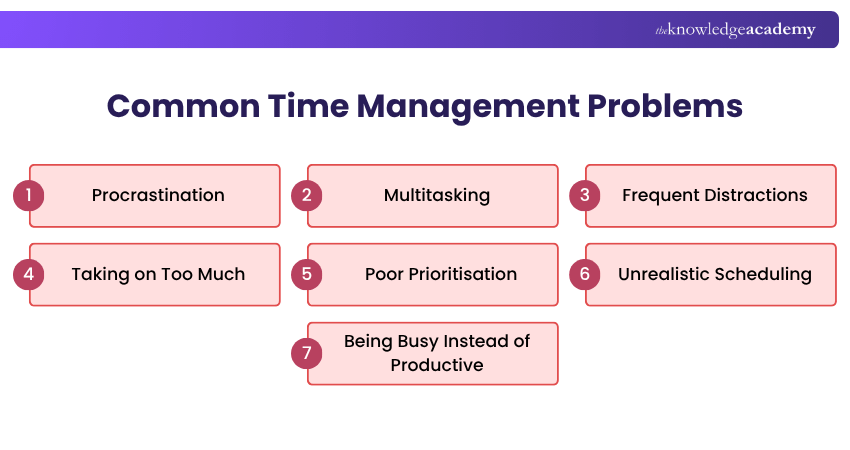
1) Procrastination
Procrastination involves delaying tasks despite knowing that postponement may create problems later. Fear of failure, perfectionism or feeling overwhelmed can all contribute to this behaviour.
Solution: Identify what is causing the delay and break difficult tasks into smaller, easier starting points.
2) Multitasking
Switching repeatedly between unrelated tasks can reduce concentration and require constant mental refocusing. Working on one priority at a time can make attention easier to maintain.
Solution: Use single-tasking and complete focused blocks of work before switching activities.
3) Frequent Distractions
Social media, unnecessary notifications and repeated interruptions can consume time without supporting meaningful progress. Small disruptions can become significant when they occur repeatedly throughout the day.
Solution: Identify recurring distractions and create clear periods for focused work.
4) Taking on Too Much
Overcommitting can create stress, missed deadlines and an unrealistic workload. It often results from difficulty saying no or failing to delegate appropriate responsibilities.
Solution: Review your capacity before accepting new work and delegate when appropriate.
5) Poor Prioritisation
Treating every task as equally important can leave significant work unfinished while lower-value activities consume available time.
Solution: Regularly compare tasks according to importance, urgency and their contribution to your goals.
6) Unrealistic Scheduling
Underestimating how long activities require can create overloaded schedules and repeated delays. Plans also become fragile when they leave no time for unexpected work.
Solution: Estimate task duration realistically and include some buffer time when appropriate.
7) Being Busy Instead of Productive
A full schedule does not always mean meaningful progress. Responding to emails, updating lists and completing minor tasks can create activity without advancing important goals.
Solution: Identify the tasks that create the greatest value and protect time for them first.
One Thing to Change Tomorrow
You do not need to overhaul your entire schedule at once. Choose one change to test tomorrow:
☐ Prioritise your three most important tasks☐ Block one uninterrupted period for focused work☐ Delegate one suitable responsibility☐ Say no to one low-value request☐ Remove one recurring distraction☐ Add buffer time between important tasks☐ Review how accurately you estimated your time
Choose one action, test it for a day, and review whether it improves how you use your time.
Strengthen your planning skills with our Effective Planning and Scheduling Course and manage priorities efficiently.

Shristi Roy is a Content Writer with experience in journalism, article writing and web content development. Her experience researching and writing about Business Skills and Accounting and Finance enables her to communicate specialised information through clear, engaging narratives.
View Detail

 If you wish to make any changes to your course, please


