


We may not have the course you’re looking for. If you enquire or give us a call on 01344203999 and speak to our training experts, we may still be able to help with your training requirements.
Top 10 Secretary Skills You Need for Career Success
ByThe Knowledge AcademyLast updated on: 10 November 2026
Secretary skills are essential for managing administrative tasks, supporting communication and maintaining organised office operations. From technical knowledge to time management, these skills help professionals work efficiently. Explore the top skills needed to succeed as a secretary.
At a Glance
1. Communication and customer service skills help Secretaries manage professional interactions.2. Technical knowledge and note-taking skills support accurate documentation and everyday administrative activities.3. Planning, time management and adaptability help Secretaries balance changing workplace demands.4. Attention to detail, initiative, and discretion contribute to reliable and professional office support.
Ever wondered what keeps a busy office running smoothly, even when schedules change, meetings overlap and urgent requests arrive unexpectedly? Behind much of that coordination is a secretary who knows how to organise tasks, communicate effectively and keep information flowing.
From managing correspondence to coordinating meetings and maintaining records, Secretaries handle a wide range of administrative responsibilities. Although secretaries share responsibilities with Administrative Assistants, Personal Assistants and Executive Assistants, the scope and level of responsibility can differ between these roles.
So, what skills help a secretary handle these responsibilities effectively? Let's explore the essential skills that make a difference in everyday office operations.
Top Secretary Skills
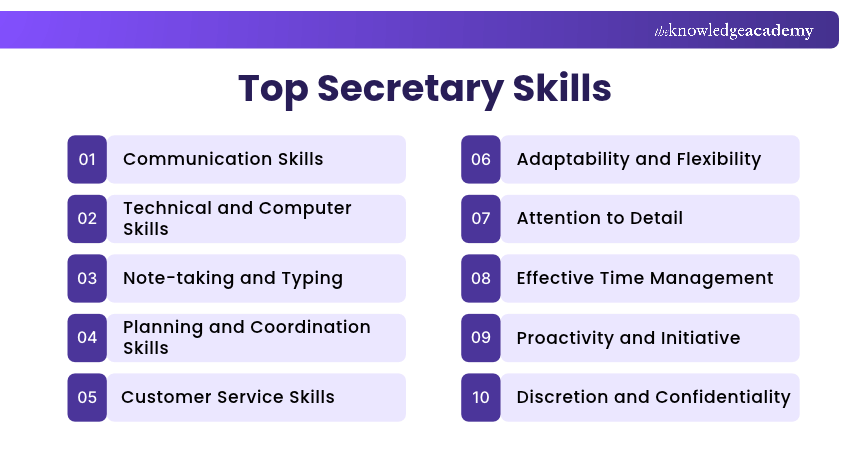
Here are 10 essential secretary skills that can help professionals manage their responsibilities effectively:
1) Communication Skills
Communication is one of the most important skills for Secretaries, as they regularly exchange information with managers, colleagues and external contacts. Strong verbal and written communication helps them convey instructions clearly and prevent misunderstandings.
A secretary needs to be able to:
a) Speak clearly, politely and confidently in professional situations.
b) Listen attentively to understand instructions and important information.
c) Write concise, professional emails, letters and messages.
d) Adjust communication styles to suit different audiences and situations.
e) Use correct grammar, spelling and punctuation in written correspondence.
f) Communicate professionally during telephone calls and video meetings.
g) Ask relevant questions to clarify instructions or incomplete information.
h) Give and receive constructive feedback professionally.

2) Technical and Computer Skills
Secretaries need strong technical and computer skills to use digital systems and complete administrative tasks efficiently. Familiarity with common office applications helps them work with documents, spreadsheets, presentations and other digital resources.
Some essential technical and computer skills include:
a) Using Microsoft 365 applications, such as Word, Excel, PowerPoint and Outlook.
b) Navigating internet browsers, such as Google Chrome, Firefox and Safari.
c) Using cloud-based platforms, such as Google Drive, Dropbox, and Microsoft OneDrive.
d) Operating workplace collaboration tools, such as Microsoft Teams and Zoom.
e) Applying keyboard shortcuts and productivity features to complete routine computer-based tasks.
f) Performing basic troubleshooting, such as identifying software errors and following approved update procedures.
3) Note-taking and Typing
Secretaries need effective note-taking and typing skills to capture important information during meetings, discussions, and conferences. These abilities help them produce clear records of decisions, instructions, and follow-up actions.
A secretary needs to be able to:
a) Record important discussion points quickly and accurately.
b) Use note-taking techniques, such as shorthand, symbols and abbreviations.
c) Identify key decisions, action points, and assigned responsibilities during meetings.
d) Convert handwritten notes or recordings into structured digital documents when authorised.
e) Prepare meeting minutes using appropriate formats and templates.
f) Maintain sufficient typing speed and accuracy to produce documents efficiently.
4) Planning and Coordination Skills
Secretaries need strong planning and coordination skills to organise administrative activities and support smooth office operations. These skills help them arrange meetings, manage logistical requirements and ensure that different activities are properly coordinated.
A secretary needs to be able to:
a) Understand the objectives and requirements of assigned administrative activities.
b) Organise meetings, appointments, travel arrangements and office events.
c) Coordinate the documents, facilities and equipment required for different activities.
d) Arrange administrative tasks in a logical sequence to support efficient workflows.
e) Liaise with relevant departments and external contacts to coordinate arrangements.
f) Track outstanding administrative arrangements and confirm that necessary preparations are completed.
Trainer's Insight
Experienced Secretaries do more than complete assigned activities. Understanding why a meeting, document, or administrative process matters helps them recognise dependencies and provide more effective support.
5) Customer Service Skills
Secretaries need good customer service skills because they often serve as the first point of contact for visitors, clients and customers. Providing helpful assistance and responding professionally to enquiries can create a positive impression of the organisation.
A secretary needs to be able to:
a) Welcome visitors and clients warmly and professionally.
b) Identify customer needs and direct enquiries to the appropriate person or department.
c) Provide relevant information about organisational services and procedures.
d) Respond calmly and professionally to customer complaints or concerns.
e) Assist visitors with appointments, directions and other reception-related requirements.
f) Follow up on unresolved customer requests to ensure they reach the appropriate team.
6) Adaptability and Flexibility
Secretaries need adaptability and flexibility to handle changing workplace requirements, unexpected situations and evolving organisational procedures. Being adaptable allows them to maintain their effectiveness even when established routines change.
A secretary needs to be able to:
a) Adjust to different working environments and organisational cultures.
b) Learn new workplace systems and procedures when required.
c) Respond calmly to unexpected changes in schedules or assignments.
d) Switch between different responsibilities when operational needs change.
e) Adjust their working approach to accommodate new policies or instructions.
f) Remain composed and productive during periods of uncertainty or increased workplace demands.
7) Attention to Detail
Secretaries need strong attention to detail to maintain the accuracy and completeness of administrative documents and records. Identifying small mistakes before they affect business activities helps maintain the reliability of office information.
A secretary needs to be able to:
a) Verify names, dates, figures and other important information in documents.
b) Proofread reports, letters and presentations for errors and inconsistencies.
c) Check documents for missing information or incorrect attachments.
d) Follow established formatting standards and document requirements.
e) Maintain accurate records, databases and filing systems.
f) Review completed administrative work to identify and correct mistakes before submission.
8) Effective Time Management
Secretaries need effective time management skills to handle multiple responsibilities and meet deadlines without compromising the quality of their work. Managing available time efficiently helps them balance routine duties with urgent assignments.
A secretary needs to be able to:
a) Prioritise tasks according to urgency and importance.
b) Estimate the time required to complete different responsibilities.
c) Allocate suitable working periods for routine and high-priority tasks.
d) Use calendars, reminders and to-do lists to monitor personal workloads.
e) Meet deadlines by tracking task completion and adjusting time allocations when necessary.
f) Minimise distractions and manage interruptions to maintain productivity.
Pro Tip
Before starting work, identify your three most important tasks for the day. Separate urgent requests from activities that can be completed later, and review your checklist whenever new responsibilities arise.
9) Proactivity and Initiative
Secretaries need proactivity and initiative to anticipate administrative requirements and identify potential problems before they affect office operations. Taking initiative demonstrates independence, responsibility and a willingness to contribute beyond routine instructions.
A secretary needs to be able to:
a) Anticipate the administrative needs of managers and colleagues.
b) Identify potential workplace issues before they become significant problems.
c) Suggest practical solutions to day-to-day administrative problems.
d) Recommend improvements to existing office processes.
e) Offer additional support when colleagues require assistance.
f) Take responsibility for appropriate tasks within their role without always waiting for detailed instructions.
10) Discretion and Confidentiality
Secretaries need discretion and confidentiality skills because they may handle sensitive information relating to employees, managers, clients, and organisational activities. Protecting such information and exercising professional judgement helps maintain trust and responsible workplace practices.
A secretary needs to be able to:
a) Recognise which documents and discussions contain confidential information.
b) Protect sensitive records and personal information from unauthorised access.
c) Share confidential information only with authorised individuals.
d) Handle sensitive workplace discussions with professionalism and discretion.
e) Follow organisational confidentiality policies and applicable data protection requirements.
f) Avoid discussing private workplace matters or sharing unverified information.
Learn effective diary, meeting, and office management techniques with the PA and Secretarial Courses – Sign up today!

The Knowledge Academy develops accessible learning content across Project Management, IT, Cybersecurity, Data Science, Business Analysis, HR, Accounting and Finance, Leadership and Health and Safety. Its resources combine subject research with clear explanations to help professionals build practical knowledge across a wide range of disciplines.
View Detail

 If you wish to make any changes to your course, please


