


We may not have the course you’re looking for. If you enquire or give us a call on 01344203999 and speak to our training experts, we may still be able to help with your training requirements.
Top 12 Office Manager Skills and How to Develop Them
ByThe Knowledge AcademyLast updated on: 05 November 2026
Office Manager skills are essential for coordinating daily operations, leading teams and maintaining an organised workplace. Discover important skills, including communication, leadership, financial proficiency and adaptability, along with practical ways to develop them.
The Gist
1. People Management: Strengthen teams through leadership, communication and collaboration.2. Office Efficiency: Organise workflows and streamline daily operations.3. Financial Awareness: Manage budgets, track costs and make informed decisions.4. Problem-solving: Prioritise tasks, resolve challenges and adapt to change.5. Technology Proficiency: Use digital tools to simplify tasks and boost productivity.
Office Managers play an important role in overseeing daily operations, coordinating administrative tasks and ensuring office activities run efficiently. The diverse and dynamic nature of their role requires a wide range of skills and competencies. Without these skills, organisations may experience delays, communication difficulties and inefficient processes.
Developing essential Office Manager skills can help professionals manage responsibilities effectively, support their teams and respond to workplace challenges. This blog explores the top Office Manager skills and practical ways to improve them. Let's get started!
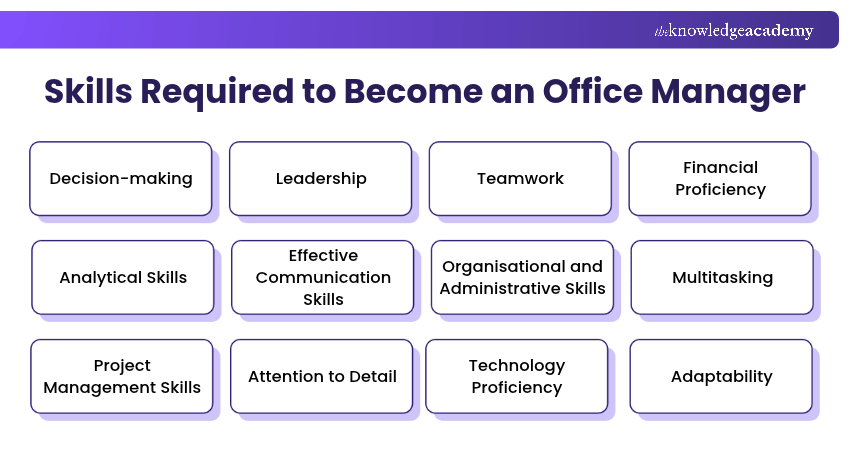
Skills Required to Become an Office Manager
As an Office Manager, you'll need to wear several hats and handle a wide range of responsibilities. To perform these responsibilities effectively, you should possess or develop essential administrative, interpersonal and management skills.
Here are the top Office Manager skills to focus on developing:
1) Decision-making
Decision-making involves making well-informed and timely choices that align with organisational objectives. Office Managers navigate daily decisions, such as task prioritisation, resource allocation, delegation, and conflict resolution. Here are the steps to improve your decision-making skills:
a) Define the Problem Clearly: Start by identifying the issue and collecting relevant information.
b) Assess Options: Identify potential solutions, weighing their pros and cons.
c) Select the Most Suitable Option: Choose the most appropriate course of action and implement it effectively.
d) Monitor Results: Review the outcomes of your decisions and adjust where necessary.

2) Leadership
Leadership involves guiding, motivating and supporting others towards shared goals. Office Managers require strong leadership skills to oversee staff, cultivate a positive work culture, and attain organisational goals. Here are the steps to enhance your leadership skills:
a) Clear and Frequent Communication: Articulate your vision and expectations consistently.
b) Feedback and Recognition: Offer feedback and acknowledge your team members' contributions.
c) Empowerment and Initiative: Empower your team to take ownership and initiative in their roles.
d) Support Professional Development: Identify learning opportunities and help team members strengthen their skills.
e) Lead by Example: Demonstrate integrity, accountability and professionalism in your daily actions.
3) Teamwork
Teamwork involves working effectively with everyone involved to achieve a common goal. Office Managers must possess strong teamwork skills to coordinate various departments, promote communication and cooperation, and resolve conflicts. Here are the key actions to enhance your teamwork skills:
a) Respect Diversity and Opinions: Honour the diversity of perspectives and opinions within your team.
b) Active and Empathetic Listening: Engage in active and empathetic listening with your team members.
c) Coordinate Shared Responsibilities: Clarify individual contributions and ensure colleagues understand how their tasks support common objectives.
d) Support Colleagues: Offer practical help when colleagues face difficulties completing shared tasks.
e) Resolve Disagreements Constructively: Address differences respectfully and work towards solutions that support team objectives.
4) Financial Proficiency
Financial proficiency involves managing office budgets, monitoring expenses and maintaining accurate financial records. Office Managers require these skills to control operational costs, support financial planning and use available resources effectively. Here are the steps to enhance your financial skills:
a) Mastering Financial Concepts: Acquire knowledge of fundamental accounting and financial concepts and terminology.
b) Utilising Financial Tools: Employ appropriate tools and software to track and analyse financial data effectively.
c) Budgeting and Reporting: Practise preparing and reviewing office budgets and expenditure reports within your responsibilities.
d) Cost Management: Identify opportunities to reduce unnecessary expenditure without compromising essential office operations.
e) Expert Consultation: Seek advice from financial experts when necessary to make informed decisions.
Trainer Insight
When office expenditure exceeds the planned budget, investigate the reason before recommending reductions. For example, a rise in printing costs might result from increased workload, unnecessary printing or higher supplier prices. Identifying the cause helps Office Managers choose proportionate cost-control measures.
5) Analytical Skills
Analytical skills involve collecting, examining and interpreting information to draw meaningful conclusions. Office Managers use analytical skills to assess office performance, identify operational problems and make informed decisions about resources and processes. Let's explore the steps to improve your analytical skills:
a) Clear Problem Definition: Begin by defining the problem or goal clearly and breaking it down into smaller, manageable parts.
b) Data Collection and Organisation: Gather and organise relevant data and information from various sources.
c) Effective Analysis and Visualisation: Utilise appropriate methods and tools to analyse and visualise the data and information.
d) Interpretation and Recommendations: Evaluate the findings and recommend practical improvements based on the evidence.
e) Feedback and Learning: Continuously evaluate outcomes and learn from feedback to refine your analytical abilities.
6) Effective Communication Skills
Effective communication skills encompass the ability to convey and receive messages clearly, accurately, and respectfully. Office Managers require these skills to engage with diverse stakeholders, including staff, clients, vendors, and management. Here are the steps to enhance your communication skills:
a) Adapt to Your Audience: Adapt your communication style and tone to different audiences and situations.
b) Clarity and Simplicity: Utilise simple and concise language, avoiding jargon and ambiguity.
c) Appropriate Channels: Select suitable communication channels and modes, such as email, phone, or face-to-face interactions.
d) Effective Questioning: Ask open-ended questions and clarify any uncertainties or misunderstandings.
e) Non-verbal Cues: Use appropriate eye contact, gestures and facial expressions to support clear and professional communication.
7) Organisational and Administrative Skills
Organisational and administrative skills involve planning, coordinating and managing office tasks and procedures effectively. Office Managers require these skills to manage office resources such as equipment, supplies, documents, and records. Here are the steps to improve your organisational and administrative skills:
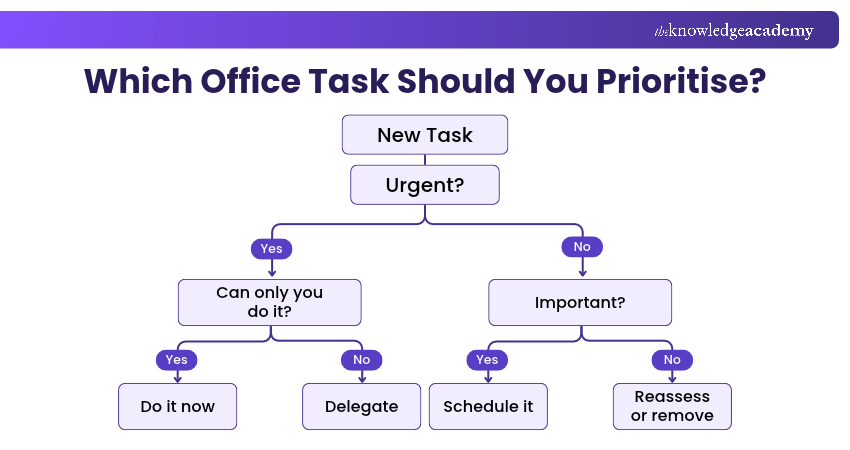
a) Follow a Realistic Schedule: Create and adhere to a realistic and flexible schedule, prioritising the most important and urgent tasks.
b) Utilise Effective Tools: Make use of appropriate tools and software to manage and store office resources and data.
c) Implement Standard Operating Procedures (SOPs): Establish and follow standard operating procedures and best practices for office tasks and processes.
d) Review Policies Regularly: Review office procedures and update internal policies where authorised, ensuring they remain consistent with applicable requirements.
e) Delegate Tasks Appropriately: Assign suitable responsibilities to colleagues based on their roles, availability and capabilities.
Organise the chaos and own your workday with the Administrative Assistant Training now!
8) Multitasking
Multitasking involves handling several responsibilities, setting priorities and switching between tasks when necessary. Office Managers need these skills to manage busy office environments, meet deadlines and respond to changing demands. Here are the steps to enhance your multitasking skills:
a) Minimise Distractions: Concentrate on doing one task at a time, minimising distractions and interruptions.
b) Manage Task Transitions: Keep track of priorities and progress when moving between different responsibilities.
c) Task Grouping: Group and batch similar or related tasks together for efficient completion.
d) Leverage Automation and Tools: Utilise appropriate tools and software to automate and streamline tedious tasks and processes.
e) Recharge and Refresh: Take breaks to relax and recharge your energy and concentration.
9) Project Management Skills
Project management skills involve the ability to plan, execute, and monitor office projects and initiatives from start to finish. Office Managers use these skills to coordinate activities, manage resources and track progress towards agreed objectives. Here are the steps to improve your project management skills:
a) Clear Objective Alignment: Define project objectives, scope, and deliverables clearly, aligning them with organisational goals.
b) Detailed Project Planning: Create a realistic project plan and timeline, then assign clear roles and responsibilities to team members.
c) Utilise Project Tools: Use appropriate tools and software to track project activities, deadlines and resource allocation.
d) Stakeholder Communication: Communicate project status and issues to stakeholders, soliciting feedback and input.
e) Results Evaluation: Evaluate project results and performance, documenting lessons learned and best practices.
10) Attention to Detail
Attention to detail is the ability to identify and correct errors or inconsistencies in office tasks and processes. Office Managers need attention to detail to ensure the accuracy and quality of office work and to prevent mistakes that could impact the organisation's operations and professional standards. Here are the steps to enhance your attention to detail:
a) Thorough Checking and Proofreading: Review documents carefully to identify spelling, formatting and factual errors.
b) Utilise Error-detection Tools: Use appropriate tools and software to identify and correct errors and inconsistencies.
c) Follow Checklists and Guidelines: Adhere to checklists and guidelines for office tasks and processes.
d) Verify Important Information: Cross-check figures, meeting details, records and other essential information before finalising documents or communicating updates.
e) Maintain Accurate Records: Use consistent naming conventions and filing procedures to reduce errors and make information easier to retrieve.
11) Technology Proficiency
Technology proficiency involves the ability to use and adapt to digital tools and software required for office operations. Office Managers need these skills to coordinate communication, manage information and improve administrative efficiency. Here are the steps to improve your technology proficiency:
a) Master Tools and Software: Learn the essential functions of commonly used office applications and gradually develop more advanced skills.
b) Explore Emerging Technology: Explore approved new tools and software that can improve your office work.
c) Seek Expert Guidance: Obtain training and guidance from experts and peers when needed.
d) Follow IT and Data Security Practices: Use approved software, follow secure access procedures and comply with organisational data protection and backup policies.
e) Share Your Knowledge: Share your knowledge and skills with others while learning from them in return.
Bonus Tip
Keep a record of workplace improvements you have contributed to, such as reducing booking errors, simplifying document retrieval or improving administrative turnaround times. Where possible, record results using appropriate, non-confidential evidence. These examples can help demonstrate your abilities during performance reviews and interviews.
12) Adaptability
Adaptability is the ability to adjust to changing responsibilities, unexpected challenges and new workplace requirements. Office Managers need this skill to respond to shifting priorities, staff absences, operational disruptions and changes in technology or office procedures. Here are the steps to strengthen your adaptability skills:
a) Stay Open to Change: Be willing to adjust existing processes and consider alternative approaches when workplace requirements change.
b) Reassess Priorities: Review tasks and deadlines when unexpected responsibilities arise, ensuring important activities receive appropriate attention.
c) Develop New Skills: Learn unfamiliar software, administrative procedures and working methods to respond to evolving workplace needs.
d) Prepare for Unexpected Situations: Identify potential workplace disruptions and develop practical contingency arrangements.
e) Learn From Experience: Reflect on how previous changes were managed and apply those lessons to future situations.
Which Office Manager Skill Needs Your Attention?
Choose your biggest current challenge to identify a sensible development priority.□ I struggle with competing deadlines.□ I find coordinating colleagues challenging.□ I need to manage office costs better.□ I lack confidence with office technology.□ I find unexpected changes difficult.
Make every office task look effortless by joining the Office Skills Training today!

The Knowledge Academy develops accessible learning content across Project Management, IT, Cybersecurity, Data Science, Business Analysis, HR, Accounting and Finance, Leadership and Health and Safety. Its resources combine subject research with clear explanations to help professionals build practical knowledge across a wide range of disciplines.
View Detail

 If you wish to make any changes to your course, please


