


We may not have the course you’re looking for. If you enquire or give us a call on 01344203999 and speak to our training experts, we may still be able to help with your training requirements.
Top 15 Product Manager Skills for Effective Product Management
ByThe Knowledge AcademyLast updated on: 22 October 2026
Discover the 15 most important Product Manager skills required to boost your career. Learn what these skills are and why they are important for the role.

One bad decision can sink a product. One good decision can make it a hit.
Who makes that call, day after day? The Product Manager.
It is also one of today's most rewarding careers. Glassdoor reports that Product Managers in the UK earn an average of £57,126 a year, with top earners crossing £112,000.
But the title alone will not get you there. What makes someone effective in this role is a combination of skills that can be developed through learning, practice and experience.
In this blog, you'll explore the top 15 skills every Product Manager needs. Ready? Let's dive in.
Most Important Product Manager Skills
Becoming a successful Product Manager isn't about mastering a single skill; it requires a combination of technical, business, and interpersonal skills. These skills help you connect user requirements, technical feasibility, and business goals to drive product success with measurable impact.
Here are the 15 most important skills you need to become a successful Product Manager:
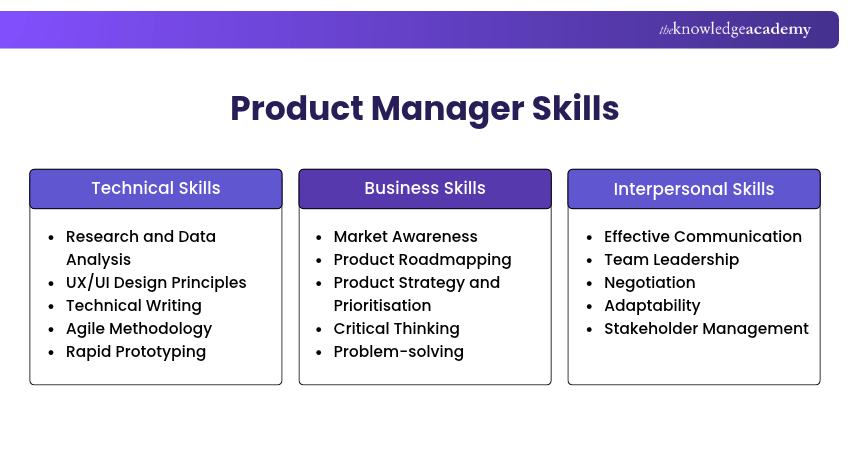
Technical Skills for Product Managers
Product Managers require technical skills which help them collaborate with engineers and make data-driven decisions. The core technical skills required for a Product Manager include the following:
1) Research and Data Analysis
Research and data analysis involve gathering relevant information, examining user behaviour and interpreting data to identify trends, understand customer needs and support informed product decisions. This involves identifying Key Performance Indicators (KPIs), using analytics tools to monitor user behaviour, and setting up and interpreting A/B tests.
This Product Manager skill replaces guesswork with factual evidence, giving you a clear picture of real user behaviour. Moreover, data analysis helps you understand current market trends and track performance. This helps you make informed product decisions and reduce the risk of investing in features that do not meet user needs.

2) UX/UI Design Principles
UX/UI design principles are the guidelines that shape how a product looks, feels, and functions for users. This involves understanding user flows, wireframing and prototyping basics, accessibility standards, and knowing how visual hierarchy and interaction design influence usability.
This Product Manager skill helps you collaborate effectively with designers instead of simply approving their work. As a Product Manager, you don't need to design the interface yourself. But understanding design principles lets you give informed feedback, spot usability issues early, and advocate for the user in every product decision. This can help minimise costly redesigns and contribute to a smoother, more intuitive product experience.
3) Technical Writing
Technical writing is the ability to document product requirements, specifications, and processes clearly. This allows your team to understand what to build and why. It involves writing Product Requirement Documents (PRDs), user stories, acceptance criteria, release notes, and internal documentation that engineering and design teams rely on.
This Product Manager skill helps reduce ambiguity during development, making it easier for teams to understand product requirements and expectations. Miscommunication can lead to wasted development time and unnecessary rework. Clear technical writing keeps everyone, from engineers to stakeholders, aligned on scope, priorities, and expectations.
Trainer's Tip
Before finalising a Product Requirements Document (PRD), ask an engineer or designer to review it. If they interpret a requirement differently from what you intended, clarify the wording and include acceptance criteria where appropriate.
4) Agile Methodology
Agile is an approach to product development that emphasises flexibility, collaboration, continuous feedback and iterative delivery. It helps teams respond to changing requirements rather than relying entirely on rigid, long-term plans. Product Managers working in Agile environments collaborate with development teams, communicate product goals, provide input on priorities and adapt product roadmaps based on feedback.
This skill helps Product Managers deliver value to users incrementally while staying flexible to change. The requirements and market conditions shift constantly. Agile practices help you break big goals into manageable increments, gather early feedback, and course-correct before you spend too much time or budget going in the wrong direction. This helps you ship better products, faster.
Master Agile project delivery with the AgilePM® Foundation and Practitioner (AgilePM® V3) Course. Sign up now!
5) Rapid Prototyping
Rapid prototyping is the process of quickly creating simple physical or digital models of a product to test ideas, gather feedback and make improvements before full-scale development. This involves using tools to sketch user flows, creating clickable prototypes, and running quick usability tests with real users or stakeholders.
This Product Manager skill lets you validate ideas cheaply before committing engineering resources. Building the wrong feature costs time and money. Rapid prototyping helps you gather early feedback, identify design flaws and assess whether a proposed solution addresses user needs before committing significant development resources.
Business Skills for Product Managers
Product Managers require business skills to understand the market, plan strategically, and align product decisions with company goals. The core business skills required for a Product Manager are discussed below:
1) Market Awareness
Market awareness is the ability to monitor shifts in customer needs, competitor moves, and industry trends. It helps Product Managers understand how those shifts affect their product. It involves tracking competitor launches, reading industry reports, analysing customer feedback and identifying emerging changes in demand.
This skill helps Product Managers keep their product relevant instead of reacting too late. Identifying market shifts early helps Product Managers make informed decisions and adjust their product roadmaps in response to changing customer expectations and competitive pressures.
2) Product Roadmapping
Product roadmapping is the practice of planning and communicating a product's direction over time. This involves setting priorities across short- and long-term goals, identifying key product initiatives and communicating strategic priorities, expected outcomes and indicative timelines to stakeholders.
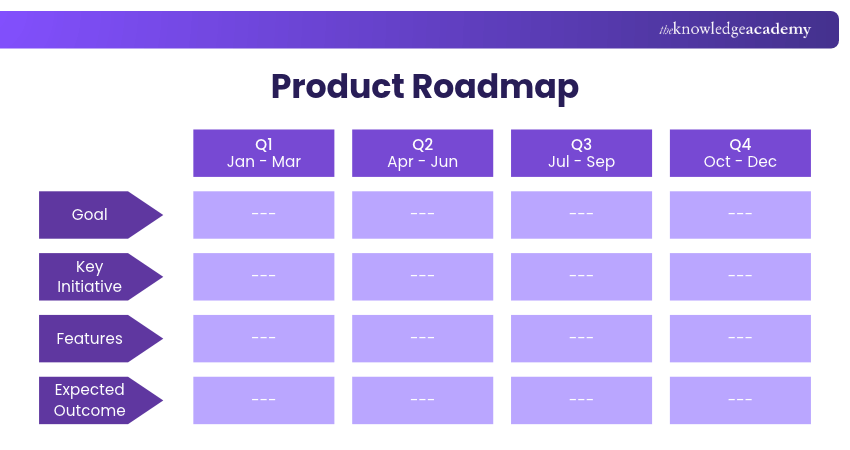
This skill keeps everyone working toward the same goals instead of pulling in different directions. As a Product Manager, a roadmap is one of the clearest ways you communicate strategy to your team, leadership, and customers. A well-built roadmap balances ambition with realistic timelines and gives you a shared reference point when you need to discuss or change priorities.
3) Product Strategy and Prioritisation
Product strategy and prioritisation involve defining a clear product direction and deciding which features or improvements should receive attention first. This includes understanding customer needs, aligning product goals with business objectives, evaluating potential opportunities and prioritising work based on its expected value, impact and feasibility.
This skill helps Product Managers focus on initiatives that deliver meaningful results rather than trying to address every request at once. By setting clear priorities and making informed trade-offs, they can guide development efforts, use available resources effectively and ensure product decisions support long-term business goals.
4) Critical Thinking
Critical thinking involves examining data from multiple angles, considering different perspectives, and separating opinions from facts. This approach encourages curiosity and openness, which are key to making well-informed decisions.
This skill helps Product Managers make sound decisions in scenarios like feature prioritisation or user research, instead of relying on gut feeling or the loudest voice in the room. Thinking critically about the evidence in front of you and being willing to challenge your own assumptions leads to better decisions and stronger justifications when you need to explain them to others.
5) Problem-solving
Problem-solving is the ability to identify an issue's root cause and find a practical way to resolve it. This involves breaking complex problems into smaller parts, weighing options, and choosing the one that best balances user needs, technical constraints, and business goals.
This skill helps Product Managers move a product forward even when the path is not obvious. Strong problem-solving lets you cut through the noise, find a workable solution, and keep the team moving instead of getting stuck.
Quick Technique: The 5 Whys
When a recurring product issue appears, ask "Why?" repeatedly to explore its underlying cause. For example, if users abandon registration, investigate whether the process is too long, instructions are unclear or technical errors are occurring. Use evidence to verify the likely cause before deciding on a solution.
Analyse root causes and implement effective solutions with our Problem Solving Course. Register now!
Interpersonal Skills for Product Managers
Product Managers work with people every day, not just data and roadmaps. Interpersonal skills help them build trust, guide teams, and get everyone moving toward the same goal. The core interpersonal skills required for a Product Manager include:
1) Effective Communication
Effective communication means sharing ideas clearly so that everyone understands the message, whether you are speaking to an engineer, a designer, or a company executive. It involves explaining complex ideas in simple terms, listening carefully to others, and adjusting the approach to suit the audience.
This skill helps Product Managers maintain alignment across teams and minimise misunderstandings. They often act as the link between different departments, so an unclear message can send work in the wrong direction. Clear communication helps save time, prevent mistakes, and build trust in the Product Manager’s decisions.
2) Team Leadership
Team leadership means guiding a group toward a shared goal, even when you don't manage them directly. This involves motivating the team, setting clear expectations, resolving conflicts, and giving credit where it is due.
This skill helps keep the team focused and confident, especially during difficult projects. Most Product Managers do not have direct authority over engineers or designers, so leadership relies on influence and trust rather than a job title. Strong leadership keeps morale high and helps the team push through challenges together.
3) Negotiation
Negotiation is the ability to discuss competing interests, evaluate trade-offs and work towards mutually acceptable agreements. It involves understanding what each side truly needs, staying calm under pressure, and finding a solution that keeps the project moving forward.
This skill helps a Product Manager balance competing demands from engineering, design, sales, and leadership. Every team has its own priorities, and conflicts over time, budget, or scope are common. Effective negotiation helps Product Managers find practical compromises, balance competing priorities and reach decisions that support product and business goals.
Enhance your communication and persuasion skills with Negotiation Skills Training. Join now!
4) Adaptability
Adaptability means adjusting quickly when plans change, whether because of a market shift, new customer feedback, or a sudden technical problem. This may involve staying calm under uncertainty, rethinking priorities, and finding new solutions when the original plan no longer works.
This skill helps a Product Manager respond to unexpected challenges and keep product development aligned with changing user needs and business priorities. Change is a normal part of building a product, and teams look to their Product Manager for direction when something unexpected happens. Being adaptable helps a Product Manager guide the team through change instead of letting it slow the project down.
5) Stakeholder Management
Stakeholder management is the process of identifying, engaging and maintaining relationships with individuals or groups who influence or are affected by a product. It involves understanding what each stakeholder cares about, communicating updates regularly, and managing expectations when priorities shift.
This skill helps a Product Manager build trust with leadership, customers, and other teams. Clear, consistent communication helps stakeholders feel more confident and secure, reducing uncertainty. Managing these relationships effectively helps maintain stakeholder support, address concerns early and reduce disagreements throughout product development.
Keep This in Mind
The role of a Product Manager keeps evolving. Keep your Product Manager skill set up to date. Mastering a mix of technical, business, and interpersonal skills gives you the confidence to make smart decisions, work well with every team, and build products that actually succeed in the market.
Manage product lifecycles and deliver business value with the Online Product Manager Course. Join now!

The Knowledge Academy develops accessible learning content across Project Management, IT, Cybersecurity, Data Science, Business Analysis, HR, Accounting and Finance, Leadership and Health and Safety. Its resources combine subject research with clear explanations to help professionals build practical knowledge across a wide range of disciplines.
View Detail

 If you wish to make any changes to your course, please


