


We may not have the course you’re looking for. If you enquire or give us a call on 01344203999 and speak to our training experts, we may still be able to help with your training requirements.
Top Interpersonal Skills with Examples
ByNaveena VenkatesanLast updated on: 23 October 2026
Discover the important interpersonal skills with practical workplace examples. Learn how active listening, empathy, accountability, and effective communication help build stronger professional relationships.
A Quick Look
1. Interpersonal skills help individuals communicate effectively, build trust and maintain professional relationships.2. Active listening, empathy and emotional intelligence support understanding and respectful interactions.3. Leadership, accountability and reliability encourage cooperation and shared responsibility.4. Conflict management, negotiation and feedback help address disagreements and improve communication.5. Regular practice, self-assessment and constructive feedback help strengthen interpersonal skills over time.
Ever wondered why some people find it easier to connect with colleagues, handle disagreements or work effectively in teams? The answer often lies in their interpersonal skills. These are the abilities we use to communicate, understand others, and build relationships in everyday interactions.
Whether you're sharing ideas in a meeting, working on a group project or handling a difficult conversation, strong interpersonal skills can make a real difference. They help you express yourself clearly, understand different perspectives, and navigate workplace situations with greater confidence. Let's learn more about it!
Top 15 Interpersonal Skills with Examples
Interpersonal skills help individuals interact effectively with others. While some are broader workplace qualities, they also influence how people collaborate and maintain professional relationships. Here are some important interpersonal skills with practical examples:
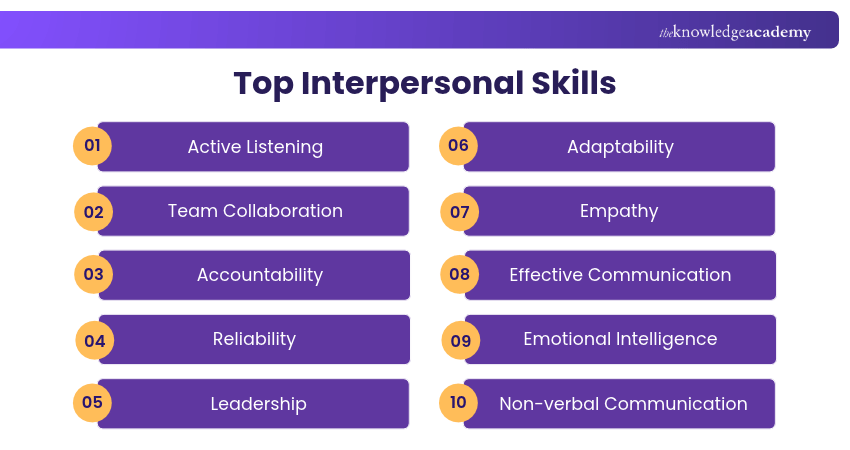
1) Active Listening
Pay full attention when someone is speaking. Don't interrupt; instead, listen carefully and try to understand their message. Active listening also involves asking relevant questions, observing non-verbal cues and confirming that you have understood the speaker correctly.
Example: Your teammate shares an idea during a meeting, and you ask thoughtful questions before offering your opinion.

2) Team Collaboration
Work together with others to finish a task or reach a goal. Being a good team player means sharing ideas, respecting others and helping when needed. Effective collaboration also involves coordinating responsibilities, recognising different strengths and contributing towards shared objectives.
Example: You coordinate with colleagues to divide project responsibilities and help resolve difficulties that affect the team's progress.
3) Accountability
Take ownership of your actions, whether good or bad. Being accountable shows maturity and builds trust in others. Accountability supports interpersonal relationships by encouraging honesty, transparency and responsibility when working with others.
Example: You acknowledge an error in a shared report, explain the situation to your team and take steps to correct it.
4) Reliability
Be someone others can trust to do things on time and do them well. Reliable people are consistent and dependable. Reliability helps colleagues develop confidence in your commitments and reduces uncertainty when working together.
Example: You complete your assigned work before the deadline and inform your colleagues early if an unexpected issue affects delivery.
5) Leadership
Guide, support or motivate others even if you're not the leader. Good leadership is about setting a positive example and helping others succeed. Interpersonal leadership involves communicating expectations, encouraging participation and supporting colleagues when challenges arise.
Example: You help a new colleague understand team procedures and encourage them to contribute during discussions.
6) Adaptability
Adaptability is the ability to adjust your approach, behaviour or communication when circumstances change. It helps you work effectively with different personalities, expectations and workplace situations.
Example: Your team adopts a new communication platform, so you adjust your working methods and help colleagues become familiar with it.
7) Empathy
Understand and care about how others feel. Empathy helps build trust and stronger relationships. It involves recognising another person's perspective and responding with consideration, even when their experiences differ from your own.
Example: A colleague appears overwhelmed by their workload, so you listen to their concerns and discuss whether practical support would help.
8) Effective Communication
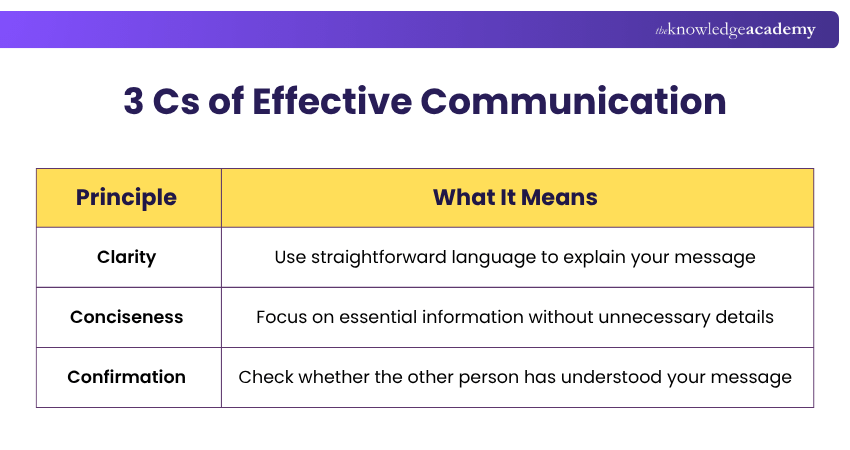
Speak and write in a way that's clear and easy to understand. Good communication avoids confusion and helps individuals share information and coordinate activities effectively. It also involves choosing an appropriate tone, adapting messages to the audience and confirming mutual understanding.
Example: You explain a project update in clear language and provide a concise email summary, so everyone understands the next steps.
The Three Cs of Effective Communication
9) Emotional Intelligence
Emotional intelligence involves recognising and managing your own emotions while understanding and responding appropriately to those of others. This skill helps you remain composed during difficult conversations, recognise emotional cues and communicate with greater sensitivity.
Example: During a tense meeting, you manage your frustration, listen to opposing viewpoints and respond respectfully.
Understand emotions, build trust and strengthen every professional relationship with Emotional Intelligence Training - Register now!
10) Non-verbal Communication
Non-verbal communication involves expressing and interpreting messages through facial expressions, gestures, posture and other physical cues. Being aware of these signals helps individuals understand how others may be responding and communicate more effectively. However, body language should be interpreted alongside verbal communication and context.
Example: During a team discussion, you maintain appropriate eye contact, use an open posture and observe colleagues' reactions to check whether further clarification may be needed.
11) Conflict Management
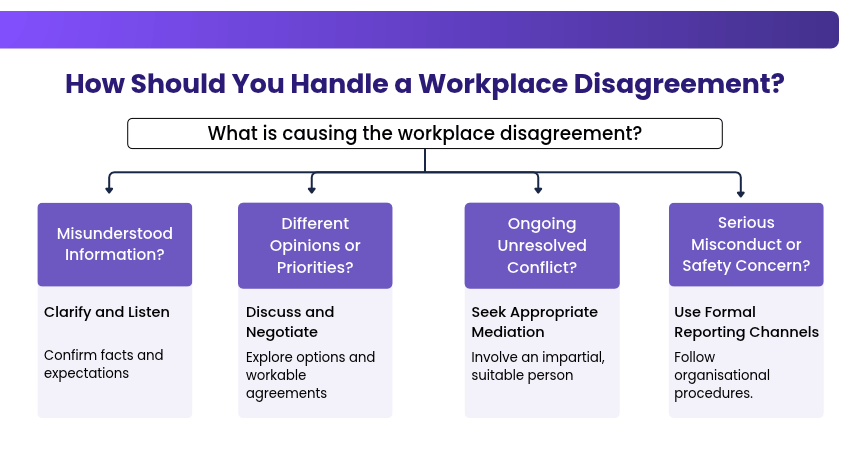
Conflict management involves recognising disagreements and addressing them constructively before they seriously affect working relationships. It includes understanding different viewpoints, communicating calmly and identifying practical solutions.
Example: You disagree with a colleague about project priorities and discuss possible adjustments to reach a workable agreement.
12) Negotiation Skills
Negotiation involves discussing different needs, priorities or expectations to reach an acceptable agreement. Effective negotiation requires preparation, clear communication, active listening and flexibility. The goal is to identify a workable outcome that addresses important interests wherever possible.
Example: You discuss an unrealistic deadline with your manager and agree on revised milestones that account for available resources.
Trainer's Insight
Understanding why each person wants a particular outcome can reveal solutions that address their underlying concerns. Ask questions, identify shared priorities and remain open to alternatives before reaching an agreement.
13) Maintaining a Positive Attitude
Maintaining a positive attitude involves approaching workplace interactions with optimism, resilience and a willingness to find solutions. It does not mean ignoring difficulties or pretending that problems do not exist. Instead, it means recognising challenges while responding constructively.
Example: When a project encounters unexpected delays, you acknowledge the issue and encourage your team to explore practical solutions.
14) Building Professional Networks
Connect with people who can help or support your goals. Networking opens new opportunities and helps you grow. Effective networking also involves maintaining professional relationships, sharing useful information and offering support rather than focusing only on personal benefits.
Example: You attend an industry event, exchange ideas with other professionals and maintain contact to explore future collaboration opportunities.
15) Giving and Receiving Feedback
Giving and receiving feedback involves sharing constructive observations and responding openly to suggestions for improvement. Effective feedback should be specific, respectful and focused on actions or behaviours. Receiving feedback also requires listening carefully, asking questions and considering appropriate improvements.
Example: You suggest a clearer structure for a colleague's presentation and later use their feedback to improve your own communication style.
Pro Tip
When receiving difficult feedback, avoid responding immediately or defending every decision. Listen carefully, ask for specific examples and identify one practical improvement you can make. This turns feedback into an opportunity for professional growth.
Speak with clarity, listen with purpose and connect with confidence by joining the Effective Communication Skills Training now!
Why are Interpersonal Skills Important?
Interpersonal skills matter because most roles require regular interaction with colleagues, clients and managers. They also make collaboration more comfortable and productive. Here are some key reasons why interpersonal skills are important:
a) Stronger Workplace Relationships: Effective communication, empathy and reliability help establish trust and maintain respectful professional relationships.
b) Better Teamwork: Interpersonal skills encourage cooperation, information sharing and productive collaboration towards common goals.
c) Effective Conflict Resolution: Active listening, negotiation and conflict management help individuals address disagreements constructively.
d) Improved Communication: Clear expression and thoughtful listening reduce misunderstandings and support better coordination.
e) Professional Development: Strong interpersonal abilities can support leadership opportunities, workplace confidence and career progression.
How to Improve Your Interpersonal Skills?
You can improve your interpersonal skills with consistent practice, reflection and a willingness to learn from others. Here's how:
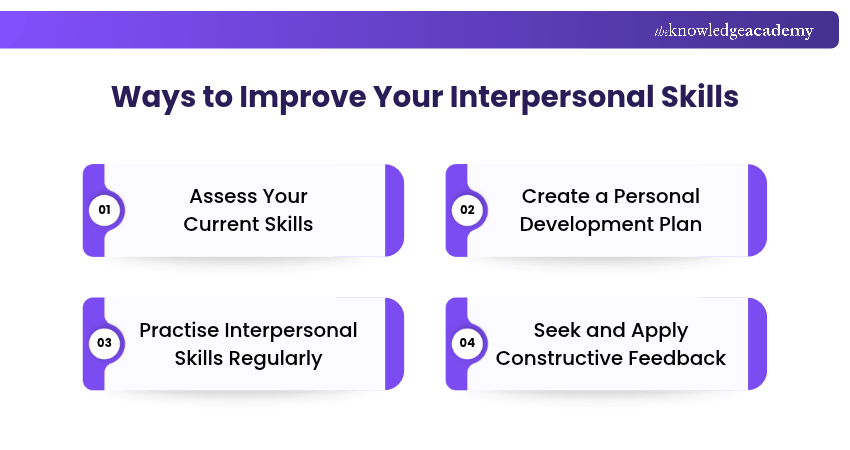
1) Assess Your Current Skills
Begin by identifying your strengths and weaknesses in how you interact with others. Reflect on past situations at work or in groups to see what went well and what could improve. Consider how effectively you listen, communicate, respond to disagreements and collaborate with colleagues. This helps you identify the skills that need the most attention.
2) Create a Personal Development Plan
Select one or two interpersonal skills to improve and set clear, practical goals. For example, if you want to strengthen active listening, aim to summarise the speaker's main points before sharing your opinion during meetings.
A development plan helps you focus on specific behaviours, track progress and make consistent improvements over time.
3) Practise Interpersonal Skills Regularly
Apply your interpersonal skills during everyday conversations, team discussions and workplace interactions. Look for opportunities to collaborate, communicate clearly and manage disagreements respectfully.
For example, you could volunteer to coordinate a small team activity or practise explaining complex information in simpler terms.
4) Seek and Apply Constructive Feedback
Ask colleagues, managers or trusted peers for feedback on how you communicate and interact with others. Encourage specific observations rather than general opinions. Use their suggestions to identify practical changes, apply them during future interactions and reflect on your progress.
Interpersonal Skills Self-assessment Checklist
Use this checklist to reflect on your workplace interactions:
□ Do I listen without interrupting unnecessarily?□ Can I communicate ideas clearly and respectfully?□ Do I consider other people's perspectives during discussions?□ Can I manage my emotions during difficult conversations?□ Do I address disagreements constructively?□ Do I follow through on commitments to colleagues?□ Can I give and receive feedback professionally?□ Do I adapt my communication style to different situations?
Master the art of professional speaking, writing, and interpersonal communication through the Business Communication Course - Join now!

Naveena Venkatesan is a Content Editor with 2+ years of experience in content writing, editing and linguistic quality assurance. Her research, fact-checking and editorial experience enable her to develop accurate, accessible resources across Business Skills, Human Resources, and Accounting and Finance.
View Detail

 If you wish to make any changes to your course, please


