


 Top Rated Course

We may not have the course you’re looking for. If you enquire or give us a call on 01344203999 and speak to our training experts, we may still be able to help with your training requirements.
Assertiveness Skills: Meaning, Benefits and How to Develop Them
Charlotte Wilson 08 September 2026Assertiveness skills help you express your thoughts, needs, and boundaries clearly while respecting others. From confident communication to active listening and boundary-setting, these skills can help you communicate effectively and build healthier professional and personal relationships.

Training Outcomes Within Your Budget!
We ensure quality, budget-alignment, and timely delivery by our expert instructors.
Table of Contents
Key Takeaways
1. Assertiveness skills help you communicate your needs and opinions clearly and respectfully.2. Assertive communication balances self-expression with consideration for others.3. Active listening, boundary-setting, confidence, and emotional control support assertive behaviour.4. Being assertive can improve communication, relationships, confidence, and conflict management.5. Regular practice can help you become more comfortable expressing yourself assertively.
Ever agreed to something when you really wanted to say “no”? Or stayed quiet in a meeting, only to think of exactly what you wanted to say afterwards? Knowing what you want to communicate is one thing. Expressing it clearly and confidently is another.
That is where assertiveness skills make a difference. They help you speak up without becoming confrontational and communicate your needs without dismissing those of others.
In this blog, we explore what assertiveness skills are, the essential skills involved, their benefits, and practical ways to develop them.
What are Assertiveness Skills?
Assertiveness skills are the abilities that help you express your thoughts, feelings, needs, opinions, and boundaries clearly and respectfully. They allow you to stand up for yourself while recognising the perspectives and rights of others.
Assertive communication generally sits between passive and aggressive communication. Rather than staying silent or dominating a conversation, an assertive approach aims for clear, confident, and respectful communication.
Where Does Assertiveness Sit?
Passive: “Your needs matter more than mine.”Assertive: “My needs matter, and so do yours.”Aggressive: “My needs matter more than yours.”
The goal is not to speak louder. It is to communicate clearly without losing respect for either side.
Essential Assertiveness Skills
Assertiveness is not a single ability. It combines several communication and interpersonal skills that help you express yourself effectively while responding appropriately to others.
1) Clear and Direct Communication
Assertive communication involves expressing what you think, need, or expect without unnecessary ambiguity. Being clear reduces misunderstandings and helps others understand your position.
2) Active Listening
Being assertive also means giving others an opportunity to speak. Active listening helps you understand different perspectives and respond thoughtfully rather than simply waiting for your turn to talk.
3) Boundary-setting
Healthy boundaries communicate what you are comfortable with and what you cannot reasonably accept. This might involve declining additional work, protecting your time, or addressing inappropriate behaviour.
4) Self-confidence
Confidence helps you express your ideas and concerns without excessive hesitation. It does not mean assuming you are always right, but recognising that your perspective deserves to be heard.
5) Emotional Regulation
Difficult conversations can bring frustration, nervousness, or anger. Managing these emotions can help you remain calm and communicate without slipping into passive or aggressive behaviour.
6) Conflict Resolution
Assertive individuals address disagreements directly rather than avoiding or escalating them. They explain concerns, listen to different viewpoints, and work towards practical solutions.
7) Positive Body Language
Your tone, posture, facial expressions, gestures, and eye contact can influence how your message is received. Calm and confident body language can reinforce assertive communication.
Benefits of Assertiveness Skills
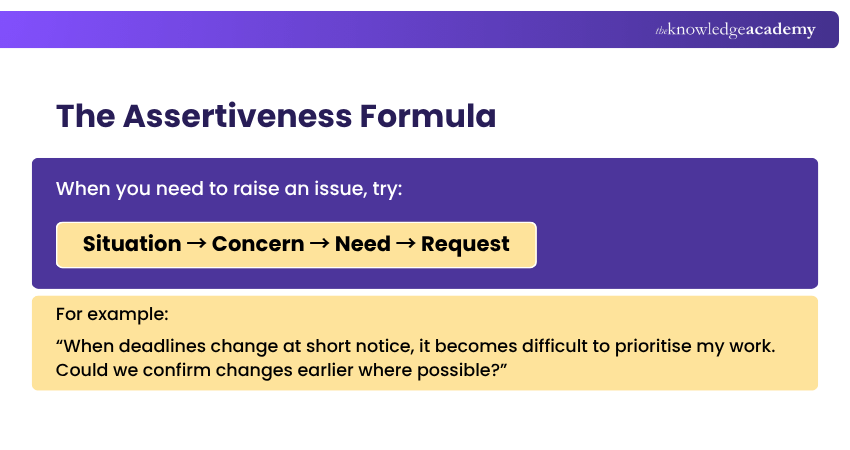
Developing Assertiveness skills can improve the way you communicate, handle challenging situations, and interact with others. Some key benefits include:
1) Builds Self-confidence: Expressing your opinions and needs clearly can help you become more comfortable speaking up and communicating your perspective.
2) Strengthens Relationships: Clear and respectful communication can reduce misunderstandings and encourage greater openness, trust, and mutual respect in professional and personal relationships.
3) Helps Establish Healthy Boundaries: Assertiveness makes it easier to communicate your limits and protect your time, workload, and priorities without unnecessarily damaging relationships.
4) Supports Conflict Resolution: Instead of avoiding disagreements or allowing them to escalate, assertive communication encourages you to address issues directly and constructively.
5) Improves Workplace Communication: Assertiveness can help professionals contribute ideas, give feedback, disagree respectfully, communicate expectations, and raise concerns more effectively.
Did You Know?Being assertive does not mean every conversation ends with:“They agreed with me.”Sometimes, a successful outcome is simply:“We both understand where the other person stands.”
How to Develop Assertiveness Skills?
Developing Assertiveness skills takes practice. The aim is to become comfortable expressing what you need, setting boundaries, and handling disagreement without becoming passive or aggressive. Here are some practical ways to build these skills:
1) Recognise Your Communication Patterns
Pay attention to how you react when someone disagrees with you, criticises your work, or asks for something you cannot manage. Do you stay silent, become defensive, or communicate your position calmly?
Recognising these patterns helps you identify where your assertiveness needs improvement.
Strengthen every conversation with our Effective Communication Skills Course – Join today!
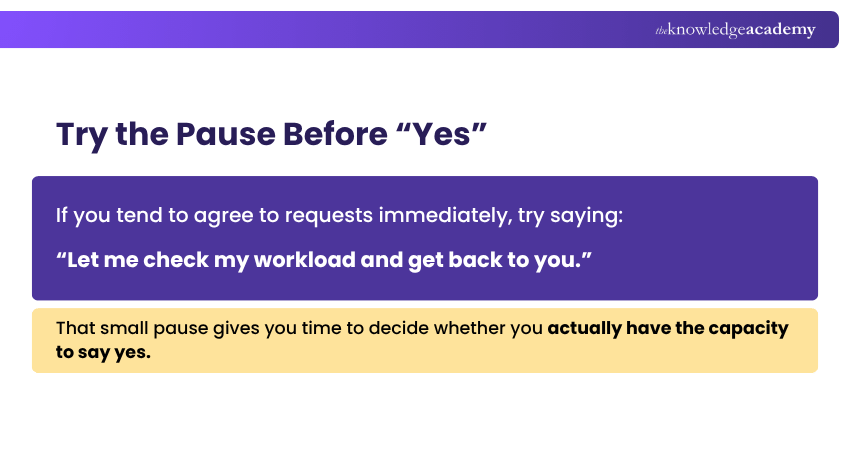
2) Practise Saying “No” Clearly
Learn to decline requests without excessive apologies or lengthy explanations. Keep your response polite, clear, and firm.
For example: “I can't take this today because of my current priorities. I can look at it tomorrow.”
3) Replace Blame With “I” Statements
Frame difficult messages around your experience rather than accusing the other person. This can make your concern clearer without immediately putting them on the defensive.
Instead of: “You keep interrupting me.”
Try: “I'd like to finish explaining my point before we move on.”
4) Make Specific Requests
Assertiveness becomes more effective when the other person knows exactly what you need. Rather than leaving your expectations unclear, communicate your request directly and respectfully so there is less room for misunderstanding.
5) Match Your Body Language to Your Words
Assertiveness is communicated through more than words. Maintain a calm tone, natural eye contact, confident posture, and relaxed gestures so your body language supports what you are saying.
The goal is to appear confident and composed, not intimidating or defensive.
6) Rehearse Difficult Conversations
If you know a challenging conversation is coming, prepare what you want to communicate beforehand. Practise your key message aloud or role-play the conversation with someone you trust.
This can make it easier to remain focused when the real conversation happens.
7) Start Small and Build Confidence
Assertiveness does not have to begin with major confrontation. Start by expressing a preference, asking for clarification, correcting a misunderstanding, or declining a small request.
As these situations become easier, gradually practise assertiveness in more challenging conversations.
8) Reflect and Improve
After an important conversation, consider what worked and what you would change next time. You can also seek constructive feedback from someone you trust to understand how your communication comes across.
Conclusion
Developing Assertiveness skills can make everyday conversations easier to navigate, whether you are setting a boundary, sharing an opinion, handling disagreement, or saying no. With regular practice, these situations can become more comfortable and constructive.
Becoming more assertive is not about becoming louder or more forceful. It is about learning to speak clearly, listen openly, and respect both your own needs and those of others.
Communicate with confidence through our Public Speaking Training – Join today!
Frequently Asked Questions
Can Assertiveness Skills Be Learned?

Yes. Assertiveness skills can be developed through regular practice. Setting boundaries, using clear language, practising active listening, managing emotions, and seeking feedback can help improve assertive communication.
What is the Difference Between Assertive and Aggressive Communication?
Assertive communication expresses your needs while respecting others. Aggressive communication can prioritise your own needs at the expense of another person's feelings, rights, or perspective.
Why are Assertiveness Skills Important at Work?
Assertiveness skills can help professionals contribute ideas, set boundaries, manage disagreements, give feedback, communicate expectations, and raise concerns clearly while maintaining professional relationships.

Charlotte Wilson


Soft Skills and Business Training Manager
Charlotte Wilson is an expert in soft skills development, with over 14 years of experience helping individuals and teams improve communication, productivity and emotional intelligence in the workplace. Her training content is focused on enhancing interpersonal effectiveness and fostering positive, collaborative environments across all levels of an organisation.
View Detail

 If you wish to make any changes to your course, please


