




We may not have the course you’re looking for. If you enquire or give us a call on 01344203999 and speak to our training experts, we may still be able to help with your training requirements.
Essential Active Listening Skills and Ways to Improve Them
ByThe Knowledge AcademyLast updated on: 26 November 2026
Discover essential active listening skills, including attentive listening, empathy, questioning and summarising. Learn how these skills improve understanding, strengthen communication and help you become a better listener through practical exercises.
The Gist
1. Active listening skills help you understand others and respond thoughtfully.2. Essential skills include attention, empathy, patience, questioning, reflection and summarising.3. Effective listening reduces misunderstandings and strengthens trust, teamwork and relationships.4. Distractions, assumptions, interruptions and premature judgement can hinder effective listening.5. Regular practice, feedback and self-reflection help strengthen active listening skills.
You are listening to someone speak. Halfway through, you already know what you are going to say next. By the time they finish, you have your response ready.
But did you fully understand them?
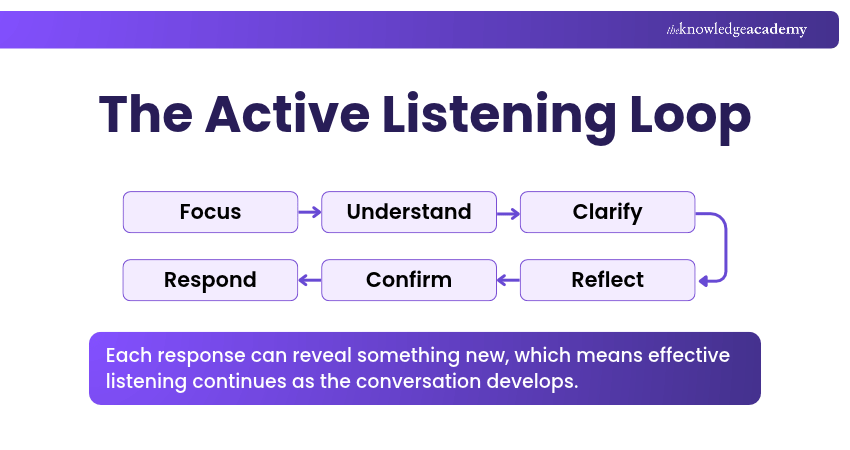
That small gap between hearing someone and understanding them is where active listening skills make a difference. They help you focus on the speaker, recognise what they mean, clarify what is unclear, and respond in a way that keeps the conversation moving.
These skills can strengthen trust, reduce misunderstandings and improve everyday communication. This blog explores essential active listening skills and practical ways to develop them. Let's begin!
Top Active Listening Skills
Effective communication requires more than hearing someone's words. It involves attention, empathy, patience and the ability to understand and respond thoughtfully. Here are the top active listening skills that can help you become a more effective listener:
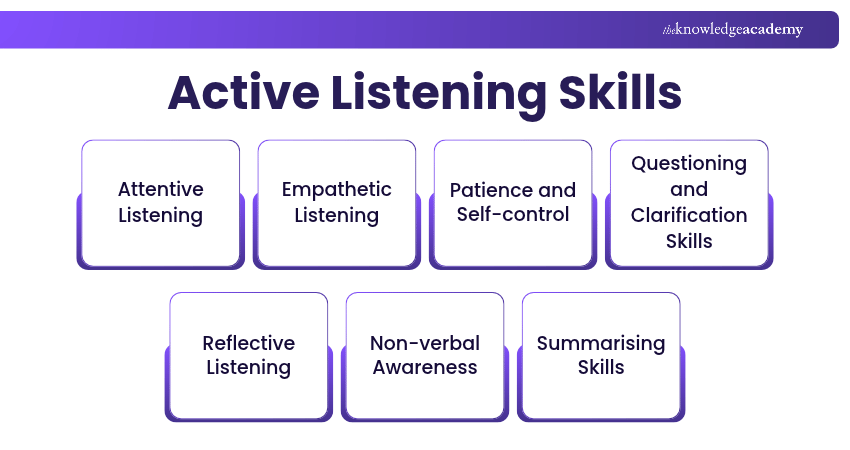
1) Attentive Listening
Good listening begins with being present. Focus on the speaker and reduce distractions that compete for your attention. This could mean putting your phone away, pausing another task, using appropriate eye contact where comfortable and directing your attention towards the conversation. These behaviours help show the speaker that their message has your attention.

2) Empathetic Listening
Words tell you what someone is saying, but tone, context and emotion can provide additional meaning. Empathetic listening involves considering the speaker's perspective and recognising the feelings or concerns behind their words. Acknowledging these emotions without making assumptions can make conversations more open and supportive.
3) Patience and Self-control
Give people enough time to express their ideas before responding. Patience and self-control help you avoid interruptions, premature judgement and the urge to prepare your reply too soon. This is particularly valuable when someone needs extra time to explain a complex idea, describe an experience or find the right words.
4) Questioning and Clarification Skills
Questions help fill gaps in understanding. When something is unclear, ask the speaker to explain further. For example, questions such as "What happened next?" "What do you mean by that?" or "Which part concerns you most?" can encourage the speaker to provide more context. Clarifying questions also demonstrate genuine interest in understanding their perspective.
Bonus Tip
Before offering advice, ask whether the speaker wants help finding a solution or simply needs someone to listen. This can help you respond to their needs rather than making assumptions.
5) Reflective Listening
Reflective listening involves responding in a way that shows how you have interpreted the speaker's message. You might paraphrase an idea, acknowledge an emotion or briefly restate an important point.
For Example
Speaker: "The project keeps changing, and I am struggling to keep up."Listener: "It sounds like the frequent changes are making the workload difficult to manage."This provides the speaker an opportunity to confirm or correct your understanding.
6) Non-verbal Awareness
Communication also happens through tone of voice, facial expressions, posture, gestures and other non-verbal signals. Paying attention to these cues can give additional context to the words being spoken. Also, when a person's words and behaviour seem inconsistent, asking for clarification is more reliable than making assumptions.
Listen with Intention, understand with empathy and respond with impact by signing up with the Conscious Listening Training now!
7) Summarising Skills
Summarising brings the key parts of a conversation together. It can be particularly helpful after a detailed explanation, meeting discussion or conversation involving several decisions. By bringing together the main points in your own words, you can confirm what you understood and give the speaker an opportunity to clarify anything important before the conversation progresses.
How to Improve Active Listening Skills?
Becoming a better listener takes more than understanding active listening skills. Consistent practice, feedback, and self-reflection help you develop effective listening habits and apply them naturally in everyday conversations. Here are some practical ways to improve your active listening skills:
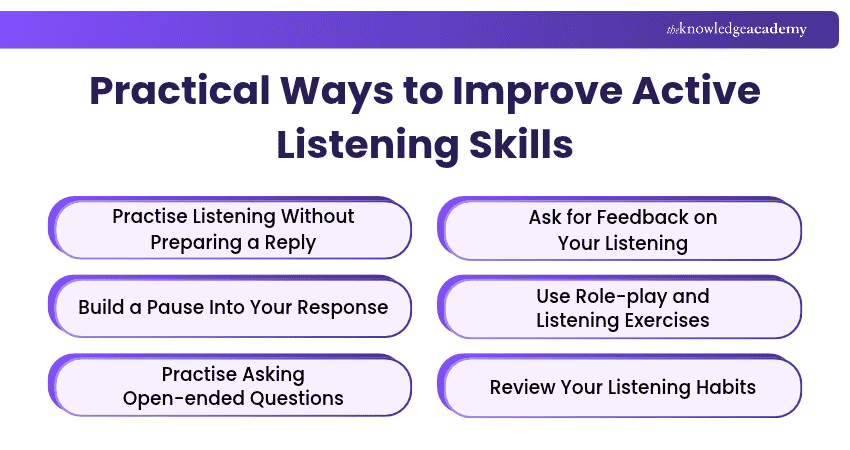
1) Practise Listening Without Preparing a Reply
During your next conversation, focus entirely on understanding the speaker rather than planning what to say next. Notice when your attention shifts towards forming a response and gently bring it back to the conversation. Begin with shorter conversations before practising during longer or more complex discussions.
2) Build a Pause Into Your Response
Practise leaving a brief pause after someone finishes speaking. Use this moment to process their message and consider whether you have understood their point. Over time, this habit can help you respond more thoughtfully, avoid unnecessary interruptions and become more comfortable with silence during conversations.
3) Practise Asking Open-ended Questions
Practise asking open-ended questions during important conversations. These questions encourage the speaker to explain their thoughts or concerns in greater detail. For example, instead of asking "Was the meeting difficult?", try "What was the most challenging part of the meeting?" This exercise helps you develop curiosity and encourage meaningful discussions.
4) Ask for Feedback on Your Listening
Ask a trusted colleague, friend, or family member how effectively you listen during conversations. Encourage honest feedback about whether they feel heard, understood, and comfortable expressing their thoughts. Their feedback can help you recognise listening habits you might not notice yourself and identify areas where you can improve.
5) Use Role-play and Listening Exercises
Practise active listening through structured exercises with a friend. Take turns speaking about a topic for two minutes while the other person listens without interrupting. Afterwards, the listener should explain the message in their own words, and the speaker can confirm whether it was understood correctly. This develops concentration, patience, and listening accuracy.
6) Review Your Listening Habits
After an important conversation, reflect on how effectively you listened. Consider whether you remained focused, avoided interruptions, understood the speaker's perspective, and responded appropriately. Choose one listening habit at a time to improve. Focusing on a specific behaviour makes progress easier to notice and practise.
Developing strong active listening skills can improve how you understand and respond to others. By practising attention, empathy, questioning and reflection, you can make conversations clearer and meaningful. Remember, good listening does not require an impressive response. Sometimes, the most valuable contribution is ensuring the other person feels genuinely heard.
Strengthen the way you listen, respond, and connect with the Effective Communication Skills Training – Join today!

The Knowledge Academy develops accessible learning content across Project Management, IT, Cybersecurity, Data Science, Business Analysis, HR, Accounting and Finance, Leadership and Health and Safety. Its resources combine subject research with clear explanations to help professionals build practical knowledge across a wide range of disciplines.
View Detail

 If you wish to make any changes to your course, please


