


We may not have the course you’re looking for. If you enquire or give us a call on 01344203999 and speak to our training experts, we may still be able to help with your training requirements.
Business Analyst Salary: How Much Can You Earn?
ByNaveena VenkatesanLast updated on: 17 September 2026
A Business Analyst Salary varies depending on experience, location, industry, skills and responsibilities.

What makes the difference in a Business Analyst Salary?
Consider two Business Analysts applying for similar positions:
✓ One has experience gathering requirements and documenting processes.
✓ The other can also manage complex stakeholders, analyse data, improve processes and work confidently with both business and technical teams.
Their salaries may differ because pay is influenced by more than job title alone. Factors such as experience, location, industry, technical expertise, certifications and the ability to deliver measurable business value can all influence how much a Business Analyst earns.
Who is a Business Analyst?
A Business Analyst (BA) is a professional who identifies business needs, analyses information and helps connect stakeholders with technical or delivery teams. They can support organisations by improving processes, clarifying requirements and helping teams determine suitable solutions to business problems.
Their work can involve analysing requirements, communicating with stakeholders, examining business processes, interpreting data and supporting the validation of solutions. The exact responsibilities vary according to the organisation, industry and project.

Business Analyst Salary by Location
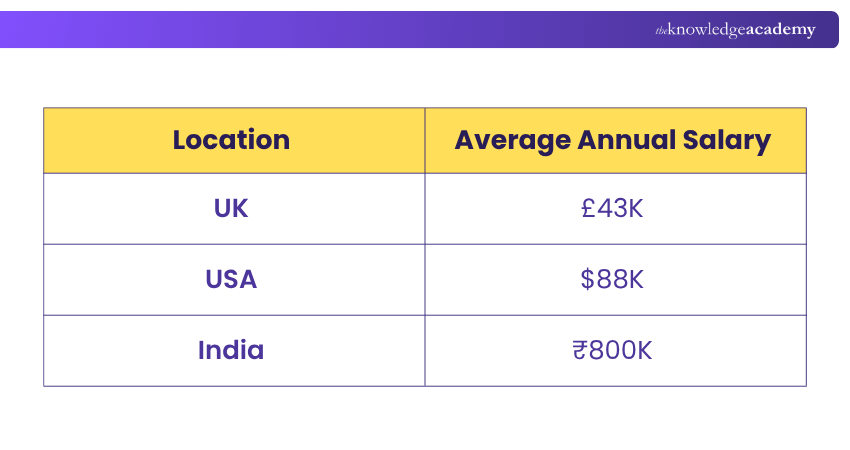
Location can significantly influence Business Analyst salaries because labour markets, employer demand, economic conditions and living costs differ between countries and regions. Here are the Business Analyst Salary figures across three major regions:
Source: Glassdoor
1) Business Analyst Salary in the UK
The average annual Business Analyst Salary in the United Kingdom is £43K. Opportunities can exist across sectors such as finance, IT and consulting. Key employment hubs include London, Manchester, Birmingham, Edinburgh and Leeds, where demand for Business Analysts remains strong across finance, healthcare, government and digital transformation projects.
2) Business Analyst Salary in the USA
The average annual salary for Business Analysts in the USA is around $88K. Demand is strong across technology, healthcare, finance and consulting, with major metropolitan areas often offering greater opportunities for career and salary growth.
3) Business Analyst Salary in India
The average annual Business Analyst Salary in India is ₹800K. Compensation varies significantly across regions, with those having strong IT ecosystems standing out as leading employment destinations. They often offer higher salary packages across sectors like banking, finance and consulting.
Business Analyst Salary by Experience Level
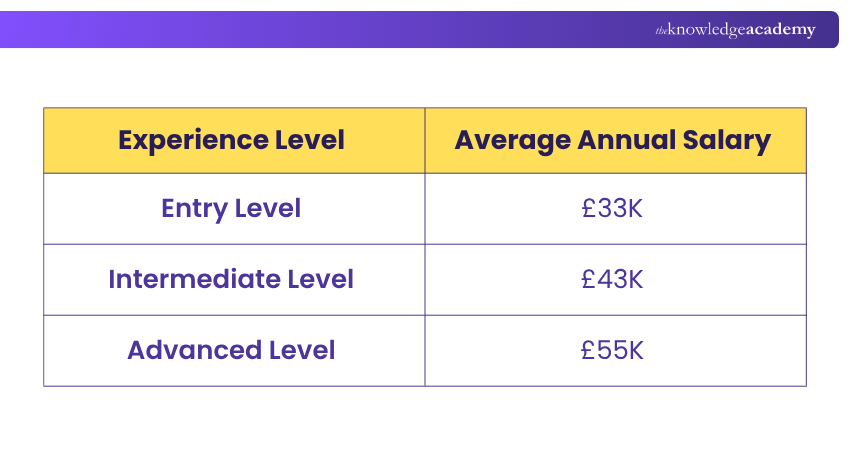
Experience can have a significant influence on earning potential. As Business Analysts progress, they may work on more complex requirements, manage broader stakeholder groups and take greater responsibility for analysis and decision support. Here are indicative UK salary figures across different Business Analyst seniority levels:
Source: Glassdoor
1) Entry Level
Entry-level Business Analysts are generally at the beginning of their careers and may have limited professional experience. At this stage, professionals can focus on developing requirements analysis, communication, process modelling and stakeholder management capabilities while gaining practical project experience.
2) Intermediate Level
Intermediate Business Analysts have greater professional experience and a stronger understanding of Business Analysis. They may be trusted with more complex tasks and greater independence. Developing deeper industry knowledge and taking responsibility for more challenging projects can help professionals continue their career progression.
Become the go-to business problem-solver! Master Business Analysis with our Business Analyst Fundamentals Training – Register now!
3) Advanced Level
Advanced Business Analysts typically have extensive experience and may take on leadership responsibilities, guide projects or support less experienced analysts. At this level, strategic thinking, stakeholder management and the ability to handle complex business challenges can become increasingly important.
Trainer's Insight
Years of experience tell only part of the story. Project complexity, stakeholder responsibility and the business outcomes you can demonstrate may also influence your market value.
Business Analyst Salary Based on Industry
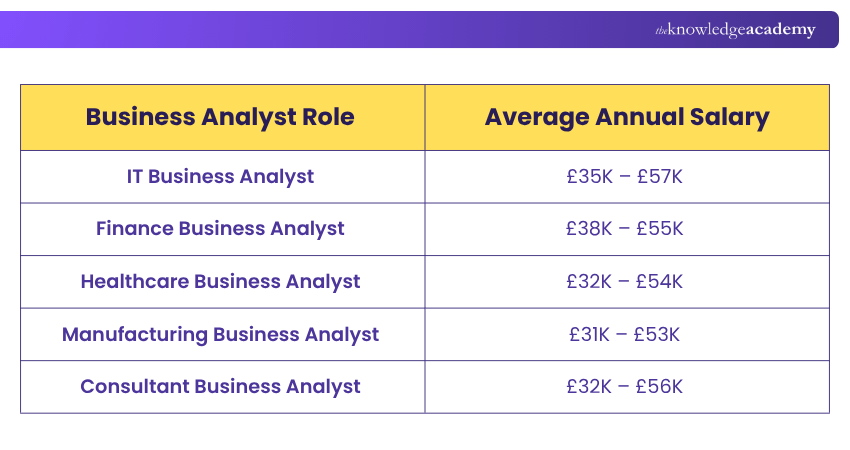
Business Analysts can work across different industries. Here are the key Business Analyst Salary figures across these fields:
Source: Glassdoor
1) IT Business Analyst: An IT Business Analyst works closely with business stakeholders and technology teams. They help understand technology-related business requirements and communicate them to teams responsible for designing or implementing systems. These professionals can earn anywhere between £35K and £57K.
2) Finance Business Analyst: Financial Business Analysts operate within finance-related environments. Their work can involve analysing business requirements and processes while working with financial stakeholders and relevant regulatory requirements. These professionals can earn anywhere between £38K and £55K.
3) Healthcare Business Analyst: Healthcare Business Analysts apply Business Analysis within healthcare environments. They may work with healthcare providers, administrators and IT teams to support improvements to healthcare-related processes or systems. These professionals can earn anywhere between £32K and £54K.
4) Manufacturing Business Analyst: A Business Analyst in manufacturing examines business requirements and operational processes within manufacturing environments. They may work with production, supply chain and technology teams to identify requirements and support improvements to systems and processes. These professionals can earn anywhere between £31K and £53K.
5) Business Analyst in Consulting Services: These Business Analysts work across client projects to understand business needs, analyse requirements and recommend suitable improvements. They may collaborate with different stakeholders and support projects involving process improvement and technology implementation. These professionals can earn anywhere between £32K and £56K.
Factors That Influence Business Analyst Salary
No single factor determines what a Business Analyst earns. Compensation can reflect a combination of professional experience, capabilities, responsibilities and market conditions.
1) Location: Salaries can vary between countries, cities and regions because of differences in employer demand, labour markets and living costs.
2) Experience: More experienced Business Analysts may take responsibility for complex projects, requirements and stakeholder relationships, which can affect earning potential.
3) Industry: Different industries require different levels of domain expertise. Working in a specialist or highly regulated sector may require additional knowledge.
4) Skills: Capabilities in areas such as requirements analysis, data analysis, stakeholder management, process improvement and communication can strengthen a Business Analyst's profile.
5) Qualifications: Relevant academic qualifications, professional training and certifications can demonstrate knowledge and commitment to professional development.
6) Responsibilities: Two professionals with the title "Business Analyst" may have very different responsibilities. Project complexity, decision-making involvement and stakeholder scope can therefore matter when comparing salaries.
7) Employer: Organisation size, sector, location and compensation structure can also affect what an employer offers.
How to Increase Your Business Analyst Earning Potential?
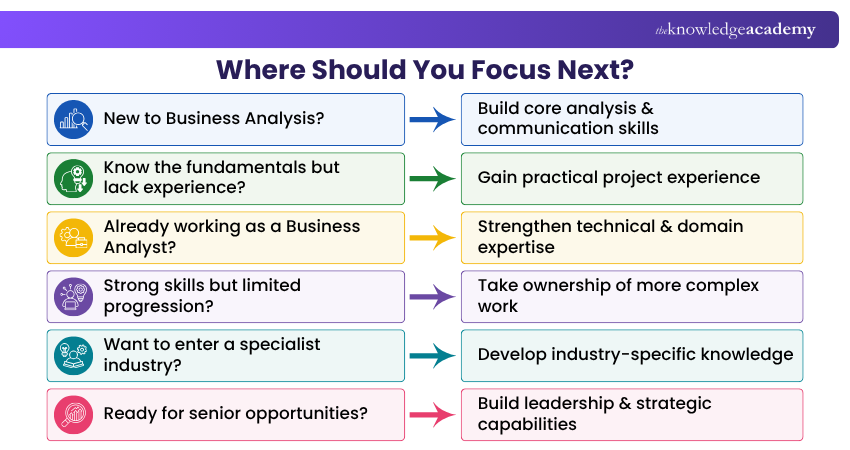
Increasing earning potential is not simply about accumulating years of experience. Building valuable capabilities, demonstrating business impact and preparing for greater responsibility can strengthen your position when pursuing more senior opportunities.
1) Strengthen Your Core Business Analysis Skills: Develop strong foundations in requirements analysis, stakeholder management, communication, process analysis and problem-solving.
2) Gain Practical Experience: Apply your knowledge to real business problems. Practical project experience can demonstrate that you can turn analysis into useful business outcomes.
3) Develop Technical Knowledge: Build familiarity with relevant data, reporting and business technology tools. Technical understanding can also make communication with technology teams easier.
4) Build Industry Expertise: Develop knowledge of the processes, terminology, regulations and challenges within the industry where you want to work.
5) Take on Greater Responsibility: Look for opportunities to handle complex requirements, facilitate important stakeholder discussions or contribute to larger projects.
6) Demonstrate Your Business Impact: Keep examples of improvements you have helped achieve. These might include streamlined processes, better requirements, reduced inefficiencies or improved project outcomes.
7) Continue Learning: Business needs, working methods and technologies change over time. Continuous professional development can help you maintain relevant capabilities as your career progresses.
Decode business data for lasting business success with our Introduction to Business Analytics Training – Sign up now!

Naveena Venkatesan is a Content Editor with 2+ years of experience in content writing, editing and linguistic quality assurance. Her research, fact-checking and editorial experience enable her to develop accurate, accessible resources across Business Skills, Human Resources, and Accounting and Finance.
View Detail

 If you wish to make any changes to your course, please


