


 Top Rated Course

We may not have the course you’re looking for. If you enquire or give us a call on +61 1-800-150644 and speak to our training experts, we may still be able to help with your training requirements.
Blockchain Developer Salary: How Much do They Really Earn?
Scarlett Adams 26 August 2026The Blockchain Developer Salary can vary but they are among the highest in the technology sector, driven by increasing demand for decentralised applications, Cryptocurrency platforms and smart contracts.

Training Outcomes Within Your Budget!
We ensure quality, budget-alignment, and timely delivery by our expert instructors.
Table of Contents
Key Takeaways
1) Blockchain Developer salaries vary by experience, location and industry.2) Greater technical expertise and responsibility can improve earning potential.3) Smart contracts, Cryptography and programming are important Blockchain Development skills.4) Practical projects can help Developers demonstrate their abilities to employers.5) Continuous learning is key in the evolving Blockchain ecosystem.
Behind every decentralised application, Cryptocurrency network, and smart contract is a skilled professional making it all work: the Blockchain Developer. Now imagine two Blockchain Developers applying for similar roles:
1) One has basic Blockchain knowledge and a few personal projects.
2) The other has built production-ready smart contracts, contributed to DApps and understands cryptographic security and distributed systems.
Would you expect them to command the same salary? Probably not.
A Blockchain Developer Salary comes down to much more than just the job title. Experience, location, technical specialisation, industry and project complexity can all influence earning potential.
Who is a Blockchain Developer?
A Blockchain Developer is a software professional who designs, develops and maintains applications and systems based on Blockchain technology. Their work can include developing smart contracts, building Decentralised Applications (DApps), designing Blockchain protocols and maintaining Blockchain networks. They also need to understand areas such as programming, Cryptography and distributed systems.

Primary Responsibilities of a Blockchain Developer
The primary responsibilities of a Blockchain Developer are the following:
1) Designing Blockchain Protocols: Blockchain Developers create the fundamental rules and structure for Blockchain systems. These protocols define how data is stored, verified, and secured within the network.
2) Developing Smart Contracts: These are code-based agreements that are automatically executed. Blockchain Engineers design and deploy these contracts, allowing automated procedures to take place without intermediaries.
3) Building Decentralised Applications (DApps): DApps operate on Blockchain networks instead of centralised servers. Developers create DApps that use Blockchain features to ensure security and efficiency.
4) Maintaining Blockchain Networks: Ensuring the Blockchain system remains secure, functional, and scalable. Regular maintenance and updates are crucial.
5) Implementing Cryptographic Security Measures: Developers use advanced Cryptography Techniques to protect data. Encryption, hashing, and digital signatures enhance security.
6) Collaborating with Teams: Blockchain Development involves teamwork. Developers work with designers, stakeholders, and other experts to integrate Blockchain solutions.
7) Troubleshooting and Debugging: Identifying and fixing issues within Blockchain applications and ensuring performance and security.
8) Staying Updated with Industry Trends: Continuous learning about new developments in Blockchain Technology. Applying innovative solutions to real-world challenges.
KEY INSIGHT
IBM, Microsoft, The Linux Foundation, Deloitte Touche Tohmatsu Limited and Ripple are some of the biggest players in the Blockchain Technology market
Skills Required to Become a Blockchain Developer
A Blockchain Developer's salary depends on their skills. The primary Blockchain Developer skills required are as follows:
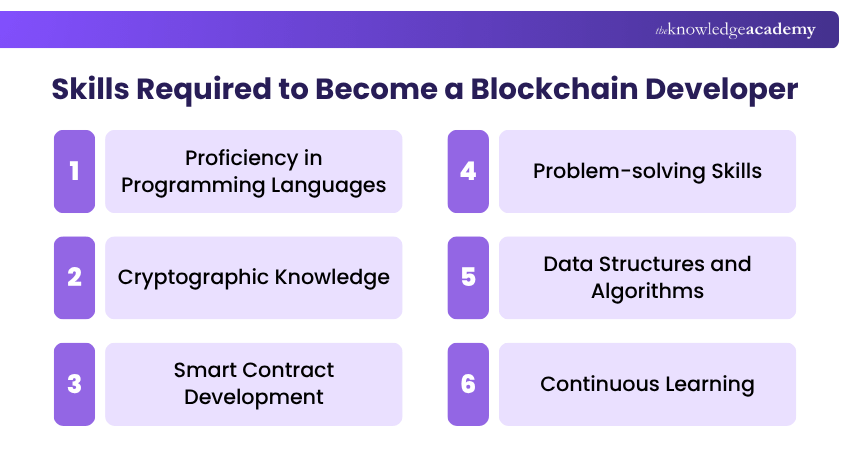
1) Proficiency in Programming Languages
Blockchain Developers need strong programming skills to build applications, smart contracts and Blockchain-based systems. Languages such as Solidity, JavaScript, Python and C++ may be useful depending on the platform and project.
2) Cryptographic Knowledge
A good understanding of cryptographic concepts such as hashing, digital signatures and public-key Cryptography helps Developers understand how Blockchain systems protect data and verify transactions.
3) Smart Contract Development
Developers working with programmable Blockchains should know how to write, test and deploy smart contracts. They also need to consider security, efficiency and potential vulnerabilities when developing contract logic.
4) Problem-solving Skills
Blockchain Development often involves complex technical challenges. Strong problem-solving skills help Developers debug code, identify vulnerabilities and design practical solutions for decentralised systems.
5) Data Structures and Algorithms
Knowledge of data structures and algorithms provides an important foundation for software development. It helps Blockchain Developers write efficient code and understand how data can be organised and processed within applications.
6) Continuous Learning
Blockchain technology evolves rapidly, with new protocols, development tools and security practices emerging regularly. Developers need to keep learning and updating their skills to remain effective in the field.
Master the technology that's redefining trust. Sign up for range of Blockchain Courses now!
Blockchain Developer Salary Based on Location
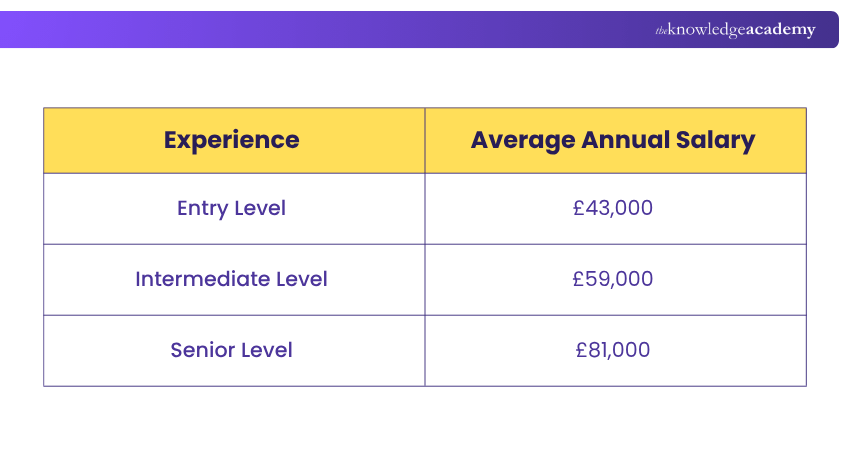
This table outlines the average annual salaries for different countries in the field of Blockchain Developers:
Source: Glassdoor
1) United Kingdom (UK): The average annual salary for Blockchain Developers is £59,000. This reflects the high demand for their specialised skills in a competitive market.
2) United States of America (USA): The average annual salary for Blockchain Developers is $100,000, highlighting the advanced and competitive tech industry in the country.
3) India: The average annual salary for Blockchain Developers is ₹6,00,000. Despite being lower than in many Western countries, this is a substantial salary in the Indian job market, highlighting the growing importance of Blockchain technology.
Trainer's Pro Tip
Don't compare salaries across countries using currency conversion alone. Cost of living, taxes, benefits, employment type and local demand can significantly affect the real value of compensation.
Blockchain Developer Salary Based on Experience
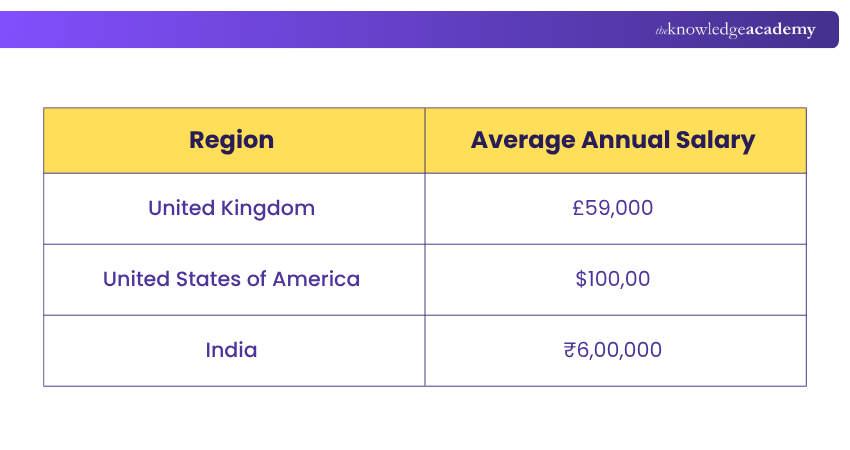
This table outlines the average annual salaries based on the experience level of Blockchain Developers:
Source: Glassdoor
1) Entry-level: Developers at the beginning of their careers may focus on strengthening programming fundamentals, Blockchain concepts and practical development experience. The average yearly salary for someone new to this industry is £43,000.
2) Mid-level: With greater experience, Developers may independently build smart contracts, DApps and other Blockchain components. The average yearly salary for Developers with a few years of expertise is £59,000. They are more knowledgeable about Blockchain technology and its uses.
3) Experienced Level: Experienced professionals may take responsibility for architecture, security, complex systems and technical decision-making. The average annual salary for experienced Blockchain Developers is £81,000. They are in high demand for managing complex projects and encouraging technological advancement due to their advanced talents.
How to Become a Highly Paid Blockchain Developer?
Technical skills, Industry knowledge and passion for decentralised technologies are essential to become a highly paid Blockchain Developer. You can accomplish it by following these steps:
1) Understand the Opportunity: Recognise the potential of Blockchain Development as it's a rapidly growing industry with high demand and the ability to command six-figure incomes. Explore various use cases for Blockchain, including Non-Fungible Token (NFTs), Decentralised Finance (DeFi), gaming and Web 3.0.
2) Learn the Fundamentals: Begin with the basics of Blockchain technology through concepts like decentralisation, censorship resistance, and transparency. Dive into the principles that enable various applications of Blockchain.
3) Choose Your Path: Decide on the type of Blockchain Developer you want to be because there are many exciting options, such as Smart Contract Developer, Web 3.0 Developer, Crypto Gaming Developer and Metaverse Developer.
4) Master Relevant Skills: You must master the Programming Languages, frameworks, and tools relevant to your chosen path, such as Solidity, Web3.js and Truffle.
5) Build a Portfolio: Participate in projects to showcase your skills, such as building your own DApps, writing smart contracts, and contributing to open-source initiatives. Collaborating with other Developers and participating in hackathons or coding challenges is a great way to build a strong portfolio.
6) Stay Updated: The Blockchain landscape evolves rapidly, so you must stay informed about the latest protocols, trends and technologies. Attend conferences, follow industry blogs, and keep engaging with the community.
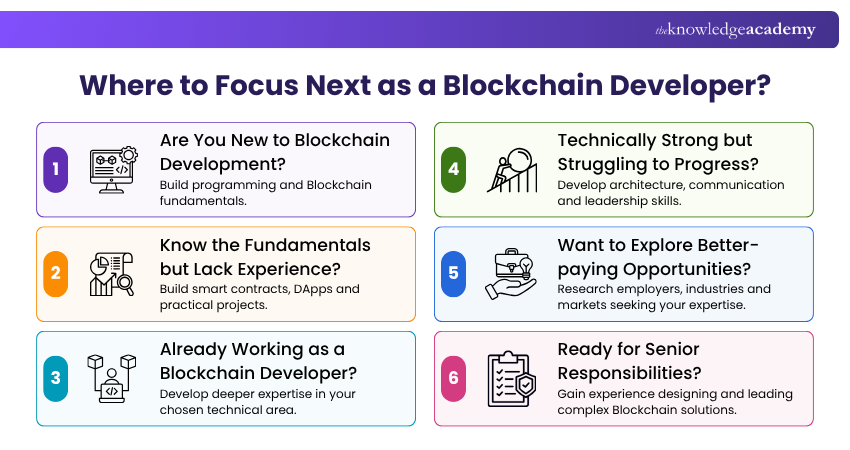
Use this quick decision tree to identify where to focus next in your Blockchain Developer journey:
Conclusion
A Blockchain Developer Salary can vary widely depending on experience, location, industry, skills and responsibilities. Rather than focusing on one headline figure, consider the factors that shape your market value. Build strong technical foundations, gain practical experience and develop deeper expertise to position yourself for stronger career and earning opportunities.
Learn to create secure, scalable blockchain solutions with our comprehensive Ethereum Developer Training. Sign up now!
Frequently Asked Questions
Is Blockchain Coding Hard?

Blockchain Development can be challenging, but its difficulty depends heavily on what you build. Smart contract and dApp development are approachable if you know JavaScript, while core protocol and cryptographic system engineering require advanced computer science expertise.
Will Blockchain be Replaced by AI?
No, Artificial Intelligence (AI) will not replace Blockchain. They solve completely different problems: AI processes data, makes predictions, and automates tasks, while Blockchain acts as a secure, decentralised ledger that records transactions and proves digital ownership. Instead of competing, they work together.
What Math is Needed for Blockchain?
Blockchain technology relies heavily on Cryptography, discrete mathematics, and game theory. The required math depth depends on your focus: smart contract or app Developers need basic arithmetic and logic, while core protocol and Cryptography Engineers require advanced number theory and abstract algebra.
How to Get Started with Blockchain?
To start working with Blockchain, learn programming basics like JavaScript or Python, study core concepts like distributed ledgers and Cryptography, and build practical projects using smart contract languages like Solidity.

 If you wish to make any changes to your course, please


