


 Top Rated Course

We may not have the course you’re looking for. If you enquire or give us a call on 01344203999 and speak to our training experts, we may still be able to help with your training requirements.
Top 25+ Agile Testing Interview Questions and Answers
Sienna Roberts 20 January 2026Master your Agile interview with this blog on the most asked questions and sample answers. Learn what interviewers expect, how to structure your responses, and how to smartly and confidently showcase your Agile skills. It is giving you the advantage you need to land your ideal job role and start preparing smarter today.
Training Outcomes Within Your Budget!
We ensure quality, budget-alignment, and timely delivery by our expert instructors.
Table of Contents

Already have some experience in QA, but facing your first Agile interview? It’s a whole different game. Agile testing interviews go beyond theory, they test your mindset, flexibility, and how you collaborate in fast-moving teams.
This handpicked list of 25+ Agile Testing Interview Questions and Answers is crafted to help you brush up on everything from sprint planning to velocity tracking. In this blog, we've included thoughtful sample answers to help you stand out. Stay sharp, stay confident and let’s make your next interview a success.
Table of Contents
1) Most asked Agile Testing Interview Questions with Sample Answers
a) What is Agile Testing?
b) What are the principles of Agile Software Development?
c) What are the main roles in Scrum?
d) What approach do you follow when requirements change continuously?
e) When do we use Agile Scrum Methodology?
f) What is a Sprint?
g) What are Product Backlog and Sprint Backlog?
h) What is Sprint Burndown Chart?
i) What is DevOps?
j) What is the difference between Agile and DevOps?
2) Conclusion
Most Asked Agile Testing Interview Questions with Sample Answers
Whether you're a seasoned tester or just stepping into an Agile environment, knowing how to answer common interview questions can make all the difference. These questions are designed to reflect the skills and mindset hiring managers expect from Agile professionals.
What is Agile Testing?

Agile Testing is a software testing practice that follows the principles of Agile development. It involves continuous testing throughout the development lifecycle rather than waiting for the coding phase to finish. Agile testers work closely with developers and business stakeholders to ensure rapid feedback, flexible changes, and quality delivery in every iteration.
What are the principles of Agile Software Development?
The core principles of Agile Software Development include:
1) Customer satisfaction through early and continuous delivery
2) Welcoming changing requirements, even late in development
3) Frequent delivery of working software
4) Close collaboration between business stakeholders and developers
5) Face-to-face communication
6) Working software as the primary measure of progress
7) Simplicity, or maximising the amount of work not done
Agile promotes adaptability, continuous improvement, and iterative progress.
What are the main roles in Scrum?
Scrum Defines Three Main Roles:
1) Product Owner: Manages the product backlog and ensures the team delivers value.
2) Scrum Master: Acts as a facilitator and removes any blockers for the team.
3) Development Team: a cross-functional group responsible for delivering the product increment during a sprint.
What approach do you follow when requirements change continuously?
When requirements change frequently, I remain flexible and maintain close communication with the product owner and team. I update test cases regularly, prioritise critical functionality, and use exploratory testing alongside automation to adapt quickly. Daily stand-ups help keep everyone aligned, and I ensure feedback loops are short and effective to support continuous refinement.
When do we use Agile Scrum Methodology?
Agile Scrum methodology is ideal for projects with evolving requirements that require iterative development. It suits environments that benefit from frequent deliveries, customer feedback, and continuous improvement. It's widely used in software development, marketing, product design, and any fast-paced team environment.
What is a Sprint?
A Sprint is a fixed-length iteration in Scrum, typically lasting 1 to 4 weeks, during which the team works to deliver a potentially shippable product increment. Each sprint begins with a planning meeting and ends with a review and retrospective. It promotes focus, accountability, and fast delivery of value.
What are Product Backlog and Sprint Backlog?
The Product Backlog is a prioritised list of all features, enhancements, bug fixes, and tasks required in a product. It is owned and maintained by the Product Owner. The Sprint Backlog, on the other hand, is a subset of the Product Backlog that the team commits to delivering in a specific Sprint. It is created during Sprint Planning and managed by the team.
What is Sprint Burndown Chart?
A Sprint Burndown Chart visually represents the remaining work in a sprint over time. It helps the team monitor their daily progress.
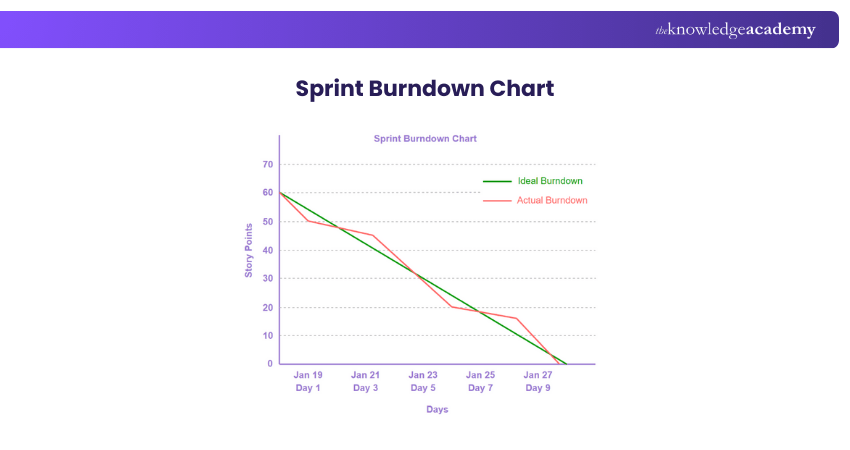
The chart ensures they are on track to complete all planned tasks by the end of the sprint. A consistent downward slope indicates healthy progress; any flat lines may suggest delays.
Master test automation, teamwork, and quality in agile environments – Register for Agile Tester Training today!
What is DevOps?
DevOps is a combination of development and operations aimed at automating and integrating the processes between Software Development and IT teams. It encourages collaboration, continuous integration and delivery (CI/CD), and faster, more reliable software releases. DevOps supports Agile principles by improving deployment speed and operational efficiency.
What is the difference between Agile and DevOps?
Agile focuses on iterative development, customer feedback, and collaboration between developers and stakeholders. It primarily addresses Software Development practices. DevOps extends beyond development to include deployment and infrastructure management. It bridges the gap between development and operations, promoting automation, continuous integration, and faster delivery pipelines.
What is Velocity?
Velocity is the amount of work a team completes during a sprint, usually measured in story points or work hours. It helps teams estimate future workloads and plan Sprints more accurately. A consistent velocity helps forecast project timelines and assess team performance over time.
What does the term Taskboard mean in Agile?
A Taskboard is a visual representation of tasks in a sprint, often divided into columns such as "To Do," "In Progress," "In Review," and "Done." It helps teams stay organised, see what everyone is working on, and identify bottlenecks quickly. Taskboards are commonly used in both physical and digital forms.
What are the characteristics of a good Agile tester?
A good Agile tester is flexible, collaborative, and proactive. They have a solid understanding of Agile principles, good communication skills, and the ability to test early and frequently. They are comfortable with changing requirements, understand both manual and automated testing, and focus on delivering quality in every iteration.
Explain the role and responsibilities of Agile testers
A good Agile tester is flexible, collaborative, and proactive. They have a strong understanding of Agile principles, good communication skills, and the ability to test early and often. They are comfortable with changing requirements, understand both manual and automated testing, and focus on delivering quality in every iteration.
Describe the Agile testing life cycle
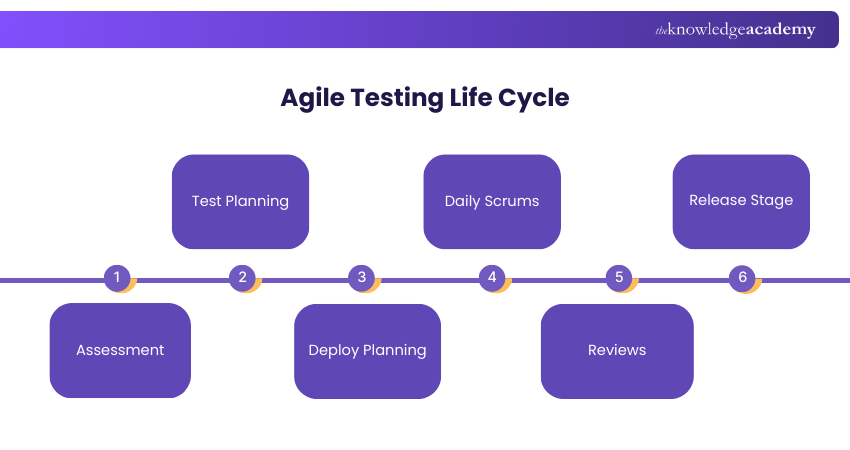
The Agile testing life cycle involves six key stages: requirement analysis, test planning, test design, test execution, defect logging and retesting, and test closure. Unlike traditional models, testing in Agile is continuous and runs parallel to development, allowing for faster feedback, early bug detection, and improved collaboration throughout the sprint.
What are the principles of Agile testing?
Agile testing follows key principles such as:
a) Continuous testing
b) Quick feedback
c) Testing throughout the lifecycle
d) Involving the whole team in quality
e) Simplified and customer-focused documentation
f) Being ready for changes
g) Frequent delivery of working software
These principles ensure that quality is built-in, not inspected at the end.
Explain Epic, User Stories, and Tasks
An Epic is a large body of work that can be broken into smaller, manageable parts. A User Story is a short, simple description of a feature from the end-user's perspective. Tasks are specific actions or work items required to implement a user story. This hierarchy helps Agile teams organise work efficiently and track progress clearly.
Do you know some agile frameworks?
Yes, there are several Agile frameworks used across industries. The most common include:
a) Scrum: Focuses on time-boxed iterations called Sprints
b) Kanban: Visualises workflow and limits Work in Progress (WIP)
c) Extreme Programming (XP): Emphasises technical excellence and frequent releases
d) SAFe (Scaled Agile Framework): Helps scale Agile to large enterprises
Each framework supports Agile principles but caters to different team sizes and goals.
Explain Agile Manifesto?
The Agile Manifesto outlines four key values:
a) Individuals and interactions over processes and tools
b) Working software over comprehensive documentation
c) Customer collaboration over contract negotiation
d) Responding to change over following a plan
It also contains 12 principles that guide Agile teams towards flexibility, transparency, and customer satisfaction.
Unlock your tester’s potential with Agile tools and training – Register for Agile Project Management Practitioner (AgilePM® V3) Course now!
What are the main Agile quality strategies?
Agile quality strategies focus on building quality into every stage of development. Key practices include Test-Driven Development (TDD), pair programming, continuous integration, and automated testing. Regular code reviews and retrospectives further ensure continuous improvement. These methods help teams detect issues early, reduce rework, and deliver reliable, high-quality software consistently.
What is Scrumban?
Scrumban is a hybrid Agile framework that combines the structure of Scrum with the flexibility of Kanban. It allows teams to use sprints and roles from Scrum while adopting visual workflows and continuous delivery from Kanban. Scrumban is ideal for teams transitioning between frameworks or looking for a more adaptable and visual way of working.
What is the role of Sashimi in Scrum?
In Scrum, “Sashimi” refers to work items that are considered completely done, with all criteria met, similar to the way sashimi is served raw and ready to eat. It ensures that each increment is fully developed, tested, and shippable. This concept helps reinforce the importance of delivering truly finished work at the end of each sprint.
How will you define storyboard in Agile?
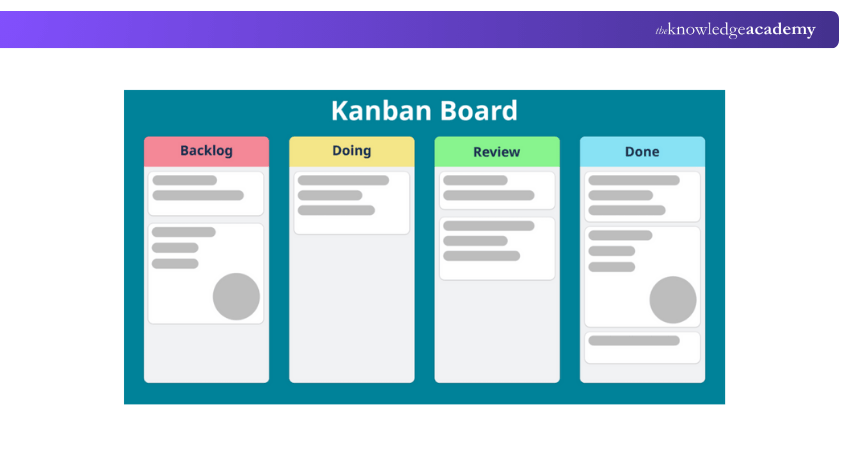
A storyboard in Agile is a visual tool that displays the flow of work through various stages, such as “To Do,” “In Progress,” and “Done.” It helps teams track progress, identify bottlenecks, and promote transparency. Storyboards can be physical boards or digital tools like Kanban boards used for daily stand-ups.
Name the components in the user story?
A typical user story has three key components: Who (the user role), What (the goal), and Why (the reason or value). For example, “As a user, I want to reset my password so that I can regain account access.” It may also include acceptance criteria to define when the story is considered complete.
What is the main objective of the Sprint Burndown chart?
The Sprint Burndown Chart helps teams visualise the amount of work remaining in a sprint. It tracks progress daily and highlights whether the team is on track to meet its goals. By providing a visual cue of workload, it enables timely adjustments and fosters better planning, accountability, and transparency within the team.
Explain Kanban in Agile?
Kanban is an Agile framework that emphasises visualising work, limiting work in progress (WIP), and improving flow efficiency. Tasks move through columns such as “To Do,” “In Progress,” and “Done.” Kanban encourages teams to focus on completing tasks before starting new ones, making it ideal for continuous delivery and managing unpredictable workloads.
Explain what is Zero Sprint in Agile?
A Zero Sprint refers to the pre-planning or setup phase that occurs before the first official sprint begins. It includes activities such as setting up the development environment, preparing the backlog, and configuring tools and systems. While not part of the official Scrum practice, Zero Sprint helps teams start their first sprint smoothly and ensures readiness for Agile execution.
Mention the most critical Agile Matrices?
Key Agile metrics include Velocity (team’s work rate), Sprint Burndown (progress tracking), Lead Time (time from task start to finish), Cycle Time (actual time taken to complete tasks), and Cumulative Flow Diagrams (work distribution). These metrics help assess productivity, identify bottlenecks, and ensure continuous delivery of high-quality work.

 If you wish to make any changes to your course, please


