


We may not have the course you’re looking for. If you enquire or give us a call on 01344203999 and speak to our training experts, we may still be able to help with your training requirements.
ISO 17025 Guidelines: Key Requirements and Best Practices
BySubiksha ArulprakashLast updated on: 17 September 2026
ISO 17025 Guidelines help testing and calibration laboratories demonstrate competence, impartiality and consistent operations. This blog explores the standard’s key features, requirements, benefits and use cases for laboratory professionals.

Imagine you are having coffee with a colleague who manages a busy testing laboratory.
They have just received an urgent request from a client and say:
"Our team knows the method and our equipment is working. But how can we prove that our results can be trusted?"
It is a fair question. A reliable result depends on more than a single test. It depends on competent people, suitable equipment, controlled methods and clear records.
That is where ISO 17025 comes in.
This blog explores ISO 17025 Guidelines, including their features, requirements, benefits and use cases for testing and calibration laboratories. Let's begin!
What are ISO 17025 Guidelines?
ISO/IEC 17025:2017 is an international standard for testing and calibration laboratories. It sets out requirements for competence, impartiality, and consistent laboratory operations. Although commonly called "ISO 17025 Guidelines", it contains requirements rather than optional guidance.
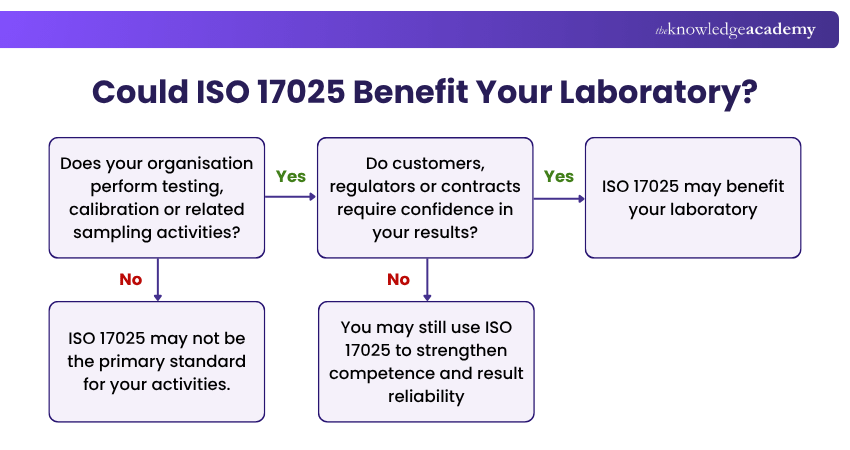
The standard applies to laboratories of any size conducting testing, calibration or related sampling activities. Laboratories can gain ISO 17025 accreditation for a defined scope of work, helping customers, regulators and other stakeholders trust their results.

Key Features of 17025 Guidelines
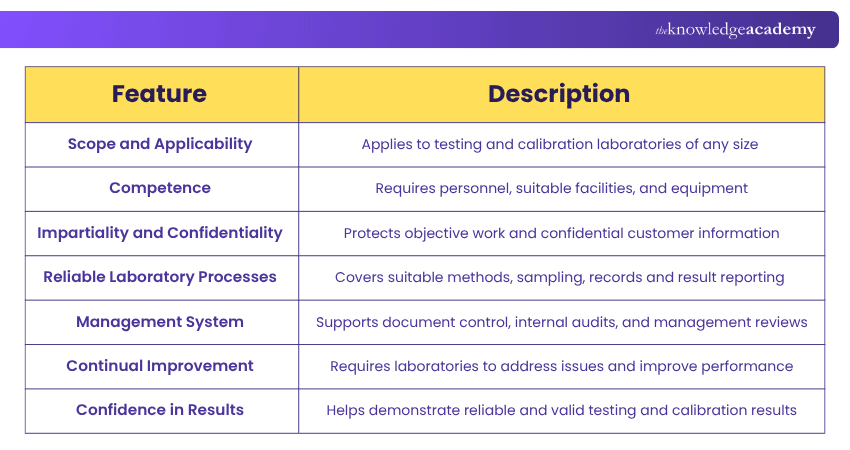
The ISO 17025 Guidelines encompass a set of key features that laboratories must adhere to achieve compliance and demonstrate their competence. These features include the following:
Key Requirements of ISO 17025
ISO 17025:2017 is structured around five main requirement areas. Together, they help laboratories demonstrate technical competence, impartiality, and consistent operations. Let's learn about it below:
1) General Requirements
Laboratories must remain impartial and protect confidential customer information. They must identify and manage risks arising from relationships, activities, or pressures that could affect the objectivity of their work.
2) Structural Requirements
A laboratory must be a legal entity, or a defined part of one, with clear responsibility for its activities. It must also establish its organisational structure, management roles, and authorities to ensure laboratory work is properly controlled.
3) Resource Requirements
Laboratories need competent personnel, suitable facilities, appropriate environmental conditions, and equipment that is fit for purpose. They must also ensure measurement traceability where applicable and control externally provided products and services that affect laboratory activities.
Pro Tip
Equipment calibration is not a one-time activity. Review equipment performance, maintenance records and calibration needs regularly to keep it fit for its intended use.
4) Process Requirements
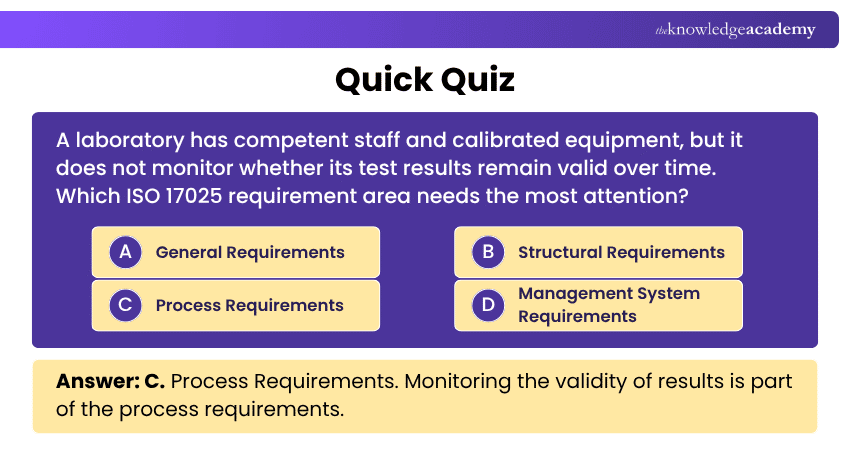
These requirements govern how laboratory work is reviewed, performed, and reported. They cover method selection and validation, sampling, handling of test or calibration items, technical records, evaluation of result validity, and management of non-conforming work.
5) Management System Requirements
Laboratories must maintain a management system that supports consistent operation and continual improvement. This includes document and record control, actions to address risks and opportunities, internal audits, corrective actions, and management reviews.
Build the knowledge behind reliable laboratory results with the ISO 17025 Foundation Training now!
What are the Benefits of Implementing the 17025 Guidelines?
Implementing the ISO 17025 Guidelines offers several significant benefits for laboratories and organisations involved in testing and calibration activities. Let's learn about it below:
1) Enhanced Credibility and Trust
ISO 17025 accreditation provides independent recognition of a laboratory's competence for its approved scope. This can strengthen confidence among customers, regulators and other stakeholders.
2) Improved Quality and Reliability of Test Results
By following ISO 17025 requirements, laboratories can improve the reliability of their results. The standard emphasises suitable methods, competent personnel, properly controlled equipment and appropriate quality assurance activities.
3) Compliance with Regulatory Requirements
Accreditation may help laboratories meet customer, tender or regulatory expectations. However, ISO 17025 accreditation does not automatically demonstrate compliance with every legal or sector-specific requirement.
4) Better Customer Satisfaction
Reliable and clearly reported results can improve customer confidence. Consistent laboratory processes also help organisations respond more effectively to customer requirements and concerns.
5) International Recognition
Accredited results may receive wider acceptance across markets and organisations, particularly when accreditation bodies participate in recognised international arrangements.
6) Improved Efficiency and Effectiveness
Implementing ISO 17025 Guidelines can help laboratories standardise processes, clarify responsibilities and reduce avoidable errors. This supports more efficient use of time, equipment and resources.
7) Risk Management and Decision-making
By identifying risks to impartiality, laboratory activities and result validity, laboratories can take informed action to reduce potential errors and improve decision-making.
8) Continuous Improvement
ISO 17025 encourages laboratories to review their management system and laboratory activities regularly. This helps them identify opportunities to improve performance and maintain effective processes.
Lead meaningful audits that raise laboratory standards by joining the ISO 17025 Lead Auditor Training today!
Best Practices for Implementing ISO 17025
Laboratories can support effective implementation of ISO 17025 by adopting the following practices:
a) Maintain Clear Documentation and Records: Keep laboratory procedures, work instructions and records current and controlled. This supports consistent work and provides evidence of laboratory activities.
b) Train and Authorise Personnel: Train personnel and assess their competence for assigned work. Authorise them only for activities they are qualified to perform.
c) Maintain Equipment: Ensure equipment is suitable, maintained and calibrated or checked when needed. Keep records to show it remains fit for purpose.
d) Use Suitable Methods: Use appropriate methods for each activity. Verify standard methods and validate non-standard or laboratory-developed methods before use.
e) Monitor Result Validity: Use suitable quality assurance activities to check that results remain valid. This may include internal quality control, replicate testing or proficiency testing.
f) Conduct Reviews and Audits: Use internal audits and management reviews to identify gaps, assess performance and improve laboratory operations.
g) Manage Non-conforming Work: Identify work that does not meet requirements, assess its impact and take corrective action to prevent recurrence.
Pro Tip
Start with one area, such as document control or equipment records, and improve it fully before expanding changes across the laboratory.
Use Cases of 17025 Guidelines
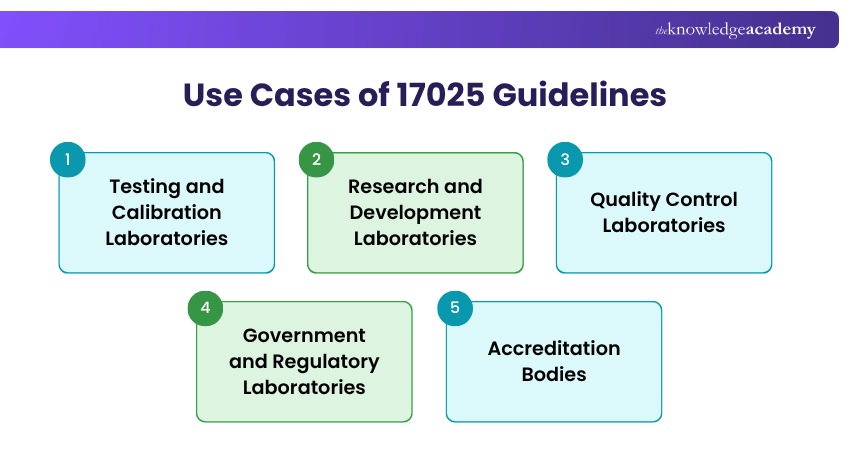
ISO/IEC 17025 applies to laboratories carrying out testing, calibration and associated sampling activities. Its requirements are also used when assessing the competence of laboratories performing these activities. Some common use cases are outlined below:
1) Testing and Calibration Laboratories
ISO 17025 supports this area in the following ways:
a) ISO 17025 is designed for testing and calibration laboratories.
b) It applies across numerous industries like aerospace, automotive, food and beverages, textiles and electronics.
c) Following these guidelines improves the testing accuracy and reliability.
d) It helps labs deliver consistent and trustworthy results.
2) Research and Development Facilities
ISO 17025 supports this area in the following ways:
a) Research and development labs depend on accurate test results.
b) ISO 17025 helps them build strong Quality Management Systems.
c) It can support the reliability of testing and calibration results produced within their accredited scope.
d) This improves the trust and quality of their research findings.
3) Quality Control Departments
ISO 17025 supports this area in the following ways:
a) ISO 17025 is helpful for quality control departments in organisations.
b) It helps ensure the accuracy and reliability of test results.
c) These results help you check raw materials, in-process items and final products.
d) Following the standard supports better quality monitoring and control.
4) Government and Regulatory Bodies
ISO/IEC 17025 can apply to government-operated laboratories that perform testing or calibration activities.
a) Government laboratories can use the standard to demonstrate competence for defined testing or calibration activities.
b) Accredited laboratory results can support regulatory, enforcement or public-sector decisions.
c) The standard can help strengthen confidence in results used for these purposes.
5) Accreditation Bodies
ISO 17025 supports this area in the following ways:
a) Accreditation bodies use ISO/IEC 17025 requirements when assessing testing and calibration laboratories.
b) They assess whether the laboratory demonstrates competence, impartiality and consistent operation within the requested scope.
c) The assessment helps determine whether the laboratory conforms to the applicable ISO/IEC 17025 requirements.
d) Laboratories that successfully complete the accreditation process can receive accreditation for a defined scope of activities.
Build the skills to support continual laboratory improvement with the ISO 17025 Internal Auditor Training – Join now!

Subiksha Arulprakash is a Copywriter with 5+ years of experience in content writing, editing, content development and digital marketing. Her experience researching and writing about Business Skills, ISO standards and compliance enables her to produce clear, accessible content for different audiences.
View Detail

 If you wish to make any changes to your course, please


