


 Top Rated Course

We may not have the course you’re looking for. If you enquire or give us a call on 01344203999 and speak to our training experts, we may still be able to help with your training requirements.
How to Write a Letter of Recommendation: A Complete Guide
The Knowledge Academy 02 September 2026Learn How to Write a Letter of Recommendation with clear steps, relevant examples, a simple template and common mistakes to avoid.

Training Outcomes Within Your Budget!
We ensure quality, budget-alignment, and timely delivery by our expert instructors.
Table of Contents

Key Takeaways
a) A strong Letter of Recommendation should clearly explain the relationship between the recommender and the candidate.b) Write the Letter of Recommendation only if you know the applicant well enough to give an honest recommendation.c) Include specific examples and achievements that demonstrate the candidate’s abilities, qualities and potential.d) Tailor the recommendation to the role, programme or opportunity the candidate is pursuing.e) Review the letter carefully for accuracy, tone and grammatical errors before submitting it.
Imagine a former colleague asks if you could write them a Letter of Recommendation.
They have found a role or university programme they are excited about, and they want you to describe their strengths.
It sounds simple at first. But then you wonder:
“What should I include, and how can I make the letter genuinely useful?”
A strong recommendation is not just a list of positive qualities. It should explain how you know the applicant, show what they have achieved and connect their strengths to the opportunity they want.
This blog explains How to Write a Letter of Recommendation that is clear, professional and supported by relevant examples. Let's begin!
What is a Letter of Recommendation?
A Letter of Recommendation is a written endorsement from someone who can credibly comment on an applicant’s abilities, achievements, character or potential. It may support an application for a job, university programme, scholarship, internship, tenancy, or another opportunity.
The letter should explain how the writer knows the applicant and provide a truthful, relevant assessment of their strengths and suitability for the specific opportunity. Specific examples of achievements, qualities or contributions can make the recommendation more credible and informative.

How to Write a Letter of Recommendation?
A Recommendation Letter is most effective when it is clear, specific and concise. Three or four focused paragraphs are commonly suitable, but always follow the requirements provided by the employer, university or programme. Let’s look at the key steps to consider:
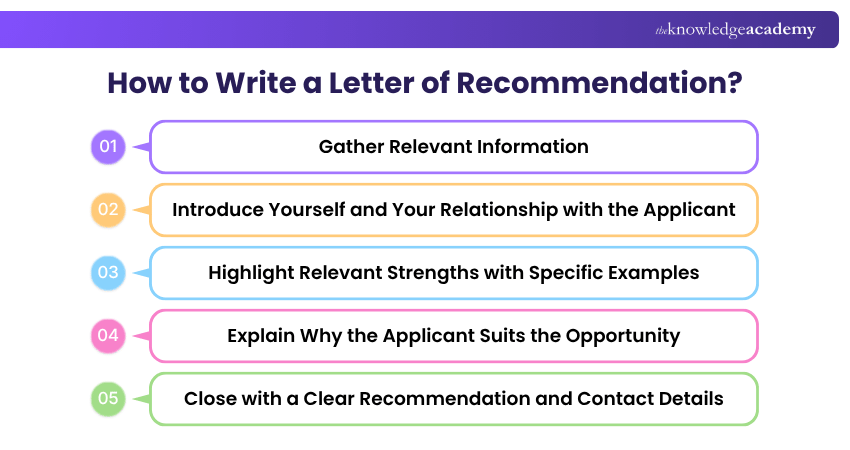
1) Gather Relevant Information
Before writing, ask the applicant for the information you need to tailor the letter. This may include:
a) The job description, programme details or opportunity information
b) The submission deadline and submission instructions
c) Their current resume or CV
d) Relevant achievements, skills or projects
e) Their personal statement or goals, where relevant
f) Any specific questions the recipient wants the recommender to address
Review the information before you agree to write. If you do not know the applicant well enough to provide a positive and evidence-based recommendation, it is better to decline politely.
Pro Tip
Check the submission instructions early. The recipient may require a signed letter, an official letterhead, a secure upload or a direct email from the recommender.
2) Introduce Yourself and Your Relationship with the Applicant
Start by addressing the recipien
e) The opportunity you are recommending them for
For example:
I am pleased to recommend Elizabeth Taylor for the role of Project Coordinator at [Organisation Name]. I have worked with Elizabeth for two years as her line manager at [Company Name], where I have directly supervised her work on client reporting and project administration.
3) Highlight Relevant Strengths with Specific Examples
The main body of the Letter of Recommendation should explain the applicant’s most relevant strengths. Focus on qualities that relate directly to the opportunity. Avoid vague statements such as “They are excellent” or “They are very hardworking” without evidence. Instead, describe a real situation, task or achievement.
For example:
Elizabeth consistently demonstrated strong organisational skills when managing weekly progress reports across several client projects. She introduced a clearer tracking process that helped the team identify overdue actions earlier and improve follow-up with stakeholders.
One or two detailed examples are usually more effective than a long list of general compliments.
Trainer’s Insight
Specific examples make a recommendation believable. Instead of writing that the applicant is “hard-working”, explain what they did, how they approached it and what the outcome was
4) Explain Why the Applicant Suits the Opportunity
Connect the applicant’s strengths and experience to the role, programme or opportunity. Explain why you believe they are a suitable candidate.
For example:
Elizabeth’s attention to detail, communication skills and ability to manage competing priorities would make her well suited to a Project Coordinator role. She has shown that she can work independently while keeping colleagues and stakeholders informed.
Keep this assessment honest. A Recommendation Letter should be supportive, but it should not exaggerate achievements or make claims you cannot verify.
Pro Tip
Match the evidence to the opportunity. For a university application, focus on academic ability and potential. For a job application, prioritise workplace skills, results and professional conduct.
5) Close with a Clear Recommendation and Contact Details
End the letter by clearly confirming your recommendation. You may also invite the recipient to contact you for further information.
For example:
I recommend Elizabeth without reservation for this position. Please feel free to contact me at [email address] or [phone number] if you require any further information.
Include your full name, job title, organisation and relevant contact details in the signature.
Learn to communicate ideas with professional confidence by joining the Business Writing Course now!
Letter of Recommendation Template
Use this Letter of Recommendation template as a clear starting point for academic, professional or character references. Replace the placeholders with accurate details and tailor each section to the applicant and opportunity. Let’s look at it below:
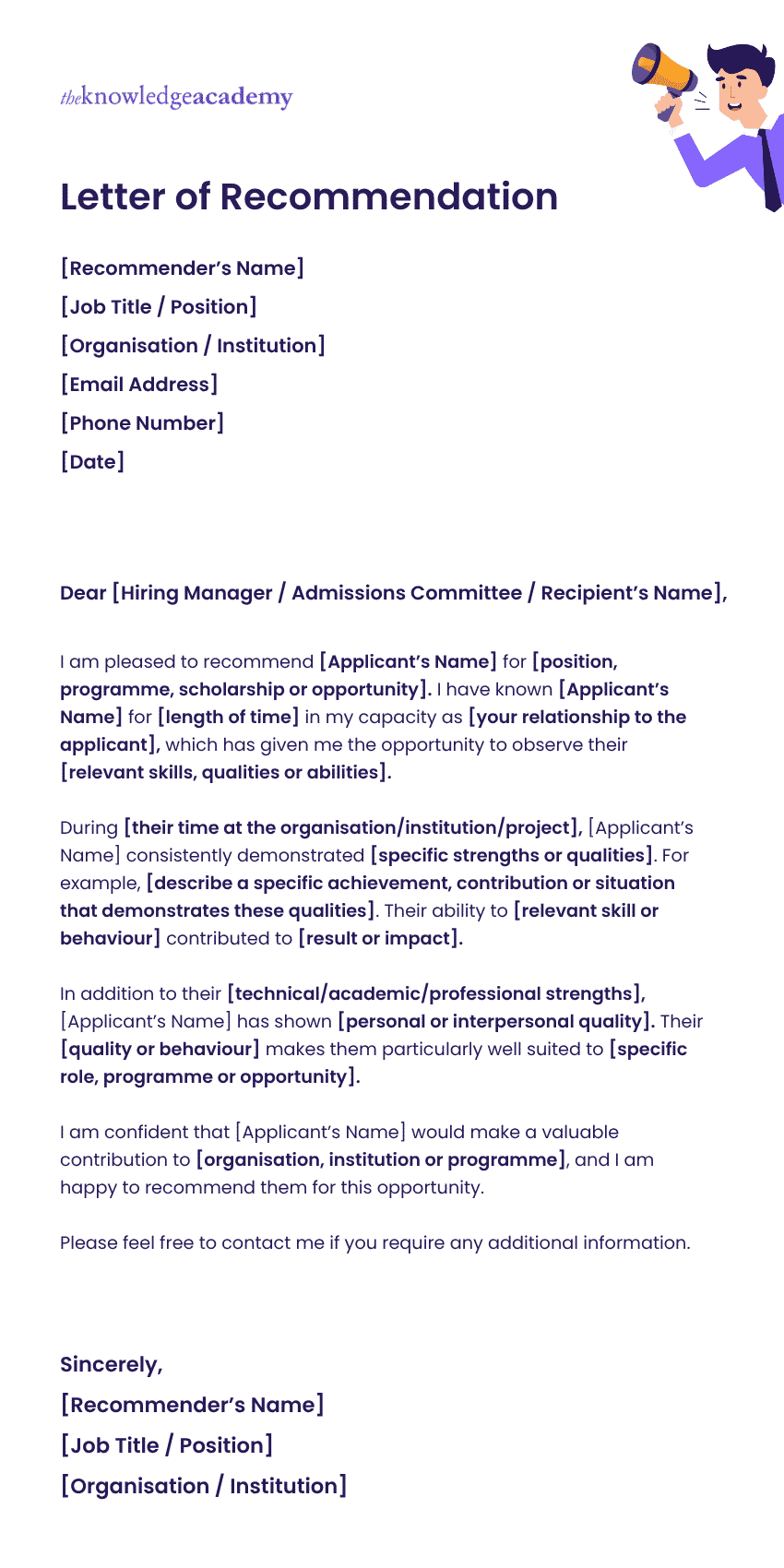
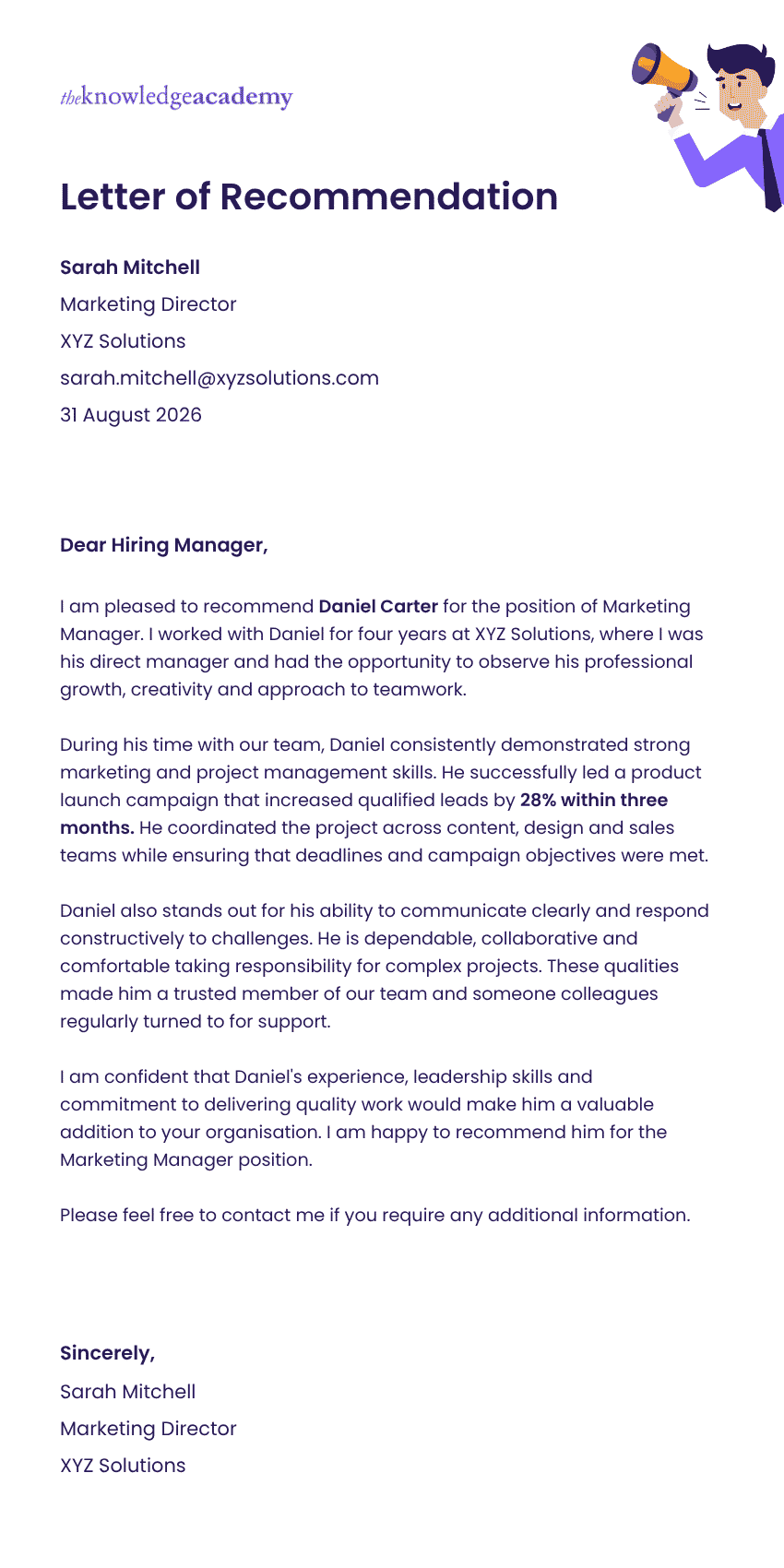
Now that you understand the structure, let's see what a completed Letter of Recommendation could look like:
Common Mistakes to Avoid When Writing a Letter of Recommendation
Even a well-intentioned Letter of Recommendation can lose impact if it is too vague, generic or poorly tailored. Avoiding common mistakes helps you write a clear, credible and useful letter that supports the applicant effectively. Let’s learn about the common mistakes below:
a) Writing a Generic Letter: Avoid using the same letter for every applicant or opportunity. Tailor the content to the applicant’s goals and the recipient’s requirements.
b) Making Vague Claims: General praise without evidence has limited value. Support your comments with examples of the applicant’s work, achievements or behaviour.
c) Exaggerating Achievements: Do not overstate the applicant’s skills or make claims you cannot confirm. Honest and specific recommendations are more credible.
d) Focusing on Irrelevant Details: Include information that helps the recipient understand why the applicant suits the opportunity. Avoid unrelated personal details or long background information.
e) Ignoring Submission Instructions: Check the deadline, required format and submission method before writing. Some universities and organisations require the recommender to submit the letter directly through an online portal.
f) Forgetting to Proofread: Check names, dates, job titles, programme names and contact details. A letter with incorrect information can weaken an otherwise strong recommendation.
Checklist Before You Send the Letter of Recommendation
• Is the letter tailored to the opportunity?• Are all claims accurate and supported by examples?• Have you avoided vague phrases such as “hard-working” without evidence?• Is the tone professional, clear and respectful?• Have you checked the recipient's name, deadline and required format?
Conclusion
Understanding How to Write a Letter of Recommendation requires honesty, relevant evidence and a clear understanding of the opportunity. Explain how you know the applicant, use specific examples and connect their strengths to the role or programme. A concise, professional and tailored letter gives the reader a credible view of the applicant’s potential.
Develop essential skills to express ideas that people remember with the Communication Skills Courses now!
Frequently Asked Questions
Can a Colleague Write a Letter of Recommendation?

Yes, a colleague can write a Recommendation if they have direct knowledge of the applicant’s work and can provide specific, credible examples. However, some employers or programmes may prefer a manager, supervisor, or lecturer.
Should a Letter of Recommendation be Submitted Directly by the Writer?
It depends on the organisation’s requirements. Some employers and universities ask recommenders to submit letters directly through an application portal or email, while others allow applicants to submit them. Always check the specific submission instructions before sending the letter.
Can an Applicant Write Their Own Letter of Recommendation?
The applicant can provide a resume, achievements and helpful background information. However, the recommender should write the final letter in their own words and remain responsible for its accuracy.

The Knowledge Academy


Global Training Provider
The Knowledge Academy is a world-leading provider of professional training courses, offering globally recognised qualifications across a wide range of subjects. With expert trainers, up-to-date course material, and flexible learning options, we aim to empower professionals and organisations to achieve their goals through continuous learning.


 If you wish to make any changes to your course, please


