Who should attend this PM² Foundation Training Course?
The PM² Foundation Training Course is centred around the PM² methodology, the European Commission's official Project Management methodology.
A few of the professionals who will benefit from the course are:
- Project Managers
- Project Team Members
- EU Institution Staff Members
- Stakeholders
- Consultants
Prerequisites of the PM² Foundation Training Course
For the PM² Foundation Training Course, no prior knowledge of the PM² methodology is required. However, a basic understanding of Project Management concepts can be beneficial for participants to grasp the content effectively.
PM² Foundation Training Course Overview
PM² Project Management is a globally recognised project management methodology that provides a structured approach for managing projects effectively. It provides a consistent framework for project management, ensuring standardisation and alignment across projects. Studying this training helps individuals effectively plan, execute, and monitor projects, enabling them to contribute to successful project outcomes. This training benefits organisations by equipping project teams with the necessary skills and knowledge for improved project performance, increased customer satisfaction, and better organisational project maturity. Individuals holding these valuable skills increase their marketability and unlock career opportunities in the dynamic field of project management.
The Knowledge Academy’s 2-Day APMG PM² Foundation Training course provides delegates with in-depth knowledge and skills in project management using the PM² methodology. During this training, they will learn PM² concepts, project phases, and gates, as well as how PM² supports programme and portfolio management. They will also learn about how to effectively manage projects using the PM² methodology. This course will be led by our highly skilled and knowledgeable trainer, who has years of experience in teaching and will help delegates get a complete understanding of this course.
Course Objectives
- To understand the various fundamental concepts and characteristics of a project
- To grasp the key PM² concepts and their application in programme and portfolio management
- To familiarise oneself with the roles and responsibilities within a project organisation
- To acquire proficiency in project planning techniques and the composition of a project handbook
- To develop skills in monitoring and control, risk and issue management, and stakeholder communication
- To gain knowledge and expertise in change, quality, and requirements management in projects
After attending this training, delegates will be able to apply the key project management concepts and principles to initiate, plan, execute, and close projects using the PM² methodology. They will also be able to develop comprehensive project plans and utilise various project management techniques.
Skills Gained from PM² Foundation Certification Training
The PM² Foundation Training equips learners with the skills needed to manage projects using the PM² methodology in a structured and practical manner. Professionals gain a clear understanding of how to apply project management principles across the project lifecycle, with a focus on control, governance, and successful delivery.
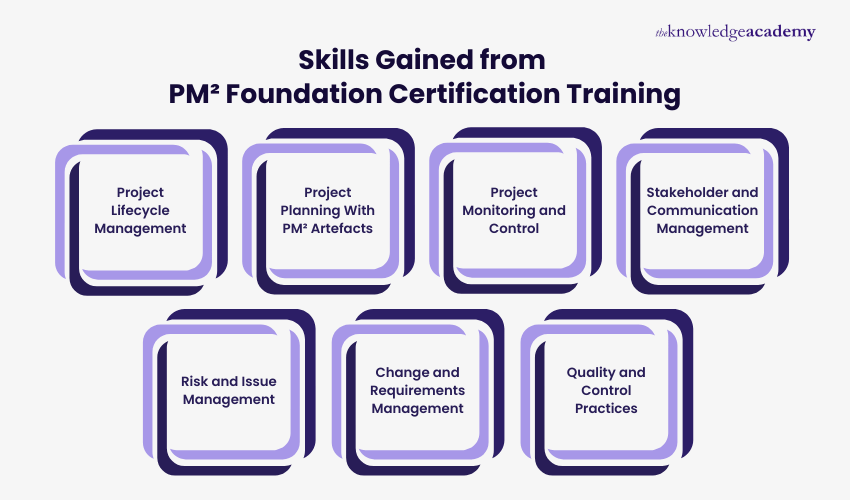
Key skills gained from this course include:
- Project Lifecycle Management: Apply the PM² project lifecycle from project initiation and planning through execution, monitoring, and closure.
- Project Planning With PM² Artefacts: Develop structured project plans, charters, and logs, define activities, manage timelines, and support controlled project progress.
- Project Monitoring and Control: Track project progress, review performance against plans, manage deviations, and support informed decision-making.
- Stakeholder and Communication Management: Engage stakeholders, manage expectations, and maintain clear communication throughout the project lifecycle.
- Risk and Issue Management: Identify project risks and issues, assess their impact, and apply structured mitigation and escalation approaches.
- Change and Requirements Management: Manage project changes and maintain documented requirements using PM² processes to support governance and traceability.
- Quality and Control Practices: Apply quality controls, monitor performance, and ensure project deliverables meet agreed standards.




 If you miss out, enquire to get yourself on the waiting list for the next day!













 If you wish to make any changes to your course, please


