Who Should Attend this Product Management Training Course?
Product Management Training is designed for professionals who want to develop practical Product Management skills across the product lifecycle, from concept to market launch. The following professionals can benefit from attending this course:
- Product Managers
- Product Owners
- Marketing Managers
- Product Development Teams
- UX/UI Designers
- Business Owners
- E-commerce Managers
Prerequisites of the Product Management Training Course
There are no formal prerequisites to attend this Product Management Training Course. However, a basic understanding of business objectives and Project Management may help delegates gain more from the course content.
Product Management Training Overview
The Product Management Course provides delegates with detailed knowledge and practical skills in managing products, from concept building to launching. It covers concepts such as Product Management fundamentals, portfolio management, financial considerations, and marketing strategies.
Delegates will learn to develop key product strategies, evaluate portfolios, collaborate with cross-functional teams, and make the right investment decisions. They will also learn product lifecycle management and customer-focused planning to align products with organisational objectives.
This 1-Day course by The Knowledge Academy enables delegates to apply the Product Management principles in a commercial environment. Delegates will develop skills in managing the product lifecycle, and continuous improvement for better delivery.
Product Management Training Course Objectives
- To understand the core principles of Product Management
- To master the art of market research and customer analysis
- To develop skills for effective communication and collaboration within cross-functional teams
- To explore user experience and design thinking principles
- To measure and improve product performance through key metrics
After completing the Product Management Course, delegates will be well-prepared to take on the challenges of Product Management. They will have the knowledge and skills to develop, launch, and manage successful products, leading to career advancement and contributions to their organisation's growth and profitability.
Career Progression of a Product Management Professional
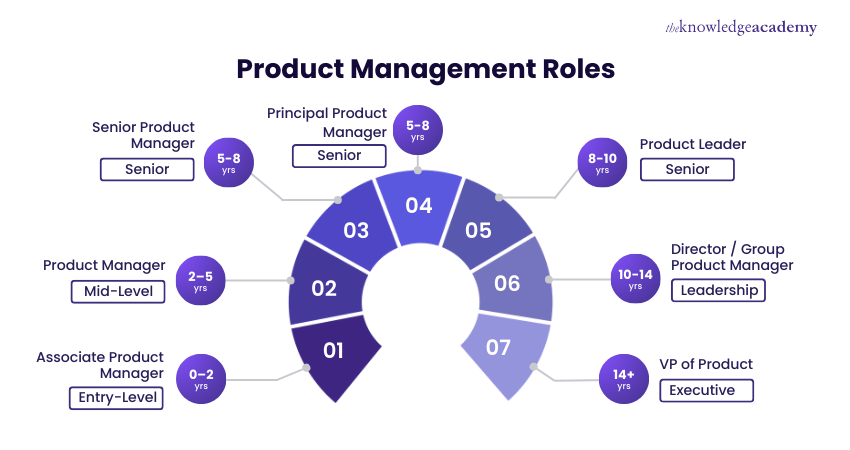
Product Management offers a structured career path, often progressing from Associate Product Manager to VP of Product. Here's an overview of the experience required at each stage and the roles professionals can pursue as they grow.
- Associate Product Manager (0–2 yrs): Entry-level role focused on supporting product teams and learning the fundamentals.
- Product Manager (2–5 yrs): Mid-level position responsible for product strategy, roadmaps, and cross-functional execution.
- Senior Product Manager (5–8 yrs): Leads major products or initiatives with full ownership and strategic input.
- Principal Product Manager (8–10 yrs): Expert-level contributor driving high-impact product decisions and mentoring others.
- Product Leader (5–8 yrs): Oversees multiple teams or key product lines with senior-level responsibility.
- Director/Group Product Manager (10–14 yrs): Leadership role managing multiple PMs and aligning product vision with business goals.
- VP of Product (14+ yrs): Executive position driving overall product strategy, innovation, and organisational outcomes.
Skills You'll Gain with this Product Management Training
The Product Management Course provides hands-on Product Management techniques to help delegates create, develop, and review products throughout the lifecycle. These skills enable professionals to make their product strategies more effective in achieving their business objectives and provide more value to customers. The key skills include:

- Product Strategy Development: Develop the product strategies that align to business goals and market needs.
- Product Lifecycle Management: Plan and manage products effectively throughout their lifecycle, from planning the product to launching and continuous improvement.
- Product Portfolio Management: Assess and prioritise product portfolios using well-known strategic frameworks.
- Market and Customer Analysis: Measure the value of customers, opportunities within the markets and product positioning to make informed decisions.
- Product Leadership and Team Management: Lead cross-functional product teams, manage collaboration and effectively resolve conflicts.
- Product Planning and Financial Management: Use pricing strategies, investment analysis and annual product planning to help ensure business success.





 If you miss out, enquire to get yourself on the waiting list for the next day!













 If you wish to make any changes to your course, please


