Who Should Attend this Fraud Analytics Training Course?
This Fraud Analytics Training Course is ideal for professionals involved in the management, analysis, and protection of financial and operational data within an organisation. This course is particularly beneficial for the following professionals:
- Cybersecurity Professionals
- Financial Analysts
- Risk Managers
- IT Security Officers
- Compliance Officers
- Internal Auditors
Prerequisites for the Fraud Analytics Training Course
There are no formal prerequisites to attend this Fraud Analytics Course. However, having fundamental knowledge of data analytics will be beneficial for learners to grasp concepts more effectively.
Fraud Analytics Training Course Overview
Fraud Analytics Training helps delegates understand how data can be used to detect, investigate, and prevent fraudulent activity. It focuses on identifying suspicious patterns, anomalies, and risk indicators across financial and digital environments.
This training develops practical skills in transaction monitoring, data visualisation, predictive modelling, and fraud risk assessment. It supports stronger decision-making and helps organisations improve their anti-fraud controls.
This 1-day course by The Knowledge Academy equips delegates with practical fraud detection and prevention techniques. Upon completion, delegates will be able to analyse fraud risks, identify warning signs, and support effective fraud investigation processes.
Fraud Analytics Training Course Objectives
- To apply fraud analytics techniques to detect suspicious patterns in financial data
- To strengthen anti-fraud frameworks within organisations using data insights
- To implement effective fraud controls and monitoring systems
- To use data models and visualisation tools to investigate and prevent fraud
- To support compliance and reduce reputational and financial damage
- To develop practical skills to respond proactively to evolving fraud threats
Upon completion, delegates gain essential knowledge and practical skills to detect, prevent, and investigate fraud effectively. This Cyber Security Certification expertise also strengthens career prospects by opening advanced opportunities in risk management and financial compliance.
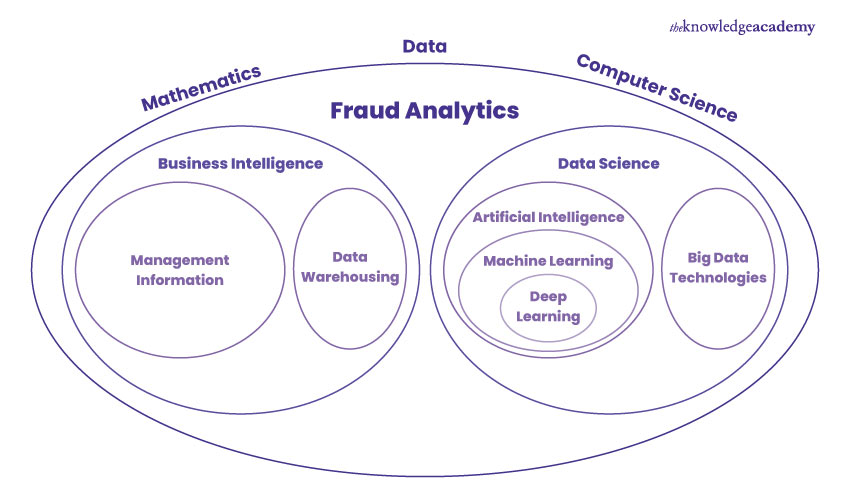
Building Blocks of Fraud Analytics
Fraud Analytics combines principles from mathematics, data, and computer science with business insight to detect, prevent, and respond to fraud. It relies on key domains and technologies that enable effective analysis and action.
Business Intelligence
- Management Information
- Data Warehousing
Data Science
- Artificial Intelligence (AI)
- Machine Learning (ML) - Deep Learning
- Big Data Technologies





 If you miss out, enquire to get
yourself
on the waiting list for the next day!
If you miss out, enquire to get
yourself
on the waiting list for the next day!













 If you wish to make any changes to your course, please


