Who Should Attend this Digital Forensics Training Course?
This Digital Forensics Course is ideal for professionals looking to build expertise in cyber investigations, digital evidence handling, and cybercrime prevention. You should attend this course if you are:
- Law Enforcement Officer: Enhancing digital investigation and evidence handling skills
- Cybersecurity Professional: Managing threat detection and incident response
- Auditor or Compliance Officer: Investigating security risks and control breaches
- IT Security Professional: Applying forensic principles and evidence techniques
- Digital Investigator: Developing skills in evidence collection, examination, and analysis
- Data or Security Analyst: Applying forensic methods to data investigations
- Aspiring Digital Forensics Expert: Preparing for roles in cybercrime and investigations
Prerequisites for the Digital Forensics Training Course
There are no formal prerequisites for this Digital Forensics Training Course. However, a basic understanding of IT systems, networks, and cyber security concepts will be beneficial for delegates.
Digital Forensics Training Course Overview
Digital Forensics Training in the United Kingdom introduces delegates to the process of identifying, preserving, analysing, and presenting digital evidence. It covers key forensic methods used to investigate cyber incidents and digital crimes.
This training helps delegates develop the skills needed to examine devices, recover data, and maintain evidence integrity. It also supports effective incident investigation and strengthens organisational security practices.
This 1-Day Digital Forensics Course by The Knowledge Academy equips delegates with practical digital investigation techniques. Upon completion, delegates will be able to handle digital evidence confidently and support cybercrime investigations effectively.
Digital Forensics Training Course Objective
- To understand the principles, processes, and purpose of digital forensics
- To identify, collect, and preserve digital evidence using recognised forensic practices
- To understand the legal and regulatory considerations associated with cybercrime investigations
- To apply digital forensic readiness concepts, frameworks, and methodologies
- To examine and analyse digital evidence using established forensic techniques
- To recognise challenges associated with digital forensic investigations, including automation and standardisation
Upon completion of this Digital Forensics Course, delegates will have the knowledge to collect, preserve, and analyse digital evidence effectively. They will understand forensic investigation processes, cybercrime law, and forensic readiness principles used in investigative environments.
Digital Forensics Process Covered in this Course
The Digital Forensics Training Course introduces the structured process used to identify, collect, examine, analyse, and present digital evidence during an investigation. Delegates learn how each stage contributes to maintaining the integrity of evidence and supporting reliable investigative outcomes. The course covers the key phases of the digital forensics process:
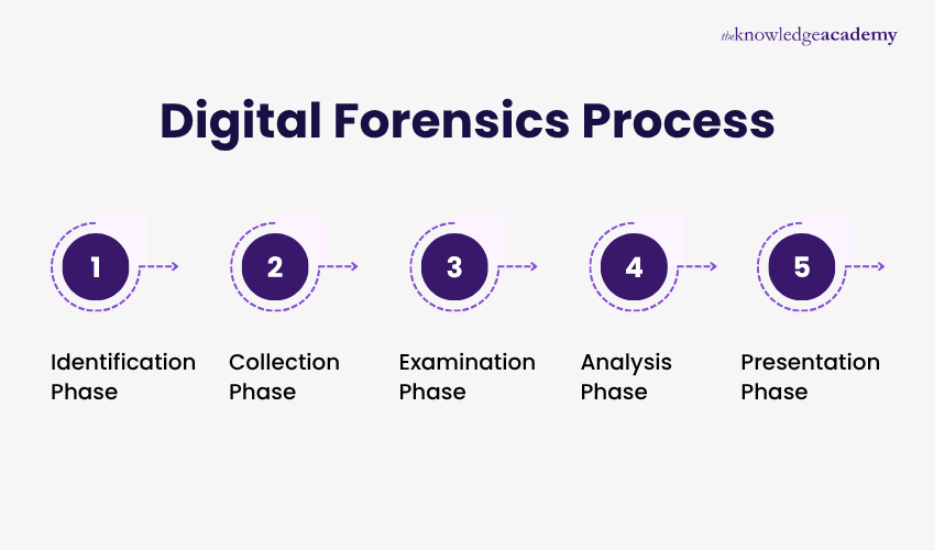
- Identification Phase: Identifying potential sources of digital evidence relevant to an investigation.
- Collection Phase: Gathering and preserving digital evidence using appropriate forensic procedures.
- Examination Phase: Reviewing and extracting relevant information from collected evidence.
- Analysis Phase: Interpreting findings to establish facts, patterns, and investigative insights.
- Presentation Phase: Documenting and presenting findings clearly to support investigative or legal requirements.
By understanding these stages, delegates gain practical insight into how digital evidence is managed throughout the investigation lifecycle while supporting legal, procedural, and organisational requirements.





 If you miss out, enquire to get
yourself
on the waiting list for the next day!
If you miss out, enquire to get
yourself
on the waiting list for the next day!













 If you wish to make any changes to your course, please


