Who Should Attend this CCNA Certification Course?
This CCNA Course is designed for individuals who want to gain foundational knowledge and skills in computer networking and earn the Cisco Certified Network Associate (CCNA) Certification. This course benefits a wide range of professionals, including:
- System Administrators
- Network Engineers
- DevOps Engineers
- Cloud Computing Engineers
- Security Engineers
- Software Developers
- IT Professionals
Prerequisites of this CCNA Certification Course
There are no formal prerequisites to attend this CCNA Certification Course. However, a basic understanding of networking and operating systems would be beneficial for the delegates.
CCNA Certification Course Overview
CCNA Certification Course introduces fundamental networking concepts that form the foundation of modern IT infrastructure. Delegates learn key networking principles, including IPv4 and IPv6 technologies, while understanding the Importance of CCNA.
This training supports upskilling in network configuration, troubleshooting, and Cisco networking technologies. Delegates strengthen their ability to work with Cisco equipment and prepare for various CCNA Job Roles.
This 5-Day CCNA Certification Course offered by The Knowledge Academy prepares delegates to apply networking knowledge across a range of IT environments. The skills gained support effective network administration, problem resolution, and the delivery of secure and scalable networking solutions.
CCNA Certification Course Objectives
To learn how to identify the components of a computer network and describe their basic characteristics
- To configure and verify IPv4 and IPv6 addressing and subnetting
- To implement and verify VLANs, interswitch connectivity, and EtherChannel configurations
- To explain and configure key security fundamentals, including device access control, VPNs, and wireless security protocols
- To explore automation and programmability impacts on network management
Upon completion of CCNA Certification Course, delegates will emerge with a strong foundation in CCNA, enabling them to navigate the complexities of modern networking environments with confidence. This newfound expertise will open doors to exciting career opportunities and empower them to make a substantial impact in the IT industry.
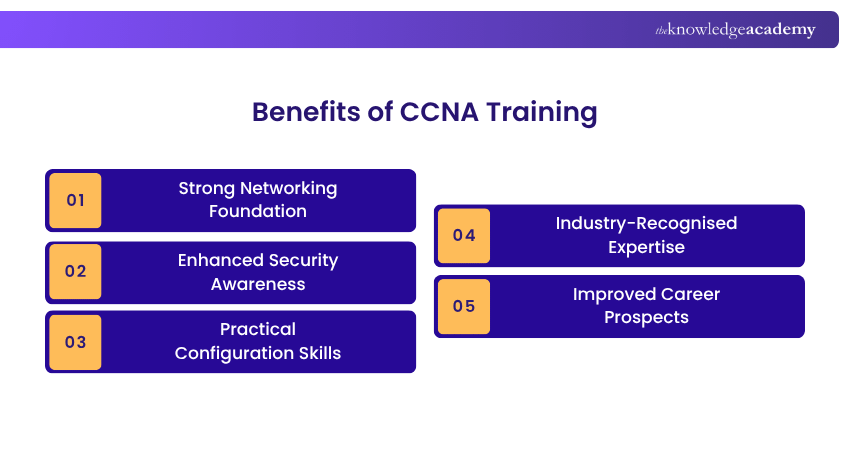
Benefits of CCNA Training
This CCNA Course helps learners develop the networking knowledge and practical skills required to manage modern IT infrastructures. The capabilities gained can support professional growth and improve career opportunities across the technology sector.
- Strong Networking Foundation: Develop a comprehensive understanding of networking concepts, protocols, and infrastructure.
- Enhanced Security Awareness: Learn key network security principles and techniques for protecting organisational assets.
- Practical Configuration Skills: Gain hands-on experience configuring routers, switches, VLANs, and network services.
- Industry-Recognised Expertise: Build skills aligned with the globally respected CCNA Certification.
- Improved Career Prospects: Strengthen your profile for networking, infrastructure, and IT support roles.
Job Opportunities After CCNA Certification
CCNA Certification equips professionals with in-demand networking skills that are valued across various industries. The knowledge gained can support progression into a range of networking and infrastructure-related roles.
- Network Engineer: Design, configure, and maintain network infrastructure.
- Network Administrator: Monitor and manage organisational network environments.
- IT Support Engineer: Troubleshoot network and connectivity issues across business systems.
- Systems Administrator: Manage networked systems, servers, and IT resources.
- Infrastructure Engineer: Support the implementation and optimisation of enterprise IT infrastructure.





 If you miss out, enquire to get yourself on the waiting list for the next day!













 If you wish to make any changes to your course, please


